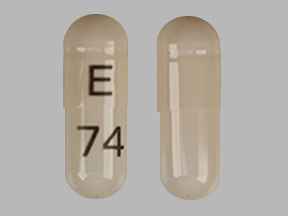
Venlafaxine Dosage
Medically reviewed by Drugs.com. Last updated on Jul 11, 2023.
Applies to the following strengths: 25 mg; 50 mg; 75 mg; 100 mg; 37.5 mg; 150 mg; 225 mg; 112.5 mg
Usual Adult Dose for:
Additional dosage information:
Usual Adult Dose for Depression
Immediate release:
- Initial dose: 37.5 mg orally twice a day OR 25 mg orally 3 times a day
- Maintenance dose: 75 to 150 mg orally per day, given in divided doses
- Maximum dose:
- Moderately depressed outpatients: 225 mg/day
- Severely depressed inpatients: 375 mg/day
Extended release:
- Initial dose: 75 mg orally once a day
- Maintenance dose: 75 to 225 mg orally once a day
- Maximum dose:
- Moderately depressed outpatients: 225 mg/day
- Severely depressed inpatients: 375 mg/day
Comments:
- The daily dosage of immediate-release formulations may be divided into 2 or 3 doses/day.
- Healthcare providers should consider initial extended release doses of 37.5 mg orally once a day for 4 to 7 days (before increasing the dose to 75 mg/day) in patients who may require additional time to adjust to the drug.
- Doses may be increased in daily increments of up to 75 mg orally at intervals of no less than 4 days.
- Patients should be periodically reassessed for the continued need of maintenance treatment and for the appropriate dose of treatment.
- Use of doses exceeding 225 mg/day is limited.
Use: Treatment of major depressive disorder (MDD)
Usual Adult Dose for Generalized Anxiety Disorder
Extended release:
- Initial dose: 75 mg orally once a day
- Maintenance dose: 75 to 225 mg orally once a day
- Maximum dose: 225 mg/day
Comments:
- Healthcare providers should consider initial extended release doses of 37.5 mg orally once a day for 4 to 7 days (before increasing the dose to 75 mg/day) in patients who may require additional time to adjust to the drug.
- Doses may be increased in daily increments of up to 75 mg orally at intervals of no less than 4 days.
Use: Treatment of generalized anxiety disorder (GAD)
Usual Adult Dose for Social Anxiety Disorder
Extended release: 75 mg orally once a day
Comment: There is no evidence that doses greater than 75 mg/day confer additional benefit.
Uses:
- Treatment of social anxiety disorder (SAD)
- Treatment of social phobia
Usual Adult Dose for Panic Disorder
Extended release:
- Initial dose: 37.5 mg orally once a day for 7 days, then 75 mg orally once a day thereafter
- Maintenance dose: 75 to 225 mg orally once a day
- Maximum dose: 225 mg/day
Comment: Doses may be increased in daily increments of 75 mg orally at intervals of no less than 7 days.
Use: Treatment of Panic Disorder (PD), with or without agoraphobia
Renal Dose Adjustments
Immediate release:
- Mild to moderate renal dysfunction: The total daily dosage should be reduced by 25%.
Extended release:
- Renal dysfunction (glomerular filtration rate [GFR] 10 to 70 mL/min): The total daily dose should be reduced by 25% to 50%.
- Mild to moderate renal dysfunction (CrCl 30 to 89 mL/min): The total daily dose should be reduced by 50%.
- Severe renal dysfunction (CrCl less than 30 mL/min): The total daily dose should be decreased by at least 50%.
Liver Dose Adjustments
Immediate release:
- Mild to moderate liver dysfunction: The total daily dosage should be reduced by 50%.
- Patients with cirrhosis: The dosage should be reduced by at least 50%.
Extended release:
- Mild to moderate liver dysfunction (Child-Pugh 5 to 9): The total daily dose should be reduced by 50%.
- Severe liver dysfunction (Child-Pugh 10 to 15) and hepatic cirrhosis: The total daily dose should be decreased by at least 50%.
Dose Adjustments
Immediate release TO extended release formulations: Patients may be switched to the nearest equivalent daily dosage (e.g., from 37.5 mg [immediate release] orally 2 times a day to 75 mg [extended release] orally once a day)
Treatment Discontinuation:
- Abrupt discontinuation should be avoided when possible.
- Patients should be monitored for adverse events.
- Treatment should be gradually reduced in 75 mg intervals every week.
- Providers should consider resuming the previously prescribed dose in patients who develop intolerable symptoms following a dose reduction or treatment discontinuation; subsequent dose reductions may continue at a more gradual rate.
Switching patients to/from MAOIs:
- Starting treatment with this drug: At least 14 days should elapse between discontinuing MAOI therapy and starting treatment.
- Stopping treatment with this drug: At least 7 days should elapse between stopping treatment and starting an MAOI.
Patients who require urgent treatment with linezolid/IV methylene blue during treatment:
- The potential benefits must outweigh the risks of serotonin syndrome.
- This drug should be stopped promptly before administering linezolid/IV methylene blue.
- Patients should be monitored for serotonin syndrome for 7 days OR 24 hours after the last dose of linezolid/IV methylene blue, whichever comes first.
- Treatment may resume 24 hours after the last dose of linezolid/IV methylene blue.
Precautions
US BOXED WARNINGS:
SUICIDAL THOUGHTS AND BEHAVIORS; SUICIDALITY AND ANTIDEPRESSANT DRUGS:
- Antidepressants increased the risk compared to placebo of suicidality (e.g., suicidal thoughts and behavior) in children, adolescents, and young adults in short-term studies of major depressive disorder (MDD) and other psychiatric disorders.
- These studies did not show an increase in the risk of suicidal thoughts and behavior with antidepressant use in patients over age 24; there was a reduction in risk with antidepressant use in patients aged 65 and older.
- Depression and certain other psychiatric disorders are themselves associated with increases in the risk of suicide.
- Anyone considering the use of this drug in a child, adolescent, or young adult must balance this risk with the clinical need.
- In patients of all ages who are started on antidepressant therapy, monitor closely for clinical worsening and emergence of suicidality or unusual behavior.
- Advise families and caregivers of the need for close observation and communication with the prescriber.
- This drug is not approved for use in pediatric patients.
CONTRAINDICATIONS:
- Hypersensitivity to the active component, desvenlafaxine, or any of the ingredients
- Starting treatment with this drug in patients already receiving therapy with MAOIs (e.g., linezolid, IV methylene blue)
- The concomitant use of MAOIs or within 7 days of stopping treatment with this drug
- The use of this drug within 14 days of stopping an MAOI
Safety and efficacy have not been established in patients younger than 18 years.
Consult WARNINGS section for additional precautions.
Dialysis
Hemodialysis:
- Immediate release: The total daily dose should be reduced by 50%.
- Extended release: The total daily dose should be reduced by at least 50%.
Peritoneal dialysis: Data not available
Other Comments
Administration advice:
- This drug should be taken with food at the same time each day.
- The capsules should not be divided, crushed, or chewed.
General:
- Patients should have their treatment regularly reviewed to evaluate for the ongoing efficacy of therapy.
- Individual dose adjustments may be necessary.
Monitoring:
- CARDIOVASCULAR: Regular blood pressure monitoring
- NERVOUS SYSTEM: Signs/symptoms of serotonin syndrome
- PSYCHIATRIC: Discontinuation symptoms, and worsening/emergence of suicidal thoughts
Patient advice:
- The prolonged release capsules contain spheroids. The insoluble portion of these is eliminated and may be seen in the feces.
- Inform patients that this drug may impair judgement, thinking, and motor skills, and they should avoid driving or operating machinery if these side effects occur.
- Advise patients to speak to their healthcare provider if they become pregnant, intend to become pregnant, or are breastfeeding.
Frequently asked questions
- How long do venlafaxine withdrawal symptoms last?
- SSRIs vs SNRIs - What's the difference between them?
More about venlafaxine
- Check interactions
- Compare alternatives
- Pricing & coupons
- Reviews (2,765)
- Drug images
- Side effects
- Patient tips
- During pregnancy
- Support group
- Drug class: serotonin-norepinephrine reuptake inhibitors
- Breastfeeding
- En español
Patient resources
- Venlafaxine drug information
- Venlafaxine Extended-Release Tablets
- Venlafaxine Tablets
- Venlafaxine Extended-Release Capsules
Other brands
Professional resources
Other brands
Related treatment guides
Further information
Always consult your healthcare provider to ensure the information displayed on this page applies to your personal circumstances.