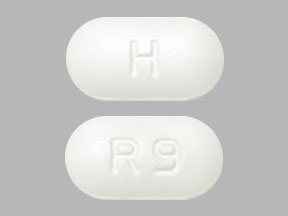
Ritonavir Dosage
Medically reviewed by Drugs.com. Last updated on Aug 10, 2023.
Applies to the following strengths: 100 mg; 80 mg/mL
Usual Adult Dose for:
Usual Pediatric Dose for:
Additional dosage information:
Usual Adult Dose for HIV Infection
Use as a pharmacokinetic (PK) booster for other protease inhibitors: 100 to 400 mg/day orally in 1 or 2 divided doses
Use as an antiretroviral agent (sole protease inhibitor):
- Initial dose: 300 mg orally twice a day; increase by 100 mg twice a day every 2 to 3 days to the full maintenance dose
- Maintenance dose: 600 mg orally twice a day
Comments:
- This drug is most often used and recommended as a PK enhancer of more potent and better tolerated protease inhibitors.
- Use as a PK enhancer for other protease inhibitors is not specifically approved by the US FDA in the manufacturer product information for ritonavir.
- The manufacturer product information of the boosted protease inhibitor should be consulted for additional information (including dose recommendations).
- According to experts, this drug should not be used as the sole protease inhibitor for initial therapy.
- Due to its ethanol content, the oral solution is not recommended during pregnancy; the oral solution contains ethanol (about 43% v/v) and propylene glycol (about 27% w/v).
Use: In combination with other antiretroviral agents, for the treatment of HIV-1 infection
Usual Pediatric Dose for HIV Infection
Use as a PK booster for other protease inhibitors: The manufacturer product information of the boosted protease inhibitor should be consulted for dose recommendations.
Use as an antiretroviral agent (sole protease inhibitor):
Older than 1 month:
- Initial dose: 250 mg/m2 orally twice a day; increase by 50 mg/m2 twice a day every 2 to 3 days to the full maintenance dose
- Maintenance dose: 350 to 400 mg/m2 orally twice a day
Comments:
- This drug is most often used and recommended as a PK enhancer of more potent and better tolerated protease inhibitors.
- Use as a PK enhancer for other protease inhibitors is not specifically approved by the US FDA in the manufacturer product information for ritonavir.
- If 400 mg/m2 twice a day is intolerable, the highest tolerated dose may be used for maintenance therapy in combination with other antiretrovirals; however, alternative therapy should be considered.
- According to experts, this drug should not be used as the sole protease inhibitor for initial therapy.
- Oral Powder: This formulation should be used only for dosing increments of 100 mg.
- The oral powder should not be used for doses less than 100 mg or for incremental doses between 100 mg intervals; the oral solution is the preferred formulation for such doses.
- Oral Solution: This formulation should not be given to neonates before a postmenstrual age of 44 weeks has been reached.
- Oral Solution: This formulation contains ethanol (about 43% v/v) and propylene glycol (about 27% w/v).
- Special attention should be given to accurate calculation of dose, transcription of medication order, dispensing information, and dosing instructions to reduce risk for medication errors and overdose; this is particularly important for young children.
- Total amounts of ethanol and propylene glycol from all medications (including the oral solution) to be given to pediatric patients 1 to 6 months of age should be considered to avoid toxicity from these excipients.
- Oral Solution: When possible, dose should be administered using a calibrated dosing syringe.
Use: In combination with other antiretroviral agents, for the treatment of HIV-1 infection
Renal Dose Adjustments
Renal dysfunction: Data not available
Liver Dose Adjustments
Mild or moderate liver dysfunction (Child-Pugh A or B): No adjustment recommended.
Severe liver dysfunction (Child-Pugh C): Not recommended.
Comments:
- Caution and clinical and laboratory monitoring are recommended in patients with preexisting liver disease, hepatitis, or abnormal liver enzymes.
Dose Adjustments
Ritonavir dose reduction needed when used with other protease inhibitors (atazanavir, darunavir, fosamprenavir, saquinavir, tipranavir); the full manufacturer product information and clinical study data of these protease inhibitors should be consulted if they are coadministered with a reduced dose of this drug.
Precautions
US BOXED WARNING:
- DRUG-DRUG INTERACTIONS LEADING TO POTENTIALLY SERIOUS AND/OR LIFE-THREATENING REACTIONS: Coadministration of this drug with several drug classes (including sedative hypnotics, antiarrhythmics, ergot alkaloids) may lead to potentially serious and/or life-threatening reactions due to possible effects of this drug on the hepatic metabolism of certain drugs. Medications taken by patients should be reviewed before prescribing this drug or when prescribing other medications to patients already taking this drug.
CONTRAINDICATIONS:
- Contraindications to coadministered protease inhibitors
- Known hypersensitivity (e.g., toxic epidermal necrolysis, Stevens-Johnson syndrome) to the active component or any of the ingredients
- Coadministration with drugs highly dependent on CYP450 3A for clearance and for which elevated plasma levels are associated with serious and/or life-threatening events, including alfuzosin, ranolazine, amiodarone, dronedarone, flecainide, propafenone, quinidine, voriconazole (with ritonavir doses of 400 mg every 12 hours or greater), colchicine (in patients with renal and/or liver dysfunction), lurasidone, pimozide, dihydroergotamine, ergotamine, methylergonovine, cisapride, lovastatin, simvastatin, lomitapide, oral midazolam, triazolam, sildenafil (for treatment of pulmonary arterial hypertension)
- Coadministration with potent CYP450 3A inducers where significantly reduced ritonavir plasma levels may be associated with the potential for loss of virologic response and possible resistance and cross-resistance, including apalutamide, St. John's wort
Safety and efficacy have not been established in patients younger than 1 month.
Consult WARNINGS section for additional precautions.
Dialysis
Data not available
Comments:
- This drug is highly protein bound; significant removal via dialysis is unlikely.
Other Comments
Administration advice:
- Use in combination with other antiretroviral agents.
- Administer with meals.
- Do not exceed the maximum dose (600 mg twice a day) upon completion of the titration.
- Swallow tablets whole; do not chew, break, or crush.
- Oral Powder:
- Mix the oral powder with soft food (e.g., apple sauce, vanilla pudding) or mix it with liquid (e.g., water, chocolate milk, infant formula); the bitter aftertaste may be lessened if administered with food.
- Administer the oral powder mixed with soft food or liquid within 2 hours of preparation; if not administered during this time, discard the mixture and prepare a new dose.
- The prescribed dose of the oral powder can be administered by a feeding tube after being mixed with water (consult the manufacturer product information [Instructions for Use]); follow the instructions for the feeding tube to administer this product.
- Oral Solution:
- Shake the oral solution well before each use.
- The taste of the oral solution may be improved by mixing it with chocolate milk, Ensure, or Advera within 1 hour of dosing.
- Use a calibrated dosing syringe to administer the oral solution.
- Do not administer the oral solution to neonates before a postmenstrual age of 44 weeks is reached.
- Do not use the oral solution during pregnancy (due to ethanol content).
- Because it contains ethanol and propylene glycol, do not use the oral solution with polyurethane feeding tubes due to potential incompatibility. Feeding tubes compatible with ethanol and propylene glycol (such as silicone and polyvinyl chloride [PVC] feeding tubes) can be used to administer the oral solution; follow instructions for use of the feeding tube to administer this product.
Storage requirements:
- Capsules: Store in the refrigerator between 2C to 8C (36F to 46F) until dispensed; refrigeration by the patient recommended, but not required if used within 30 days and stored below 25C (77F); protect from light; avoid exposure to excessive heat; store in original bottle and keep tightly closed.
- Oral Powder: Store at or below 30C (86F).
- Oral Solution: Store at 20C to 25C (68F to 77F) in original bottle; do not refrigerate; avoid exposure to excessive heat; keep bottle tightly closed.
- Tablets: Store at or below 30C (86F); exposure up to 50C (122F) for 7 days permitted; do not expose to high humidity outside the original/tight container for more than 2 weeks.
Reconstitution/preparation techniques:
- Oral powder: The manufacturer product information (Instructions for Use) should be consulted.
- The dose should be prepared using the required number of packets (e.g., 1 packet for dose of 100 mg); the entire contents of each packet should be poured onto soft food or into liquid and mixed well.
General:
- Current HIV guidelines should be consulted for additional information.
- Dose titration may reduce therapy-emergent side effects while maintaining appropriate plasma drug levels.
- More gastrointestinal side effects (e.g., nausea, vomiting, abdominal pain, diarrhea) may occur when switching from the soft gel capsule to the tablet formulation; these side effects (gastrointestinal or paresthesias) may lessen with continued therapy.
- Continued use of ritonavir 600 mg twice a day after loss of viral suppression may increase probability of cross-resistance to other protease inhibitors.
- The oral powder is indicated for pediatric patients; the capsules, oral solution, and tablets are indicated for adult and pediatric patients.
- The oral solution contains ethanol (about 43% v/v) and propylene glycol (about 27% w/v).
- The manufacturer product information for coadministered protease inhibitors should be consulted.
Monitoring:
- Cardiovascular: For PR interval prolongation
- Gastrointestinal: For signs/symptoms of pancreatitis, including serum lipase and amylase
- General: For increases in serum osmolality and for toxicity related to the oral solution in preterm neonates in the immediate postnatal period
- Hepatic: AST, ALT, and GGT (before starting and periodically during therapy); AST/ALT in patients with preexisting liver disease, liver enzyme abnormalities, or hepatitis (especially during first 3 months of therapy)
- Metabolic: Triglycerides, cholesterol, and uric acid (before starting and periodically during therapy)
- Musculoskeletal: Creatine phosphokinase (before starting and periodically during therapy)
- Renal: For increases in serum creatinine in preterm neonates in the immediate postnatal period
Patient advice:
- Read the US FDA-approved patient labeling (Patient Information and Instructions for Use).
- Pay special attention to accurate preparation and administration of the dose to reduce the risk of accidental overdose/underdose of this drug.
- For the oral powder: Read and follow the Instructions for Use for preparing the correct dose.
- If your child's weight changes, notify health care provider to ensure the child's dose is adjusted as needed.
- Do not alter the dose or discontinue therapy without consulting health care provider.
- Take this drug on a regular dosing schedule and avoid missing doses.
- Contact health care provider if a rash develops during therapy or if signs/symptoms of worsening liver disease (including loss of appetite, abdominal pain, jaundice, itchy skin) develop.
- Inform health care provider of signs/symptoms suggestive of pancreatitis (e.g., nausea, vomiting, abdominal pain).
- Inform health care provider if signs/symptoms of diabetes mellitus (including frequent urination, excessive thirst, extreme hunger/unusual weight loss, and/or increased blood sugar) develop during therapy.
- Contact health care provider if symptoms such as dizziness, lightheadedness, abnormal heart rhythm, or loss of consciousness occur.
More about ritonavir
- Check interactions
- Compare alternatives
- Pricing & coupons
- Reviews (3)
- Drug images
- Side effects
- During pregnancy
- Drug class: antiviral boosters
- Breastfeeding
- En español
Patient resources
Other brands
Professional resources
Other brands
Related treatment guides
Further information
Always consult your healthcare provider to ensure the information displayed on this page applies to your personal circumstances.