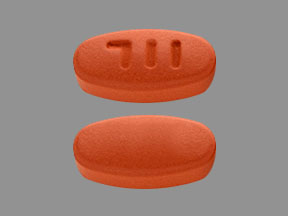
Mesalamine Dosage
Medically reviewed by Drugs.com. Last updated on Aug 14, 2023.
Applies to the following strengths: 250 mg; 400 mg; 800 mg; 4 g/60 mL; 500 mg; 0.375 g; 1.2 g; 1000 mg
Usual Adult Dose for:
Usual Pediatric Dose for:
Additional dosage information:
Usual Adult Dose for Ulcerative Colitis - Active
ORAL:
250 and 500 mg capsules: 1 g orally 4 times a day
Duration of therapy: Up to 8 weeks
400 mg tablets: 800 mg orally 3 times a day
Duration of therapy: 6 weeks
400 mg delayed release capsules: 800 mg orally 3 times a day
Duration of therapy: 6 weeks
800 mg delayed release tablets: 1600 mg orally 3 times a day
Duration of therapy: 6 weeks
1200 mg tablets: 2.4 to 4.8 g orally once a day with food
Uses: Treatment of mildly to moderately active ulcerative colitis and induction of remission of ulcerative colitis.
---
RECTAL:
Enema: 1 rectal installation (4 gm), once a day, preferably at bedtime
Duration of therapy: 6 weeks
Comments:
- Shake well before use.
- Retain for approximately 8 hours.
- Effects may be seen in 3 to 21 days.
- Therapy usually lasts 3 to 6 weeks, depending on symptoms and sigmoidoscopic findings.
Uses: Treatment of active mild to moderate distal ulcerative colitis, proctosigmoiditis, or proctitis.
Usual Adult Dose for Ulcerative Colitis - Maintenance
375 mg extended release capsules: 1.5 g (4 capsules) orally once a day in the morning
400 and 800 mg tablets and capsules: 1.6 g orally daily in divided doses
1200 mg tablets: 2.4 g (2 tablets) orally once a day with food
Comments:
- Do not co-administer 375 mg extended release capsules with antacids.
Use: Maintenance of remission of ulcerative colitis in adults.
Usual Adult Dose for Ulcerative Proctitis
Suppository:
1 suppository (1000 mg) rectally once a day at bedtime
Duration of therapy: 6 weeks
Comments:
- Retain suppository for 1 to 3 hours or longer, if possible.
- Therapy usually lasts 3 to 6 weeks, depending on symptoms and sigmoidoscopic findings.
Use: Treatment of mild to moderately active ulcerative proctitis.
---
Enema:
1 rectal installation (4 gm), once a day, preferably at bedtime
Duration of therapy: 6 weeks
Comments:
- Retain for approximately 8 hours.
- Effects may be seen in 3 to 21 days.
- Therapy usually lasts 3 to 6 weeks, depending on symptoms and sigmoidoscopic findings.
- Shake well before use.
Uses: Treatment of active mild to moderate proctosigmoiditis or proctitis.
Usual Pediatric Dose for Ulcerative Colitis - Active
400 mg tablets or capsules, dosing is weight based:
17 to less than 33 kg: 36 to 71 mg/kg/day, orally, divided into 2 doses a day
Maximum dose: 1.2 g/day
33 to less than 54 kg: 37 to 61 mg/kg/day, orally, divided into 2 doses a day
Maximum dose: 2 g/day
54 to 90 kg: 27 to 44 mg/kg/day, orally, divided into 2 doses a day
Maximum dose: 2.4 gm/day
Duration of therapy: 6 weeks
Use: Treatment of mildly to moderately active ulcerative colitis in patients 5 years of age or older (tablets) or 12 years of age and older (capsules).
Renal Dose Adjustments
Use with caution.
Liver Dose Adjustments
Use with caution.
Precautions
Safety and efficacy of oral formulations have not been established in patients younger than 5 years.
Safety and efficacy of rectal formulations have not been established in patients younger than 18 years.
Consult WARNINGS section for additional precautions.
Dialysis
Data not available
Other Comments
Administration advice:
- Do not crush, split, chew, or open tablets or capsules.
- Oral product may be taken with or without food.
- Two 400 mg capsules should not be substituted for on 800 mg delayed release capsule/tablet.
- Before prescribing, assess the patient's ability to swallow the capsules or tablets.
- If a dose of the suppository is missed, give as soon as possible unless it is almost time for the next dose. Do not double the dose.
- The manufacturer product information should be consulted for complete instructions.
Frequently asked questions
More about mesalamine
- Check interactions
- Compare alternatives
- Pricing & coupons
- Reviews (426)
- Drug images
- Side effects
- During pregnancy
- Drug class: 5-aminosalicylates
- Breastfeeding
Patient resources
- Mesalamine drug information
- Mesalamine rectal
- Mesalamine (Oral) (Advanced Reading)
- Mesalamine (Rectal) (Advanced Reading)
- Mesalamine Long-Acting Capsules (Apriso)
Other brands
Lialda, Pentasa, Apriso, Delzicol, ... +4 more
Professional resources
- Mesalamine monograph
- Mesalamine (FDA)
- Mesalamine Capsules (FDA)
- Mesalamine Controlled-Release Capsules (FDA)
- Mesalamine Delayed Release Tablets (FDA)
Other brands
Lialda, Pentasa, Apriso, Asacol, ... +5 more
Related treatment guides
Further information
Always consult your healthcare provider to ensure the information displayed on this page applies to your personal circumstances.