Consumer Information
Carenotes > Chronic Myeloid Leukemia (Discharge Care)

Chronic Myeloid Leukemia

Advertisement

WHAT YOU SHOULD KNOW:

  • Chronic myeloid leukemia (loo-KEE-mee-ah) is also called chronic myelogenous (mi-e-LOJ-e-nus) leukemia or CML. It is cancer of the bone marrow and blood cells. CML starts in the spongy red tissue inside your bones called bone marrow. The bone marrow makes stem cells. Stem cells become fully grown red blood cells (RBCs), white blood cells (WBCs) and platelets. Normally, stem cells grow to become blood cells in an orderly way and only as the body needs them.

  • With CML, certain stem cells that should become WBCs do not fully grow. They act a little like WBCs, but do not fight infection like a normal WBC should. CML cells live longer than mature (fully grown) WBCs. They crowd the bone marrow and prevent normal blood cells from growing and doing their jobs correctly. If you have CML, you will need to get treatment as soon as possible. The type of treatment you have will depend on a number of things. These include your age, test results, general health, and phase (stage) of CML.

AFTER YOU LEAVE:

Medicines:

  • Keep a list of your medicines: Keep a written list of the medicines you take, the amounts, and when and why you take them. Bring the list of your medicines or the pill bottles when you see your caregivers. Do not take any medicines, over-the-counter drugs, vitamins, herbs, or food supplements without first talking to caregivers.

  • Take your medicine as directed: Always take your medicine as directed by caregivers. Call your caregiver if you think your medicines are not helping. Do not quit taking your medicines until you discuss it with your caregiver. If you are having bad side effects from a CML treatment, tell your caregiver. Ask if there are ways to decrease the side effects.

  • Antibiotics: This medicine is given to fight or prevent infection caused by bacteria. If you are taking antibiotics, take them as ordered until they are all gone, even if you feel better.

  • Antidiarrheal medicine: This medicine is given to decrease the amount of diarrhea you are having. Some of these medicines coat the intestine (bowel) and make the BM less watery. Other antidiarrheal medicine works by slowing down how fast the intestine is moving.

  • Pain medicine: If you are taking pain medicine, especially as a shot or IV, you and your family should learn how to give it to you. Ask your caregiver to show you how to do this. Use enough medicine to stay comfortable. Do not worry about becoming addicted to the medicine.

  • Other medicines: Do not take any medicine that contains aspirin, acetaminophen, or ibuprofen. Read the label on the medicine bottle, and ask your caregiver before taking any medicine you bought at the store. If your caregiver has ordered a medicine called a kinase inhibitor, be sure that you do not take other medicines, including herbs or supplements, without first asking your caregiver.

Ask your caregiver when to return for a follow-up visit. Keep all appointments. Write down any questions you may have. This way you will remember to ask these questions during your next visit.

How should I take care of myself at home?

  • Activity: Rest as much as you need to. Match your activity to the amount of energy you have. Nap a couple of times during the day. Going to bed early and getting up late may also help.

  • Diet: It is important that you get good nutrition when you have cancer. Eat a variety of healthy foods. Eating healthy foods may help you feel better and have more energy. If you have trouble swallowing, you may be given foods that are soft or in liquid form. Ask your caregiver about any extra nutrition you may need, such as nutrition shakes or vitamins. Tell your caregiver if you have problems eating, or if you are getting sick to your stomach.

  • Drinking liquids: Men 19 years old and older should drink about 3.0 Liters of liquid each day (close to 13 eight-ounce cups). Women 19 years old and older should drink about 2.2 Liters of liquid each day (close to 9 eight-ounce cups). It is especially important to drink enough liquids if you are vomiting. Ask your caregiver how much liquid you should drink each day. For most people, healthy liquids to drink are water, juices, and milk. If you are used to drinking liquids that contain caffeine, such as coffee, these can be counted in your daily liquid amount.

What are the signs of an infection? It is easier to get infections when you have CML. Tell your caregiver if you have any of the following symptoms.

  • Sores, swelling, redness, or white patches in your mouth or throat.

  • Redness, pain, or hemorrhoids at your rectum (rear end).

  • Diarrhea (loose, runny, bowel movements).

  • Heat or pain in your eyes, ears, skin, joints, or stomach.

  • Pain or burning when you urinate, or bad smelling urine.

  • Coughing, trouble breathing, or changes in the color of your sputum (spit).

How can I keep from getting an infection?

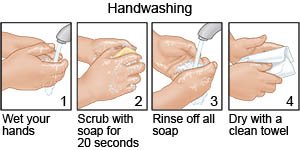
  • Wash your hands often, especially after you go to the bathroom. Wash your hands well before eating. Ask family and friends to also wash their hands.

  • Shower every day making sure to wash between folds of skin. If you are feeling dizzy, wait until it passes, and then take a bath or use a shower chair instead. Use an electric shaver to keep from nicking your skin when shaving.

  • Use a deodorant instead of an antiperspirant. Antiperspirants block sweat glands which can cause an infection.

  • Brush your teeth or rinse your mouth 2 to 3 times every day. It is best to do this after meals. Gently brush your teeth and gums using a brush with soft bristles. See your dentist for regular check-ups. Your dentist may need to speak to your doctor before the exam.

  • Change the water in your denture cup every day if you have dentures.

  • Change the water in any respiratory equipment every day, such as a humidifier.

  • There are germs in plant dirt and in flower vase water. Ask someone else to water and take care of your plants and flowers.

  • Clean your perineum (the area between your legs) each time you have a BM or urinate.

  • Stay away from people who have an infection, such as colds or the "flu". Also try to stay away from large groups of people. This will decrease your chance of getting sick. The medicines and treatments you are getting can decrease your ability to fight infection. You may need to get shots to keep from getting the flu and pneumonia. Check with your caregiver before getting vaccinations.

What are the signs of bleeding? It is easier to bleed inside and outside of your body when you have CML. Tell your caregiver if you have any of the following signs or symptoms:

  • Bleeding gums, or blood in your sputum (spit).

  • Blood in your bowel movements (stool).

  • Blurred vision, or blood spots in the whites of your eyes.

  • Dizziness.

  • Frequent nosebleeds.

  • Heart beating very fast.

  • Vomiting (throwing up) blood.

For information and support: You may feel scared, confused, and anxious because you have CML. You may blame yourself and think you have done something wrong. These feelings are common. Talk about them with your caregiver or with someone close to you. Ask your caregiver about support groups for people with cancer. Such a group can give you support and information. For more information call or write:

  • American Cancer Society
    Phone: 1-800-227-2345
    Web Address: http://www.cancer.org
  • National Cancer Institute
    Phone: 1-800-422-6237
    Web Address: http://www.cancer.gov
  • The Leukemia & Lymphoma Society Inc.
    1311 Mamaroneck Avenue
    White Plains, NY 10605
    Phone: 1-914-949-5213
    Phone: 1-800-955-4572
    Web Address: http://www.leukemia-lymphoma.org

CONTACT A CAREGIVER IF:

  • You have a fever (increased body temperature).

  • You think you have an infection (such as a cold or flu). You may have white patches in your mouth, chills, or look flushed. You may also have a sore throat, stomach pain, or a headache.

  • You have any bleeding from your mouth or nose.

  • You see blood in your BMs or urine, or burning when you go to the bathroom.

  • You are vomiting (throwing up) and cannot keep food or liquids down.

  • You cannot make it to your chemotherapy visit.

  • You are very sad and feel that you cannot cope with your illness.

  • You are having bad side effects from your CML medicine.

  • You have swelling around your eyes, legs, or other areas.

  • You have questions or concerns about CML, your care, or your medicine.

SEEK CARE IMMEDIATELY IF:

  • You have a headache, stiff neck, or have trouble seeing or thinking clearly.

  • You feel like your heart is racing or you are coughing up blood.

  • You have chest pain.

  • You have trouble breathing.

  • You are taking chemotherapy or have had chemotherapy in the last two weeks and have a fever.

Copyright © 2008 Thomson Healthcare Inc. All rights reserved. Information is for End User's use only and may not be sold, redistributed or otherwise used for commercial purposes.

The above information is an educational aid only. It is not intended as medical advice for individual conditions or treatments. Talk to your doctor, nurse or pharmacist before following any medical regimen to see if it is safe and effective for you.


MedNotes
Advertisement

(web4)