
Kidney Infection
Medically reviewed by Drugs.com. Last updated on Apr 2, 2024.
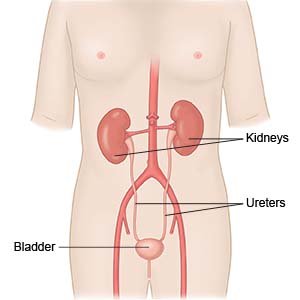
A kidney infection, or pyelonephritis, is a bacterial infection. The infection usually starts in your bladder or urethra and moves into your kidney. One or both kidneys may be infected.
 |
DISCHARGE INSTRUCTIONS:
Seek care immediately if:
- You have a fever and chills.
- You cannot stop vomiting.
- You have severe pain in your abdomen, lower back, or sides.
Contact your healthcare provider if:
- You continue to have a fever after you take antibiotics for 3 days.
- You have pain when you urinate, even after treatment.
- Your signs and symptoms return.
- You have questions or concerns about your condition or care.
Medicines:
You may need any of the following:
- Antibiotics treat your bacterial infection.
- Acetaminophen decreases pain and fever. It is available without a doctor's order. Ask how much to take and how often to take it. Follow directions. Read the labels of all other medicines you are using to see if they also contain acetaminophen, or ask your doctor or pharmacist. Acetaminophen can cause liver damage if not taken correctly.
- NSAIDs , such as ibuprofen, help decrease swelling, pain, and fever. This medicine is available with or without a doctor's order. NSAIDs can cause stomach bleeding or kidney problems in certain people. If you take blood thinner medicine, always ask if NSAIDs are safe for you. Always read the medicine label and follow directions. Do not give these medicines to children younger than 6 months without direction from a healthcare provider.
- Prescription pain medicine may be given. Ask how to take this medicine safely.
- Take your medicine as directed. Contact your healthcare provider if you think your medicine is not helping or if you have side effects. Tell your provider if you are allergic to any medicine. Keep a list of the medicines, vitamins, and herbs you take. Include the amounts, and when and why you take them. Bring the list or the pill bottles to follow-up visits. Carry your medicine list with you in case of an emergency.
Treatment options
The following list of medications are related to or used in the treatment of this condition.
Drink liquids as directed:
You may need to drink extra liquids to help flush your kidneys and urinary system. Water is the best liquid to drink. Ask your healthcare provider how much liquid to drink each day and which liquids are best for you.
Urinate as soon as you feel the urge:
This will help flush bacteria from your urinary system. Do not wait or hold your urine for too long.
Clean your genital area every day with soap and water:
Wipe from front to back after you urinate or have a bowel movement. Wear cotton underwear. Fabrics such as nylon and polyester can stay damp. This can increase your risk for infection. Urinate within 15 minutes after you have sex.
Follow up with your doctor as directed:
Write down your questions so you remember to ask them during your visits.
© Copyright Merative 2024 Information is for End User's use only and may not be sold, redistributed or otherwise used for commercial purposes.
The above information is an educational aid only. It is not intended as medical advice for individual conditions or treatments. Talk to your doctor, nurse or pharmacist before following any medical regimen to see if it is safe and effective for you.
Learn more about Kidney Infection
- Antibiotic Resistance: The Top 10 List
- Antibiotic Shortages: A Serious Safety Concern
- Antibiotics 101
- Antibiotics and Birth Control Pill Interactions
- Antibiotics For UTI Treatment - What Are My Options?
- Anticholinergic Drugs to Avoid in the Elderly
- Can You Drink Alcohol with Antibiotics?
- Common Side Effects from Antibiotics, and Allergies and Reactions
- Why Don’t Antibiotics Kill Viruses?
Treatment options
Care guides
- Kidney Infection
- Urinary Tract Infection in Children
- Urinary Tract Infection in Men
- Urinary Tract Infection in Women
Medicine.com guides (external)
Further information
Always consult your healthcare provider to ensure the information displayed on this page applies to your personal circumstances.
