
Urinary Tract Infection in Women
Medically reviewed by Drugs.com. Last updated on Apr 2, 2024.
What is a urinary tract infection (UTI)?
A UTI is caused by bacteria that get inside your urinary tract. Your urinary tract includes your kidneys, ureters, bladder, and urethra. A UTI is more common in your lower urinary tract, which includes your bladder and urethra.
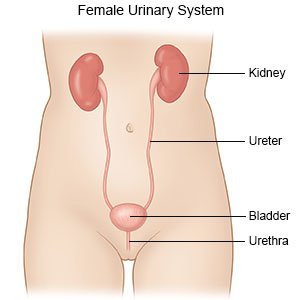 |
What increases my risk for a UTI?
- Older age
- A urinary catheter or self-catheterization
- Pregnancy
- Urinary tract problems, such as a narrowing, kidney stones, or inability to empty your bladder completely
- History of a UTI
- Sexual intercourse
- Menopause
- Diabetes or obesity
What are the signs and symptoms of a UTI?
- Urinating more often than usual, leaking urine, or waking from sleep to urinate
- Pain or burning when you urinate
- Pain or pressure in your lower abdomen and back
- Urine that smells bad
- Blood in your urine
How is a UTI diagnosed?
Your healthcare provider will ask about your signs and symptoms. Your provider may press on your abdomen, sides, and back to check if you feel pain. You may need any of the following:
- Urinalysis will show infection and your overall health.
- Urine cultures may show which germ is causing your infection.
- CT or MRI pictures may be used if you have UTIs often or do not respond to treatment. You may be given contrast liquid to help the pictures show up better. Tell a healthcare provider if you have ever had an allergic reaction to contrast liquid. Do not enter the MRI room with anything metal. Metal can cause serious injury. Tell a healthcare provider if you have any metal in or on your body.
How is a UTI treated?
- Antibiotics treat a bacterial infection. If you have UTIs often (called recurrent UTIs), you may be given antibiotics to take regularly. You will be given directions for when and how to use antibiotics. The goal is to prevent UTIs but not cause antibiotic resistance by using antibiotics too often.
- Medicines may be given to decrease pain and burning when you urinate. They will also help decrease the feeling that you need to urinate often. These medicines may make your urine orange or red.
Treatment options
The following list of medications are related to or used in the treatment of this condition.
What can I do to prevent a UTI?
- Talk to your healthcare provider about your birth control method. You may need to change your method if it is increasing your risk for UTIs.
- Empty your bladder often. Urinate and empty your bladder as soon as you feel the need. Do not hold your urine for long periods of time.
- Wipe from front to back after you urinate or have a bowel movement. This will help prevent germs from getting into your urinary tract through your urethra.
- Drink liquids as directed. Ask how much liquid to drink each day and which liquids are best for you. You may need to drink more liquids than usual to help flush out the bacteria. Do not drink alcohol, caffeine, or citrus juices. These can irritate your bladder and increase your symptoms. Your healthcare provider may recommend cranberry juice to help prevent a UTI.
- Urinate before and after you have sex. This can help flush out bacteria passed during sex.
- Do not douche or use feminine deodorants. These can change the chemical balance in your vagina.
- Change sanitary pads or tampons often. This will help prevent germs from getting into your urinary tract.
- Wear cotton underwear and clothes that are loose. Tight pants and nylon underwear can trap moisture and cause bacteria to grow.
- Vaginal estrogen may be recommended. This medicine helps prevent UTIs in women who have gone through menopause or are in peri-menopause.
- Do pelvic muscle exercises often. Pelvic muscle exercises may help you start and stop urinating. Strong pelvic muscles may help you empty your bladder easier. Squeeze these muscles tightly for 5 seconds like you are trying to hold back urine. Then relax for 5 seconds. Gradually work up to squeezing for 10 seconds. Do 3 sets of 15 repetitions a day, or as directed.
When should I seek immediate care?
- You are urinating very little or not at all.
- You have a high fever with shaking chills.
- You have side or back pain that gets worse.
When should I call my doctor?
- You have a fever.
- You do not feel better after 2 days of taking antibiotics.
- You have new symptoms, such as blood or pus in your urine.
- You are vomiting.
- You have questions or concerns about your condition or care.
Care Agreement
You have the right to help plan your care. Learn about your health condition and how it may be treated. Discuss treatment options with your healthcare providers to decide what care you want to receive. You always have the right to refuse treatment. The above information is an educational aid only. It is not intended as medical advice for individual conditions or treatments. Talk to your doctor, nurse or pharmacist before following any medical regimen to see if it is safe and effective for you.© Copyright Merative 2024 Information is for End User's use only and may not be sold, redistributed or otherwise used for commercial purposes.
Learn more about Urinary Tract Infection
- Antibiotic Resistance: The Top 10 List
- Antibiotic Shortages: A Serious Safety Concern
- Antibiotics 101
- Antibiotics and Birth Control Pill Interactions
- Antibiotics For UTI Treatment - What Are My Options?
- Anticholinergic Drugs to Avoid in the Elderly
- Can You Drink Alcohol with Antibiotics?
- Common Side Effects from Antibiotics, and Allergies and Reactions
- Why Don’t Antibiotics Kill Viruses?
Treatment options
Care guides
- Interstitial Cystitis
- Kidney Infection
- Nonspecific Urethritis in Men
- Urinary Tract Infection in Children
- Urinary Tract Infection in Men
Symptoms and treatments
Medicine.com guides (external)
Further information
Always consult your healthcare provider to ensure the information displayed on this page applies to your personal circumstances.
