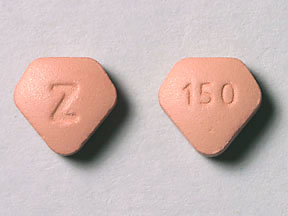
Zantac Side Effects
Generic name: ranitidine
Medically reviewed by Drugs.com. Last updated on Apr 29, 2024.
Note: This document provides detailed information about Zantac Side Effects associated with ranitidine. Some dosage forms listed on this page may not apply specifically to the brand name Zantac.
Applies to ranitidine: oral capsule, oral suspension reconstituted, oral syrup, oral tablet.
Other dosage forms:
Serious side effects of Zantac
WARNING/CAUTION: Even though it may be rare, some people may have very bad and sometimes deadly side effects when taking a drug. Tell your doctor or get medical help right away if you have any of the following signs or symptoms that may be related to a very bad side effect:
- Signs of an allergic reaction, like rash; hives; itching; red, swollen, blistered, or peeling skin with or without fever; wheezing; tightness in the chest or throat; trouble breathing, swallowing, or talking; unusual hoarseness; or swelling of the mouth, face, lips, tongue, or throat.
- Signs of liver problems like dark urine, feeling tired, not hungry, upset stomach or stomach pain, light-colored stools, throwing up, or yellow skin or eyes.
Other side effects of Zantac
All drugs may cause side effects. However, many people have no side effects or only have minor side effects. Call your doctor or get medical help if any of these side effects or any other side effects bother you or do not go away:
- Headache.
- Constipation, diarrhea, stomach pain, upset stomach, or throwing up.
These are not all of the side effects that may occur. If you have questions about side effects, call your doctor. Call your doctor for medical advice about side effects.
You may report side effects to the FDA at 1-800-332-1088. You may also report side effects at https://www.fda.gov/medwatch.
For healthcare professionals
Applies to ranitidine: compounding powder, injectable solution, intravenous solution, oral capsule, oral granule effervescent, oral syrup, oral tablet, oral tablet effervescent.
General
The most commonly reported side effect for IM administration was injection site pain, and the most commonly reported side effects with IV administration were localized pain and burning.[Ref]
Gastrointestinal
- Uncommon (0.1% to 1%): Abdominal discomfort/pain, constipation, nausea, vomiting
- Very rare (less than 0.01%): Acute pancreatitis, diarrhea[Ref]
Abdominal pain, constipation, and nausea tended to improve with continued treatment.[Ref]
Cardiovascular
- Rare (0.01% to 0.1%): Hypotension, chest pain, arrhythmia, bradycardia, atrioventricular block, tachycardia, premature ventricular beats
- Very rare (less than 0.01%): Asystole, vasculitis[Ref]
Bradycardia, atrioventricular block, tachycardia, and asystole have occurred in H2 receptor antagonists.[Ref]
Psychiatric
- Rare (0.01% to 0.1%): Insomnia, reversible mental confusion, agitation, depression, hallucinations
- Frequency not reported: Loss of libido[Ref]
Nervous system
- Rare (0.01% to 0.1%): Dizziness, somnolence, vertigo, reversible involuntary movement disorders
- Very rare (less than 0.01%): Headache/severe headache[Ref]
Headache may be related to administration of treatment.[Ref]
Dermatologic
- Rare (0.01% to 0.1%): Urticaria, angioneurotic edema, skin rash
- Very rare (less than 0.01%): Erythema multiforme, alopecia[Ref]
Musculoskeletal
- Very rare (less than 0.01%): Musculoskeletal symptoms, arthralgia, myalgia[Ref]
Hepatic
- Rare (0.01% to 0.1%): Transient and reversible changes in liver function tests, increased ALT levels
- Very rare (less than 0.01%): Hepatocellular/hepatocanalicular/mixed hepatitis with/without jaundice[Ref]
Hepatitis with/without jaundice were usually reversible.
ALT levels increased to at least 2 times the pretreatment levels in patients receiving high IV doses for at least 5 days.[Ref]
Other
- Rare (0.01% to 0.1%): Fever, malaise
- Frequency not reported: Death[Ref]
Hypersensitivity
- Rare (0.01% to 0.1%): Hypersensitivity reactions
- Very rare (less than 0.01%): Anaphylactic shock/anaphylaxis[Ref]
Anaphylactic shock occurred after administration of a single dose.[Ref]
Renal
- Rare (0.01% to 0.1%): Elevation in serum creatinine
- Very rare (less than 0.01%): Acute interstitial nephritis[Ref]
Elevation in serum creatinine was usually slight, and typically normalized with continued treatment.[Ref]
Respiratory
- Rare (0.01% to 0.1%): Bronchospasm
- Frequency not reported: Dyspnea, pneumonia[Ref]
Ocular
- Rare (0.01% to 0.1%): Reversible blurred vision[Ref]
Hematologic
- Very rare (less than 0.01%): Blood count changes, leukopenia, thrombocytopenia, granulocytopenia, agranulocytosis, pancytopenia, marrow hypoplasia/aplasia
- Frequency not reported: Aplastic anemia, immune hemolytic anemia/acquired immune hemolytic anemia, eosinophilia[Ref]
Leukopenia, granulocytopenia, and thrombocytopenia were usually reversible.[Ref]
Genitourinary
Endocrine
- Very rare (less than 0.01%): Gynecomastia[Ref]
Metabolic
- Postmarketing reports: Acute porphyria[Ref]
Local
- Frequency not reported: Injection site pain, transient localized burning or itching[Ref]
References
1. (2001) "Product Information. Zantac (ranitidine)." Glaxo Wellcome
2. (2002) "Product Information. Zantac 75 (ranitidine)." Pfizer U.S. Pharmaceuticals
3. Cerner Multum, Inc. "UK Summary of Product Characteristics."
4. Cerner Multum, Inc. "Australian Product Information."
More about Zantac (ranitidine)
- Check interactions
- Compare alternatives
- Reviews (83)
- Drug images
- Latest FDA alerts (18)
- Dosage information
- Patient tips
- During pregnancy
- Generic availability
- Support group
- Drug class: H2 antagonists
- Breastfeeding
Patient resources
- Zantac drug information
- Zantac (Ranitidine Injection)
- Zantac (Ranitidine Syrup)
- Zantac (Ranitidine Tablets and Capsules)
Professional resources
Related treatment guides
Further information
Zantac side effects can vary depending on the individual. Always consult your healthcare provider to ensure the information displayed on this page applies to your personal circumstances.
Some side effects may not be reported. You may report them to the FDA.