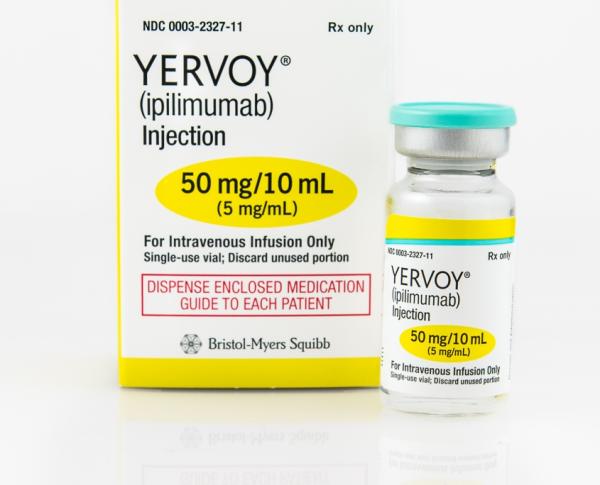
Yervoy Side Effects
Generic name: ipilimumab
Note: This document provides detailed information about Yervoy Side Effects associated with ipilimumab. Some dosage forms listed on this page may not apply specifically to the brand name Yervoy.
Applies to ipilimumab: intravenous solution.
Serious side effects of Yervoy
Along with its needed effects, ipilimumab (the active ingredient contained in Yervoy) may cause some unwanted effects. Although not all of these side effects may occur, if they do occur they may need medical attention.
Check with your doctor or nurse immediately if any of the following side effects occur while taking ipilimumab:
More common
- bloody, black, or tarry stools
- bone pain
- chest pain or tightness
- constipation
- cough
- depressed mood
- diarrhea
- dry skin and hair
- feeling cold
- fever
- hair loss
- heartburn
- hoarseness or husky voice
- indigestion
- itching, skin rash
- muscle cramps
- nausea
- pain in the arms or legs
- severe stomach pain, cramping, or burning
- slowed heartbeat
- sneezing
- sore throat
- trouble breathing
- unusual tiredness or weakness
- vomiting
- vomiting of material that looks like coffee grounds, severe and continuing
- watery or bloody diarrhea
Less common
- blistering, crusting, irritation, itching, or reddening of the skin
- bloody or cloudy urine
- blurred vision or other changes in vision
- burning, dry, or itching eyes
- burning, tingling, numbness or pain in the hands, arms, feet, or legs
- chills
- clay-colored stools
- cracked, dry, or scaly skin
- dark urine
- darkening of the skin
- decreased appetite
- decreased frequency or amount of urine
- difficulty with breathing, chewing, swallowing, or talking
- dizziness
- double vision
- drooping eyelids
- drowsiness
- eye discharge or excessive tearing
- eye pain or sensitivity to light
- fainting
- headache, possibly severe
- hives or welts
- loss of appetite
- mental depression
- muscle weakness
- pain, itching, burning, swelling, bleeding, or a lump under the skin where the needle was placed
- painful or difficult urination
- redness, pain, or swelling of the eye, eyelid, or inner lining of the eyelid
- sensation of pins and needles
- severe tiredness
- sores, ulcers, or white spots on the lips or in the mouth
- stabbing pain
- stomach tenderness
- swelling of the face, feet, or lower legs
- swollen glands
- unusual bleeding or bruising
- unusual weight gain
- yellow eyes or skin
Rare
- anxiety
- bloating
- blue or pale skin
- chest pain, possibly moving to the left arm, neck, or shoulder
- confusion
- difficulty with moving
- fast heartbeat
- general feeling of discomfort or illness
- increased thirst
- lower back or side pain
- muscle pain, stiffness, or weakness
- pain or burning in the throat
- pain, swelling, or redness in the joints
- pains in the stomach or side, possibly radiating to the back
- skin irritation or rash, including rash that looks like psoriasis
- sores, welts, or blisters on the skin
- stiff neck or back
Incidence not known
- back, leg, or stomach pains
- blistering, peeling, or loosening of the skin
- bleeding gums
- general body swelling
- inability to move the arms and legs
- joint or muscle pain
- nosebleeds
- red irritated eyes
- red skin lesions, often with a purple center
- throbbing pain
Other side effects of Yervoy
Some side effects of ipilimumab may occur that usually do not need medical attention. These side effects may go away during treatment as your body adjusts to the medicine. Also, your health care professional may be able to tell you about ways to prevent or reduce some of these side effects.
Check with your health care professional if any of the following side effects continue or are bothersome or if you have any questions about them:
More common
- headache
- swelling or inflammation of the mouth
- trouble sleeping
- weight loss
For healthcare professionals
Applies to ipilimumab: intravenous solution.
General
The most common adverse reactions reported with this drug as a single agent were fatigue, diarrhea, pruritus, rash, decreased appetite, nausea, vomiting, abdominal pain, cough, headache, pyrexia, insomnia, weight loss, and colitis.
The most common adverse reactions reported with this drug in combination with nivolumab were fatigue, diarrhea, rash, pruritus, nausea, musculoskeletal pain, pyrexia, cough, decreased appetite, vomiting, abdominal pain, dyspnea, upper respiratory tract infection, arthralgia, headache, increased transaminases, hypothyroidism, constipation, decreased weight, and dizziness.
The most common adverse reactions with this drug in combination with nivolumab and platinum-doublet chemotherapy were fatigue, musculoskeletal pain, nausea, diarrhea, rash, decreased appetite, constipation, and pruritus.[Ref]
Cardiovascular
- Common (1% to 10%): Hypertension (includes hypertension, increased blood pressure), hypotension, flushing, hematoma, venous thrombosis, thrombosis, hemorrhage, lymphedema, arrhythmia (including ventricular arrhythmia), atrial fibrillation, cardiac failure, hot flush, tachycardia
- Uncommon (0.1% to 1%): Myocarditis, bradycardia, vasculitis, angiopathy, peripheral ischemia, orthostatic hypotension
- Rare (0.01% to 0.1%): Cardiomyopathy, pericardial effusion (pericarditis), temporal arteritis, Raynaud's phenomenon
- Frequency not reported: Pericarditis, acute heart failure, shock, pericardial disorders (includes pericarditis, pericardial effusion, cardiac tamponade, Dressler's syndrome)
Dermatologic
- Very common (10% or more): Rash (includes pustular rash, dermatitis, acneiform dermatitis, allergic dermatitis, atopic dermatitis, bullous dermatitis, exfoliative dermatitis, psoriasiform dermatitis, drug eruption, exfoliative rash, erythematous rash, follicular rash, generalized rash, macular rash, maculopapular rash, morbilliform rash, papular rash, papulosquamous rash, pruritic rash, fixed-drug eruption, autoimmune dermatitis, contact dermatitis, granulomatous dermatitis, dyshidrotic eczema, eczema, nodular rash, rash, toxic skin eruption, acne, generalized exfoliative rash, keratoderma blenorrhagica, skin exfoliation, skin reaction, skin toxicity, Stevens-Johnson syndrome, urticaria, pemphigoid; up to 53%), pruritus (includes pruritus, generalized pruritus, allergic pruritus; up to 53%), immune-related skin adverse reactions (up to 42%), immune-mediated rash (up to 28%), dry skin (up to 11%), alopecia (up to 11%)
- Common (1% to 10%): Vitiligo, urticaria, erythema, night sweats, dermatitis, eczema, skin hypopigmentation, cellulitis, contusion, excoriation
- Uncommon (0.1% to 1%): Toxic epidermal necrolysis, Stevens-Johnson syndrome, psoriasis, erythema multiforme, leukocytoclastic vasculitis, skin exfoliation, hair color changes
- Frequency not reported: Hypersensitivity vasculitis, palmar-plantar erythrodysesthesia syndrome, pemphigoid, erythema nodosum
- Postmarketing reports: Drug reaction with eosinophilia and systemic symptoms (DRESS syndrome)
Endocrine
- Very common (10% or more): Increased thyroid stimulating hormone (TSH; up to 31%), immune-mediated endocrinopathies (up to 28%), hypothyroidism (includes autoimmune thyroiditis, increased blood TSH, hypothyroidism, primary hypothyroidism, thyroiditis, decreased free triiodothyronine [T3], autoimmune hypothyroidism; up to 20%), adrenal insufficiency (up to 18%), hyperthyroidism (includes decreased blood TSH, hyperthyroidism, increased free T3; up to 12%)
- Common (1% to 10%): Hypophysitis, thyroiditis, decreased blood corticotrophin, hypopituitarism (including hypophysitis), immune-related endocrine adverse reactions
- Uncommon (0.1% to 1%): Hypoparathyroidism, secondary adrenocortical insufficiency, hypogonadism, decreased blood cortisol, decreased blood testosterone
- Rare (0.01% to 0.1%): Hyperpituitarism, autoimmune thyroiditis, decreased blood TSH, decreased thyroxine, abnormal blood prolactin
- Frequency not reported: Decreased blood gonadotrophin, thyroid dysfunction
Gastrointestinal
- Very common (10% or more): Diarrhea (up to 54%), nausea (up to 44%), increased lipase (up to 51%), increased amylase (up to 39%), vomiting (up to 31%), diarrhea/colitis (includes colitis, microscopic colitis, ulcerative colitis, diarrhea, enteritis, infectious enteritis, enterocolitis, infectious enterocolitis, viral enterocolitis; up to 31%), immune-mediated colitis (up to 31%), abdominal pain (includes upper abdominal pain, lower abdominal pain, abdominal discomfort, abdominal pain, abdominal tenderness, gastrointestinal pain; up to 30%), immune-related gastrointestinal adverse reactions (up to 28%), constipation (up to 21%), colitis (up to 16%), ascites (up to 14%), dry mouth (up to 12%), dyspepsia (up to 12%), dysphagia (up to 12%), stomatitis (including aphthous ulcer, mouth ulceration, mucosal inflammation; up to 11%)
- Common (1% to 10%): Pancreatitis, esophageal varices hemorrhage, gastrointestinal hemorrhage, retching, gastroenteritis, oral candidiasis, large intestine perforation, gastroesophageal reflux disease, mucosal inflammation, gastritis
- Uncommon (0.1% to 1%): Intestinal perforation, enterocolitis, autoimmune pancreatitis, infectious peritonitis, duodenitis, gastrointestinal perforation, peritonitis, diverticulitis, gastric ulcer, large intestinal ulcer, esophagitis, ileus
- Rare (0.01% to 0.1%): Proctitis
Genitourinary
- Common (1% to 10%): Urinary tract infection, hematuria
- Uncommon (0.1% to 1%): Amenorrhea, noninfective cystitis
- Rare (0.01% to 0.1%): Proteinuria
Hematologic
- Very common (10% or more): Anemia (includes hemolytic anemia, autoimmune anemia, iron-deficiency anemia, decreased hemoglobin; up to 70%), lymphopenia (up to 53%), neutropenia (up to 43%), leukopenia (up to 40%), thrombocytopenia (up to 34%), decreased hemoglobin (up to 25%)
- Common (1% to 10%): Cytopenias, eosinophilia, febrile neutropenia, lymphadenopathy
- Uncommon (0.1% to 1%): Hemolytic anemia
- Rare (0.01% to 0.1%): Polycythemia
- Frequency not reported: Aplastic anemia, lymphocytosis
Hepatic
- Very common (10% or more): Increased ALT (up to 66%), increased AST (up to 66%), increased bilirubin (up to 55%), hepatitis C virus (HCV) virologic breakthrough (up to 50%), hepatitis (includes increased ALT, increased AST, autoimmune hepatitis, increased blood bilirubin, increased hepatic enzyme, hepatic failure, abnormal hepatic function, hepatitis, hepatitis E, hepatocellular injury, hepatotoxicity, hyperbilirubinemia, immune-mediated hepatitis, abnormal liver function test, increased liver function test, increased transaminases; up to 21%), immune-mediated hepatitis (up to 15%), hepatitis B virus (HBV) virologic breakthrough (up to 14%)
- Common (1% to 10%): Abnormal hepatic function, hepatic events, infectious hepatitis, hepatic failure, hepatomegaly, jaundice, immune-related hepatic adverse reactions
- Uncommon (0.1% to 1%): Autoimmune hepatitis, increased GGT
- Frequency not reported: Hepatic toxicity, abnormal liver function test
In patients who received this drug with nivolumab for hepatocellular carcinoma, virologic breakthrough occurred in 4 of 28 (14%) patients and 2 of 4 (50%) patients with active HBV or HCV at baseline, respectively.
Hypersensitivity
- Very common (10% or more): Hypersensitivity/infusion reactions (up to 12%)
- Common (1% to 10%): Hypersensitivity, contrast media allergy, seasonal allergy
- Very rare (less than 0.01%): Anaphylactic reaction (shock)
Immunologic
- Very common (10% or more): Any immune-related adverse reactions (up to 60%)
- Common (1% to 10%): Positive for treatment-emergent binding antibodies against this drug, anti-drug antibodies, neutralizing antibodies against this drug
- Uncommon (0.1% to 1%): Sarcoidosis, positive antinuclear antibody
- Frequency not reported: Immune-related adverse reactions with fatal outcomes (includes gastrointestinal perforation, colitis, hepatic failure, toxic epidermal necrolysis, Guillain-Barre syndrome, multi-organ failure), cytokine release syndrome
- Postmarketing reports: Hemophagocytic lymphohistiocytosis, graft-versus-host disease, solid organ transplant rejection
This drug was most commonly associated with immune-related adverse reactions (i.e., adverse reactions resulting from increased/excessive immune activity). Most of these adverse reactions (including severe reactions) resolved after appropriate medical therapy was started or this drug was withdrawn; some immune-related adverse reactions were permanent (e.g., thyroid dysfunction, diabetes mellitus). Life-threatening or fatal immune-related adverse reactions that occurred with this drug (as monotherapy or in combination with nivolumab) have included colitis, intestinal perforation, hepatitis, pneumonitis, hypophysitis, adrenal insufficiency, toxic epidermal necrolysis, myocarditis, encephalitis, myasthenia gravis, and neuropathy.
Local
- Very common (10% or more): Injection site reaction (up to 50%)
- Common (1% to 10%): Vaccination site reaction
Metabolic
- Very common (10% or more): Hyperglycemia (up to 53%), hyponatremia (up to 49%), hypocalcemia (up to 47%), decreased appetite (up to 35%), hyperkalemia (up to 30%), hypomagnesemia (up to 29%), hypokalemia (up to 26%), hypercalcemia (up to 15%), hypoglycemia (up to 15.2%)
- Common (1% to 10%): Diabetes mellitus, dehydration, hypoalbuminemia, hypermagnesemia, hypernatremia, hypophosphatemia
- Uncommon (0.1% to 1%): Diabetic ketoacidosis, metabolic acidosis, tumor lysis syndrome
- Rare (0.01% to 0.1%): Alkalosis, type 1 diabetes mellitus (including diabetic ketoacidosis)
Musculoskeletal
- Very common (10% or more): Musculoskeletal pain (includes back pain, bone pain, musculoskeletal chest pain, musculoskeletal discomfort, musculoskeletal pain, myalgia, neck pain, pain in extremity, spinal pain, flank pain, muscle spasms, musculoskeletal disorder, osteitis, musculoskeletal stiffness, noncardiac chest pain, arthralgia, arthritis, arthropathy, joint effusion, psoriatic arthropathy, synovitis, involuntary muscle contractions, muscle twitching, polymyalgia rheumatica; up to 41%), arthralgia (up to 23%)
- Common (1% to 10%): Increased blood creatine phosphokinase, myalgia, muscle spasms, arthritis, muscular weakness
- Uncommon (0.1% to 1%): Myopathy, Sjogren's syndrome, spondyloarthropathy, myositis (including polymyositis), necrotizing myositis, rhabdomyolysis, polymyalgia rheumatica
- Rare (0.01% to 0.1%): Polymyositis
Nervous system
- Very common (10% or more): Headache (up to 33%), dizziness (includes dizziness, vertigo, positional vertigo; up to 20%)
- Common (1% to 10%): Autoimmune neuropathy (including facial nerve paresis, abducens nerve paresis), lethargy, tremor, brain edema, cranial neuropathy, peripheral neuropathy, aphasia, immune-related neurological adverse reactions, peripheral sensory neuropathy
- Uncommon (0.1% to 1%): Guillain-Barre syndrome, polyneuropathy, neuritis, peroneal nerve palsy, encephalitis, ataxia, dysarthria, aseptic meningitis, myasthenia gravis, autoimmune central neuropathy (encephalitis), syncope, myoclonus
- Rare (0.01% to 0.1%): Meningism, neurosensory hypoacusis, myelitis
- Frequency not reported: Meningitis, demyelination, myasthenic syndrome/myasthenia gravis, nerve paresis, motor dysfunction, autoimmune encephalitis, myasthenia gravis-like syndrome
Ocular
- Common (1% to 10%): Blurred vision, conjunctivitis, uveitis, eye pain, dry eye
- Uncommon (0.1% to 1%): Episcleritis, vitreous hemorrhage, iritis, eye edema, blepharitis, reduced visual acuity, foreign body sensation in eyes
- Rare (0.01% to 0.1%): Scleritis, ocular myositis
- Frequency not reported: Vogt-Koyanagi-Harada-like syndrome, orbital myositis, retinal detachment
- Postmarketing reports: Serous retinal detachment, Vogt-Koyanagi-Harada syndrome
Oncologic
- Common (1% to 10%): Tumor pain, cancer pain
- Uncommon (0.1% to 1%): Paraneoplastic syndrome
- Frequency not reported: Histiocytic necrotizing lymphadenitis (Kikuchi lymphadenitis)
Other
- Very common (10% or more): Fatigue (includes asthenia, fatigue, malaise; up to 62%), increased alkaline phosphatase (up to 41%), pyrexia (includes pyrexia, tumor-associated fever; up to 40%), decreased weight (up to 32%), malaise (up to 18%), edema (includes peripheral edema, peripheral swelling, eyelid edema, face edema, generalized edema, localized edema, edema, periorbital edema; up to 17%), influenza-like illness (up to 14%), infusion-related reactions (up to 12%)
- Common (1% to 10%): Chills, chest pain, sepsis, asthenia, pain
- Uncommon (0.1% to 1%): Septic shock, multi-organ failure, systemic inflammatory response syndrome
- Frequency not reported: Infusion reaction
Psychiatric
- Very common (10% or more): Insomnia (up to 18%)
- Common (1% to 10%): Depression, anxiety, decreased libido, confusional state
- Uncommon (0.1% to 1%): Mental status change
Renal
- Very common (10% or more): Increased creatinine (up to 42.7%)
- Common (1% to 10%): Immune-mediated nephritis with renal dysfunction, acute kidney injury, renal failure, glomerulonephritis
- Uncommon (0.1% to 1%): Tubulointerstitial nephritis, autoimmune nephritis, renal tubular acidosis, nephritis
- Frequency not reported: Acute renal failure
Respiratory
- Very common (10% or more): Cough (includes cough, productive cough, upper-airway cough syndrome; up to 37%), dyspnea (includes dyspnea, exertional dyspnea, dyspnea at rest; up to 27%), upper respiratory tract infection (includes upper respiratory tract infection, nasopharyngitis, pharyngitis, rhinitis; up to 23%), pneumonia (includes lower respiratory tract infection, bacterial lower respiratory tract infection, lung infection, pneumonia, adenoviral pneumonia, aspiration pneumonia, bacterial pneumonia, Klebsiella pneumonia, influenzal pneumonia, viral pneumonia, atypical pneumonia, organizing pneumonia, Pneumocystis jirovecii pneumonia, pseudomonal pneumonia; up to 14%)
- Common (1% to 10%): Immune-mediated pneumonitis, pneumonitis, aspiration pneumonia, pleural effusion, pulmonary embolism, respiratory failure, influenza, lower respiratory tract infection, oropharyngeal pain, wheezing, nasal disorder, sinus congestion, respiratory tract infection, bronchitis
- Uncommon (0.1% to 1%): Lung infiltration, acute respiratory distress syndrome, pulmonary edema, allergic rhinitis
- Frequency not reported: Massive hemoptysis (in the setting of thrombocytopenia), interstitial lung disease
References
1. (2023) "Product Information. Yervoy (ipilimumab)." Bristol-Myers Squibb, SUPPL-129
2. (2021) "Product Information. Yervoy (ipilimumab)." Bristol-Myers Squibb Australia Pty Ltd, V15.0
3. (2022) "Product Information. Yervoy (ipilimumab)." Bristol-Myers Squibb Pharmaceuticals Ltd
Frequently asked questions
More about Yervoy (ipilimumab)
- Check interactions
- Compare alternatives
- Pricing & coupons
- Reviews (2)
- Drug images
- Dosage information
- During pregnancy
- FDA approval history
- Drug class: anti-CTLA-4 monoclonal antibodies
- Breastfeeding
- En español
Patient resources
Professional resources
Related treatment guides
Further information
Yervoy side effects can vary depending on the individual. Always consult your healthcare provider to ensure the information displayed on this page applies to your personal circumstances.
Some side effects may not be reported. You may report them to the FDA.