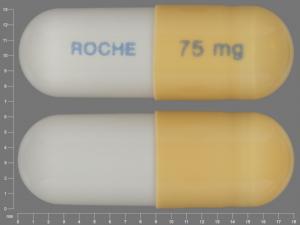
Tamiflu Side Effects
Generic name: oseltamivir
Medically reviewed by Drugs.com. Last updated on Sep 24, 2024.
Note: This document provides detailed information about Tamiflu Side Effects associated with oseltamivir. Some dosage forms listed on this page may not apply specifically to the brand name Tamiflu.
Applies to oseltamivir: oral capsule, oral powder for suspension.
Precautions
It is very important that your doctor check your or your child's progress after treatment. This is to make sure that the infection is cleared up completely, and to allow your doctor to check for any unwanted effects.
This medicine is not a substitute for an annual flu shot. It also will not keep you or your child from getting a bacterial infection that starts with flu-like symptoms.
This medicine may cause a serious type of allergic reaction called anaphylaxis. Anaphylaxis can be life-threatening and requires immediate medical attention. Call your doctor right away if you have a rash, itching, hoarseness, trouble breathing, trouble swallowing, or any swelling of your hands, face, or mouth while you or your child are using this medicine.
Serious skin reactions can occur with this medicine. Stop using this medicine and check with your doctor right away if you have blistering, peeling, or loosening of the skin, red skin lesions, severe acne or skin rash, sores or ulcers on the skin, or fever or chills while you or your child are using this medicine.
Oseltamivir may cause some people, especially children and teenagers, to be agitated, irritable, or display other abnormal behaviors, which may result in injury. If you, your child, or your caregiver notice any of these side effects, tell your doctor or your child's doctor right away.
Make sure your doctor knows if you or your child plan to get the live nasal mist flu vaccine before you start using this medicine. You should not receive the vaccine within 2 weeks before or 48 hours after using this medicine.
If your or your child's symptoms do not improve after you or your child finish taking the medicine, or if they become worse, check with your doctor.
Common side effects of Tamiflu
Some side effects of oseltamivir may occur that usually do not need medical attention. These side effects may go away during treatment as your body adjusts to the medicine. Also, your health care professional may be able to tell you about ways to prevent or reduce some of these side effects.
Check with your health care professional if any of the following side effects continue or are bothersome or if you have any questions about them:
More common side effects
- diarrhea
- nausea
- vomiting
Less common side effects
- abdominal or stomach pain
- bloody nose or unexplained nosebleeds (occurs mainly in children)
- burning, dry, or itching eyes (mainly in children)
- dizziness
- ear disorder (occurs mainly in children)
- excessive tearing of the eyes (mainly in children)
- redness, pain, or swelling of the eye or eyelid (mainly in children)
- trouble with sleeping
Rare side effects
- pale skin
- troubled breathing
- unusual bleeding or bruising
Incidence not known
- blurred vision
- cracked, dry, or scaly skin
- dry mouth
- flushed, dry skin
- mood or mental changes
- skin rash that is encrusted, scaly, and oozing
Serious side effects of Tamiflu
Along with its needed effects, oseltamivir (the active ingredient contained in Tamiflu) may cause some unwanted effects. Although not all of these side effects may occur, if they do occur they may need medical attention.
Check with your doctor immediately if any of the following side effects occur while taking oseltamivir:
Less common side effects
- phlegm-producing cough
- wheezing
Rare side effects
- abdominal or stomach cramps or tenderness
- arm, back, or jaw pain
- bloating
- chest pain or discomfort
- diarrhea, watery and severe, which may also be bloody
- drooling
- facial swelling
- fast or irregular heartbeat
- hoarseness
- increased thirst
- pain
- shortness of breath
- unusual weight loss
Incidence not known
- blistering, peeling, or loosening of the skin
- convulsions (seizures)
- dark urine
- difficulty with swallowing
- fainting
- fast, slow, or irregular heartbeat
- hives or welts
- itching, puffiness, or swelling of the eyelids or around the eyes, face, lips, or tongue
- joint or muscle pain
- light-colored stools
- loss of bladder control
- loss of consciousness
- muscle spasm or jerking of all extremities
- red skin lesions, often with a purple center
- red, irritated eyes
- skin rash or itching over the entire body
- sores, ulcers, or white spots in the mouth or on the lips
- sweating
- upper right abdominal or stomach pain
- yellow eyes and skin
See also:
For healthcare professionals
Applies to oseltamivir: oral capsule, oral powder for reconstitution.
General adverse events
The most common side effects were nausea and vomiting.
The most common side effects reported with this drug during studies for the treatment of influenza were nausea, vomiting, and headache; the most common side effects reported in prophylaxis studies were nausea, vomiting, headache, and pain. Most side effects were reported on a single occasion, occurred on the first or second day of therapy, and resolved spontaneously within 1 to 2 days.[Ref]
Nervous system
- Very common (10% or more): Headache (up to 17%)
- Common (1% to 10%): Dizziness, vertigo
- Frequency not reported: Drowsiness
- Postmarketing reports: Seizure/convulsion[Ref]
Side effects with similar or higher incidence among placebo patients included dizziness and vertigo.[Ref]
Gastrointestinal
- Very common (10% or more): Nausea
- Common (1% to 10%): Vomiting, diarrhea, abdominal pain, upper abdominal pain, dyspepsia
- Frequency not reported: Pseudomembranous colitis
- Postmarketing reports: Gastrointestinal bleeding, hemorrhagic colitis[Ref]
Side effects with similar or higher incidence among placebo patients included diarrhea, abdominal pain, upper abdominal pain, and dyspepsia.[Ref]
Respiratory
- Common (1% to 10%): Nasal congestion, cough, sore throat, bronchitis, nasopharyngitis, upper respiratory tract infections, influenza, rhinorrhea, sinusitis
- Frequency not reported: Pneumonia, peritonsillar abscess, congestion, rhinitis, dry sore throat, epistaxis, asthma, aggravated asthma[Ref]
Side effects with similar or higher incidence among placebo patients included cough, nasal congestion, sore throat, rhinorrhea, bronchitis, sinusitis, nasopharyngitis, upper respiratory tract infections, and influenza.[Ref]
Psychiatric
- Common (1% to 10%): Insomnia
- Frequency not reported: Mania
- Postmarketing reports: Abnormal behavior, delirium, altered level of consciousness, confusion, delusions, hallucinations, agitation, anxiety, nightmares, self-injury[Ref]
Influenza can be associated with various neurologic and behavioral symptoms (including hallucinations, delirium, abnormal behavior), with fatal outcomes in some cases; such events may occur with encephalitis or encephalopathy but can occur without obvious severe disease. There are postmarketing reports (mostly in Japan) of delirium and abnormal behavior leading to injury, with fatal outcomes in some cases, in influenza patients using this drug. Although frequency is unknown, based on usage, these events appear uncommon. These events were primarily reported in pediatric patients, often with abrupt onset and rapid resolution. The contribution of this drug to such events has not been established.
Side effects with similar or higher incidence among placebo patients included insomnia.[Ref]
Other
- Common (1% to 10%): Fatigue, pain, pyrexia, influenza-like illness, pain in limb, otitis media, earache
- Uncommon (0.1% to 1%): Tympanic membrane disorder
- Frequency not reported: Humerus fracture, malaise, sepsis, facial edema, ear disorder, accidental injury
- Postmarketing reports: Hypothermia[Ref]
Side effects with similar or higher incidence among placebo patients included fatigue, pyrexia, influenza-like illness, and pain in limb.[Ref]
Dermatologic
- Common (1% to 10%): Herpes simplex
- Uncommon (0.1% to 1%): Dermatitis (including allergic and atopic dermatitis)
- Rare (less than 0.1%): Angioneurotic edema
- Postmarketing reports: Rash, urticaria, eczema, serious skin reactions, toxic epidermal necrolysis, Stevens-Johnson syndrome, erythema multiforme[Ref]
Side effects with similar or higher incidence among placebo patients included herpes simplex.[Ref]
Musculoskeletal
- Common (1% to 10%): Back pain, arthralgia, myalgia[Ref]
Side effects with similar or higher incidence among placebo patients included back pain, arthralgia, and myalgia.[Ref]
Genitourinary
- Common (1% to 10%): Dysmenorrhea
Side effects with similar or higher incidence among placebo patients included dysmenorrhea.
Ocular
- Common (1% to 10%): Conjunctivitis (including red eyes, eye discharge, eye pain)
- Postmarketing reports: Visual disturbances[Ref]
Hepatic
- Uncommon (0.1% to 1%): Elevated liver enzymes
- Rare (less than 0.1%): Hepatic failure, fulminant hepatitis (including fatalities)
- Frequency not reported: Hepatic function disorder, jaundice
- Postmarketing reports: Hepatitis, abnormal liver function tests[Ref]
Hypersensitivity
- Postmarketing reports: Hypersensitivity reactions (e.g., allergic skin reactions), allergy, anaphylactic/anaphylactoid reactions, swelling of the face or tongue[Ref]
Cardiovascular
- Uncommon (0.1% to 1%): Cardiac arrhythmia
- Frequency not reported: Unstable angina, sudden cardiopulmonary arrest
- Postmarketing reports: Arrhythmia[Ref]
Metabolic
- Frequency not reported: Hyperglycemia
- Postmarketing reports: Aggravation of diabetes[Ref]
Hematologic
- Frequency not reported: Anemia, pancytopenia, lymphadenopathy
- Postmarketing reports: Thrombocytopenia[Ref]
References
1. (2001) "Product Information. Tamiflu (oseltamivir)." Roche Laboratories
2. Hayden FG, Atmar RL, Schilling M, et al. (1999) "Use of selective oral neura minidase inhibitor oseltamivir to prevent influenza." N Engl J Med, 341, p. 1336-43
3. Cox NJ, Hughes JM (1999) "New options for the prevention of influenza." N Engl J Med, 341, p. 1387-8
4. Treanor JJ, Hayden FG, Vrooman PS, et al. (2000) "Efficacy and safety of the oral neuramidase inhibitor oseltamivir in treating acute influenza: a randomized controlled trial." JAMA, 283, p. 1016-24
5. He G, Massarella J, Ward P (1999) "Clinical pharmacokinetics of the prodrug oseltamivir and its active metabolite Ro 64-0802." Clin Pharmacokinet, 37, p. 471-84
6. Bardsley-Elliot A, Noble S (1999) "Oseltamivir." Drugs, 58, p. 851-60
7. Montalto NJ, Gum KD, Ashley JV (2000) "Updated treatment for influenza A and B." Am Fam Physician, 62, p. 2467-76
8. Nicholson KG, Aoki FY, Osterhaus AD, et al. (2000) "Efficacy and safety of oseltamivir in treatment of acute influenza: a randomised controlled trial." Lancet, 355, p. 1845-50
9. Dreitlein WB, Maratos J, Brocavich J (2001) "Zanamivir and oseltamivir: Two new options for the treatment and prevention of influenza." Clin Ther, 23, p. 327-55
10. Welliver R, Monto AS, Carewicz O, et al. (2001) "Effectiveness of oseltamivir in preventing influenza in household contacts." JAMA, 285, p. 748-54
11. McClellan K, Perry CM (2001) "Oseltamivir: a review of its use in influenza." Drugs, 61, p. 263-83
12. Snell P, Dave N, Wilson K, et al. (2005) "Lack of effect of moderate hepatic impairment on the pharmacokinetics of oral oseltamivir and its metabolite oseltamivir carboxylate." Br J Clin Pharmacol, 59, p. 598-601
13. Moscona A (2005) "Neuraminidase inhibitors for influenza." N Engl J Med, 353, p. 1363-73
14. (2006) "Antiviral drugs prophylaxis and treatment of influenza." Med Lett Drugs Ther, 48, p. 87-8
15. McNicholl IR, McNicholl JJ (2001) "Neuraminidase inhibitors: zanamivir and oseltamivir." Ann Pharmacother, 35, p. 57-70
16. Cerner Multum, Inc. "Australian Product Information."
17. Jefferson T, Demicheli V, Rivetti D, Jones M, Di Pietrantonj C, Rivetti A (2006) "Antivirals for influenza in healthy adults: systematic review." Lancet, 367, p. 303-13
18. (2007) "New concerns about oseltamivir." Lancet, 369, p. 1056
19. Strong M, Burrows J, Redgrave P (2009) "A/H1N1 pandemic. Oseltamivir's adverse events." BMJ, 339, b3249
20. Jefferson T, Jones M, Doshi P, Del Mar C (2009) "Possible harms of oseltamivir-a call for urgent action." Lancet, 374, p. 1312-3
21. (2012) "Antiviral drugs for influenza." Med Lett Drugs Ther, 54, p. 1-3
22. Anekthananon T, Pukritayakamee S, Ratanasuwan W, et al. (2013) "Oseltamivir and inhaled zanamivir as influenza prophylaxis in Thai health workers: a randomized, double-blind, placebo-controlled safety trial over 16 weeks." J Antimicrob Chemother, 68, p. 697-707
23. (2012) "Antiviral drugs for influenza 2012-2013." Med Lett Drugs Ther, 54, p. 97-8
24. Cerner Multum, Inc. "UK Summary of Product Characteristics."
25. Hama R (2007) "Oseltamivir's adverse reactions: Fifty sudden deaths may be related to central suppression." BMJ, 335, p. 59
26. Ho LN, Chung JP, Choy KL (2010) "Oseltamivir-induced mania in a patient with H1N1." Am J Psychiatry, 167, p. 350
27. Abe M, Smith J, Urae A, Barrett J, Kinoshita H, Rayner CR (2006) "Pharmacokinetics of Oseltamivir in Young and Very Elderly Subjects (October)." Ann Pharmacother
28. Hankey GJ (2000) "Clopidogrel and thrombotic thrombocytopenic purpura." Lancet, 356, p. 269-70
Frequently asked questions
- How long does it take for Tamiflu to work?
- Does Tamiflu (oseltamivir) work on COVID-19?
- Can I drink alcohol if I'm taking Tamiflu?
- What is the difference between Xofluza and Tamiflu?
More about Tamiflu (oseltamivir)
- Check interactions
- Compare alternatives
- Pricing & coupons
- Reviews (565)
- Drug images
- Dosage information
- Patient tips
- During pregnancy
- Generic availability
- Drug class: neuraminidase inhibitors
- Breastfeeding
- En español
Patient resources
Professional resources
Related treatment guides
Further information
Tamiflu side effects can vary depending on the individual. Always consult your healthcare provider to ensure the information displayed on this page applies to your personal circumstances.
Note: Medication side effects may be underreported. If you are experiencing side effects that are not listed, submit a report to the FDA by following this guide.