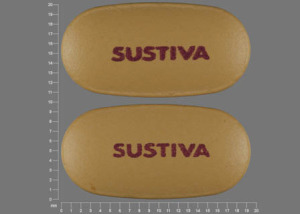
Sustiva Side Effects
Generic name: efavirenz
Medically reviewed by Drugs.com. Last updated on Oct 4, 2024.
Note: This document provides detailed information about Sustiva Side Effects associated with efavirenz. Some dosage forms listed on this page may not apply specifically to the brand name Sustiva.
Applies to efavirenz: oral tablet.
Precautions
It is very important that your doctor check the progress of you or your child at regular visits, to make sure this medicine is working properly. Blood tests may be needed to check for unwanted effects.
Using this medicine while you are pregnant can harm your unborn baby. Use an effective form of birth control to keep from getting pregnant. You should not become pregnant while you are taking this medicine and for 12 weeks after stopping it. If you think you have become pregnant while using the medicine, tell your doctor right away.
This medicine may decrease the effects of some birth control including pills, injections, or implants. To avoid getting pregnant, use an additional form of birth control along with your pills, injections, or implant and for 12 weeks after stopping it. Other forms of birth control include a condom, a diaphragm, contraceptive foam, or jelly.
Do not use this medicine if you or your child are also using Atripla®. Atripla® also contains efavirenz (the active ingredient contained in Sustiva).
Contact your doctor right away if you have any changes to your heart rhythm. You might feel dizzy or faint, or you might have a fast, pounding, or uneven heartbeat. Make sure your doctor knows if you or anyone in your family has ever had a heart rhythm problem such as QT prolongation.
You might have mood or behavior changes with this medicine, such as feeling sad or hopeless, or getting upset easily. You could feel nervous or hostile, or have decreased awareness or responsiveness. Some people become violent and want to hurt themselves or others. Call your doctor right away if you or your child have any strange feelings, thoughts, or behaviors.
This medicine may cause some people to become dizzy, lightheaded, drowsy, or less alert than they are normally. Even if taken at bedtime, it may cause some people to feel drowsy or less alert on arising. Make sure you know how you react to this medicine before you drive, use machines, or do anything else that could be dangerous if you are not alert.
Check with your doctor before taking efavirenz with alcohol or other medicines that affect the central nervous system (CNS). The use of alcohol or other medicines that affect the CNS with efavirenz may worsen the side effects of this medicine, such as dizziness, poor concentration, drowsiness, unusual dreams, and trouble with sleeping. Some examples of medicines that affect the CNS are antihistamines or medicine for allergies or colds, sedatives, tranquilizers, or sleeping medicines, medicine for depression, medicine for anxiety, prescription pain medicine or narcotics, medicine for attention deficit and hyperactivity disorder, medicine for seizures or barbiturates, muscle relaxants, or anesthetics, including some dental anesthetics.
Tell your doctor if you or your child get any type of skin rash, even a mild rash. Call your doctor right away if you or your child have a rash with blisters, a fever, mouth sores, red or irritated eyes, swelling of the face, muscle or joint pain, or muscle weakness.
Liver problems may occur while you are using this medicine. Check with your doctor right away if you or your child are having more than one of these symptoms: abdominal or stomach pain or tenderness, clay-colored stools, dark urine, a fever, a headache, itching, loss of appetite, nausea and vomiting, skin rash, swelling of the feet or lower legs, unusual tiredness or weakness, or yellow eyes or skin.
This medicine may increase the level of cholesterol and fats in your blood. If this condition occurs, your doctor may give you a medicine to lower the cholesterol and fats. Talk to your doctor if you have concerns.
Your immune system may get stronger when you start taking HIV medicines. Tell your doctor right away if you or your child notice any changes in your health. Sometimes the immune system will start to fight infections that were hidden in your body, such as pneumonia, herpes, or tuberculosis. Autoimmune disorders (eg, Graves' disease, polymyositis, and Guillain-Barré syndrome) may also occur.
Efavirenz may cause you to have excess body fat. Tell your doctor if you or your child notice changes in your body shape, including an increased amount of body fat in your neck or upper back, around your chest, or stomach area. You might also lose fat from your legs, arms, and face.
This medicine does not decrease the risk of transmitting the HIV infection to others through sexual contact or by contaminated blood. Make sure you understand and practice safe sex, even if your partner also has HIV. Avoid sharing needles with anyone.
Tell the doctor in charge that you or your child are taking this medicine before you have any medical tests. The results of some tests may be affected by this medicine.
Do not take other medicines unless they have been discussed with your doctor. This includes prescription or nonprescription (over-the-counter [OTC]) medicines and herbal or vitamin supplements.
Serious side effects of Sustiva
Along with its needed effects, efavirenz may cause some unwanted effects. Although not all of these side effects may occur, if they do occur they may need medical attention.
Check with your doctor immediately if any of the following side effects occur while taking efavirenz:
More common side effects
- depression
- skin rash or itching
Less common side effects
- blood in the urine
- difficult or painful urination
- pain in the lower back or side
Rare side effects
- abdominal or stomach pain
- blistering
- changes in vision
- clumsiness or unsteadiness
- confusion
- convulsions (seizures)
- cough
- dark urine
- delusions
- double vision
- fainting
- fast or pounding heartbeat
- fever or chills
- headache (severe and throbbing)
- hives
- inappropriate behavior
- loss of appetite
- mood or mental changes (severe)
- muscle cramps or pain
- nausea or vomiting
- nerve pain
- open sores
- pain, tenderness, bluish color, or swelling of the leg or foot
- rapid weight gain
- seeing, hearing, or feeling things that are not there
- sense of constant movement of self or surroundings
- sores, ulcers, or white spots in the mouth or on the lips
- speech disorder
- swelling or tenderness in the upper abdominal or stomach area
- swelling of the hands, arms, feet, or legs
- thoughts of suicide or attempts at suicide
- tightness in the chest
- tingling, burning, numbness, or pain in the hands, arms, feet, or legs
- tingling, burning, or prickling sensations
- tremor
- troubled breathing
- unusual tiredness
- weight loss
- yellow eyes or skin
Incidence not known
- actions that are out of control
- attack, assault, or force
- continuing vomiting
- decreased awareness or responsiveness
- delusions of persecution, mistrust, suspiciousness, or combativeness
- difficult or labored breathing
- early appearance of redness or swelling of the skin
- general feeling of tiredness or weakness
- irregular heartbeat recurrent
- irritability
- late appearance of rash with or without weeping blisters that become crusted, especially in sun-exposed areas of the skin, may extend to unexposed areas
- light-colored stools
- mimicry of speech or movements
- mutism
- negativism
- nervousness
- peculiar postures or movements, mannerisms, or grimacing
- severe sleepiness
- talking, feeling, and acting with excitement
Other side effects of Sustiva
Some side effects of efavirenz may occur that usually do not need medical attention. These side effects may go away during treatment as your body adjusts to the medicine. Also, your health care professional may be able to tell you about ways to prevent or reduce some of these side effects.
Check with your health care professional if any of the following side effects continue or are bothersome or if you have any questions about them:
More common side effects
- diarrhea
- dizziness
- drowsiness
- headache
- increased sweating
- poor concentration
- trouble sleeping
Less common or rare side effects
- abnormally decreased sensitivity, particularly to touch
- agitation or anxiety
- belching
- change in sense of taste or smell
- dry mouth
- excessive gas
- false sense of well-being
- flaking and falling off of the skin
- flushing
- general feeling of discomfort
- heartburn
- indigestion
- joint pain
- lack of feeling or emotion
- loss of hair
- loss of memory
- loss of sense of reality
- mood changes
- pain
- painful, red, hot, or irritated hair follicles
- ringing in the ears
- stomach discomfort
- unusual dreams
- weakness
Incidence not known
- difficulty having a bowel movement (stool)
- discoloration of the fingernails or toenails
- dizziness or lightheadedness
- feeling of constant movement of self or surroundings
- increased amount of fat in the upper back and neck, or around the chest and stomach area
- lose fat from the legs, arms, and face
- sensation of spinning
- swelling of the breasts or breast soreness in both females and males
See also:
For healthcare professionals
Applies to efavirenz: oral capsule, oral tablet.
General adverse events
The most significant adverse reactions included nervous system symptoms, psychiatric symptoms, and rash. The most common adverse reactions (at least moderate severity) were impaired concentration, abnormal dreams, rash, dizziness, nausea, headache, fatigue, insomnia, and vomiting in patients using this drug in combination with lamivudine-zidovudine or indinavir.[Ref]
Cardiovascular
- Common (1% to 10%): Cardiovascular dysfunction
- Frequency not reported: QT interval prolongation, torsades de pointes, tachycardia, thrombophlebitis, hot flushes
- Postmarketing reports: Flushing, palpitations
Dermatologic
- Very common (10% or more): Rash (up to 26%)
- Common (1% to 10%): Pruritus, increased sweating, urticaria, erythema/redness/inflammation, blisters/ulcerations/lesions, dry skin
- Postmarketing reports: Erythema multiforme, photoallergic dermatitis, Stevens-Johnson syndrome, pruritus[Ref]
In clinical trials, 26% of adult patients treated with this drug reported new-onset skin rash. Rash associated with blistering, moist desquamation, or ulceration occurred in 0.9% of patients. The incidence of grade 4 rash (e.g., erythema multiforme, Stevens-Johnson syndrome) in all studies and expanded access was 0.1%. Rashes were usually mild to moderate maculopapular skin eruptions. The median time to onset of rash in adults was 11 days. In most patients, the rash resolved within 1 month despite continued use of the drug. Treatment was discontinued in 1.7% of patients due to rash.
Rash was reported in 32% of pediatric patients treated with this drug. Grade 3 rash (confluent rash with fever, generalized rash) occurred in 2 patients, and grade 4 rash (erythema multiforme) occurred in 4 patients. The median time to onset of rash in pediatric patients was 28 days.
Rash included erythema multiforme, rash, erythematous rash, follicular rash, maculopapular rash, petechial rash, pustular rash, urticaria, macules, papules, erythema, redness, inflammation, allergic rash, welts, hives, itchy, and pruritus.
Urticaria included allergic rash, welts, and hives.
There was limited experience using this drug in patients who previously discontinued other nonnucleoside reverse transcriptase inhibitors due to rash. In 19 such patients formerly on nevirapine, about half developed a mild to moderate rash with this drug; 2 of those patients discontinued therapy because of the rash.[Ref]
Endocrine
- Postmarketing reports: Gynecomastia
Gastrointestinal
- Very common (10% or more): Diarrhea (up to 14%)
- Common (1% to 10%): Nausea, vomiting, elevated amylase, dyspepsia, abdominal pain, constipation
- Uncommon (0.1% to 1%): Pancreatitis, flatulence
- Frequency not reported: Gastritis, gastroenteritis, gastroesophageal reflux, dry mouth, burning mouth syndrome
- Postmarketing reports: Malabsorption, constipation, abdominal pain, pancreatitis[Ref]
Nausea included nausea/vomiting.
Elevated amylase (greater than 2 times the upper limit of normal [2 x ULN]) has been reported in up to 6% of patients. Asymptomatic increases in serum amylase levels have been reported.
Abdominal pain included groin/pelvic pain.
A 42-year-old HIV-positive woman's saquinavir in her highly active antiretroviral therapy was replaced with this drug to increase compliance. Two weeks after initiation, the patient reported severe and constant burning in her tongue, gums, and oral mucosa and was diagnosed with burning mouth syndrome (BMS). Efavirenz was discontinued and the BMS resolved within a week.[Ref]
Genitourinary
- Uncommon (0.1% to 1%): Hematuria
- Frequency not reported: Impotence, urolithiasis[Ref]
Analysis of a 3 mm stone, eliminated by a 47-year-old HIV-1-infected male patient, showed a stone consisting of 60% efavirenz (the active ingredient contained in Sustiva) metabolites.[Ref]
Hematologic
- Common (1% to 10%): Neutropenia
- Rare (less than 0.1%): Hemolytic anemia
Neutropenia (less than 750/mm3) was reported in up to 10% of patients.
Hepatic
- Common (1% to 10%): Increased ALT, increased AST, increased GGT
- Frequency not reported: Acute hepatitis
- Postmarketing reports: Hepatic failure, increased hepatic enzymes, hepatitis, autoimmune hepatitis
Increased ALT, AST, and GGT to greater than 5 x ULN have each been reported in up to 8% of patients. Isolated elevations of GGT may have reflected enzyme induction not associated with liver toxicity.
During clinical trials, elevations in ALT and AST to greater than 5 x ULN occurred in 20% and 13%, respectively, of patients seropositive for hepatitis B and/or C. Therapy was discontinued in 3% of coinfected patients due to liver or biliary system disorders.
Postmarketing cases of hepatitis (including fulminant hepatitis progressing to liver failure requiring transplantation or resulting in death) have been reported with this drug. Reports included patients with underlying liver disease (including coinfection with hepatitis B or C) and patients without preexisting liver disease or other identifiable risk factors.
Hypersensitivity
- Uncommon (0.1% to 1%): Hypersensitivity
- Postmarketing reports: Allergic reactions[Ref]
Immunologic
- Frequency not reported: Immune reconstitution/reactivation syndrome, autoimmune disorders in the setting of immune reconstitution
Autoimmune disorders in the setting of immune reconstitution (e.g., Graves' disease, polymyositis, Guillain-Barre syndrome, autoimmune hepatitis) have been reported.
Metabolic
- Common (1% to 10%): Increased glucose, anorexia, hypertriglyceridemia
- Uncommon (0.1% to 1%): Hypercholesterolemia
- Frequency not reported: Insulin resistance, hyperglycemia, hyperlactatemia, alcohol intolerance, increased appetite, vitamin D deficiency
- Postmarketing reports: Redistribution/accumulation of body fat, hypercholesterolemia, hypertriglyceridemia
Increased glucose (greater than 250 mg/dL) has been reported in up to 5% of patients.
Redistribution/accumulation of body fat (including central obesity, dorsocervical fat enlargement, peripheral wasting, facial wasting, breast enlargement, "cushingoid appearance") has been reported.
Musculoskeletal
- Frequency not reported: Osteomalacia (due to drug-induced vitamin D deficiency), osteonecrosis
- Postmarketing reports: Arthralgia, myalgia, myopathy[Ref]
Nervous system
- Very common (10% or more): Nervous system symptoms (up to 53%), dizziness (up to 28.1%)
- Common (1% to 10%): Impaired concentration, headache, somnolence, disturbance in attention, paresthesia
- Uncommon (0.1% to 1%): Agitation, amnesia, ataxia, abnormal coordination, convulsions, abnormal thinking, vertigo, taste perversion
- Frequency not reported: Depersonalization, confusion, stupor, impaired attention span, impaired coordination, migraine headaches, neuralgia, peripheral neuropathy, speech disorder, parosmia, vacuolar axonopathy, hypersomnolence, syncope
- Postmarketing reports: Abnormal coordination, ataxia, encephalopathy, cerebellar coordination and balance disturbances, convulsions, hypoesthesia, paresthesia, neuropathy, tremor, vertigo, tinnitus[Ref]
Nervous system symptoms generally began the first or second day of therapy and often resolved after 2 to 4 weeks. Nervous system symptoms of any grade and regardless of causality (52.7%) included dizziness, insomnia, impaired concentration, somnolence, abnormal dreams, hallucinations, amnesia, agitation, euphoria, depersonalization, confusion, abnormal thinking, and stupor during clinical trials with this drug in combination with other antiretroviral agents. These symptoms were mild in 33.3%, moderate in 17.4%, and severe in 2% of patients. Therapy was discontinued in 2.1% of patients due to these symptoms.
Dizziness included lightheadedness/fainting.
Paresthesia included numbness/tingling.
Vacuolar axonopathy and hypersomnolence leading to coma and death were reported in a patient with elevated drug levels.[Ref]
Ocular
- Uncommon (0.1% to 1%): Blurred vision
- Frequency not reported: Diplopia
- Postmarketing reports: Abnormal vision
Other
- Very common (10% or more): Increased nonfasting serum cholesterol (up to 54%), increased high-density lipoprotein (HDL; up to 35%), pain (up to 13%), increased nonfasting triglycerides (up to 11%)
- Common (1% to 10%): Fatigue, edema, fever, decreased weight/weight loss, weight gain
- Uncommon (0.1% to 1%): Asthenia
- Frequency not reported: False-positive urine cannabinoid test results, malaise, influenza-like symptoms, peripheral edema
- Postmarketing reports: Asthenia, contraceptive failure (with an implantable hormonal contraceptive)[Ref]
Increased nonfasting serum cholesterol and HDL have been reported; clinical significance was unknown.
Pain included flank and back pain.
Increased nonfasting triglycerides (at least 751 mg/dL) have been reported in up to 11% of patients.
Fatigue included asthenia and malaise.
Edema included enlarged/swollen, leg edema, and peripheral edema.
Decreased weight included cachexia/wasting.
False-positive urine cannabinoid test results have been observed with some screening assays in uninfected and HIV-infected subjects using this drug.[Ref]
Psychiatric
- Very common (10% or more): Depression (up to 19%), insomnia (up to 16.3%), anxiety (up to 13%)
- Common (1% to 10%): Nervousness, abnormal dreams, severe depression, hallucinations
- Uncommon (0.1% to 1%): Affect lability, confusional state, euphoric mood, suicidal ideation, nonfatal suicide attempts, aggressive behavior, paranoid reactions, manic reactions, drug abuse
- Frequency not reported: Obsessive disorder, irritability, mood changes, vivid dreams, nightmares, delirium, increased libido, decreased libido, aggravated depression, apathy
- Postmarketing reports: Aggressive reactions, agitation, delusions, emotional lability, mania, neurosis, paranoia/paranoid reaction, psychosis, suicide, catatonia, psychosis-like behavior
Psychiatric symptoms generally began the first or second day of therapy and often resolved after 2 to 4 weeks. Patients with history of psychiatric disorders were at greater risk of serious psychiatric events. Psychiatric events classified as serious during controlled trials included severe depression, suicidal ideation, nonfatal suicide attempts, aggressive behavior, paranoid reactions, and manic reactions. One percent of patients discontinued or interrupted therapy due to at least 1 of these selected psychiatric symptoms.
Insomnia included dreams/sleeping problems.
Nervousness (as agitation/hyperactive) was reported.
Renal
- Uncommon (0.1% to 1%): Renal calculus
- Frequency not reported: Podocyte damage, renal colic[Ref]
Respiratory
- Uncommon (0.1% to 1%): Dyspnea
- Frequency not reported: Asthma, sinusitis, upper respiratory tract infection
- Postmarketing reports: Dyspnea
References
1. (2023) "Product Information. Sustiva (efavirenz)." Bristol-Myers Squibb, SUPPL-59/47
2. (2024) "Product Information. Stocrin (efavirenz)." Merck Sharp & Dohme (Australia) Pty Ltd
3. (2024) "Product Information. Efavirenz (efavirenz)." Viatris UK Healthcare Ltd
4. Izzedine H, Valantin MA, Daudon M, Mohand HA, Caby F, Katlama C (2007) "Efavirenz urolithiasis." AIDS, 21, p. 1992
5. Borras-Blasco J, Belda A, Rosique-Robles JD, Castera ME, Abad FJ (2006) "Burning Mouth Syndrome Due to Efavirenz Therapy (July/August)." Ann Pharmacother
6. Gyllensten K, Josephson F, Lidman K, Saaf M (2006) "Severe vitamin D deficiency diagnosed after introduction of antiretroviral therapy including efavirenz in a patient living at latitude 59 degrees N." AIDS, 20, p. 1906-1907
7. Barbour TD, Furlong TJ, Finlayson RJ (2007) "Efavirenz-associated podocyte damage." AIDS, 21, p. 257-258
Frequently asked questions
- What is the difference between HIV treatments Symfi and Symfi Lo?
- What drugs are contained in the HIV treatment Symfi Lo?
More about Sustiva (efavirenz)
- Check interactions
- Compare alternatives
- Reviews (6)
- Drug images
- Dosage information
- During pregnancy
- Generic availability
- Drug class: NNRTIs
- Breastfeeding
- En español
Patient resources
Professional resources
Related treatment guides
Further information
Sustiva side effects can vary depending on the individual. Always consult your healthcare provider to ensure the information displayed on this page applies to your personal circumstances.
Note: Medication side effects may be underreported. If you are experiencing side effects that are not listed, submit a report to the FDA by following this guide.