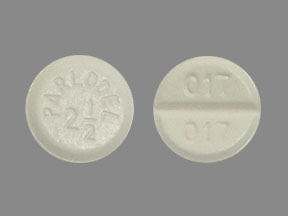
Parlodel Side Effects
Generic name: bromocriptine
Medically reviewed by Drugs.com. Last updated on Aug 30, 2024.
Note: This document provides detailed information about Parlodel Side Effects associated with bromocriptine. Some dosage forms listed on this page may not apply specifically to the brand name Parlodel.
Applies to bromocriptine: oral capsule, oral tablet.
Serious side effects of Parlodel
Along with its needed effects, bromocriptine (the active ingredient contained in Parlodel) may cause some unwanted effects. Although not all of these side effects may occur, if they do occur they may need medical attention.
Check with your doctor immediately if any of the following side effects occur while taking bromocriptine:
More common
- blurred vision
- chest pain or discomfort
- difficulty in speaking
- dizziness or lightheadedness, especially when getting up suddenly from a lying or sitting position
- double vision
- feeling, seeing, or hearing things that are not there
- feeling of constant movement of self or surroundings
- feeling that others are watching you or controlling your behavior
- feeling that others can hear your thoughts
- headache
- inability to move the arms, legs, or facial muscles
- inability to speak
- lack or loss of strength
- nausea
- nervousness
- pain or discomfort in the arms, jaw, back, or neck
- pounding in the ears
- sensation of spinning
- severe mood or mental changes
- shakiness and unsteady walk
- slow or fast heartbeat
- slow speech
- sweating
- trouble breathing
- trouble sleeping
- unsteadiness, trembling, or other problems with muscle control or coordination
- unusual behavior
- vomiting
Less common—reported more often in patients with Parkinson's disease
- confusion
- uncontrolled movements of the body, such as the face, tongue, arms, hands, head, and upper body
Rare—reported more often in patients taking large doses
- increased frequency of urination
- loss of appetite, continuing
- lower back pain
- runny nose, continuing
- stomach pain, continuing or severe
- weakness
Rare
- black, tarry stools
- bloody vomit
- fainting
- nausea
- nervousness
- seizures
- sudden weakness
- temporary blindness
- unusual headache
- vomiting, continuing or severe
Incidence not known
- agitation
- anxiety
- blue or pale skin
- chest pain, possibly moving to the left arm, neck, or shoulder
- chills
- constipation
- continuing ringing or buzzing or other unexplained noise in the ears
- cough
- diarrhea
- difficulty in speaking
- double vision
- false beliefs that cannot be changed by facts
- fever
- headache
- hearing loss
- heartburn
- high fever
- high or low blood pressure
- inability to move the arms, legs, or facial muscles
- inability to speak
- increased in sexual ability, desire, drive, or performance
- increased interest in sexual intercourse
- increased frequency of urination
- indigestion
- loss of bladder control
- lower back pain
- severe muscle stiffness
- stuffy nose
- unusual tiredness or weakness
- unusually pale skin
- vomiting of blood or material that looks like coffee grounds
Other side effects of Parlodel
Some side effects of bromocriptine may occur that usually do not need medical attention. These side effects may go away during treatment as your body adjusts to the medicine. Also, your health care professional may be able to tell you about ways to prevent or reduce some of these side effects.
Check with your health care professional if any of the following side effects continue or are bothersome or if you have any questions about them:
Less common
- drowsiness
- dry mouth
- leg cramps at night
- loss of appetite
- mental depression
- stomach pain
- tingling or pain in the fingers and toes when exposed to cold temperatures
Incidence not known
- hair loss
For healthcare professionals
Applies to bromocriptine: compounding powder, oral capsule, oral tablet.
General
The incidence of adverse reactions with this drug are high, but generally mild to moderate in degree. The most commonly reported adverse reactions have included nausea, headache, dizziness, vomiting, and fatigue.[Ref]
Gastrointestinal
- Very common (10% or more): Nausea (up to 49%), constipation (12.5%)
- Common (1% to 10%): Dyspepsia, vomiting, abdominal cramps, diarrhea
- Frequency not reported: Severe gastrointestinal bleeding from peptic ulcers (including fatalities), dry mouth
- Postmarketing reports: Retroperitoneal fibrosis, gastrointestinal ulcer[Ref]
Retroperitoneal fibrosis has been reported in a few patients receiving this drug in doses ranging from 30 to 140 mg/day for 2 to 10 years.[Ref]
Cardiovascular
- Common (1% to 10%): Syncope, hypotension, orthostatic hypotension, cold-sensitive digital vasospasm
- Rare (0.01% to 0.1%): Hypertension
- Frequency not reported: Myocardial infarction, arrhythmia, ventricular tachycardia, bradycardia, ankle and feet edema, signs and symptoms of ergotism (e.g., tingling of fingers, cold feet, numbness, muscle cramps of feet and legs or exacerbation of Raynaud's syndrome)
- Postmarketing reports: Cardiac valvulopathy, pericarditis, pericardial effusions, constrictive pericarditis, cardiac valve fibrosis[Ref]
Symptomatic hypotension has been reported in patients receiving this drug for any indication. Syncope and symptomatic hypotension (decreases in supine systolic and diastolic pressures of greater than 20 mm and 10 mm Hg, respectively) have been reported in approximately 30% of postpartum patients. Rare cases of serious adverse events including hypertension, myocardial infarction, seizures, and strokes, have been reported in postpartum women. Patients experiencing seizures and/or strokes have reported developing a continuous headache, often progressively severe, hours to days prior to the acute event. In addition, visual disturbances (blurred vision and transient cortical blindness) have been reported to also precede stroke and/or seizure events.
Type 2 diabetes mellitus trials: Syncope was reported in 1.5% of patients; the cause of syncope was not known in all cases. In a 52-week safety trial in which all serious adverse events and cardiovascular endpoints were adjudicated, serious adverse events occurred in 8.5% of drug treated patients compared with 9.6% of placebo patients. The composite cardiovascular endpoint occurred in 31 (1.5%) drug-treated patients and 30 (3%) placebo patients.
Fibrotic complications including cases of retroperitoneal fibrosis, pulmonary fibrosis, pleural effusion, pleural thickening, pericarditis, and pericardial effusions have been reported during postmarketing period. These reports have been more commonly received in patients on long-term and high-dose treatment.[Ref]
Psychiatric
- Frequency not reported: Insomnia, paranoia, depression, anxiety, nervousness, nightmares, "on-off" phenomenon
- Postmarketing reports: Hallucinations, mental confusion, psychomotor agitation/excitation, increased libido, hypersexuality, pathological gambling, increased sexual urges, intense urges to spend money uncontrollably, other intense urges[Ref]
This drug, alone or in combination with levodopa, may cause hallucinations (visual or auditory). Hallucinations usually resolve with dosage reduction; occasionally, discontinuation of the drug is required. Rarely, after high doses, hallucinations have persisted for several weeks after discontinuation of the drug.[Ref]
Nervous system
- Very common (10% or more): Headache (up to 19%), Dizziness (up to 17%)
- Common (1% to 10%): Somnolence, lightheadedness, dyskinesia, ataxia
- Frequency not reported: Cerebrospinal fluid rhinorrhea, paresthesia, vasovagal attack, seizures
- Postmarketing reports: Stroke, neuroleptic-like malignant syndrome upon cessation in patients with Parkinson's disease, sudden sleep onset[Ref]
A few cases of cerebrospinal fluid rhinorrhea have been reported in patients with large prolactinomas who have received previous transsphenoidal surgery, pituitary radiation, or both. It may also occur in previously untreated patients whose tumor extends into the sphenoid sinus.[Ref]
Respiratory
- Very common (10% or more): Rhinitis (up to 13.8%), sinusitis (10%)
- Common (1% to 10%): Nasal congestion
- Frequency not reported: Shortness of breath, nasal stuffiness
- Postmarketing reports: Pulmonary fibrosis, pleural effusion, pleural thickening, pleural fibrosis, pleurisy, dyspnea[Ref]
Fibrotic complications including cases of retroperitoneal fibrosis, pulmonary fibrosis, pleural effusion, pleural thickening, pericarditis, and pericardial effusions have been reported during postmarketing approval use of this drug. These reports have been more commonly received in patients on long-term and high-dose treatment.[Ref]
Ocular
- Common (1% to 10%): Amblyopia
- Frequency not reported: Blepharospasm
- Postmarketing reports: Visual disturbance, vision blurred[Ref]
Musculoskeletal
- Frequency not reported: Muscle cramps
- Postmarketing reports: Leg cramps[Ref]
Genitourinary
- Frequency not reported: Urinary frequency, urinary incontinence, urinary retention[Ref]
Dermatologic
- Frequency not reported: Hair loss, erythromelalgia, mottling of skin, skin rash
- Postmarketing reports: Allergic skin reactions[Ref]
Other
- Very common (10% or more): Asthenia (up to 18.9%), fatigue (up to 13.9%)
- Frequency not reported: Vertigo, sluggishness, lassitude, alcohol potentiation
- Postmarketing reports: Tinnitus[Ref]
Hypersensitivity
- Postmarketing reports: Allergic skin reactions
Endocrine
- Frequency not reported: Growth hormone-secreting tumor expansion in patients with acromegaly
Immunologic
- Common (1% to 10%): Infection, flu syndrome
Metabolic
- Common (1% to 10%): Anorexia, hypoglycemia
In the monotherapy trial in patients with type 2 diabetes mellitus, hypoglycemia was reported in 2 patients (3.7%). In the add-on to sulfonylurea trials, hypoglycemia was reported in 8.6% of patients.
References
1. (2018) "Product Information. Cycloset (bromocriptine)." Valeant Pharmaceuticals
2. (2001) "Product Information. Parlodel (bromocriptine)." Sandoz Pharmaceuticals Corporation
3. Larrazet F, Spaulding C, Lobreau HJ, Weber S, Guerin F (1993) "Possible bromocriptine-induced myocardial infarction." Ann Intern Med, 118, p. 199-200
4. Champagne SP, Coste E, Peyriere H, Nigond J, Mania E, Pons M, HillaireBuys D, Balmes P, Blayac JP, Davy JM (1999) "Chronic constrictive pericarditis induced by long-term bromocriptine therapy: Report of two cases." Ann Pharmacother, 33, p. 1050-4
5. Kaushik P, Vatsavai SR, Banda VR, Sanghi PK, Ahmad M, Kaushik R (2004) "Acute onset of severe dilated cardiomyopathy during bromocriptine therapy." Ann Pharmacother, 38, p. 1219-21
6. Peter SA, Autz A, Jean-Simon ML (1993) "Bromocriptine-induced schizophrenia." J Natl Med Assoc, 85, p. 700-1
7. Dorevitch A, Aronzon R, Stark M (1991) "Psychotic exacerbation attributed to low-dose bromocriptine treatment of galactorrhea and hyperprolactinemia." Acta Obstet Gynecol Scand, 70, p. 375-6
8. Boyd A (1995) "Bromocriptine and psychosis: a literature review." Psychiatr Q, 66, p. 87-95
9. Bende M, Bergman B, Sjogren C (1993) "Nasal mucosal congestion after treatment with bromocriptine." Laryngoscope, 103, p. 1142-4
10. Couldwell WT, Weiss MH (1992) "Visual loss associated with bromocriptine." Lancet, 340, p. 1210-411
11. Leiguarda R, Merello M, Sabe L, Starkstein S (1993) "Bromocriptine-induced dystonia in patients with aphasia and hemiparesis." Neurology, 43, p. 2319-22
12. Fabre N, Montastruc JL, Rascol O (1993) "Alopecia: an adverse effect of bromocriptine." Clin Neuropharmacol, 16, p. 266-8
More about Parlodel (bromocriptine)
- Check interactions
- Compare alternatives
- Pricing & coupons
- Reviews (16)
- Drug images
- Dosage information
- During pregnancy
- Generic availability
- Drug class: dopaminergic antiparkinsonism agents
- Breastfeeding
- En español
Patient resources
Other brands
Professional resources
Other brands
Related treatment guides
Further information
Parlodel side effects can vary depending on the individual. Always consult your healthcare provider to ensure the information displayed on this page applies to your personal circumstances.
Some side effects may not be reported. You may report them to the FDA.