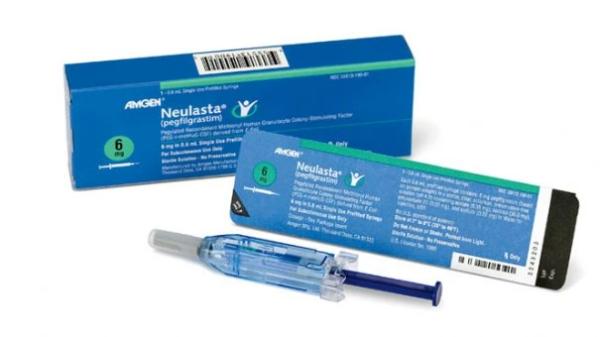
Neulasta Side Effects
Generic name: pegfilgrastim
Note: This document contains side effect information about pegfilgrastim. Some dosage forms listed on this page may not apply to the brand name Neulasta.
Applies to pegfilgrastim: subcutaneous solution.
Serious side effects of Neulasta
Along with its needed effects, pegfilgrastim (the active ingredient contained in Neulasta) may cause some unwanted effects. Although not all of these side effects may occur, if they do occur they may need medical attention.
Check with your doctor immediately if any of the following side effects occur while taking pegfilgrastim:
More common
- Chills
- cough
- fever
- sore throat
- ulcers, sores, or white spots in the mouth
Rare
- Bluish lips or skin
- pain, left upper abdomen or shoulder
- tightness in the chest
- trouble breathing
Incidence not known
- Black, tarry stools
- bleeding gums
- bleeding, blistering, burning, coldness, discoloration of the skin, feeling of pressure, hives, infection, inflammation, itching, lumps, numbness, pain, rash, redness, scarring, soreness, stinging, swelling, tenderness, tingling, ulceration, or warmth at the injection site
- blisters in the skin
- blood in the urine or stools
- chest pain
- cloudy urine
- decrease in how much or how often you urinate
- difficulty with swallowing
- dizziness
- fainting or lightheadedness
- fast heartbeat
- flushing or redness of the skin
- hives or welts, skin rash
- itching, puffiness, or swelling of the eyelids or around the eyes, face, lips, or tongue
- large, hive-like swelling on the face, eyelids, lips, tongue, throat, hands, legs, feet, or sex organs
- lower back or side pain
- nausea
- painful or difficult urination
- pinpoint red spots on the skin
- sores on the skin
- stomach pain
- swelling of the hands, ankles, feet, or lower legs
- swollen glands
- unusual bleeding or bruising
- unusual tiredness or weakness
- unusually warm skin
Get emergency help immediately if any of the following symptoms of overdose occur while taking pegfilgrastim:
Symptoms of overdose
- Bone pain
- chest pain
- difficult or labored breathing
- eye pain
- general feeling of illness
- headache
Other side effects of Neulasta
Some side effects of pegfilgrastim may occur that usually do not need medical attention. These side effects may go away during treatment as your body adjusts to the medicine. Also, your health care professional may be able to tell you about ways to prevent or reduce some of these side effects.
Check with your health care professional if any of the following side effects continue or are bothersome or if you have any questions about them:
More common
- Belching
- change in sense of taste
- constipation
- cracked lips
- diarrhea
- hair loss or thinning of the hair
- heartburn
- indigestion
- joint pain
- lack or loss of strength
- loss of appetite
- muscle soreness
- swelling or inflammation of the mouth
- trouble sleeping
- vomiting
- weakness, generalized
- weight loss
Incidence not known
- Body produces substance that can bind to drug making it less effective or cause side effects
For Healthcare Professionals
Applies to pegfilgrastim: subcutaneous solution.
General
The most commonly reported side effects included bone pain, skeletal pain, medullary bone pain, and spontaneously reversible mild to moderate lactate dehydrogenase elevations.[Ref]
Musculoskeletal
Very common (10% or more): Bone pain (up to 31%), skeletal pain (up to 27%), medullary bone pain (up to 26%)
Common (1% to 10%): Arthralgia, back pain, extremity pain, limb pain, musculoskeletal pain, myalgia, neck pain, polyarthralgia, polymyalgia[Ref]
Metabolic
Very common (10% or more): Spontaneously reversible mild to moderate lactate dehydrogenase elevations (up to 18%), spontaneously reversible mild to moderate alkaline phosphatase elevations (up to 11%), spontaneously reversible mild to moderate uric acid elevations (up to 11%)
Common (1% to 10%): Spontaneously reversible severe uric acid elevations
Frequency not reported: Anorexia[Ref]
Other
Common (1% to 10%): Fever, non-cardiac chest pain, pain, pyrexia
Frequency not reported: Fatigue, generalized weakness, mucositis[Ref]
Dermatologic
Common (1% to 10%): Alopecia, contact dermatitis
Uncommon (0.1% to 1%): Acute febrile dermatosis, cutaneous vasculitis, erythema/generalized erythema, pruritus, skin rash, Sweet's syndrome, urticaria[Ref]
Hematologic
Common (1% to 10%): Leukocytosis, thrombocytopenia
Uncommon (0.1% to 1%): Asymptomatic splenomegaly, fatal splenic rupture, sickle cell crisis, splenic rupture, splenomegaly/enlarged spleen
Frequency not reported: Granulocytopenia, neutropenic fever[Ref]
Local
Common (1% to 10%): Application site reactions, injection site pain
Uncommon (0.1% to 1%): Injection site erythema, injection site reactions
Postmarketing reports: Application site bruise, application site discomfort, application site hemorrhage, local skin reactions[Ref]
Gastrointestinal
Common (1 to 10%): Diarrhea, nausea
Frequency not reported: Abdominal pain, constipation, dyspepsia, stomatitis, vomiting[Ref]
Immunologic
Common (1% to 10%): Influenza, preexisting binding antibodies[Ref]
Cardiovascular
Common (1% to 10%): Chest pain
Uncommon (0.1% to 1%): Capillary leak syndrome, flushing, hypotension
Rare (0.01% to 0.1%): Aortitis
Frequency not reported: Peripheral edema[Ref]
Nervous system
Common (1% to 10%): Headache
Frequency not reported: Dizziness, taste perversion[Ref]
Ocular
Common (1% to 10%): Periorbital edema[Ref]
Respiratory
Uncommon (0.1% to 1%): Acute respiratory distress syndrome (ARDS), dyspnea, fatal ARDS, interstitial pneumonia, pulmonary adverse reactions, pulmonary edema, pulmonary fibrosis, pulmonary infiltrates, respiratory failure[Ref]
Hypersensitivity
Uncommon (0.1% to 1%): Anaphylaxis, angioedema, hypersensitivity reactions/hypersensitivity-type reactions, serious allergic reactions
Frequency not reported: Allergies to acrylics
Postmarketing reports: Allergic reactions, allergic-type reactions, anaphylactic reactions[Ref]
Hepatic
Uncommon (0.1% to 1%): Transient elevations in ALT, transient elevations in AST, transient elevations in liver function tests[Ref]
Renal
Uncommon (0.1% to 1%): Glomerulonephritis[Ref]
Oncologic
Frequency not reported: Potential for tumor growth stimulatory effects on malignant cells[Ref]
Psychiatric
Frequency not reported: Insomnia[Ref]
Frequently asked questions
- What are biosimilar drugs?
- How do you increase white blood cells during chemo?
- What is the difference between Fulphila and Neulasta?
- What is the difference between Udenyca and Neulasta?
- What does cbqv stand for in pegfilgrastim?
- Why do you take Claritin with Neulasta?
- How many biosimilars have been approved in the United States?
- How long do the side effects of the Neulasta (pegfilgrastim) shot last?
- Does Neulasta cause bone pain?
More about Neulasta (pegfilgrastim)
- Check interactions
- Compare alternatives
- Pricing & coupons
- Reviews (70)
- Drug images
- Dosage information
- Patient tips
- During pregnancy
- Support group
- Drug class: colony stimulating factors
Patient resources
Other brands
Udenyca, Fulphila, Ziextenzo, Nyvepria, ... +2 more
Professional resources
Other brands
Udenyca, Fulphila, Ziextenzo, Nyvepria, ... +2 more
Related treatment guides
References
1. Product Information. Neulasta (pegfilgrastim). Amgen. 2002.
2. Cerner Multum, Inc. UK Summary of Product Characteristics.
3. Cerner Multum, Inc. Australian Product Information.
Further information
Always consult your healthcare provider to ensure the information displayed on this page applies to your personal circumstances.
Some side effects may not be reported. You may report them to the FDA.