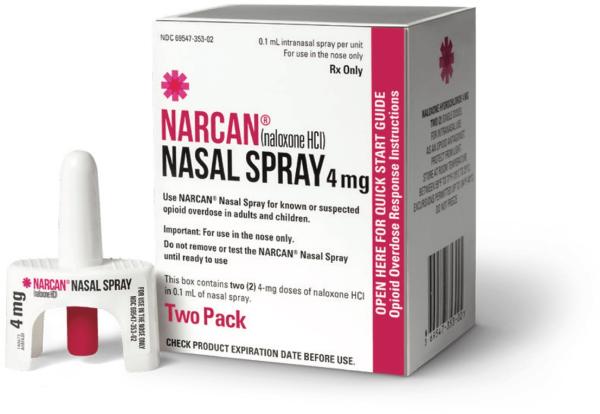
Narcan Side Effects
Generic name: naloxone
Medically reviewed by Drugs.com. Last updated on Mar 1, 2024.
Note: This document provides detailed information about Narcan Side Effects associated with naloxone. Some dosage forms listed on this page may not apply specifically to the brand name Narcan.
Applies to naloxone: injection solution.
Other dosage forms:
Precautions
The effects of the opioid medicine may last longer than the effects of the naloxone (the active ingredient contained in Narcan). This means the breathing problems and sleepiness could come back. Always call for emergency help after the first dose of naloxone.
Severe opioid withdrawal symptoms may happen suddenly after receiving this medicine. These include body aches, a fever, sweating, runny nose, sneezing, goose bumps, yawning, weakness, shivering or trembling, nervousness, restlessness or irritability, diarrhea, nausea or vomiting, stomach cramps, fast heartbeat, and increased blood pressure.
Some types of opioid medicines (eg, buprenorphine, pentazocine) may require larger or repeat doses of naloxone to reverse the opioid effects.
Do not take other medicines unless they have been discussed with your doctor. This includes prescription or nonprescription (over-the-counter [OTC]) medicines and herbal or vitamin supplements.
Serious side effects of Narcan
Along with its needed effects, naloxone may cause some unwanted effects. Although not all of these side effects may occur, if they do occur they may need medical attention.
Check with your doctor immediately if any of the following side effects occur while taking naloxone:
Incidence not known
- agitation
- body aches
- chest pain
- coughing that sometimes produces a pink frothy sputum
- crying more than the usual (in babies)
- diarrhea
- difficult or trouble breathing
- excessive crying
- fast, pounding, or irregular heartbeat or pulse
- fever
- goosebumps
- increased or excessive unconscious or jerking movements
- irregular, fast or slow, or shallow breathing
- irritability
- nausea or vomiting
- nervousness
- pale or blue lips, fingernails, or skin
- restlessness
- runny nose
- seizures
- shivering
- sneezing
- sweating
- swelling in the legs and ankles
- trembling
- weakness
- yawning
See also:
Opvee
Opvee Nasal Spray is used to treat opioid overdose in patients 12 years and older. Opvee ...
Kloxxado
Kloxxado (naloxone hydrochloride) is used for the emergency treatment of opioid overdose. Includes ...
Botox
Botox is used cosmetically to reduce facial lines and wrinkles and for medical purposes for ...
Zimhi
Zimhi is used for the treatment of an opioid emergency such as an overdose or a possible opioid ...
Zurnai
Zurnai (nalmefene) is an opioid antagonist autoinjector that may be used for the emergency ...
For healthcare professionals
Applies to naloxone: compounding powder, injectable kit, injectable solution, nasal spray, oral solution.
General adverse events
This drug may precipitate abrupt opioid withdrawal in physically dependent persons; signs and symptoms may include body aches, fever, sweating, sneezing, yawning, nausea, vomiting, sweating, lacrimation, rhinorrhea, cramping, insomnia, chills/hot flashes, piloerection, tachycardia, anxiety, restlessness, irritability, tremulousness, hypertension, seizures, and cardiac arrest. In the neonate, opioid withdrawal may also include convulsions, excessive crying, and hyperactive reflexes.[Ref]
Cardiovascular
- Common (1% to 10%): Tachycardia, hypotension, hypertension
- Uncommon (0.1% to 1%): Arrhythmia, bradycardia
- Rare (less than 0.1%): Fibrillation, cardiac arrest
- Frequency not reported: Left ventricular failure, flushing[Ref]
In postoperative patients, many of whom had cardiovascular disease, the following cardiovascular side effects have been reported: hypotension, hypertension, atrial and ventricular tachycardia, ventricular fibrillation, left ventricular failure, and cardiac arrest. Death, coma, and encephalopathy have been reported as sequelae of these events.[Ref]
Nervous system
- Common (1% to 10%): Dizziness, headache
- Uncommon (0.1% to 1%): Tremor
- Rare (less than 0.1%): Seizures
- Frequency not reported: Coma, encephalopathy, convulsions, paraesthesia, grand mal convulsion[Ref]
Death, coma, and encephalopathy have been reported as a result of abrupt postoperative reversal of opioid depression, primarily in patients with preexisting cardiovascular disorders or in those who received other drugs with similar adverse cardiovascular effects.[Ref]
Respiratory
- Very rare (less than 0.01%): Pulmonary edema
- Frequency not reported: Dyspnea, respiratory depression, hypoxia, nasal dryness, nasal edema, nasal congestion, nasal inflammation[Ref]
It has been suggested that pulmonary edema may be due to a centrally mediated massive catecholamine response leading to a dramatic shift of blood volume into the pulmonary vascular bed resulting in increased hydrostatic pressures.
Nasal dryness, nasal edema, nasal congestion, and nasal inflammation were the most common adverse reactions reported in clinical trials with naloxone nasal spray.[Ref]
Local
- Frequency not reported: Nonspecific injection site reactions, irritation of vessel was after IV administration[Ref]
Gastrointestinal
Dermatologic
- Very rare (less than 0.01%): Erythema multiforme
- Frequency not reported: Sweating[Ref]
Hypersensitivity
- Very rare (less than 0.01%): Allergic reactions including urticaria, rhinitis, dyspnea, Quincke's edema, anaphylactic shock[Ref]
Psychiatric
- Frequency not reported: Agitation, hallucination, tremulousness[Ref]
Musculoskeletal
- Frequency not reported: Musculoskeletal pain[Ref]
Musculoskeletal pain was one of the more commonly reported adverse reactions in clinical trials with naloxone nasal spray.[Ref]
References
1. (2001) "Product Information. Narcan (naloxone)." DuPont Pharmaceuticals
2. Cerner Multum, Inc. "UK Summary of Product Characteristics."
3. Cerner Multum, Inc. "Australian Product Information."
Frequently asked questions
- How do I get free Narcan emergency kits?
- How long does Narcan (naloxone) block opiates?
- How do you administer Narcan (naloxone)?
- How does Narcan (naloxone) work in an overdose?
- How do you administer Narcan Nasal Spray?
- What are the different types of buprenorphine/naloxone?
More about Narcan (naloxone)
- Check interactions
- Compare alternatives
- Pricing & coupons
- Reviews (5)
- Drug images
- Latest FDA alerts (2)
- Dosage information
- During pregnancy
- FDA approval history
- Drug class: antidotes
- Breastfeeding
Patient resources
- Narcan drug information
- Narcan injection
- Narcan (Naloxone Injection) (Advanced Reading)
- Narcan (Naloxone Nasal) (Advanced Reading)
Other brands
Kloxxado, Zimhi, Evzio, Rezenopy, RiVive
Professional resources
Other brands
Kloxxado, Zimhi, Evzio, Rezenopy, RiVive
Related treatment guides
Further information
Narcan side effects can vary depending on the individual. Always consult your healthcare provider to ensure the information displayed on this page applies to your personal circumstances.
Note: Medication side effects may be underreported. If you are experiencing side effects that are not listed, submit a report to the FDA by following this guide.