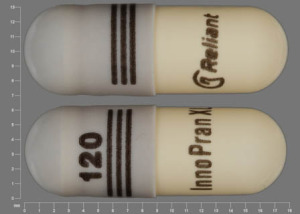
InnoPran XL Side Effects
Generic name: propranolol
Medically reviewed by Drugs.com. Last updated on Nov 12, 2023.
Note: This document contains side effect information about propranolol. Some dosage forms listed on this page may not apply to the brand name InnoPran XL.
Applies to propranolol: oral capsule extended release, oral solution, oral tablet. Other dosage forms:
Serious side effects of InnoPran XL
Along with its needed effects, propranolol (the active ingredient contained in InnoPran XL) may cause some unwanted effects. Although not all of these side effects may occur, if they do occur they may need medical attention.
Check with your doctor immediately if any of the following side effects occur while taking propranolol:
More common
- in children- Chest tightness
- cough producing mucus
- difficulty with breathing
Incidence not known
- Black, tarry stools
- blistering, peeling, or loosening of the skin
- blood in the urine
- bloody nose
- bloody stools
- blurred or loss of vision
- body aches or pain
- burning, crawling, itching, numbness, prickling, "pins and needles", or tingling feelings
- chest pain or discomfort
- confusion about identity, place, and time
- congestion
- constipation
- cough
- cracks in the skin
- crying
- decreased awareness or responsiveness
- decreased urine output
- depersonalization
- diarrhea
- difficulty with swallowing
- dilated neck veins
- disturbed color perception
- dizziness, faintness, or lightheadedness when getting up suddenly from a lying or sitting position
- double vision
- dryness or soreness of the throat
- dysphoria
- euphoria
- fast, pounding, slow, or irregular heartbeat
- fever and chills
- general feeling of discomfort, illness, or weakness
- hair loss
- halos around lights
- headaches
- heavier menstrual periods
- hoarseness
- irregular breathing
- lightheadedness, dizziness, or fainting
- loss of heat from the body
- mental depression
- mimicry of speech or movements
- muscle or joint pain
- mutism
- nausea
- negativism
- night blindness
- noisy breathing
- overbright appearance of lights
- paleness or cold feeling in the fingertips and toes
- paranoia
- peculiar postures or movements, mannerisms, or grimacing
- pinpoint red or purple spots on the skin
- puffiness or swelling of the eyelids or around the eyes, face, lips, or tongue
- quick to react or overreact emotionally
- rapidly changing moods
- rectal bleeding
- red skin lesions, often with a purple center
- red, irritated eyes
- red, swollen skin
- reddening of the skin, especially around the ears
- runny nose
- scaly skin
- seeing, hearing, or feeling things that are not there
- severe sleepiness
- short-term memory loss
- skin irritation or rash, including rash that looks like psoriasis
- skin rash, hives, or itching
- stomach pain and tenderness
- sores, ulcers, or white spots in the mouth or on the lips
- sweating
- swelling of the eyes, face, fingers, feet, or lower legs
- swollen glands
- tender, swollen glands in the neck
- tingling or pain in fingers or toes when exposed to cold
- tunnel vision
- unusual bleeding or bruising
- unusual tiredness or weakness
- voice changes
- vomiting
- weight gain
Other side effects of InnoPran XL
Some side effects of propranolol may occur that usually do not need medical attention. These side effects may go away during treatment as your body adjusts to the medicine. Also, your health care professional may be able to tell you about ways to prevent or reduce some of these side effects.
Check with your health care professional if any of the following side effects continue or are bothersome or if you have any questions about them:
More common
- in children- Anxiety
- dry mouth
- hyperventilation
- irritability
- restlessness
- shaking
- sleepiness or unusual drowsiness
- trouble sleeping
- unusual dreams
Less common
- in children- Decreased appetite
Incidence not known
- Dry eyes
- heartburn
- loss of strength or energy
- muscle weakness
- pain or discomfort in the chest, upper stomach, or throat
- stomach cramps
- unusual drowsiness, dullness, or feeling of sluggishness
- vivid dreams
For Healthcare Professionals
Applies to propranolol: intravenous solution, oral capsule extended release, oral concentrate, oral liquid, oral solution, oral tablet.
Cardiovascular
Common (1% to 10%): Hypotension, cold extremities, Raynaud's phenomenon
Uncommon (0.1% to 1%): Heart failure, precipitation of heart block
Rare (less than 0.1%): Exacerbation of claudication, postural hypotension (which may be associated with syncope)
Frequency not reported: Bradycardia, congestive heart failure[Ref]
Use of a nonselective beta-blocker like propranolol may at least blunt cardiac output in some patients, especially those with preexisting left ventricular systolic dysfunction and during exertion. Data have shown that cardiac conditioning can delay or attenuate this side effect of propranolol.
Abrupt cessation of propranolol therapy may result in hypertension, myocardial infarction, and angina pectoris in some patients.
Paradoxical hypertension may occur in patients with pheochromocytoma, unless alpha-adrenergic blockade is already instituted.
At least two cases of electrical alternans associated with propranolol are reported from pediatric cases. In one case, electrical alternans was clearly not rate-related (since it occurred during propranolol therapy at a slower rate than the patient's "native" ventricular tachycardia) and was associated with echocardiographically-demonstrated mechanical alternans.[Ref]
Nervous system
Common (1% to 10%): Fatigue and/or lassitude (often transient), sleep disturbances, nightmares, sleep disorder, agitation, somnolence, irritability
Rare (less than 0.1%): Dizziness, paresthesia (especially of the hands)
Very rare (less than 0.01%): Seizure (linked to hypoglycemia)
Frequency not reported: Reduction or loss of libido, lightheadedness, mental depression (manifested by insomnia), weakness, catatonia, hallucinations, an acute reversible syndrome characterized by disorientation for time and place, short-term memory loss, emotional lability, slightly clouded sensorium[Ref]
Rare cases of paresthesias and myasthenia gravis have been associated with propranolol.[Ref]
Renal
Uncommon (0.1% to 1%): Renal insufficiency (related to lowering of systemic blood pressure)[Ref]
There are reports of patients who experienced reversible renal insufficiency with no decline in systemic blood pressure, but these patients had preexisting renal disease. This may be important in patients with preexisting renal insufficiency. New or worsened renal dysfunction has been reported in patients with underlying renal disease and no decline in systemic blood pressure.[Ref]
Respiratory
Rare (less than 0.1%): Dyspnea, worsening of reactive airways diseases, bronchospasm in patients with bronchial asthma or a history of asthmatic complaints (sometimes fatal)[Ref]
Limited data have shown a mean fall in maximal midexpiratory flow rate (MMFR) during propranolol therapy relative to placebo in nine of ten patients whose lung function was assessed. Interestingly, the fall was not related to smoking or to atopic status, suggestive of resting beta-adrenergic bronchodilator activity in nonasthmatic subjects.
Non-selective beta-blockers, such as propranolol, are used with caution in patients with asthma and chronic obstructive pulmonary disease due to inhibition of bronchodilation.[Ref]
Endocrine
Very rare (less than 0.01%): Hypoglycemia (particularly in neonates, infants, children, elderly patients, patients on hemodialysis, patients on concomitant antidiabetic therapy, patients with prolonged fasting and patients with chronic liver disease), hypertriglyceridemia[Ref]
Beta-blockers, such as propranolol, are used with caution in patients with diabetes due to masking of the catecholamine response to hypoglycemia. Propranolol may also mask the signs of hyperthyroidism by the same mechanism.
Propranolol has been associated with significant increases in serum triglycerides, fasting blood glucose, and LDL and VLDL cholesterol, and significant decreases in HDL cholesterol.[Ref]
Gastrointestinal
Uncommon (0.1% to 1%): Anorexia, nausea, vomiting, diarrhea, abdominal pain, flatulence, decreased appetite[Ref]
Psychiatric
One study of 34 hypertensive patients who were taking propranolol (the active ingredient contained in InnoPran XL) found the incidence of depressive symptoms in this population to be 50% to 74% (depending on the criteria used). Propranolol-induced depression may be more likely in patients with a personal or family history of depression. Of the 34 patients, 12 had a history of depression and 8 had a history of substance abuse, alcoholism, or a family history of psychiatric disorders. Since none of the 12 patients with a history of depression were clinically depressed at the start of propranolol therapy and were comparable by age, diagnosis, and propranolol dosage to the other 22 patients, a comparison was made. Patients with a personal or family history of depression had significantly higher scores on depression scales than those without such histories.
A 72-year-old retired college professor with no history of affective disorders developed progressive sadness, tearfulness, hopelessness, decreased energy, social withdrawal, anhedonia, insomnia, and decreased memory and concentration within two weeks after beginning propranolol monotherapy for hypertension. The signs and symptoms of depression resolved upon substitution with a thiazide diuretic. Interestingly, the patient later was treated for recurrent depression while not receiving propranolol.
Rare cases of psychoses associated with propranolol have been reported.[Ref]
Rare (less than 0.1%): Depression (dose dependent), hallucinations, psychoses, mood changes, confusion, memory loss
Postmarketing: Hallucinations[Ref]
Hypersensitivity
Rare (less than 0.1%): Anaphylaxis, contact dermatitis[Ref]
Hematologic
Uncommon (0.1% to 1%): Reduction of platelet adhesiveness, thrombocytopenic purpura, nonthrombocytopenic purpura, agranulocytosis, eosinophilia
Postmarketing: Agranulocytosis[Ref]
Dermatologic
Rare (less than 0.1%): Psoriatic flares
Frequency not reported: Stevens - Johnson syndrome, toxic epidermal necrolysis, exfoliative dermatitis, erythema multiforme, urticaria, purpura, alopecia, skin rashes, SLE-like reactions
Postmarketing reports: Dermatitis psoriasiform, purpura[Ref]
Immunologic
Postmarketing reports: Enhanced immune system[Ref]
Propranolol can enhance the immune system by causing an increase in the number of circulating T cells, increased interleukin-2 (IL-2) secretion, increased expression of IL-2 receptors, and increased lymphocyte production in response to the T cell mitogen Con A. Interestingly, NK (natural killer) cell activity may be decreased during propranolol therapy, although the number of circulating NK cells may remain unchanged. These results are consistent with previous data showing decreased immunologic function during periods of elevated sympathetic activity, such as congestive heart failure, uremia, or life-threatening events.[Ref]
Genitourinary
Frequency not reported: Male impotence, Peyronie's disease[Ref]
Metabolic
Frequency not reported: Weight gain[Ref]
The mechanism by which propranolol induces weight gain is unknown. Some investigators have reported a 4% to 9% reduction in total energy expenditure and a 25% reduction in thermogenic response to food during beta-blocker treatment.[Ref]
Musculoskeletal
Very rare (less than 0.01%): Myasthenia gravis like syndrome or exacerbation of myasthenia gravis
Frequency not reported: Myopathy, myotonia[Ref]
Hepatic
Very rare (less than 0.01%): Elevated liver function tests[Ref]
Ocular
Rare (less than 0.1%): Dry eyes, visual disturbances[Ref]
Frequently asked questions
More about InnoPran XL (propranolol)
- Check interactions
- Compare alternatives
- Pricing & coupons
- Reviews (4)
- Drug images
- Dosage information
- During pregnancy
- Drug class: group II antiarrhythmics
- Breastfeeding
- En español
Patient resources
Other brands
Inderal, Inderal LA, Inderal XL, Hemangeol
Professional resources
Other brands
Inderal, Inderal LA, Inderal XL, Hemangeol
Related treatment guides
References
1. Grant RH, Keelan P, Kernohan RJ, et al. Multicenter trial of propranolol in angina pectoris. Am J Cardiol. 1966;18:361-5.
2. Stephen SA. Unwanted effects of propranolol. Am J Cardiol. 1966;18:463-72.
3. Prichard BN, Gillam PM. Treatment of hypertension with propranolol. Br Med J. 1969;1:7-16.
4. Nies AS, McNeil JS, Schrier RW. Mechanism of increased sodium reabsorption during propranolol administration. Circulation. 1971;44:596-604.
5. Krauss XH, Schalekamp MA, Kolsters G, et al. Effects of chronic beta-adrenergic blockade on systemic and renal haemodynamic responses to hyperosmotic saline in hypertensive patients. Clin Sci. 1972;43:385-91.
6. Beilin LJ, Juel-Jensen BE. Alpha and beta adrenergic blockade in hypertension. Lancet. 1972;1:979-82.
7. Greenblatt DJ, Koch-Weser J. Adverse reactions to propranolol in hospitalized medical patients: a report from the Boston Collaborative Drug Surveillance Program. Am Heart J. 1973;86:478-84.
8. Ibsen H, Sederberg-Olsen P. Changes in glomerular filtration rate during long-term treatment with propranolol in patients with arterial hypertension. Clin Sci. 1973;44:129-34.
9. Morgan TO, Anavekar SN, Sabto J, et al. A comparison of beta adrenergic blocking drugs in the treatment of hypertension. Postgrad Med J. 1974;50:253-9.
10. Shand DG. Propranolol. Dis Mon. 1974;Oct:1-31.
11. Warren DJ, Swainson CP, Wright N. Deterioration in renal function after beta-blockade in patients with chronic renal failure and hypertension. Br Med J. 1974;2:193-4.
12. Greenblatt DJ, Koch-Weser. Adverse reactions to beta-adrenergic receptor blocking drugs: a report from the Boston Collaborative Drug Surveillance Program. Drugs. 1974;7:118-29.
13. Miller RR, Olson HG, Amsterdam EA, Mason DT. Propranolol-withdrawal rebound phenomenon: exacerbation of coronary events after abrupt cessation of antianginal therapy. N Engl J Med. 1975;293:416-8.
14. Holland OB, Kaplan NM. Propranolol in the treatment of hypertension. N Engl J Med. 1976;294:930-6.
15. Bauer JH, Brooks CS. The long-term effect of propranolol therapy on renal function. Am J Med. 1979;66:405-10.
16. Sobel BE. Propranolol and threatened myocardial infarction. N Engl J Med. 1979;300:191-3.
17. Abrams J, Allen J, Allin D, et al. Efficacy and safety of esmolol vs propranolol in the treatment of supraventricular tachyarrhythmias: a multicenter double-blind clinical trial. Am Heart J. 1985;110:913-22.
18. Samuel P, Chin B, Schoenfeld BH, et al. Comparison of the effect of pindolol vs propranolol on the lipid profile in patients treated for hypertension. Br J Clin Pharmacol. 1987;24:s63-4.
19. Martinez-Mir I, Navarro-Badenes J, Palop V, Morales-Olivas FJ, Rubio E. Weight gain induced by long-term propranolol treatment. Ann Pharmacother. 1993;27:512.
20. Crosson JE, Dunnigan A. Propranolol induced electrical and mechanical alternans in orthodromic reciprocating tachycardia. Pacing Clin Electrophysiol. 1993;16:496-500.
21. Broeder CE, Thomas EL, Martin NB, Hofman Z, Jesek JK, Scruggs KD, Wambsgans KC, Wilmore JH. Effects of propranolol and pindolol on cardiac output during extended periods of low-intensity physical activity. Am J Cardiol. 1993;72:1188-95.
22. Sowinski KM, Burlew BS, Johnson JA. Racial differences in sensitivity to the negative chronotropic effects of propranolol in healthy men. Clin Pharmacol Ther. 1995;57:678-83.
23. Verspeelt J, Delocht P, Amery WK. Post-marketing cohort study comparing the safety and efficacy of flunarizine and propranolol in the prophylaxis of migraine. Cephalalgia. 1996;16:328-36.
24. Product Information. InnoPran XL (propranolol). Reliant Pharmaceuticals LLC. 2003.
25. Cerner Multum, Inc. UK Summary of Product Characteristics.
26. Schoenberger JA, Croog SH, Sudilovsky A, et al. Self-reported side effects from antihypertensive drugs: a clinical trial. Am J Hypertens. 1990;3:123-32.
27. Choi KL, Wat MS, Ip TP, Kung AWC, Lam KSL. Phaeochromocytoma associated with myasthenia gravis precipitated by propranolol treatment. Aust N Z J Med. 1995;25:257.
28. Product Information. Inderal LA (propranolol). Wyeth Laboratories. 2008.
29. Darga LL, Hakim MJ, Lucas CP, Franklin BA. Comparison of the effects of guanadrel sulfate and propranolol on blood pressure, functional capacity, serum lipoproteins and glucose in systemic hypertension. Am J Cardiol. 1991;67:590-6.
30. Horvath JS, Woolcock AJ, Tiller DJ, Donnelly P, Armstrong J, Caterson R. A comparison of metoprolol and propranolol on blood pressure and respiratory function in patients with hypertension. Aust N Z J Med. 1978;8:1-6.
31. Benson MK, Berrill WT, Cruickshank JM, Sterling GS. A comparison of four B-adrenoceptor antagonists in patients with asthma. Br J Clin Pharmacol. 1978;5:415-9.
32. van der Woude HJ, Zaagsma J, Postma DS, Winter TH, van Hulst M, Aalbers R. Detrimental effects of beta-blockers in COPD: a concern for nonselective beta-blockers. Chest. 2005;127:818-24.
33. Dornhorst A, Powell SH, Pensky J. Aggravation by propranolol of hyperglycaemic effect of hydrochlorothiazide in type II diabetics without alteration of insulin secretion. Lancet. 1985;1:123-6.
34. Lind L, Pollare T, Berne C, Lithell H. Long-term metabolic effects of antihypertensive drugs. Am Heart J. 1994;128:1177-83.
35. Sasaki J, Kajiyama G, Kusukawa R, Mori H, Koga S, Takagi R, Tanaka N, Ogawa N, Arakawa K. Effect of bevantolol and propranolol on serum lipids in patients with essential hypertension. Int J Clin Pharmacol Ther. 1994;32:660-4.
36. Fogari R, Zoppi A, Corradi L, Preti P, Mugellini A, Lusardi P. beta-blocker effects on plasma lipids during prolonged treatment of hypertensive patients with hypercholesterolemia. J Cardiovasc Pharmacol. 1999;33:534-9.
37. Koksal AS, Uskudar O, Koklu S, Yuksel O, Beyazit Y, Sahin B. Propranolol-exacerbated mesenteric ischemia in a patient with hyperthyroidism. Ann Pharmacother. 2005;39:559-62.
38. Parker WA. Propranolol-induced depression and psychosis. Clin Pharm. 1985;4:214-8.
39. Cunnane JG, Blackwood GW. Psychosis with propanolol: still not recognized? Postgrad Med J. 1987;63:57-8.
40. Levinson DF, Acquaviva J. Exacerbation of panic disorder during propranolol therapy. J Clin Psychopharmacol. 1988;8:193-5.
41. Pollack MH, Rosenbaum JF, Cassem NH. Propranolol and depression revisited: three cases and a review. J Nerv Ment Dis. 1985;173:118-9.
42. Thiessen BQ, Wallace SM, Blackburn JL, et al. Increased prescribing of antidepressants subsequent to beta-blocker therapy. Arch Intern Med. 1990;150:2286-90.
43. Griffin SJ, Friedman MJ. Depressive symptoms in propranolol users. J Clin Psychiatry. 1986;47:453-7.
44. Love JN, Handler JA. Toxic psychosis: an unusual presentation of propranolol intoxication. Am J Emerg Med. 1995;13:536-7.
45. Parker SD, Curry CS, Hirshman CA. A life-threatening reaction after propranolol administration in the operating room. Anesth Analg. 1990;70:220-1.
46. Valsecchi R, Leighissa P, Piazzolla S, Naldi L, Cainelli T. Occupational contact dermatitis from propranolol. Contact Dermatitis. 1994;30:177.
47. Ring ME, Corrigan JJ Jr, Fenster PE. Antiplatelet effects of oral diltiazem, propranolol, and their combination. Br J Clin Pharmacol. 1987;24:615-20.
48. Hu CH, Miller AC, Peppercorn R, Farber EM. Generalized pustular psoriasis provoked by propranolol. Arch Dermatol. 1985;121:1326-7.
49. Massa MC, Jason SM, Gradini R, Welykyj S. Lichenoid drug eruption secondary to propranolol. Cutis. 1991;48:41-3.
50. Maisel A, Murray D, Lotz M, Rearden A, Irwin M, Michel M. Propranolol treatment affects parameters of human immunity. Immunopharmacology. 1991;22:157-64.
51. Kasiske BL, Ma JZ, Kalil RS, Louis TA. Effects of antihypertensive therapy on serum lipids. Ann Intern Med. 1995;122:133-41.
52. Taylor FR. Weight change associated with the use of migraine-preventive medications. Clin Ther. 2008;30:1069-80.
53. Imai Y, Watanabe N, Hashimoto J, Nishiyama A, Sakuma H, Sekino H, Omata K, Abe K. Muscle cramps and elevated serum creatine phosphokinase levels induced by beta-adrenoceptor blockers. Eur J Clin Pharmacol. 1995;48:29-34.
Further information
Always consult your healthcare provider to ensure the information displayed on this page applies to your personal circumstances.
Some side effects may not be reported. You may report them to the FDA.