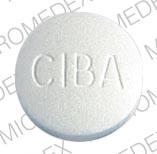
Guanethidine Side Effects
Medically reviewed by Drugs.com. Last updated on Aug 19, 2023.
Applies to guanethidine: oral tablet.
Warning
Use caution when driving, operating machinery, or performing other hazardous activities. Guanethidine may cause dizziness or drowsiness. If you experience dizziness or drowsiness, avoid these activities.
Use caution when rising from a sitting or lying position, especially first thing in the morning. Dizziness may occur while taking guanethidine and may result in a fall.
Do not stop taking guanethidine suddenly without first talking to your doctor. This could cause severely high blood pressure, nervousness, and anxiety.
Before having surgery, tell your doctor or dentist that you are taking this medication.
If you experience any of the following serious side effects, stop taking guanethidine and seek emergency medical attention or contact your doctor immediately:
-
an allergic reaction (difficulty breathing; closing of the throat; swelling of the lips, tongue, or face; or hives);
-
irregular heartbeats;
-
heart failure (shortness of breath, swelling of ankles or legs, sudden weight gain of 5 pounds or more); or
-
chest pain.
Other, less serious side effects are more likely to occur. Continue to take guanethidine and talk to your doctor if you experience
-
unusual fatigue or drowsiness;
-
dizziness (avoid standing up to quickly and use caution when performing hazardous activities);
-
anxiety, depression, or nightmares;
-
diarrhea, nausea, or vomiting (take guanethidine with food or milk if it upsets your stomach);
-
stuffy nose or a dry mouth (sucking on ice chips or sugarless hard candy may relieve a dry mouth);
-
blurred vision;
-
weight gain; or
-
impotence or difficulty ejaculating.
Side effects other than those listed here may also occur. Talk to your doctor about any side effect that seems unusual or that is especially bothersome.
For Healthcare Professionals
Applies to guanethidine: oral tablet.
Cardiovascular
Cardiovascular side effects can result from excessive sympathetic blockade or a relative increase in parasympathetic tone. Orthostatic hypotension is reported in approximately 15% of patients, some of whom experience syncope.
Unopposed or excessive parasympathetic tone can cause excessive bradycardia in rare cases. This may cause serious problems in patients with underlying sinus node dysfunction.
Guanethidine can cause generalized edema in 10% to 15% of patients. Some patients with preexisting congestive heart failure do not tolerate this, and require concomitant diuretic therapy.[Ref]
The risk of orthostatic hypotension, sometimes followed by syncope, is greatest within the first 10 minutes after dosing, early in the morning, and in hypovolemic patients. It is accentuated by alcohol, hot weather, or exercise--all of which are associated with peripheral vasodilation. The manufacturer recommends that guanethidine be gradually withdrawn over at least two weeks prior to administration of general anesthetics to avoid cardiovascular collapse during induction.[Ref]
Gastrointestinal
Gastrointestinal side effects are also related to increased parasympathetic tone. Diarrhea is reported in 11% of patients, some of whom discontinued therapy because of it. Dry mouth or parotid tenderness are reported in approximately 5% of patients.[Ref]
Genitourinary
Large studies report sexual impotence as a relatively uncommon genitourinary complaint, occurring in only approximately 2% of male patients. Smaller studies, where specific questions were asked of male patients reveal an incidence of impotence as high as 60%. Delayed or retrograde ejaculation and decreased sperm counts are reported. Impotence appears to be reversible upon discontinuation of therapy or reduction in dosage.[Ref]
There is evidence that guanethidine may interfere with ejaculation by inhibiting contraction of the seminal vesicle, ampula and ductus deferens.[Ref]
Respiratory
A relatively common respiratory system complaint, nasal stuffiness in up to 30% of patients, is related to increased parasympathetic tone. Rare reports of dyspnea or exertion unaccompanied by other signs or symptoms of congestive heart failure are associated with guanethidine.[Ref]
Renal
In one study, 58% of patients with or without preexisting elevated BUN developed an increase in the BUN during guanethidine therapy. The study did not, however, quantify the rise in BUN, attempt to make an association with the degree of blood pressure control, or attempt to measure other parameters of renal function.[Ref]
Nervous system
Because guanethidine does not affect the central nervous system, neurologic side effects are notably either absent or infrequent. Insomnia and weakness are occasionally reported more often with guanethidine than with placebo.[Ref]
Hypersensitivity
Hypersensitivity reactions are not associated with guanethidine.[Ref]
More about guanethidine
- Check interactions
- Compare alternatives
- Dosage information
- During pregnancy
- Drug class: antiadrenergic agents, peripherally acting
Patient resources
Other brands
Related treatment guides
References
1. Dollery CT, Emslie-Smith D, Milne MD. Clinical and pharmacological studies with guanethidine in the treatment of hypertension. Lancet. 1960;Aug:381-7.
2. Goldberg LI, Zimmerman AM. Guanethidine and methyldopa as therapeutic agents in hypertension: a comparative review. Postgrad Med. 1963;June:548-54.
3. Leishman AW, Sandler G. Guanethidine and hypertension after five years. Angiology. 1967;18:705-16.
4. Weil JV, Chidsey CA. Plasma volume expansion resulting from interference with adrenergic function in normal man. Circulation. 1968;37:54-61.
5. Hansson L, Pascual A, Julius S. Comparison of guanadrel and guanethidine. Clin Pharmacol Ther. 1973;14:204-8.
6. Bulpitt CJ, Dollery CT. Side effects of hypotensive agents evaluated by a self-administered questionnaire. Br Med J. 1973;3:485-90.
7. Tarpley EL. Controlled trial of guanethidine and methyldopa in moderate hypertension. Curr Ther Res Clin Exp. 1974;16:1187-96.
8. Grunstein JA. The problem of postural hypotension. Gerontol Clin (Basel). 1974;16:171-4.
9. Adi FC, Eze CJ, Anwunah A. Comparison of debrisoquine and guanethidine in treatment of hypertension. Br Med J. 1975;Mar:482-5.
10. Woosley RL, Nies AS. Guanethidine. N Engl J Med. 1976;295:1053-8.
11. Walter IE, Nies AS. Safety of single large oral doses of guanethidine. Clin Pharmacol Ther. 1977;21:706-8.
12. Ramirez EA, Elson L, Freis ED, et al. Multiclinic controlled trial of bethanidine and guanethidine in severe hypertension. Circulation. 1977;55:519-25.
13. Scheinman MM, Strauss HC, Evans GT, et al. Adverse effects of sympatholytic agents in patients with hypertension and sinus node dysfunction. Am J Med. 1978;64:1013-20.
14. Rowe J, Bassan MM. Symptomatic sick sinus syndrome due to guanethidine. Hypertension. 1979;1:543-6.
15. Sharpe E, Milaszkiewicz R, Carli F. A case of prolonged hypotension following intravenous guanethidine block. Anaesthesia. 1987;42:1081-4.
16. Kalmanovitch DV, Hardwick PB. Hypotension after guanethidine block. Anaesthesia. 1988;43:256.
17. Malinow SH. Comparison of guanadrel and guanethidine efficacy and side effects. Clin Ther. 1983;5:284-9.
18. Product Information. Ismelin (guanethidine). Ciba-Geigy Pharmaceuticals. 2001;PROD.
19. Jadad AR, Carroll D, Glynn CJ, Mcquay HJ. Intravenous regional sympathetic blockade for pain relief in reflex sympathetic dystrophy: a systematic review and a randomized, double-blind crossover study. J Pain Symptom Manage. 1995;10:13-20.
20. Kaplan R, Claudio M, Kepes E, Gu XF. Intravenous guanethidine in patients with reflex sympathetic dystrophy. Acta Anaesthesiol Scand. 1996;40:1216-22.
21. Bauer GE, Hull RD, Stokes GS, Raftos J. The reversibility of side effects of guanethidine therapy. Med J Aust. 1973;May:930-3.
22. Kedia K, Markland C. The effect of pharmacological agents on ejaculation. J Urol. 1975;114:569-73.
Further information
Always consult your healthcare provider to ensure the information displayed on this page applies to your personal circumstances.
Some side effects may not be reported. You may report them to the FDA.