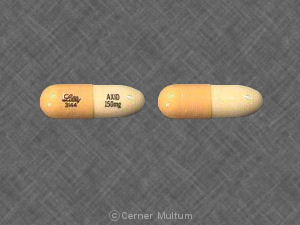
Axid Side Effects
Generic name: nizatidine
Medically reviewed by Drugs.com. Last updated on Jan 10, 2024.
Note: This document provides detailed information about Axid Side Effects associated with nizatidine. Some dosage forms listed on this page may not apply specifically to the brand name Axid.
Applies to nizatidine: oral capsule, oral tablet.
Serious side effects of Axid
Along with its needed effects, nizatidine (the active ingredient contained in Axid) may cause some unwanted effects. Although not all of these side effects may occur, if they do occur they may need medical attention.
Check with your doctor immediately if any of the following side effects occur while taking nizatidine:
More common
- headache
Less common
- chest pain
- cough or hoarseness
- fever or chills
- lack or loss of strength
- lower back or side pain
- painful or difficult urination
Rare
- black, tarry stools
- bloody nose
- blood in the urine
- chest tightness
- clay-colored stools
- diarrhea
- difficulty swallowing
- dizziness
- heavier menstrual periods
- hives, itching, skin rash
- loss of appetite
- mental confusion
- nausea
- pinpoint red spots on the skin
- puffiness or swelling of the eyelids or around the eyes, face, lips, or tongue
- sore throat
- sores, ulcers, or white spots on the lips or in the mouth
- swollen glands
- trouble breathing
- unpleasant breath odor
- unusual bleeding or bruising
- unusual tiredness or weakness
- vomiting of blood
- yellow eyes or skin
Incidence not known
- bleeding gums
- dark urine
- fainting
- fast, pounding, or irregular heartbeat or pulse
- general feeling of discomfort or illness
- muscle aches and pains
- pale skin
- runny nose
- sweating
- swelling of the feet or lower legs
- trouble sleeping
- upper right abdominal or stomach pain
Other side effects of Axid
Some side effects of nizatidine may occur that usually do not need medical attention. These side effects may go away during treatment as your body adjusts to the medicine. Also, your health care professional may be able to tell you about ways to prevent or reduce some of these side effects.
Check with your health care professional if any of the following side effects continue or are bothersome or if you have any questions about them:
More common
- diarrhea
- irritability
- sneezing
- stuffy nose
- vomiting
Less common
- anxiety
- blurred vision
- body aches or pain
- change in vision
- constipation
- difficulty in moving
- dizziness
- dry mouth
- impaired vision
- joint pain
- muscle cramps or stiffness
- nervousness
- swollen joints
- tender, swollen glands in the neck
- tooth disorder
- trouble in swallowing
- trouble sleeping
- voice changes
- weight loss
Rare
- decreased interest in sexual intercourse
- inability to have or keep an erection
- loss in sexual ability, desire, drive, or performance
- swelling of the breasts or breast soreness in both females and males
For healthcare professionals
Applies to nizatidine: oral capsule, oral solution, oral tablet.
General
The most commonly reported side effects included headache, rhinitis, abdominal pain, and diarrhea.[Ref]
Nervous system
- Very common (10% or more): Headache (up to 16.6%)
- Common (1% to 10%): Dizziness, somnolence
- Frequency not reported: Seizure[Ref]
A pediatric patient given 2.5 mg/kg orally 2 times a day for 23 days experienced an EEG-diagnosed seizure during treatment.[Ref]
Gastrointestinal
- Common (1% to 10%): Constipation, diarrhea, dry mouth, dyspepsia, flatulence, gastrointestinal disorder, nausea, nausea and vomiting, tooth disorder, vomiting[Ref]
Respiratory
- Common (1% to 10%): Cough, cough increased, nasal congestion, nasopharyngitis, pharyngitis, rhinitis, sinusitis
- Postmarketing reports: Bronchospasm, laryngeal edema[Ref]
Other
- Common (1% to 10%): Accident, asthenia, fever, injury, pain, pyrexia, surgical procedure[Ref]
Psychiatric
- Common (1% to 10%): Abnormal dreams, anxiety, insomnia, irritability, nervousness
- Postmarketing reports: Decreased libido, reversible mental confusion[Ref]
Dermatologic
- Common (1% to 10%): Pruritus, rash, sweating, urticaria
- Postmarketing reports: Exfoliative dermatitis[Ref]
Musculoskeletal
Immunologic
- Common (1% to 10%): Infection
- Rare (0.01% to 0.1%): Serum sickness, serum sickness-like reactions[Ref]
Cardiovascular
- Common (1% to 10%): Chest pain
- Frequency not reported: Short episodes of asymptomatic ventricular tachycardia
- Postmarketing reports: Vasculitis[Ref]
Metabolic
- Common (1% to 10%): Anorexia
- Postmarketing reports: Hyperuricemia unrelated to gout or nephrolithiasis[Ref]
Ocular
- Common (1% to 10%): Amblyopia[Ref]
Hematologic
- Uncommon (0.1% to 1%): Anemia
- Postmarketing reports: Agranulocytosis, eosinophilia, fatal thrombocytopenia, leukopenia, thrombocytopenic purpura[Ref]
Fatal thrombocytopenia was reported in a patient who experienced possible drug-related thrombocytopenia previously received this drug and another histamine-2 (H2) receptor antagonist.[Ref]
Hepatic
- Rare (0.01% to 0.1%): Transient, marked transaminase elevations, transient, marked alkaline phosphatase elevations
- Frequency not reported: Elevated liver enzyme tests (alkaline phosphatase, ALT, AST), hepatocellular injury, transient, asymptomatic transaminase elevations, transient, asymptomatic alkaline phosphatase elevations
- Postmarketing reports: Cholestatic injury, cholestatic injury with jaundice, hepatitis, jaundice, mixed hepatocellular injury, mixed hepatocellular injury with jaundice[Ref]
Some patients developed ALT and/or AST elevations exceeding 500 international units/L, with a report of an ALT level exceeding 2000 international units/L.
Some patients 2 to 18 years developed mild elevations in serum transaminase levels (1 to 2 times the upper limit of normal).
Liver enzyme elevations and liver abnormalities were reversible upon discontinuation of treatment.[Ref]
Hypersensitivity
- Postmarketing reports: Anaphylaxis, hypersensitivity reactions[Ref]
Hypersensitivity reactions included bronchospasm, eosinophilia, laryngeal edema, and rash.[Ref]
Genitourinary
Endocrine
- Postmarketing reports: Gynecomastia[Ref]
References
1. Cerner Multum, Inc. "Australian Product Information."
2. (2002) "Product Information. Axid (nizatidine)." Lilly, Eli and Company
More about Axid (nizatidine)
- Check interactions
- Compare alternatives
- Reviews (2)
- Drug images
- Latest FDA alerts (2)
- Dosage information
- During pregnancy
- Drug class: H2 antagonists
- Breastfeeding
Patient resources
Other brands
Professional resources
Other formulations
Related treatment guides
Further information
Axid side effects can vary depending on the individual. Always consult your healthcare provider to ensure the information displayed on this page applies to your personal circumstances.
Some side effects may not be reported. You may report them to the FDA.