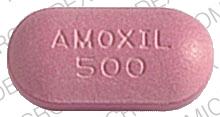
Amoxil Side Effects
Generic name: amoxicillin
Medically reviewed by Drugs.com. Last updated on Jan 23, 2024.
Note: This document provides detailed information about Amoxil Side Effects associated with amoxicillin. Some dosage forms listed on this page may not apply specifically to the brand name Amoxil.
Applies to amoxicillin: oral capsule, oral powder for suspension, oral tablet, oral tablet chewable, oral tablet extended release.
Common side effects of Amoxil
Some side effects of amoxicillin may occur that usually do not need medical attention. These side effects may go away during treatment as your body adjusts to the medicine. Also, your health care professional may be able to tell you about ways to prevent or reduce some of these side effects.
Check with your health care professional if any of the following side effects continue or are bothersome or if you have any questions about them:
Less common
- bad, unusual, or unpleasant (after) taste
- change in taste
Incidence not known
- agitation
- black, hairy tongue
- changes in behavior
- confusion
- convulsions
- discoloration of the tooth (brown, yellow, or gray staining)
- dizziness
- sleeplessness
- trouble with sleeping
- unable to sleep
- white patches in the mouth or throat or on the tongue
- white patches with diaper rash
Serious side effects of Amoxil
Along with its needed effects, amoxicillin (the active ingredient contained in Amoxil) may cause some unwanted effects. Although not all of these side effects may occur, if they do occur they may need medical attention.
Check with your doctor immediately if any of the following side effects occur while taking amoxicillin:
Incidence not known
- abdominal or stomach cramps or tenderness
- back, leg, or stomach pains
- black, tarry stools
- bleeding gums
- blistering, peeling, or loosening of the skin
- bloating
- blood in the urine
- bloody nose
- chest pain
- chills
- clay-colored stools
- cough
- dark urine
- diarrhea
- diarrhea, watery and severe, which may also be bloody
- difficulty with breathing
- difficulty with swallowing
- dizziness
- fast heartbeat
- feeling of discomfort
- fever
- general body swelling
- headache
- heavier menstrual periods
- hives or welts
- increased thirst
- inflammation of the joints
- itching
- joint or muscle pain
- loss of appetite
- muscle aches
- nausea or vomiting
- nosebleeds
- pain
- pain in the lower back
- pain or burning while urinating
- painful or difficult urination
- pale skin
- pinpoint red spots on the skin
- puffiness or swelling of the eyelids or around the eyes, face, lips, or tongue
- rash
- red, irritated eyes
- redness, soreness, or itching skin
- shortness of breath
- sore throat
- sores, ulcers, or white spots in the mouth or on the lips
- sores, welting, or blisters
- sudden decrease in the amount of urine
- swollen, lymph glands
- tenderness
- tightness in the chest
- unpleasant breath odor
- unusual bleeding or bruising
- unusual tiredness or weakness
- unusual weight loss
- vomiting of blood
- watery or bloody diarrhea
- wheezing
- yellow eyes or skin
For healthcare professionals
Applies to amoxicillin: oral capsule, oral powder for reconstitution, oral tablet, oral tablet chewable, oral tablet dispersible, oral tablet extended release.
General
The most frequently reported side effects were diarrhea, nausea, and skin rash.[Ref]
Gastrointestinal
- Common (1% to 10%): Diarrhea, nausea, abdominal pain
- Uncommon (0.1% to 1%): Vomiting
- Frequency not reported: Hemorrhagic/pseudomembranous colitis, tooth discolored, black hairy tongue, glossitis, stomatitis
- Postmarketing reports: Sore mouth/tongue[Ref]
Dermatologic
- Common (1% to 10%): Erythema, exanthema, rash
- Uncommon (0.1% to 1%): Urticaria, pruritus
- Very rare (less than 0.01%): Angioedema, hypersensitivity vasculitis
- Frequency not reported: Erythematous maculopapular rashes, erythema multiforme, Stevens-Johnson Syndrome, bullous dermatitis, exfoliative dermatitis, toxic epidermal necrolysis/Lyell's syndrome, acute generalized exanthematous pustulosis, maculopapular rash, erythema nodosum, pemphigoid reactions[Ref]
Genitourinary
- Common (1% to 10%): Vulvovaginal mycotic infection[Ref]
Nervous system
- Common (1% to 10%): Headache, taste perversion
- Very rare (less than 0.01%): Convulsion, dizziness, hyperkinesia
- Frequency not reported: Reversible hyperactivity, central nervous system toxicity, encephalopathy[Ref]
Immunologic
- Very rare (less than 0.01%): Anaphylaxis, serum sickness-like reaction
- Frequency not reported: Jarisch-Herxheimer reaction[Ref]
Renal
- Very rare (less than 0.01%): Crystalluria, interstitial nephritis
- Frequency not reported: Nephropathy[Ref]
Hematologic
- Very rare (less than 0.01%): Leucopenia, severe neutropenia, agranulocytosis, hemolytic anemia, thrombocytopenia, bleeding time prolonged, prothrombin time prolonged
- Frequency not reported: Anemia, thrombocytopenic purpura, eosinophilia, platelet function defective, lymphadenopathy[Ref]
Other
- Common (1% to 10%): Candidiasis, fungal/mycotic infection
- Very rare (less than 0.01%): Mucocutaneous candidiasis
- Frequency not reported: Intestinal candidiasis, oral moniliasis, vaginal moniliasis, fever, chills[Ref]
Hepatic
- Very rare (less than 0.01%): Hepatitis, cholestatic jaundice, AST increased, ALT increased
- Frequency not reported: Hepatic dysfunction, hepatic cholestasis, acute cytolytic hepatitis[Ref]
Respiratory
- Frequency not reported: Bronchospasm, acute severe dyspnea, pneumonitis allergic[Ref]
Local
- Frequency not reported: Phlebitis, injection site pain[Ref]
Metabolic
- Frequency not reported: Electrolyte disturbance, hypokalemia[Ref]
Musculoskeletal
- Frequency not reported: Joint pain, arthralgia[Ref]
Psychiatric
- Frequency not reported: Agitation, anxiety, insomnia, confusion, behavior changed, hallucination[Ref]
References
1. (2001) "Product Information. Amoxil (amoxicillin)." SmithKline Beecham
2. Cerner Multum, Inc. "UK Summary of Product Characteristics."
3. Cerner Multum, Inc. "Australian Product Information."
4. (2017) "Product Information. Moxatag (amoxicillin)." Fera Pharmaceuticals
Frequently asked questions
- Amoxicillin rash: When should I be concerned?
- Can I give Amoxil 500mg to my 10-year old child?
- What are the best antibiotics for a tooth infection?
- Can you drink alcohol with amoxicillin?
- Does amoxicillin expire? Is it safe to take after expiration?
- Is amoxicillin safe for dogs?
- What is the best antibiotic to treat strep throat?
- Does amoxicillin help with tooth infection and pain?
More about Amoxil (amoxicillin)
- Check interactions
- Compare alternatives
- Reviews (19)
- Drug images
- Dosage information
- During pregnancy
- Generic availability
- Drug class: aminopenicillins
- Breastfeeding
Patient resources
- Amoxil drug information
- Amoxil (Amoxicillin Capsules and Tablets)
- Amoxil (Amoxicillin Chewable Tablets)
Other brands
Moxatag, Trimox, Moxilin, Amoxicot, DisperMox
Professional resources
Other brands
Related treatment guides
Further information
Amoxil side effects can vary depending on the individual. Always consult your healthcare provider to ensure the information displayed on this page applies to your personal circumstances.
Some side effects may not be reported. You may report them to the FDA.