Fentora Prescribing Information
Package insert / product label
Generic name: fentanyl citrate
Dosage form: buccal tablet, sublingual tablet
Drug class: Opioids (narcotic analgesics)
Medically reviewed by Drugs.com. Last updated on Aug 30, 2024.
On This Page
- Indications and Usage
- Dosage and Administration
- Dosage Forms and Strengths
- Contraindications
- Warnings and Precautions
- Adverse Reactions/Side Effects
- Drug Interactions
- Use In Specific Populations
- Drug Abuse and Dependence
- Overdosage
- Description
- Clinical Pharmacology
- Nonclinical Toxicology
- Clinical Studies
- How Supplied/Storage and Handling
- Patient Counseling Information
- Medication Guide
Highlights of Prescribing Information
FENTORA® (fentanyl buccal tablet), CII
Initial U.S. Approval: 1968
WARNING: SERIOUS AND LIFE-THREATENING RISKS FROM USE OF FENTORA
See full prescribing information for complete boxed warning.
- FENTORA exposes users to risks of addiction, abuse, and misuse, which can lead to overdose and death. Assess patient’s risk before prescribing and reassess regularly for these behaviors and conditions. (5.1)
- Serious, life-threatening, or fatal respiratory depression has occurred in patients treated with FENTORA, including following use in opioid non-tolerant patients and improper dosing. Regularly evaluate patients, especially upon initiation or following a dosage increase. To reduce the risk of respiratory depression, proper dosing and titration of FENTORA are essential. The substitution of FENTORA for any other fentanyl product may result in fatal overdose. Due to the risk of fatal respiratory depression, FENTORA is contraindicated in opioid non-tolerant patients and in management of acute or postoperative pain, including headache/migraines. (1, 4, 5.2)
- Accidental ingestion of FENTORA, especially by children, can result in a fatal overdose of fentanyl. Keep out of reach of children. Ensure proper storage and disposal. (2.8, 5.3)
- Concomitant use of opioids with benzodiazepines or other central nervous system (CNS) depressants, including alcohol, may result in profound sedation, respiratory depression, coma, and death. Reserve concomitant prescribing for use in patients for whom alternative treatment options are inadequate. (5.4, 7)
- If opioid use is required for an extended period of time in a pregnant woman, advise the patient of the risk of Neonatal Opioid Withdrawal Syndrome, which may be life-threatening if not recognized and treated. Ensure that management by neonatology experts will be available at delivery. (5.8)
- FENTORA is available only through a restricted program called the TIRF REMS. Pharmacies, outpatients, and healthcare professionals who prescribe to outpatients are required to enroll in the program. Patients must be opioid tolerant to receive a TIRF medicine (5.7)
- When prescribing, do not convert patients on a mcg per mcg basis from any other fentanyl product to FENTORA. (5.5)
- When dispensing, do not substitute with any other fentanyl products. (5.5)
- Concomitant use with CYP3A4 inhibitors (or discontinuation of CYP3A4 inducers) can result in a fatal overdose of fentanyl. (5.6, 7, 12.3)
Recent Major Changes
Indications and Usage for Fentora
FENTORA is an opioid agonist indicated for the management of breakthrough pain in cancer patients 18 years of age and older who are already receiving and who are tolerant to around-the-clock opioid therapy for their underlying persistent cancer pain. (1)
Patients considered opioid tolerant are those who are taking, for one week or longer, around-the-clock medicine consisting of at least 60 mg of oral morphine per day, at least 25 mcg of transdermal fentanyl per hour, at least 30 mg of oral oxycodone per day, at least 8 mg of oral hydromorphone per day, at least 25 mg oral oxymorphone per day, at least 60 mg of oral hydrocodone per day, or an equianalgesic dose of another opioid. Patients must remain on around-the-clock opioids while taking FENTORA.
Limitations of Use:
- Not for use in opioid non-tolerant patients.
- Not for use in the management of acute or postoperative pain, including headache/migraine or dental pain. (4)
- As a part of the TIRF REMS, FENTORA may be dispensed by outpatient pharmacies only to outpatients enrolled in the program. (5.7) For inpatient administration of FENTORA, patient and prescriber enrollment are not required.
Fentora Dosage and Administration
- Patients must require and use around-the-clock opioids when taking FENTORA. (1)
- FENTORA should be prescribed only by healthcare professionals who are knowledgeable about the use of opioids and how to mitigate the associated risks. (2.1)
- Use the lowest effective dosage for the shortest duration of time consistent with individual patient treatment goals. Reserve titration to higher doses of FENTORA for patients in whom lower doses are insufficiently effective and in whom the expected benefits of using a higher dose opioid clearly outweigh the substantial risks. (2.1, 5)
- Initiate the dosing regimen for each patient individually, taking into account the patient's underlying cause and severity of pain, patient response, prior analgesic experience, and risk factors for addiction, abuse, and misuse. (2.1, 5.1)
- Respiratory depression can occur at any time during opioid therapy, especially when initiating and following dosage increases with FENTORA. Consider this risk when selecting an initial dose and when making dose adjustments. (2.1, 5.2)
- Discuss availability of naloxone with the patient and caregiver and assess each patient’s need for access to naloxone, both when initiating and renewing treatment with FENTORA. Consider prescribing naloxone based on the patient’s risk factors for overdose. (2.2, 5.1, 5.2, 5.4)
- Initial dose of FENTORA: 100 mcg. (2.3)
- Initiate titration using multiples of 100 mcg FENTORA tablet. Limit patient access to only one strength of FENTORA at any one time. (2.4)
- Individually titrate to a tolerable dose that provides adequate analgesia using single FENTORA tablet. (2.5)
- No more than two doses can be taken per breakthrough pain episode. (2.3)
- Wait at least 4 hours before treating another episode of breakthrough pain with FENTORA. (2.3)
- Place entire tablet in buccal cavity or under the tongue; tablet is not to be split, crushed, sucked, chewed, or swallowed whole. (2.6)
- When opioid therapy is no longer required, consider discontinuing FENTORA along with a gradual downward of other opioids to minimize possible withdrawal effects. (2.7)
Dosage Forms and Strengths
Buccal Tablets: 100 mcg, 200 mcg, 400 mcg, 600 mcg, and 800 mcg strengths as fentanyl base. (3)
Contraindications
- Opioid non-tolerant patients. (4)
- Management of acute or postoperative pain, including headache/migraine and dental pain. (4)
- Significant respiratory depression. (4)
- Acute or severe bronchial asthma in an unmonitored setting or in absence of resuscitative equipment. (4)
- Known or suspected gastrointestinal obstruction, including paralytic ileus. (4)
- Known hypersensitivity to fentanyl or components of FENTORA. (4)
Warnings and Precautions
- Opioid-Induced Hyperalgesia and Allodynia: Opioid-Induced Hyperalgesia (OIH) occurs when an opioid analgesic paradoxically causes an increase in pain, or an increase in sensitivity to pain. If OIH is suspected, carefully consider appropriately decreasing the dose of the current opioid analgesic or opioid rotation. (5.9)
- Serotonin Syndrome: Potentially life-threatening condition could result from concomitant serotonergic drug administration. Discontinue FENTORA if serotonin syndrome is suspected. (5.10)
- Life-Threatening Respiratory Depression in Patients with Chronic Pulmonary Disease or in Elderly, Cachectic, or Debilitated Patients: Regularly evaluate patients, particularly during initiation and titration. (5.11)
- Adrenal Insufficiency: If diagnosed, treat with physiologic replacement of corticosteroids, and wean patient off of the opioid. (5.12)
- Severe Hypotension: Regularly evaluate patients during dosage initiation and titration. Avoid use of FENTORA in patients with circulatory shock. (5.13)
- Risks of Use in Patients with Increased Intracranial Pressure, Brain Tumors, Head Injury, or Impaired Consciousness: Monitor for sedation and respiratory depression. Avoid use of FENTORA in patients with impaired consciousness or coma. (5.14)
- Application site reactions occurred in 10% of patients in clinical trials and ranged from paresthesia to ulceration and bleeding. (5.19)
Adverse Reactions/Side Effects
Most common (frequency ≥10%): nausea, dizziness, vomiting, fatigue, anemia, constipation, edema peripheral, asthenia, dehydration, and headache. (6.1)
To report SUSPECTED ADVERSE REACTIONS, contact Teva Pharmaceuticals at 1-888-483-8279 or FDA at 1-800-FDA-1088 or www.fda.gov/medwatch.
Drug Interactions
- Mixed Agonist/Antagonist and Partial Agonist Opioid Analgesics: Avoid use with FENTORA because they may reduce analgesic effect of FENTORA or precipitate withdrawal symptoms. (7)
Use In Specific Populations
See 17 for PATIENT COUNSELING INFORMATION and Medication Guide.
Revised: 12/2023
Related/similar drugs
gabapentin, acetaminophen, tramadol, cyclobenzaprine, naproxen, oxycodone, Tylenol
Full Prescribing Information
WARNING: SERIOUS AND LIFE-THREATENING RISKS FROM USE OF FENTORA
Addiction, Abuse, and Misuse
Because the use of FENTORA exposes patients and other users to the risks of opioid addiction, abuse, and misuse, which can lead to overdose and death, assess each patient’s risk prior to prescribing and reassess all patients regularly for the development of these behaviors and conditions [see Warnings and Precautions (5.1)].
Life-Threatening Respiratory Depression
Serious, life-threatening, or fatal respiratory depression has occurred in patients treated with FENTORA, including following use in opioid non-tolerant patients and improper dosing. Evaluate patients for respiratory depression, especially during initiation of FENTORA or following a dosage increase. To reduce the risk of respiratory depression, proper dosing and titration of FENTORA are essential. The substitution of FENTORA for any other fentanyl product may result in fatal overdose [see Warnings and Precautions (5.2)].
Due to the risk of respiratory depression, FENTORA is contraindicated in the management of acute or postoperative pain including headache/migraine and in opioid non-tolerant patients [see Contraindications (4)].
Accidental Ingestion
Accidental ingestion of even one dose of FENTORA, especially by children, can result in a fatal overdose of fentanyl. Death has been reported in children who have accidentally ingested FENTORA. FENTORA must be kept out of reach of children [see Warnings and Precautions (5.3)].
Risks From Concomitant Use with Benzodiazepines or Other CNS Depressants
Concomitant use of opioids with benzodiazepines or other central nervous system (CNS) depressants, including alcohol, may result in profound sedation, respiratory depression, coma, and death. Reserve concomitant prescribing of FENTORA and benzodiazepines or other CNS depressants for use in patients for whom alternative treatment options are inadequate [see Warnings and Precautions (5.4), Drug Interactions (7)].
Risk of Medication Errors
Substantial differences exist in the pharmacokinetic profile of FENTORA compared to other fentanyl products that result in clinically important differences in the extent of absorption of fentanyl and that could result in fatal overdose [see Dosage and Administration (2.1), Warnings and Precautions (5.5)].
- When prescribing, do not convert patients on a mcg per mcg basis from any other fentanyl products to FENTORA [see Dosage and Administration (2.1)].
- When dispensing, do not substitute a FENTORA prescription for other fentanyl products.
Cytochrome P450 3A4 Interaction
The concomitant use of FENTORA with all cytochrome P450 3A4 inhibitors may result in an increase in fentanyl plasma concentrations, which could increase or prolong adverse reactions and may cause potentially fatal respiratory depression. In addition, discontinuation of a concomitantly used cytochrome P450 3A4 inducer may result in an increase in fentanyl plasma concentration. Evaluate patients at frequent intervals receiving FENTORA and any CYP3A4 inhibitor or inducer [see Warnings and Precautions (5.6), Drug Interactions (7), Clinical Pharmacology (12.3)].
Risk Evaluation and Mitigation Strategy (REMS)
Because of the risk for accidental exposure, misuse, abuse, addiction, and overdose, FENTORA is available only through a restricted program required by the Food and Drug Administration, called a Risk Evaluation and Mitigation Strategy (REMS). Under the Transmucosal Immediate Release Fentanyl (TIRF) REMS, pharmacies, outpatients, and healthcare professionals who prescribe to outpatients must enroll in the program. Inpatient pharmacies must develop policies and procedures to verify opioid tolerance in inpatients who require FENTORA while hospitalized. Further information is available at www.TIRFREMSAccess.com or by calling 1-866-822-1483 [see Warnings and Precautions (5.7)].
Neonatal Opioid Withdrawal Syndrome (NOWS)
If opioid use is required for an extended period of time in a pregnant woman, advise the patient of the risk of NOWS, which may be life-threatening if not recognized and treated. Ensure that management by neonatology experts will be available at delivery [see Warnings and Precautions (5.8)].
1. Indications and Usage for Fentora
FENTORA is indicated for the management of breakthrough pain in cancer patients 18 years of age and older who are already receiving and who are tolerant to around-the-clock opioid therapy for their underlying persistent cancer pain.
Patients considered opioid tolerant are those who are taking, for one week or longer, around-the-clock medicine consisting of at least 60 mg of oral morphine per day, at least 25 mcg of transdermal fentanyl per hour, at least 30 mg of oral oxycodone per day, at least 8 mg of oral hydromorphone per day, at least 25 mg oral oxymorphone per day, at least 60 mg of oral hydrocodone per day, or an equianalgesic dose of another opioid. Patients must remain on around-the-clock opioids while taking FENTORA.
Limitations of Use:
- Not for use in opioid non-tolerant patients.
- Not for use in the management of acute or postoperative pain, including headache/migraine and dental pain [see Contraindications (4)].
- As a part of the TIRF REMS, FENTORA may be dispensed by outpatient pharmacies only to outpatients enrolled in the program [see Warnings and Precautions (5.7)]. For inpatient administration of FENTORA, patient and prescriber enrollment are not required.
2. Fentora Dosage and Administration
2.1 Important Dosage and Administration Instructions
- Healthcare professionals who prescribe FENTORA for outpatients must enroll in the TIRF REMS and comply with the requirements of the REMS to ensure safe use of FENTORA [see Warnings and Precautions (5.7)].
- Use the lowest effective dosage for the shortest duration consistent with individual patient treatment goals [see Warnings and Precautions (5)]. Because the risk of overdose increases as opioid doses increase, reserve titration to higher doses of FENTORA for patients in whom lower doses are insufficiently effective and in whom the expected benefits of using a higher dose opioid clearly outweigh the substantial risks.
- It is important to minimize the number of strengths available to patients at any time to prevent confusion and possible overdose.
- There is variability in the opioid analgesic dose and duration needed to adequately manage pain due both to the cause of pain and to individual patient factors. Initiate the dosing regimen for each patient individually, taking into account the patient's severity of pain, patient response, prior analgesic treatment experience, and risk factors for addiction, abuse, and misuse [see Warnings and Precautions (5.1)].
- Respiratory depression can occur at any time during opioid therapy, especially when initiating and following dosage increases with FENTORA. Consider this risk when selecting an initial dose and when making dose adjustments [see Warnings and Precautions (5)].
- Instruct patients and caregivers to take steps to store FENTORA securely and to properly dispose of unused FENTORA as soon as no longer needed [see Warnings and Precautions (5.1, 5.3)].
- FENTORA is not bioequivalent with other fentanyl products. Do not convert patients on a mcg per mcg basis from other fentanyl products. There are no conversion directions available for patients on any other fentanyl products other than ACTIQ (Note: This includes oral, transdermal, or parenteral formulations of fentanyl.) [see Warnings and Precautions (5.5)].
- FENTORA is NOT a generic version of any other transmucosal fentanyl product [see Warnings and Precautions (5.5)].
2.2 Patient Access to Naloxone for the Emergency Treatment of Opioid Overdose
Discuss the availability of naloxone for the emergency treatment of opioid overdose with the patient and caregiver and assess the potential need for access to naloxone, both when initiating and renewing treatment with FENTORA [see Warnings and Precautions (5.2)].
Inform patients and caregivers about the various ways to obtain naloxone as permitted by individual state naloxone dispensing and prescribing requirements or guidelines (e.g., by prescription, directly from a pharmacist, or as part of a community-based program).
Consider prescribing naloxone, based on the patient’s risk factors for overdose, such as concomitant use of CNS depressants, a history of opioid use disorder, or prior opioid overdose. The presence of risk factors for overdose should not prevent the proper management of pain in any given patient [see Warnings and Precautions (5.1, 5.2, 5.4)].
Consider prescribing naloxone if the patient has household members (including children) or other close contacts at risk for accidental ingestion or overdose.
2.3 Initial Dosage
The initial dose of FENTORA is always 100 mcg with the only exception being patients already using ACTIQ.
Patients on ACTIQ
a. For patients being converted from ACTIQ, prescribers must use the Initial Dosing Recommendations for Patients on ACTIQ table below (Table 1). The doses of FENTORA in this table are starting doses and not intended to represent equianalgesic doses to ACTIQ. Patients must be instructed to stop the use of ACTIQ and dispose of any remaining units.
|
Current ACTIQ Dose (mcg) |
Initial FENTORA Dose* |
|
200 |
100 mcg tablet |
|
400 |
100 mcg tablet |
|
600 |
200 mcg tablet |
|
800 |
200 mcg tablet |
|
1200 |
2 x 200 mcg tablets |
|
1600 |
2 x 200 mcg tablets |
*From this initial dose, titrate patient to effective dose.
b. For patients converting from ACTIQ doses equal to or greater than 600 mcg, titration should be initiated with the 200 mcg FENTORA tablet and should proceed using multiples of this tablet strength.
Repeat Dosing
- In cases where the breakthrough pain episode is not relieved after 30 minutes, patients may take ONLY ONE additional dose using the same strength for that episode. Thus patients should take a maximum of two doses of FENTORA for any episode of breakthrough pain.
- Patients MUST wait at least 4 hours before treating another episode of breakthrough pain with FENTORA.
2.4 Dose Titration
- From an initial dose, closely follow patients and change the dosage strength until the patient reaches a dose that provides adequate analgesia with tolerable side effects. Patients should record their use of FENTORA over several episodes of breakthrough pain and discuss their experience with their healthcare provider to determine if a dosage adjustment is warranted.
- Patients whose initial dose is 100 mcg and who need to titrate to a higher dose, can be instructed to use two 100 mcg tablets (one on each side of the mouth in the buccal cavity) with their next breakthrough pain episode. If this dosage is not successful, the patient may be instructed to place two 100 mcg tablets on each side of the mouth in the buccal cavity (total of four 100 mcg tablets). Titrate using multiples of the 200 mcg FENTORA tablet for doses above 400 mcg (600 mcg and 800 mcg). Note: Do not use more than 4 tablets simultaneously.
- In cases where the breakthrough pain episode is not relieved after 30 minutes, patients may take ONLY ONE additional dose of the same strength for that episode. Thus patients should take a maximum of two doses of FENTORA for any breakthrough pain episode. During titration, one dose of FENTORA may include administration of 1 to 4 tablets of the same dosage strength (100 mcg or 200 mcg).
- Patients MUST wait at least 4 hours before treating another episode of breakthrough pain with FENTORA. To reduce the risk of overdose during titration, patients should have only one strength of FENTORA tablets available at any time.
- Patients should be strongly encouraged to use all of their FENTORA tablets of one strength prior to being prescribed the next strength. If this is not practical, unused FENTORA should be disposed of safely [see How Supplied/Storage and Handling (16)]. Dispose of any unopened FENTORA tablets remaining from a prescription as soon as they are no longer needed.
2.5 Maintenance Dosing
- Once titrated to an effective dose, patients should generally use only ONE FENTORA tablet of the appropriate strength per breakthrough pain episode.
- On occasion when the breakthrough pain episode is not relieved after 30 minutes, patients may take ONLY ONE additional dose using the same strength for that episode.
- Patients MUST wait at least 4 hours before treating another episode of breakthrough pain with FENTORA.
-
Dosage adjustment of FENTORA may be required in some patients.
Generally, the FENTORA dose should be increased only when a single administration of the current dose fails to adequately treat the breakthrough pain episode for several consecutive episodes. If after increasing the dosage, unacceptable opioid-related adverse reactions are observed (including an increase in pain after dosage increase), consider reducing the dosage [see Warnings and Precautions (5)]. Adjust the dosage to obtain an appropriate balance between management of pain and opioid-related adverse reactions. - If the patient experiences greater than four breakthrough pain episodes per day, the dose of the around-the-clock opioid used for persistent pain should be re-evaluated.
- Once an effective dose is determined using the titration scheme outlined above, an alternate route of administration is sublingual (placing the tablet under the tongue).
2.6 Administration of FENTORA
Opening the Blister Package:
- Instruct patients not to open the blister until ready to administer FENTORA.
- Separate a single blister unit from the blister card by bending and tearing apart at the perforations.
- Bend the blister unit along the line where indicated.
- Peel back the blister backing to expose the tablet. Patients should NOT attempt to push the tablet through the blister as this may cause damage to the tablet.
- Do not store the tablet once it has been removed from the blister package as the tablet integrity may be compromised and, more importantly, because this increases the risk of accidental exposure to the tablet.
Tablet Administration:
Once the tablet is removed from the blister unit, the patient should immediately place the entire FENTORA tablet in the buccal cavity (above a rear molar, between the upper cheek and gum) or place the entire FENTORA tablet under the tongue. Patients should not split the tablet.
The FENTORA tablet should not be crushed, sucked, chewed, or swallowed whole, as this will result in lower plasma concentrations than when taken as directed.
The FENTORA tablet should be left between the cheek and gum or under the tongue until it has disintegrated, which usually takes approximately 14-25 minutes.
After 30 minutes, if remnants from the FENTORA tablet remain, they may be swallowed with a glass of water.
It is recommended that patients alternate sides of the mouth when administering subsequent doses of FENTORA in the buccal cavity.
2.7 Discontinuation of FENTORA
For patients no longer requiring opioid therapy, consider discontinuing FENTORA along with a gradual downward tapering (titration) of other opioids to minimize possible withdrawal effects. In patients who continue to take their chronic opioid therapy for persistent pain but no longer require treatment for breakthrough pain, FENTORA therapy can usually be discontinued immediately [see Drug Abuse and Dependence (9.3)].
3. Dosage Forms and Strengths
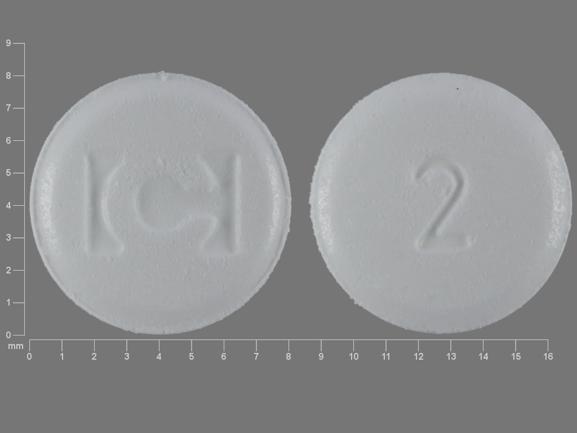
FENTORA tablets are flat-faced, round, beveled-edge in shape; are white in color; and are available in 100 mcg, 200 mcg, 400 mcg, 600 mcg, and 800 mcg strengths as fentanyl base. Each tablet strength is marked with a unique identifier [see How Supplied/Storage and Handling (16)].
4. Contraindications
FENTORA is contraindicated in:
- Opioid non-tolerant patients: Life-threatening respiratory depression and death could occur at any dose in opioid non-tolerant patients [see Indications and Usage (1), Warnings and Precautions (5.2)].
- Significant respiratory depression [see Warnings and Precautions (5.2)].
- Acute or postoperative pain including headache/migraine and dental pain, or acute pain in the emergency department [see Indications and Usage (1)].
- Acute or severe bronchial asthma in an unmonitored setting or in the absence of resuscitative equipment [see Warnings and Precautions (5.11)].
- Known or suspected gastrointestinal obstruction, including paralytic ileus [see Warnings and Precautions (5.15)].
- Known hypersensitivity to fentanyl or components of FENTORA (e.g., anaphylaxis, hypersensitivity) [see Adverse Reactions (6.2)].
5. Warnings and Precautions
5.1 Addiction, Abuse, and Misuse
FENTORA contains fentanyl, a Schedule II controlled substance. As an opioid, FENTORA exposes users to the risks of addiction, abuse, and misuse [see Drug Abuse and Dependence (9)].
Although the risk of addiction in any individual is unknown, it can occur in patients appropriately prescribed FENTORA. Addiction can occur at recommended dosages and if the drug is misused or abused.
Assess each patient’s risk for opioid addiction, abuse, or misuse prior to prescribing FENTORA, and reassess all patients receiving FENTORA for the development of these behaviors and conditions. Risks are increased in patients with a personal or family history of substance abuse (including drug or alcohol abuse or addiction) or mental illness (e.g., major depression). The potential for these risks should not, however, prevent the proper management of pain in any given patient. Patients at increased risk may be prescribed opioids such as FENTORA, but use in such patients necessitates intensive counseling about the risks and proper use of FENTORA along with frequent reevaluation for signs of addiction, abuse, and misuse. Consider prescribing naloxone for the emergency treatment of opioid overdose [see Dosage and Administration (2.2), Warnings and Precautions (5.2)].
Opioids are sought for nonmedical use and are subject to diversion from legitimate prescribed use. Consider these risks when prescribing or dispensing FENTORA. Strategies to reduce these risks include prescribing the drug in the smallest appropriate quantity and advising the patient on careful storage of the drug during the course of treatment and proper disposal of unused drug. Contact local state professional licensing board or state-controlled substances authority for information on how to prevent and detect abuse or diversion of this product.
5.2 Life-Threatening Respiratory Depression
Serious, life-threatening, or fatal respiratory depression has been reported with the use of opioids, even when used as recommended. Respiratory depression, if not immediately recognized and treated, may lead to respiratory arrest and death. Management of respiratory depression may include close observation, supportive measures, and use of opioid antagonists, depending on the patient’s clinical status [see Overdosage (10)]. Carbon dioxide (CO2) retention from opioid-induced respiratory depression can exacerbate the sedating effects of opioids.
While serious, life-threatening, or fatal respiratory depression can occur at any time during the use of FENTORA, the risk is greatest during the initiation of therapy or following a dosage increase.
To reduce the risk of respiratory depression, proper dosing and titration of FENTORA are essential [see Dosage and Administration (2)]. Overestimating the FENTORA dosage can result in a fatal overdose with the first dose. The substitution of FENTORA for any other fentanyl product may result in fatal overdose [see Warnings and Precautions (5.5)].
FENTORA could be fatal to individuals for whom it is not prescribed and for those who are not opioid-tolerant.
Accidental ingestion of even one dose of FENTORA, especially by children, can result in respiratory depression and death due to an overdose of fentanyl [see Warnings and Precautions ( 5.3)].
Educate patients and caregivers on how to recognize respiratory depression and emphasize the importance of calling 911 or getting emergency medical help right away in the event of a known or suspected overdose.
Opioids can cause sleep-related breathing disorders including central sleep apnea (CSA) and sleep-related hypoxemia. Opioid use increases the risk of CSA in a dose-dependent fashion. In patients who present with CSA, consider decreasing the opioid dosage using best practices for opioid taper [see Dosage and Administration (2.7)].
Patient Access to Naloxone for the Emergency Treatment of Opioid Overdose
Discuss the availability of naloxone for the emergency treatment of opioid overdose with the patient and caregiver and assess the potential need for access to naloxone, both when initiating and renewing treatment with FENTORA. Inform patients and caregivers about the various ways to obtain naloxone as permitted by individual state naloxone dispensing and prescribing requirements or guidelines (e.g., by prescription, directly from a pharmacist, or as part of a community-based program). Educate patients and caregivers on how to recognize respiratory depression and emphasize the importance of calling 911 or getting emergency medical help, even if naloxone is administered.
Consider prescribing naloxone, based on the patient’s risk factors for overdose, such as concomitant use of CNS depressants, a history of opioid use disorder, or prior opioid overdose. The presence of risk factors for overdose should not prevent the proper management of pain in any given patient. Also consider prescribing naloxone if the patient has household members (including children) or other close contacts at risk for accidental ingestion or overdose. If naloxone is prescribed, educate patients and caregivers on how to treat with naloxone [see Dosage and Administration (2.2), Warnings and Precautions (5.1, 5.4), Overdosage (10)].
5.3 Increased Risk of Overdose in Children Due to Accidental Ingestion or Exposure
Death has been reported in children who have accidentally ingested transmucosal immediate-release fentanyl products.
Patients and their caregivers must be informed that FENTORA contains a medicine in an amount which can be fatal to a child. Healthcare providers and dispensing pharmacists must specifically question patients or caregivers about the presence of children in the home (on a full time or visiting basis) and counsel them regarding the dangers to children from inadvertent exposure.
Patients and their caregivers must be instructed to keep both used and unused dosage units out of the reach of children. While all units should be disposed of immediately after use, partially consumed units represent a special risk to children. In the event that a unit is not completely consumed it must be properly disposed as soon as possible.
Detailed instructions for the proper storage, administration, disposal, and important instructions for managing an overdose of FENTORA are provided in the FENTORA Medication Guide. Encourage patients to read this information in its entirety and give them an opportunity to have their questions answered.
5.4 Risks from Concomitant Use with Benzodiazepines or Other CNS Depressants (including Alcohol)
Profound sedation, respiratory depression, coma, and death may result from the concomitant use of FENTORA with benzodiazepines and/or other CNS depressants, including alcohol (e.g., non-benzodiazepine sedatives/hypnotics, anxiolytics, tranquilizers, muscle relaxants, general anesthetics, antipsychotics, other opioids). Because of these risks, reserve concomitant prescribing of these drugs for use in patients for whom alternative treatment options are inadequate.
Observational studies have demonstrated that concomitant use of opioid analgesics and benzodiazepines increases the risk of drug-related mortality compared to use of opioid analgesics alone. Because of similar pharmacological properties, it is reasonable to expect similar risk with the concomitant use of other CNS depressant drugs with opioid analgesics [see Drug Interactions (7)].
If the decision is made to prescribe a benzodiazepine or other CNS depressant concomitantly with an opioid analgesic, prescribe the lowest effective dosages and minimum durations of concomitant use. In patients already receiving an opioid analgesic, prescribe a lower initial dose of the benzodiazepine or other CNS depressant than indicated in the absence of an opioid, and titrate based on clinical response. If an opioid analgesic is initiated in a patient already taking a benzodiazepine or other CNS depressant, prescribe a lower initial dose of the opioid analgesic, and titrate based on clinical response. Inform patients and caregivers of this potential interaction and educate them on the signs and symptoms of respiratory depression (including sedation).
If concomitant use is warranted, consider prescribing naloxone for the emergency treatment of opioid overdose [see Dosage and Administration (2.2), Warnings and Precautions (5.2)].
Advise both patients and caregivers about the risks of respiratory depression and sedation when FENTORA is used with benzodiazepines or other CNS depressants (including alcohol and illicit drugs). Advise patients not to drive or operate heavy machinery until the effects of concomitant use of the benzodiazepine or other CNS depressant have been determined. Screen patients for risk of substance use disorders, including opioid abuse and misuse, and warn them of the risk for overdose and death associated with the use of additional CNS depressants including alcohol and illicit drugs [see Drug Interactions (7)].
5.5 Risk of Medication Errors
When prescribing, do not convert a patient to FENTORA from any other fentanyl product on a mcg per mcg basis as FENTORA and other fentanyl products are not equivalent on a microgram per microgram basis.
FENTORA is not a generic version of other transmucosal immediate release fentanyl (TIRF) formulations. When dispensing, do not substitute a FENTORA prescription for any other TIRF formulation under any circumstances. Other TIRF formulations and FENTORA are not equivalent. Substantial differences exist in the pharmacokinetic profile of FENTORA compared to other fentanyl products including other TIRF formulations that result in clinically important differences in the rate and extent of absorption of fentanyl. As a result of these differences, the substitution of FENTORA for any other fentanyl product may result in a fatal overdose.
There are no safe conversion directions available for patients on any other fentanyl products except ACTIQ. (Note: This includes oral, transdermal, or parenteral formulations of fentanyl.) [see Dosage and Administration (2.1)]. Therefore, for opioid-tolerant patients, the initial dose of FENTORA should always be 100 mcg. Individually titrate each patient’s dose to provide adequate analgesia while minimizing side effects [see Dosage and Administration (2.4)].
5.6 Risks of Concomitant Use or Discontinuation of Cytochrome P450 3A4 Inhibitors and Inducers
Concomitant use of FENTORA with a CYP3A4 inhibitor, such as macrolide antibiotics (e.g., erythromycin), azole-antifungal agents (e.g., ketoconazole), and protease inhibitors (e.g., ritonavir), may increase plasma concentrations of fentanyl and prolong opioid adverse reactions, which may cause potentially fatal respiratory depression [see Warnings and Precautions (5.2)], particularly when an inhibitor is added after a stable dose of FENTORA is achieved. Similarly, discontinuation of a CYP3A4 inducer, such as rifampin, carbamazepine, and phenytoin, in FENTORA-treated patients may increase fentanyl plasma concentrations and prolong opioid adverse reactions. When using FENTORA with CYP3A4 inhibitors or discontinuing CYP3A4 inducers in FENTORA-treated patients, evaluate patients at frequent intervals and consider dosage reduction of FENTORA until stable drug effects are achieved [see Drug Interactions (7)].
Concomitant use of FENTORA with CYP3A4 inducers or discontinuation of a CYP3A4 inhibitor could decrease fentanyl plasma concentrations, decrease opioid efficacy or, possibly, lead to a withdrawal syndrome in a patient who had developed physical dependence to fentanyl. When using FENTORA with CYP3A4 inducers or discontinuing CYP3A4 inhibitors, evaluate patients at frequent intervals and consider increasing the opioid dosage if needed to maintain adequate analgesia or if symptoms of opioid withdrawal occur [see Drug Interactions (7)].
5.7 Transmucosal Immediate Release Fentanyl (TIRF) Risk Evaluation and Mitigation Strategy (REMS)
Because of the risk for accidental exposure, misuse, abuse, addiction, and overdose [see Warnings and Precautions (5.1), Drug Abuse and Dependence (9)], FENTORA is available only through a restricted program called the TIRF REMS. Under the TIRF REMS, healthcare professionals who prescribe to outpatients, the outpatients themselves, and pharmacies are required to enroll in the program.
Notable requirements of the TIRF REMS are:
- Prescribers for outpatient use must be certified with the REMS program by enrolling and completing training. Prescribers must document opioid tolerance with every FENTORA prescription.
- Outpatients must be enrolled in the REMS program and must be opioid-tolerant to receive FENTORA [see Dosage and Administration (2.1)].
- Outpatient pharmacies must be certified with the REMS program and verify documentation of opioid tolerance with every FENTORA prescription.
- Inpatient pharmacies must be certified with the REMS program and develop policies and procedures to verify opioid tolerance in inpatients who require FENTORA while hospitalized.
- Wholesalers and distributors must enroll in the REMS program and distribute only to certified pharmacies.
Further information, including a list of certified pharmacies and enrolled distributors, is available at www.TIRFREMSAccess.com or by calling 1-866-822-1483.
5.8 Neonatal Opioid Withdrawal Syndrome
Use of FENTORA for an extended period of time during pregnancy can result in withdrawal in the neonate. Neonatal opioid withdrawal syndrome, unlike opioid withdrawal syndrome in adults, may be life-threatening if not recognized and treated, and requires management according to protocols developed by neonatology experts. Observe newborns for signs of neonatal opioid withdrawal syndrome and manage accordingly. Advise pregnant women using opioids for an extended period of time of the risk of neonatal opioid withdrawal syndrome and ensure that appropriate treatment will be available [see Use in Specific Populations (8.1)].
5.9 Opioid-Induced Hyperalgesia and Allodynia
Opioid-Induced Hyperalgesia (OIH) occurs when an opioid analgesic paradoxically causes an increase in pain, or an increase in sensitivity to pain. This condition differs from tolerance, which is the need for increasing doses of opioids to maintain a defined effect [see Dependence (9.3)]. Symptoms of OIH include (but may not be limited to) increased levels of pain upon opioid dosage increase, decreased levels of pain upon opioid dosage decrease, or pain from ordinarily non-painful stimuli (allodynia). These symptoms may suggest OIH only if there is no evidence of underlying disease progression, opioid tolerance, opioid withdrawal, or addictive behavior.
Cases of OIH have been reported, both with short-term and longer-term use of opioid analgesics. Though the mechanism of OIH is not fully understood, multiple biochemical pathways have been implicated. Medical literature suggests a strong biologic plausibility between opioid analgesics and OIH and allodynia. If a patient is suspected to be experiencing OIH, carefully consider appropriately decreasing the dose of the current opioid analgesic or opioid rotation (safely switching the patient to a different opioid moiety) [see Dosage and Administration (2.7)].
5.10 Serotonin Syndrome with Concomitant Use of Serotonergic Drugs
Cases of serotonin syndrome, a potentially life-threatening condition, have been reported during concomitant use of FENTORA with serotonergic drugs. Serotonergic drugs include selective serotonin reuptake inhibitors (SSRIs), serotonin and norepinephrine reuptake inhibitors (SNRIs), tricyclic antidepressants (TCAs), triptans, 5-HT3 receptor antagonists, drugs that affect the serotonergic neurotransmitter system (e.g., mirtazapine, trazodone, tramadol), certain muscle relaxants (i.e., cyclobenzaprine, metaxalone), and drugs that impair metabolism of serotonin (including MAO inhibitors, both those intended to treat psychiatric disorders and also others, such as linezolid and intravenous methylene blue) [see Drug Interactions (7)]. This may occur within the recommended dosage range.
Serotonin syndrome symptoms may include mental status changes (e.g., agitation, hallucinations, coma), autonomic instability (e.g., tachycardia, labile blood pressure, hyperthermia), neuromuscular aberrations (e.g., hyperreflexia, incoordination, rigidity), and/or gastrointestinal symptoms (e.g., nausea, vomiting, diarrhea) and can be fatal. The onset of symptoms generally occurs within several hours to a few days of concomitant use, but may occur later than that. Discontinue FENTORA if serotonin syndrome is suspected.
5.11 Life-Threatening Respiratory Depression in Patients with Chronic Pulmonary Disease or in Elderly, Cachectic, or Debilitated Patients
The use of FENTORA in patients with acute or severe bronchial asthma in an unmonitored setting or in the absence of resuscitative equipment is contraindicated.
Patients with Chronic Pulmonary Disease: FENTORA-treated patients with significant chronic obstructive pulmonary disease or cor pulmonale, and those with a substantially decreased respiratory reserve, hypoxia, hypercapnia, or pre-existing respiratory depression are at increased risk of decreased respiratory drive including apnea, even at recommended dosages of FENTORA [see Warnings and Precautions (5.2)].
Elderly, Cachectic, or Debilitated Patients: Life-threatening respiratory depression is more likely to occur in elderly, cachectic, or debilitated patients because they may have altered pharmacokinetics or altered clearance compared to younger, healthier patients [see Warnings and Precautions (5.2)].
Regularly evaluate patients, particularly when initiating and titrating FENTORA and when FENTORA is given concomitantly with other drugs that depress respiration [see Warnings and Precautions (5.2), Drug Interactions (7)]. Alternatively, consider the use of non-opioid analgesics in these patients.
5.12 Adrenal Insufficiency
Cases of adrenal insufficiency have been reported with opioid use, more often following greater than one month of use. Presentation of adrenal insufficiency may include non-specific symptoms and signs including nausea, vomiting, anorexia, fatigue, weakness, dizziness, and low blood pressure. If adrenal insufficiency is suspected, confirm the diagnosis with diagnostic testing as soon as possible. If adrenal insufficiency is diagnosed, treat with physiologic replacement doses of corticosteroids. Wean the patient off of the opioid to allow adrenal function to recover and continue corticosteroid treatment until adrenal function recovers. Other opioids may be tried as some cases reported use of a different opioid without recurrence of adrenal insufficiency. The information available does not identify any particular opioids as being more likely to be associated with adrenal insufficiency.
5.13 Severe Hypotension
FENTORA may cause severe hypotension including orthostatic hypotension and syncope in ambulatory patients. There is increased risk in patients whose ability to maintain blood pressure has already been compromised by a reduced blood volume or concurrent administration of certain CNS depressant drugs (e.g. phenothiazines or general anesthetics) [see Drug Interactions (7)]. Regularly evaluate these patients for signs of hypotension after initiating or titrating the dosage of FENTORA. In patients with circulatory shock, FENTORA may cause vasodilation that can further reduce cardiac output and blood pressure. Avoid the use of FENTORA in patients with circulatory shock.
5.14 Risks of Use in Patients with Increased Intracranial Pressure, Brain Tumors, Head Injury, or Impaired Consciousness
In patients who may be susceptible to the intracranial effects of CO2 retention (e.g., those with evidence of increased intracranial pressure or brain tumors), FENTORA may reduce respiratory drive, and the resultant CO2 retention can further increase intracranial pressure. Monitor such patients for signs of sedation and respiratory depression, particularly when initiating therapy with FENTORA.
Opioids may also obscure the clinical course in a patient with a head injury. Avoid the use of FENTORA in patients with impaired consciousness or coma.
5.15 Risks of Use in Patients with Gastrointestinal Conditions
FENTORA is contraindicated in patients with known or suspected gastrointestinal obstruction, including paralytic ileus.
The fentanyl in FENTORA may cause spasm of the sphincter of Oddi. Opioids may cause increases in serum amylase. Regularly evaluate patients with biliary tract disease, including acute pancreatitis for worsening symptoms.
5.16 Increased Risk of Seizures in Patients with Seizure Disorders
The fentanyl in FENTORA may increase the frequency of seizures in patients with seizure disorders, and may increase the risk of seizures occurring in other clinical settings associated with seizures. Regularly evaluate patients with a history of seizure disorders for worsened seizure control during FENTORA therapy.
5.17 Risks of Driving and Operating Machinery
FENTORA may impair the mental or physical abilities needed to perform potentially hazardous activities such as driving a car or operating machinery. Warn patients not to drive or operate dangerous machinery unless they are tolerant to the effects of FENTORA and know how they will react to the medication.
5.18 Cardiac Disease
Intravenous fentanyl may produce bradycardia. Therefore, use FENTORA with caution in patients with bradyarrhythmias.
5.19 Application Site Reactions
Application site reactions occurred in 10% of patients in clinical trials and ranged from paresthesia to ulceration and bleeding [see Adverse Reactions (6)].
6. Adverse Reactions/Side Effects
The following serious adverse reactions are described, or described in greater detail, in other sections:
- Addiction, Abuse, and Misuse [see Warnings and Precautions (5.1)]
- Life-Threatening Respiratory Depression [see Warnings and Precautions (5.2)]
- Interactions with Benzodiazepines and Other CNS Depressants [see Warnings and Precautions (5.4)]
- Neonatal Opioid Withdrawal Syndrome [see Warnings and Precautions (5.8)]
- Opioid-Induced Hyperalgesia and Allodynia [see Warnings and Precautions (5.9)]
- Serotonin Syndrome [see Warnings and Precautions (5.10)]
- Adrenal Insufficiency [see Warnings and Precautions (5.12)]
- Severe Hypotension [see Warnings and Precautions (5.13)]
- Gastrointestinal Adverse Reactions [see Warnings and Precautions (5.15)]
- Seizures [see Warnings and Precautions (5.16)]
6.1 Clinical Studies Experience
Because clinical trials are conducted under widely varying conditions, adverse reaction rates observed in the clinical trials of a drug cannot be directly compared to rates in the clinical trials of another drug and may not reflect the rates observed in practice.
The safety of FENTORA has been evaluated in 304 opioid-tolerant cancer patients with breakthrough pain. The average duration of therapy was 76 days with some patients being treated for over 12 months.
The clinical trials of FENTORA were designed to evaluate safety and efficacy in treating patients with cancer and breakthrough pain; all patients were taking concomitant opioids, such as sustained-release morphine, sustained-release oxycodone or transdermal fentanyl, for their persistent pain.
The adverse event data presented here reflect the actual percentage of patients experiencing each adverse effect among patients who received FENTORA for breakthrough pain along with a concomitant opioid for persistent pain. There has been no attempt to correct for concomitant use of other opioids, duration of FENTORA therapy or cancer-related symptoms.
Table 2 lists, by maximum dose received, adverse events with an overall frequency of 5% or greater within the total population that occurred during titration. The ability to assign a dose-response relationship to these adverse events is limited by the titration schemes used in these studies.
|
System Organ Class MeDRA preferred term, n (%) |
100 mcg (N=45) |
200 mcg (N=34) |
400 mcg (N=53) |
600 mcg (N=56) |
800 mcg (N=113) |
Total (N=304)* |
|
Gastrointestinal disorders |
||||||
|
Nausea |
4 (9) |
5 (15) |
10 (19) |
13 (23) |
18 (16) |
50 (17) |
|
Vomiting |
0 |
2 (6) |
2 (4) |
7 (13) |
3 (3) |
14 (5) |
|
General disorders and administration site conditions |
||||||
|
Fatigue |
3 (7) |
1 (3) |
9 (17) |
1 (2) |
5 (4) |
19 (6) |
|
Nervous system disorders |
||||||
|
Dizziness |
5 (11) |
2 (6) |
12 (23) |
18 (32) |
21 (19) |
58 (19) |
|
Somnolence |
2 (4) |
2 (6) |
6 (12) |
7 (13) |
3 (3) |
20 (7) |
|
Headache |
1 (2) |
3 (9) |
4 (8) |
8 (14) |
10 (9) |
26 (9) |
*Three hundred and two (302) patients were included in the safety analysis.
Table 3 lists, by successful dose, adverse events with an overall frequency of ≥5% within the total population that occurred after a successful dose had been determined.
|
System Organ Class MeDRA preferred term, n (%) |
100 mcg (N=19) |
200 mcg (N=31) |
400 mcg (N=44) |
600 mcg (N=48) |
800 mcg (N=58) |
Total (N=200) |
|
Blood and lymphatic system disorders |
||||||
|
Anemia |
6 (32) |
4 (13) |
4 (9) |
5 (10) |
7 (13) |
26 (13) |
|
Neutropenia |
0 |
2 (6) |
1 (2) |
4 (8) |
4 (7) |
11 (6) |
|
Gastrointestinal disorders |
||||||
|
Nausea |
8 (42) |
5 (16) |
14 (32) |
13 (27) |
17 (31) |
57 (29) |
|
Vomiting |
7 (37) |
5 (16) |
9 (20) |
8 (17) |
11 (20) |
40 (20) |
|
Constipation |
5 (26) |
4 (13) |
5 (11) |
4 (8) |
6 (11) |
24 (12) |
|
Diarrhea |
3 (16) |
0 |
4 (9) |
3 (6) |
5 (9) |
15 (8) |
|
Abdominal pain |
2 (11) |
1 (3) |
4 (9) |
7 (15) |
4 (7) |
18 (9) |
|
General disorders and administration site conditions |
||||||
|
Edema peripheral |
6 (32) |
5 (16) |
4 (9) |
5 (10) |
3 (5) |
23 (12) |
|
Asthenia |
3 (16) |
5 (16) |
2 (5) |
3 (6) |
8 (15) |
21 (11) |
|
Fatigue |
3 (16) |
3 (10) |
9 (20) |
9 (19) |
8 (15) |
32 (16) |
|
Infections and infestations |
||||||
|
Pneumonia |
1 (5) |
5 (16) |
1 (2) |
1 (2) |
4 (7) |
12 (6) |
|
Investigations |
||||||
|
Weight decreased |
1 (5) |
1 (3) |
3 (7) |
2 (4) |
6 (11) |
13 (7) |
|
Metabolism and nutrition disorders |
||||||
|
Dehydration |
4 (21) |
0 |
4 (9) |
6 (13) |
7 (13) |
21 (11) |
|
Anorexia |
1 (5) |
2 (6) |
4 (9) |
3 (6) |
6 (11) |
16 (8) |
|
Hypokalemia |
0 |
2 (6) |
0 |
1 (2) |
8 (15) |
11 (6) |
|
Musculoskeletal and connective tissue disorders |
||||||
|
Back pain |
2 (11) |
0 |
2 (5) |
3 (6) |
2 (4) |
9 (5) |
|
Arthralgia |
0 |
1 (3) |
3 (7) |
4 (8) |
3 (5) |
11 (6) |
|
Neoplasms benign, malignant, and unspecified (including cysts and polyps) |
||||||
|
Cancer pain |
3 (16) |
1 (3) |
3 (7) |
2 (4) |
1 (2) |
10 (5) |
|
Nervous system disorders |
||||||
|
Dizziness |
5 (26) |
3 (10) |
5 (11) |
6 (13) |
6 (11) |
25 (13) |
|
Headache |
2 (11) |
1 (3) |
4 (9) |
5 (10) |
8 (15) |
20 (10) |
|
Somnolence |
0 |
1 (3) |
4 (9) |
4 (8) |
8 (15) |
17 (9) |
|
Psychiatric disorders |
||||||
|
Confusional state |
3 (16) |
1 (3) |
2 (5) |
3 (6) |
5 (9) |
14 (7) |
|
Depression |
2 (11) |
1 (3) |
4 (9) |
3 (6) |
5 (9) |
15 (8) |
|
Insomnia |
2 (11) |
1 (3) |
3 (7) |
2 (4) |
4 (7) |
12 (6) |
|
Respiratory, thoracic, and mediastinal disorders |
||||||
|
Cough |
1 (5) |
1 (3) |
2 (5) |
4 (8) |
5 (9) |
13 (7) |
|
Dyspnea |
1 (5) |
6 (19) |
0 |
7 (15) |
4 (7) |
18 (9) |
In addition, a small number of patients (n=11) with Grade 1 mucositis were included in clinical trials designed to support the safety of FENTORA. There was no evidence of excess toxicity in this subset of patients.
Application Site Reactions: In clinical trials, 10% of all patients exposed to FENTORA reported application site reactions. These reactions ranged from paresthesia to ulceration and bleeding. Application site reactions occurring in ≥1% of patients were pain (4%), ulcer (3%), and irritation (3%). Application site reactions tended to occur early in treatment, were self-limited, and only resulted in treatment discontinuation for 2% of patients.
The duration of exposure to FENTORA varied greatly, and included open-label and double-blind studies. The frequencies listed below represent the ≥1% of patients (and not listed in Tables 2 and 3 above) from three clinical trials (titration and post-titration periods combined) who experienced that event while receiving FENTORA. Events are classified by system organ class.
Adverse Events (≥1%)
Blood and Lymphatic System Disorders: Thrombocytopenia, Leukopenia
Cardiac Disorders: Tachycardia
Gastrointestinal Disorders: Stomatitis, Dry Mouth, Dyspepsia, Upper Abdominal Pain, Abdominal Distension, Dysphagia, Gingival Pain, Stomach Discomfort, Gastroesophageal Reflux Disease, Glossodynia, Mouth Ulceration
General Disorders and Administration Site Conditions: Pyrexia, Application Site Pain, Application Site Ulcer, Chest Pain, Chills, Application Site Irritation, Edema, Mucosal Inflammation, Pain
Hepatobiliary Disorders: Jaundice
Infections and Infestations: Oral Candidiasis, Urinary Tract Infection, Cellulitis, Nasopharyngitis, Sinusitis, Upper Respiratory Tract Infection, Influenza, Tooth Abscess
Injury, Poisoning, and Procedural Complications: Fall, Spinal Compression Fracture
Investigations: Decreased Hemoglobin, Increased Blood Glucose, Decreased Hematocrit, Decreased Platelet Count
Metabolism and Nutrition Disorders: Decreased Appetite, Hypoalbuminemia, Hypercalcemia, Hypomagnesemia, Hyponatremia, Reduced Oral Intake
Musculoskeletal and Connective Tissue Disorders: Pain in Extremity, Myalgia, Chest Wall Pain, Muscle Spasms, Neck Pain, Shoulder Pain
Nervous System Disorders: Hypoesthesia, Dysgeusia, Lethargy, Peripheral Neuropathy, Paresthesia, Balance Disorder, Migraine, Neuropathy
Psychiatric Disorders: Anxiety, Disorientation, Euphoric Mood, Hallucination, Nervousness
Renal and Urinary Disorders: Renal Failure
Respiratory, Thoracic, and Mediastinal Disorders: Pharyngolaryngeal Pain, Exertional Dyspnea, Pleural Effusion, Decreased Breathing Sounds, Wheezing
Skin and Subcutaneous Tissue Disorders: Pruritus, Rash, Hyperhidrosis, Cold Sweat
Vascular Disorders: Hypertension, Hypotension, Pallor, Deep Vein Thrombosis
6.2 Postmarketing Experience
The following adverse reactions have been identified during post approval use of fentanyl. Because these reactions are reported voluntarily from a population of uncertain size, it is not always possible to reliably estimate their frequency or establish a causal relationship to drug exposure.
Nervous System Disorders:
- Serotonin syndrome: Cases of serotonin syndrome, a potentially life-threatening condition, have been reported during concomitant use of opioids with serotonergic drugs.
- Hyperalgesia and Allodynia: Cases of hyperalgesia and allodynia have been reported with opioid therapy of any duration [see Warnings and Precautions (5.9)].
Endocrine Disorders:
- Adrenal insufficiency: Cases of adrenal insufficiency have been reported with opioid use, more often following greater than one month of use.
- Androgen deficiency: Cases of androgen deficiency have occurred with use of opioids for an extended period of time [see Clinical Pharmacology (12.2)].
Immune System Disorders:
- Anaphylaxis: Anaphylaxis has been reported with ingredients contained in FENTORA.
General Disorders and Administration Site Conditions:
- Drug withdrawal syndrome
Metabolic and Nutritional Disorders:
- Hypoglycemia: Cases of hypoglycemia have been reported in patients taking opioids. Most reports were in patients with at least one predisposing risk factor (e.g., diabetes).
7. Drug Interactions
Table 4 includes clinically significant drug interactions with FENTORA.
|
Inhibitors of CYP3A4 |
|
|
Clinical Impact: |
The concomitant use of FENTORA and CYP3A4 inhibitors can increase the plasma concentration of fentanyl, resulting in increased or prolonged opioid effects, particularly when an inhibitor is added after a stable dose of FENTORA is achieved [see Warnings and Precautions (5.6)]. After stopping a CYP3A4 inhibitor, as the effects of the inhibitor decline, the fentanyl plasma concentration will decrease [see Clinical Pharmacology (12.3)], resulting in decreased opioid efficacy or a withdrawal syndrome in patients who had developed physical dependence to fentanyl. |
|
Intervention: |
If concomitant use is necessary, consider dosage reduction of FENTORA until stable drug effects are achieved. Evaluate patients at frequent intervals for respiratory depression and sedation. If a CYP3A4 inhibitor is discontinued, consider increasing the FENTORA dosage until stable drug effects are achieved. Evaluate for signs of opioid withdrawal. |
|
Examples: |
Macrolide antibiotics (e.g., erythromycin), azole-antifungal agents (e.g., ketoconazole), protease inhibitors (e.g., ritonavir), grapefruit juice |
|
CYP3A4 Inducers |
|
|
Clinical Impact: |
The concomitant use of FENTORA and CYP3A4 inducers can decrease the plasma concentration of fentanyl [see Clinical Pharmacology (12.3)], resulting in decreased efficacy or onset of a withdrawal syndrome in patients who have developed physical dependence to fentanyl [see Warnings and Precautions (5.6)]. After stopping a CYP3A4 inducer, as the effects of the inducer decline, the fentanyl plasma concentration will increase [see Clinical Pharmacology (12.3)], which could increase or prolong both the therapeutic effects and adverse reactions, and may cause serious respiratory depression. |
|
Intervention: |
If concomitant use is necessary, consider increasing the FENTORA dosage until stable drug effects are achieved. Evaluate for signs of opioid withdrawal. If a CYP3A4 inducer is discontinued, consider FENTORA dosage reduction and evaluate patients at frequent intervals for signs of respiratory depression and sedation. |
|
Examples: |
Rifampin, carbamazepine, phenytoin |
|
Benzodiazepines and Other Central Nervous System (CNS) Depressants |
|
|
Clinical Impact: |
Due to additive pharmacologic effect, the concomitant use of benzodiazepines or other CNS depressants including alcohol, increases the risk of respiratory depression, profound sedation, coma, and death. |
|
Intervention: |
Reserve concomitant prescribing of these drugs for use in patients for whom alternative treatment options are inadequate. Limit dosages and durations to the minimum required. Inform patients and caregivers of this potential interaction and educate them on the signs and symptoms of respiratory depression (including sedation). If concomitant use is warranted, consider prescribing naloxone for the emergency treatment of opioid overdose [see Dosage and Administration (2.2), Warnings and Precautions (5.1, 5.2, 5.4)]. |
|
Examples: |
Benzodiazepines and other sedatives/hypnotics, anxiolytics, tranquilizers, muscle relaxants, general anesthetics, antipsychotics, other opioids, alcohol. |
|
Serotonergic Drugs |
|
|
Clinical Impact: |
The concomitant use of opioids with other drugs that affect the serotonergic neurotransmitter system has resulted in serotonin syndrome [see Warnings and Precautions (5.10)]. |
|
Intervention: |
If concomitant use is warranted, frequently evaluate the patient, particularly during treatment initiation and dose adjustment. Discontinue FENTORA if serotonin syndrome is suspected. |
|
Examples: |
Selective serotonin reuptake inhibitors (SSRIs), serotonin and norepinephrine reuptake inhibitors (SNRIs), tricyclic antidepressants (TCAs), triptans, 5-HT3 receptor antagonists, drugs that affect the serotonin neurotransmitter system (e.g., mirtazapine, trazodone, tramadol), certain muscle relaxants (i.e., cyclobenzaprine, metaxalone), monoamine oxidase (MAO) inhibitors (those intended to treat psychiatric disorders and also others, such as linezolid and intravenous methylene blue). |
|
Monoamine Oxidase Inhibitors (MAOIs) |
|
|
Clinical Impact: |
MAOI interactions with opioids may manifest as serotonin syndrome [see Warnings and Precautions (5.10)] or opioid toxicity (e.g., respiratory depression, coma) [see Warnings and Precautions (5.2)]. |
|
Intervention: |
The use of FENTORA is not recommended for patients taking MAOIs or within 14 days of stopping such treatment. |
|
Examples: |
Phenelzine, tranylcypromine, linezolid |
|
Mixed Agonist/Antagonist and Partial Agonist Opioid Analgesics |
|
|
Clinical Impact: |
May reduce the analgesic effect of FENTORA and/or precipitate withdrawal symptoms. |
|
Intervention: |
Avoid concomitant use. |
|
Examples: |
Butorphanol, nalbuphine, pentazocine, buprenorphine |
|
Muscle Relaxants |
|
|
Clinical Impact: |
Fentanyl may enhance the neuromuscular blocking action of skeletal muscle relaxants and produce an increased degree of respiratory depression. |
|
Intervention: |
Because respiratory depression may be greater than otherwise expected, decrease the dosage of FENTORA and/or the muscle relaxant as necessary. Due to the risk of respiratory depression with concomitant use of skeletal muscle relaxants and opioids, consider prescribing naloxone for the emergency treatment of opioid overdose [see Dosage and Administration (2.2), Warnings and Precautions (5.2, 5.4)]. |
|
Examples: |
Cyclobenzaprine, metaxalone |
|
Diuretics |
|
|
Clinical Impact: |
Opioids can reduce the efficacy of diuretics by inducing the release of antidiuretic hormone. |
|
Intervention: |
Evaluate patients for signs of diminished diuresis and/or effects on blood pressure and increase the dosage of the diuretic as needed. |
|
Anticholinergic Drugs |
|
|
Clinical Impact: |
The concomitant use of anticholinergic drugs may increase risk of urinary retention and/or severe constipation, which may lead to paralytic ileus. |
|
Intervention: |
Evaluate patients for signs of urinary retention or reduced gastric motility when FENTORA is used concomitantly with anticholinergic drugs. |
8. Use In Specific Populations
8.1 Pregnancy
Risk Summary
Use of opioid analgesics for an extended period of time during pregnancy may cause neonatal opioid withdrawal syndrome [see Warnings and Precautions (5.8)]. Available data with FENTORA in pregnant women are insufficient to inform a drug-associated risk for major birth defects and miscarriage. There are risks to the mother and infant associated with use of FENTORA for an extended period of time during pregnancy (see Clinical Considerations).
In animal reproduction studies, fentanyl administration to pregnant rats during organogenesis was embryocidal at doses within the range of the human recommended dosing. When administered during gestation through lactation fentanyl administration to pregnant rats resulted in reduced pup survival at doses within the range of the human recommended dosing. No evidence of malformations were noted in animal studies completed to date [see Data].
The background risk of major birth defects and miscarriage for the indicated population is unknown. All pregnancies have a background risk of birth defect, loss, or other adverse outcomes. In the U.S. general population, the estimated background risk of major birth defects and miscarriage in clinically recognized pregnancies is 2 to 4% and 15 to 20%, respectively.
Clinical Considerations
Fetal/Neonatal Adverse Reactions
Use of opioid analgesics for an extended period of time during pregnancy for medical or nonmedical purposes can result in physical dependence in the neonate and neonatal opioid withdrawal syndrome shortly after birth.
Neonatal opioid withdrawal syndrome presents as irritability, hyperactivity and abnormal sleep pattern, high pitched cry, tremor, vomiting, diarrhea, and failure to gain weight. The onset of neonatal withdrawal symptoms usually occurs in the first days after birth. The duration and severity of neonatal opioid withdrawal syndrome may vary. Observe newborns for symptoms of neonatal opioid withdrawal syndrome and manage accordingly [see Warnings and Precautions (5.8)].
Labor or Delivery
Opioids cross the placenta and may produce respiratory depression and psycho-physiologic effects in neonates. An opioid antagonist, such as naloxone, must be available for reversal of opioid-induced respiratory depression in the neonate. FENTORA is not recommended for use in pregnant women during or immediately prior to labor, when other analgesic techniques are more appropriate. Opioid analgesics, including FENTORA, can prolong labor through actions which temporarily reduce the strength, duration, and frequency of uterine contractions. However, this effect is not consistent and may be offset by an increased rate of cervical dilation, which tends to shorten labor. Monitor neonates exposed to opioid analgesics during labor for signs of excess sedation and respiratory depression.
Data
Human Data
In women treated acutely with intravenous or epidural fentanyl during labor, symptoms of neonatal respiratory or neurological depression were no more frequent than would be expected in infants of untreated mothers.
Transient neonatal muscular rigidity has been observed in infants whose mothers were treated with intravenous fentanyl.
Animal Data
Fentanyl (25, 50, or 100 mcg/kg) was administered subcutaneously to pregnant rats during the period of organogenesis (Gestation Day, GD 6-17). Maternal toxicity and a decrease in fetal weights were observed at 100 mcg/kg but no teratogenicity was seen in the study (100 mcg/kg dose is equivalent to 1.4-times the exposure of a single human dose of 800 mcg per pain episode, based on an AUC comparison). Fentanyl (50, 100, or 250 mcg/kg) was also administered subcutaneously to pregnant rabbits during the period of organogenesis (GD 6-18). Maternal toxicity was noted at doses >100 mcg/kg. No teratogenicity was seen in the study (250 mcg/kg dose is equivalent to 7.5-times the exposure of a single human dose of 800 mcg per pain episode, based on an AUC comparison).
Fentanyl has been shown to be embryocidal in pregnant rats at doses of 30 mcg/kg intravenously (0.4 times the 800 mcg dose of FENTORA on a mg/m2 basis) from GD 6 to 18 and 160 mcg/kg subcutaneously (2 times the 800 mcg dose of FENTORA based on a mg/m2 basis). No evidence of teratogenicity was reported.
No evidence of malformations or adverse effects on the fetus was reported in a published study in which pregnant rats were administered fentanyl continuously via subcutaneously implanted osmotic minipumps at doses of 10, 100, or 500 mcg/kg/day starting 2-weeks prior to breeding and throughout pregnancy. The high dose was approximately 6 times the human dose of 800 mcg FENTORA per pain episode on a mg/m2 basis and produced mean steady-state plasma levels that are approximately 5 times higher than the mean Cmax observed following administration of 800 mcg dose of FENTORA in humans.
In a postnatal development study, pregnant rats were treated from GD 6 through lactation day (LD) 20 with subcutaneous doses of fentanyl (25, 50, 100, and 400 mcg/kg). Maternal toxicity was noted at doses >100 mcg/kg. A reduction in pup growth and delayed attainment of developmental indices were observed at >100 mcg/kg. No difference in the number of live pups/litter was seen at birth, however, pup survival at LD 4 was reduced to 48% at 400 mcg/kg and by LD 21 pup survival was reduced to 30% and 26% at 100 and 400 mcg/kg, respectively. During lactation, fentanyl-related clinical signs (decreased activity, skin cold to touch, and moribund appearance) were noted in the F1 pups, most prominently in the 400 mcg/kg group. Pups from this group also had significantly reduced body weights throughout the lactation period. The dose of fentanyl administered to rats at which no developmental toxicity in the F1 generation was seen was 50 mcg/kg which is approximately equal the exposure of a single human dose of 800 mcg per pain episode, based on an AUC comparison.
8.2 Lactation
Risk Summary
Fentanyl is present in breast milk. One published lactation study reports a relative infant dose of fentanyl of 0.024%. However, there is insufficient information to determine the effects of fentanyl on the breastfed infant and the effects of fentanyl on milk production.
Because of the potential for serious adverse reactions, including excess sedation and respiratory depression in a breastfed infant, advise patients that breastfeeding is not recommended during treatment with FENTORA.
Clinical Considerations
Monitor infants exposed to FENTORA through breast milk for excess sedation and respiratory depression. Withdrawal symptoms can occur in breastfed infants when maternal administration of an opioid analgesic is stopped, or when breastfeeding is stopped.
8.3 Females and Males of Reproductive Potential
Infertility
Use of opioids for an extended period of time may cause reduced fertility in females and males of reproductive potential. It is not known whether these effects on fertility are reversible [see Adverse Reactions (6.2), Clinical Pharmacology (12.2), Nonclinical Toxicology (13.1)].
8.4 Pediatric Use
The safety and efficacy of FENTORA have not been established in pediatric patients below the age of 18 years.
8.5 Geriatric Use
Of the 304 patients with cancer in clinical studies of FENTORA, 69 (23%) were 65 years of age and older. Patients over the age of 65 years tended to titrate to slightly lower doses than younger patients. Patients over the age of 65 years reported a slightly higher frequency for some adverse events specifically vomiting, constipation, and abdominal pain. Therefore, caution should be exercised in individually titrating FENTORA in elderly patients to provide adequate efficacy while minimizing risk.
Respiratory depression is the chief risk for elderly patients treated with opioids, and has occurred after large initial doses were administered to patients who were not opioid-tolerant or when opioids were co-administered with other agents that depress respiration. Titrate the dosage of FENTORA slowly in geriatric patients and frequently reevaluate the patient for signs of central nervous system and respiratory depression [see Warnings and Precautions (5.11)].
Fentanyl is known to be substantially excreted by the kidney, and the risk of adverse reactions to this drug may be greater in patients with impaired renal function. Because elderly patients are more likely to have decreased renal function, care should be taken in dose selection, and it may be useful to regularly evaluate renal function.
8.6 Patients with Renal or Hepatic Impairment
Insufficient information exists to make recommendations regarding the use of FENTORA in patients with impaired renal or hepatic function. Fentanyl is metabolized primarily via human cytochrome P450 3A4 isoenzyme system and mostly eliminated in urine. If the drug is used in these patients, it should be used with caution because of the hepatic metabolism and renal excretion of fentanyl.
9. Drug Abuse and Dependence
9.2 Abuse
FENTORA contains fentanyl, a substance with high potential for misuse and abuse, which can lead to the development of substance use disorder, including addiction [see Warnings and Precautions (5.1)].
Misuse is the intentional use, for therapeutic purposes, of a drug by an individual in a way other than prescribed by a healthcare provider or for whom it was not prescribed.
Abuse is the intentional, non-therapeutic use of a drug, even once, for its desirable psychological or physiological effects.
Drug addiction is a cluster of behavioral, cognitive, and physiological phenomena that may include a strong desire to take the drug, difficulties in controlling drug use (e.g., continuing drug use despite harmful consequences, giving a higher priority to drug use than other activities and obligations), and possible tolerance or physical dependence.
Misuse and abuse of FENTORA increases risk of overdose, which may lead to central nervous system and respiratory depression, hypotension, seizures, and death. The risk is increased with concurrent abuse of FENTORA with alcohol and/or other CNS depressants. Abuse of and addiction to opioids in some individuals may not be accompanied by concurrent tolerance and symptoms of physical dependence. In addition, abuse of opioids can occur in the absence of addiction.
All patients treated with opioids require careful and frequent reevaluation for signs of misuse, abuse, and addiction, because use of opioid analgesic products carries the risk of addiction even under appropriate medical use. Patients at high risk of FENTORA abuse include those with a history of prolonged use of any opioid, including products containing fentanyl, those with a history of drug or alcohol abuse, or those who use FENTORA in combination with other abused drugs.
“Drug-seeking” behavior is very common in persons with substance use disorders. Drug-seeking tactics include emergency calls or visits near the end of office hours, refusal to undergo appropriate examination, testing, or referral, repeated “loss” of prescriptions, tampering with prescriptions, and reluctance to provide prior medical records or contact information for other treating healthcare provider(s). “Doctor shopping” (visiting multiple prescribers to obtain additional prescriptions) is common among people who abuse drugs and people with substance use disorder. Preoccupation with achieving adequate pain relief can be appropriate behavior in a patient with inadequate pain control.
FENTORA, like other opioids, can be diverted for nonmedical use into illicit channels of distribution. Careful record-keeping of prescribing information, including quantity, frequency, and renewal requests, as required by state and federal law, is strongly advised.
Proper assessment of the patient, proper prescribing practices, periodic reevaluation of therapy, and proper dispensing and storage are appropriate measures that help to limit abuse of opioid drugs.
Risks Specific to Abuse of FENTORA
Abuse of FENTORA poses a risk of overdose and death. The risk is increased with concurrent use of FENTORA with alcohol and/or other CNS depressants.
FENTORA is approved for oral transmucosal use only.
9.3 Dependence
Both tolerance and physical dependence can develop during use of opioid therapy.
Tolerance is a physiological state characterized by a reduced response to a drug after repeated administration (i.e., a higher dose of a drug is required to produce the same effect that was once obtained at a lower dose).
Physical dependence is a state that develops as a result of a physiological adaptation in response to repeated drug use, manifested by withdrawal signs and symptoms after abrupt discontinuation or a significant dose reduction of a drug.
Withdrawal may be precipitated through the administration of drugs with opioid antagonist activity (e.g., naloxone), mixed agonist/antagonist analgesics (e.g., pentazocine, butorphanol, nalbuphine), or partial agonists (e.g., buprenorphine). Physical dependence may not occur to a clinically significant degree until after several days to weeks of continued use.
Infants born to mothers physically dependent on opioids will also be physically dependent and may exhibit respiratory difficulties and withdrawal signs [see Use in Specific Populations (8.1)].
10. Overdosage
Clinical Presentation
Acute overdose with fentanyl can be manifested by respiratory depression, somnolence progressing to stupor or coma, skeletal muscle flaccidity, cold and clammy skin, constricted pupils, and, in some cases, pulmonary edema, bradycardia, hypotension, hypoglycemia, partial or complete airway obstruction, atypical snoring, and death. Marked mydriasis rather than miosis may be seen with hypoxia in overdose situations [see Clinical Pharmacology (12.2)].
Treatment of Overdose
In case of overdose, priorities are the re-establishment of a patent and protected airway and institution of assisted or controlled ventilation, if needed. Employ other supportive measures (including oxygen and vasopressors) in the management of circulatory shock and pulmonary edema as indicated. Cardiac arrest or arrhythmias will require advanced life-support measures.
Opioid antagonists, such as naloxone, are specific antidotes to respiratory depression resulting from opioid overdose. For clinically significant respiratory or circulatory depression secondary to fentanyl overdose, administer an opioid antagonist.
Because the duration of opioid reversal is expected to be less than the duration of action of fentanyl in FENTORA, carefully monitor the patient until spontaneous respiration is reliably re-established. If the response to an opioid antagonist is suboptimal or only brief in nature, administer additional antagonist as directed by the product’s prescribing information.
In an individual physically dependent on opioids, administration of the recommended usual dosage of the antagonist will precipitate an acute withdrawal syndrome. The severity of the withdrawal symptoms experienced will depend on the degree of physical dependence and the dose of the antagonist administered. If a decision is made to treat serious respiratory depression in the physically dependent patient, administration of the antagonist should be begun with care and by titration with smaller than usual doses of the antagonist.
11. Fentora Description
FENTORA (fentanyl buccal tablet) is an opioid agonist, intended for buccal mucosal administration.
FENTORA is designed to be placed and retained within the buccal cavity for a period sufficient to allow disintegration of the tablet and absorption of fentanyl across the oral mucosa.
FENTORA employs the OraVescent® drug delivery technology, which generates a reaction that releases carbon dioxide when the tablet comes in contact with saliva. It is believed that transient pH changes accompanying the reaction may optimize dissolution (at a lower pH) and membrane permeation (at a higher pH) of fentanyl through the buccal mucosa.
Active Ingredient: Fentanyl citrate, USP is N-(1-Phenethyl-4-piperidyl) propionanilide citrate (1:1). Fentanyl is a highly lipophilic compound (octanol-water partition coefficient at pH 7.4 is 816:1) that is freely soluble in organic solvents and sparingly soluble in water (1:40). The molecular weight of the free base is 336.5 (the citrate salt is 528.6). The pKa of the tertiary nitrogens are 7.3 and 8.4. The compound has the following structural formula:
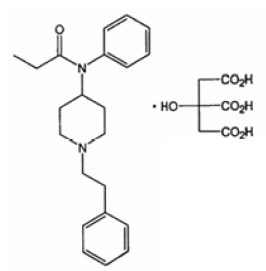
All tablet strengths are expressed as the amount of fentanyl free base, e.g., the 100 microgram strength tablet contains 100 micrograms of fentanyl free base. Inactive Ingredients: Mannitol, sodium starch glycolate, sodium bicarbonate, sodium carbonate, citric acid, and magnesium stearate.
12. Fentora - Clinical Pharmacology
12.1 Mechanism of Action
Fentanyl is an opioid agonist whose principal therapeutic action is analgesia.
12.2 Pharmacodynamics
Effects on the Central Nervous System
The precise mechanism of the analgesic action is unknown although fentanyl is known to be a mu opioid receptor agonist. Specific CNS opioid receptors for endogenous compounds with opioid-like activity have been identified throughout the brain and spinal cord and play a role in the analgesic effects of this drug. Fentanyl produces respiratory depression by direct action on brain stem respiratory centers. The respiratory depression involves a reduction in the responsiveness of the brain stem to both increases in carbon dioxide and to electrical stimulation.
Fentanyl causes miosis even in total darkness. Pinpoint pupils are a sign of opioid overdose but are not pathognomonic (e.g., pontine lesions of hemorrhagic or ischemic origin may produce similar findings). Marked mydriasis rather than miosis may be seen due to hypoxia in overdose situations.
Effects on the Gastrointestinal Tract and Other Smooth Muscle
Fentanyl causes a reduction in motility associated with an increase in smooth muscle tone in the antrum of the stomach and in the duodenum. Digestion of food in the small intestine is delayed and propulsive contractions are decreased. Propulsive peristaltic waves in the colon are decreased, while tone may be increased to the point of spasm resulting in constipation. Other opioid-induced effects may include a reduction in biliary and pancreatic secretions, spasm of the sphincter of Oddi, and transient elevations in serum amylase.
Effects on the Cardiovascular System
Fentanyl produces peripheral vasodilation which may result in orthostatic hypotension or syncope. Manifestations of histamine release and/or peripheral vasodilation may include pruritus, flushing, red eyes and sweating, and/or orthostatic hypotension.
Effects on the Endocrine System
Opioid agonists have been shown to have a variety of effects on the secretion of hormones. Opioids inhibit the secretion of adrenocorticotropic hormone (ACTH), cortisol, and luteinizing hormone (LH) in humans. They also stimulate prolactin, growth hormone (GH) secretion, and pancreatic secretion of insulin and glucagon [see Adverse Reactions (6.2)]. Thyroid stimulating hormone (TSH) has been shown to be both inhibited and stimulated by opioids.
Use of opioids for an extended period of time may influence the hypothalamic-pituitary-gonadal axis, leading to androgen deficiency that may manifest as low libido, impotence, erectile dysfunction, amenorrhea, or infertility. The causal role of opioids in the clinical syndrome of hypogonadism is unknown because the various medical, physical, lifestyle, and psychological stressors that may influence gonadal hormone levels have not been adequately controlled for in studies conducted to date [see Adverse Reactions (6.2)].
Effects on the Immune System
Opioids have been shown to have a variety of effects on components of the immune system in in vitro and animal models. The clinical significance of these findings is unknown. Overall, the effects of opioids appear to be modestly immunosuppressive.
Concentration-Efficacy Relationships
The analgesic effects of fentanyl are related to the blood level of the drug, if proper allowance is made for the delay into and out of the CNS (a process with a 3- to 5-minute half-life).
In general, the effective concentration and the concentration at which toxicity occurs increase with increasing tolerance with any and all opioids. The rate of development of tolerance varies widely among individuals [see Dosage and Administration (2.1)].
The minimum effective analgesic concentration of fentanyl for any individual patient may increase over time due to an increase in pain, the development of a new pain syndrome and/or the development of analgesic tolerance [see Dosage and Administration (2.1, 2.5)].
Concentration-Adverse Reaction Relationships
There is a relationship between increasing fentanyl plasma concentration and increasing frequency of dose-related opioid adverse reactions such as nausea, vomiting, CNS effects, and respiratory depression. In opioid-tolerant patients, the situation may be altered by the development of tolerance to opioid-related adverse reactions [see Dosage and Administration (2.1, 2.3, 2.4, 2.5)].
Respiratory System
All opioid mu-receptor agonists, including fentanyl, produce dose-dependent respiratory depression. The risk of respiratory depression is less in patients receiving chronic opioid therapy who develop tolerance to respiratory depression and other opioid effects. Peak respiratory depressive effects may be seen as early as 15 to 30 minutes from the start of oral transmucosal fentanyl citrate product administration and may persist for several hours.
Serious or fatal respiratory depression can occur even at recommended doses. Although not observed with oral transmucosal fentanyl products in clinical trials, fentanyl given rapidly by intravenous injection in large doses may interfere with respiration by causing rigidity in the muscles of respiration [see Warnings and Precautions (5), Overdosage (10)].
12.3 Pharmacokinetics
Fentanyl exhibits linear pharmacokinetics. Systemic exposure to fentanyl following administration of FENTORA increases linearly in an approximate dose-proportional manner over the 100- to 800-mcg dose range.
Absorption
Following buccal administration of FENTORA, fentanyl is readily absorbed with an absolute bioavailability of 65%. The absorption profile of FENTORA is largely the result of an initial absorption from the buccal mucosa, with peak plasma concentrations following venous sampling generally attained within an hour after buccal administration. Approximately 50% of the total dose administered is absorbed transmucosally and becomes systemically available. The remaining half of the total dose is swallowed and undergoes more prolonged absorption from the gastrointestinal tract.
In a study that compared the absolute and relative bioavailability of FENTORA and ACTIQ (oral transmucosal fentanyl citrate), the rate and extent of fentanyl absorption were considerably different (approximately 30% greater exposure with FENTORA) (Table 5).
|
Pharmacokinetic Parameter (mean) |
FENTORA 400 mcg |
ACTIQ 400 mcg (adjusted dose)*** |
|
Absolute Bioavailability |
65% ± 20% |
47% ± 10.5% |
|
Fraction Absorbed Transmucosally |
48% ± 31.8% |
22% ± 17.3% |
|
Tmax (minute)** |
46.8 (20-240) |
90.8 (35-240) |
|
Cmax (ng/mL) |
1.02 ± 0.42 |
0.63 ± 0.21 |
|
AUC0-tmax (ng•hr/mL) |
0.40 ± 0.18 |
0.14 ± 0.05 |
|
AUC0-inf (ng•hr/mL) |
6.48 ± 2.98 |
4.79 ± 1.96 |
* Based on venous blood samples.
** Data for Tmax presented as median (range).
***ACTIQ data was dose adjusted (800 mcg to 400 mcg).
Similarly, in another bioavailability study exposure following administration of FENTORA was also greater (approximately 50%) compared to ACTIQ.
Due to differences in drug delivery, measures of exposure (Cmax, AUC0-tmax, AUC0-inf) associated with a given dose of fentanyl were substantially greater with FENTORA compared to ACTIQ (see Figure 1). Therefore, caution must be exercised when switching patients from one product to another [see Dosage and Administration (2.3), Warnings and Precautions (5.5)]. Figure 1 includes an inset which shows the mean plasma concentration versus time profile to 6 hours. The vertical line denotes the median Tmax for FENTORA.
Figure 1. Mean Plasma Concentration Versus Time Profiles Following Single Doses of FENTORA and ACTIQ in Healthy Subjects
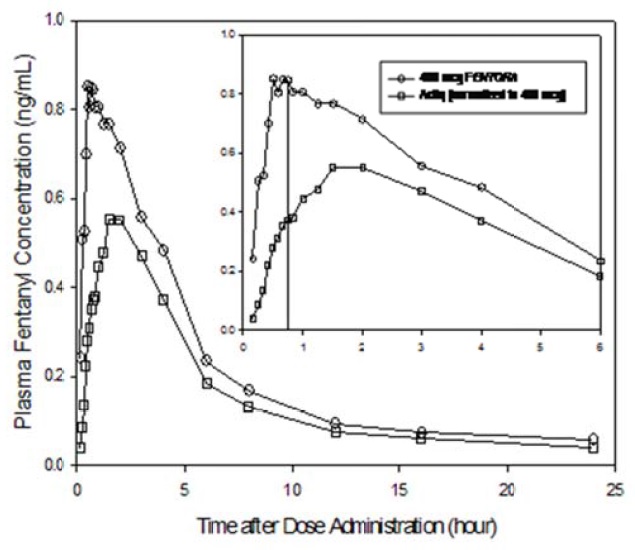
ACTIQ data was dose adjusted (800 mcg to 400 mcg).
Mean pharmacokinetic parameters are presented in Table 6. Mean plasma concentration versus time profiles are presented in Figure 2.
|
Pharmacokinetic Parameter (mean±SD) |
100 mcg |
200 mcg |
400 mcg |
800 mcg |
|
Cmax (ng/mL) |
0.25 ± 0.14 |
0.40 ± 0.18 |
0.97 ± 0.53 |
1.59 ± 0.90 |
|
Tmax, minute** (range) |
45.0 (25.0 - 181.0) |
40.0 (20.0 - 180.0) |
35.0 (20.0 - 180.0) |
40.0 (25.0 - 180.0) |
|
AUC0-inf (ng•hr/mL) |
0.98 ± 0.37 |
2.11 ± 1.13 |
4.72 ± 1.95 |
9.05 ± 3.72 |
|
AUC0-tmax (ng•hr/mL) |
0.09 ± 0.06 |
0.13 ± 0.09 |
0.34 ± 0.23 |
0.52 ± 0.38 |
|
T1/2, hr** |
2.63 (1.47 - 13.57) |
4.43 (1.85 - 20.76) |
11.09 (4.63 - 20.59) |
11.70 (4.63 - 28.63) |
* Based on venous sampling.
** Data for Tmax presented as median (range).
Figure 2. Mean Plasma Concentration Versus Time Profiles Following Single 100, 200, 400, and 800 mcg Doses of FENTORA in Healthy Subjects
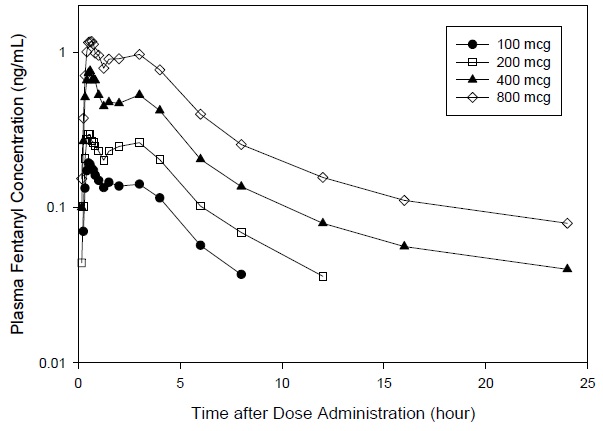
Dwell time (defined as the length of time that the tablet takes to fully disintegrate following buccal administration), does not appear to affect early systemic exposure to fentanyl.
The effect of mucositis (Grade 1) on the pharmacokinetic profile of FENTORA was studied in a group of patients with (N = 8) and without mucositis (N = 8) who were otherwise matched. A single 200 mcg tablet was administered, followed by sampling at appropriate intervals. Mean summary statistics (standard deviation in parentheses, expected tmax where range was used) are presented in Table 7.
|
Patient status |
Cmax (ng/mL) |
tmax (min) |
AUC0-tmax (ng•hr/mL) |
AUC0-8 (ng•hr/mL) |
|
Mucositis |
1.25 ± 0.78 |
25.0 (15 - 45) |
0.21 ± 0.16 |
2.33 ± 0.93 |
|
No mucositis |
1.24 ± 0.77 |
22.5 (10 - 121) |
0.25 ± 0.24 |
1.86 ± 0.86 |
Following sublingual tablet placement, systemic exposure (as measured by AUC and Cmax) of fentanyl is equivalent to systemic exposure following buccal tablet placement.
Distribution
Fentanyl is highly lipophilic. The plasma protein binding of fentanyl is 80-85%. The main binding protein is alpha-1-acid glycoprotein, but both albumin and lipoproteins contribute to some extent. The mean oral volume of distribution at steady state (Vss/F) was 25.4 L/kg.
Elimination
Metabolism
The metabolic pathways following buccal administration of FENTORA have not been characterized in clinical studies. The progressive decline of fentanyl plasma concentrations results from the uptake of fentanyl in the tissues and biotransformation in the liver. Fentanyl is metabolized in the liver and in the intestinal mucosa to norfentanyl by cytochrome P450 3A4 isoform. In animal studies, norfentanyl was not found to be pharmacologically active [see Drug Interactions (7)].
Excretion
Disposition of fentanyl following buccal administration of FENTORA has not been characterized in a mass balance study. Fentanyl is primarily (more than 90%) eliminated by biotransformation to N-dealkylated and hydroxylated inactive metabolites. Less than 7% of the administered dose is excreted unchanged in the urine, and only about 1% is excreted unchanged in the feces. The metabolites are mainly excreted in the urine, while fecal excretion is less important.
The total plasma clearance of fentanyl following intravenous administration is approximately 42 L/h.
Sex
Systemic exposure was higher for women than men (mean Cmax and AUC values were approximately 28% and 22% higher, respectively). The observed differences between men and women were largely attributable to differences in weight.
Race
In studies conducted in healthy Japanese subjects, systemic exposure was generally higher than that observed in U.S. subjects (mean Cmax and AUC values were approximately 50% and 20% higher, respectively). The observed differences were largely attributed to the lower mean weight of the Japanese subjects compared to U.S. subjects (57.4 kg versus 73 kg).
13. Nonclinical Toxicology
13.1 Carcinogenesis, Mutagenesis, Impairment of Fertility
Carcinogenesis
Fentanyl was evaluated for carcinogenic potential in a 104-week rat study and in a 6-month Tg.AC transgenic mouse study. In rats, doses up to 50 mcg/kg in males and 100 mcg/kg in females were administered subcutaneously and no treatment-related neoplasms were observed (doses are equivalent to 2.3- and 3.4-times the exposure of a single human dose of 800 mcg per pain episode, respectively, based on an AUC comparison). In a 26-week transgenic mice model (Tg.AC), at topical doses up to 50 mcg/dose/day, no increase in the occurrence of treatment-related neoplasms was observed.
Mutagenesis
Fentanyl citrate was not mutagenic in the Ames reverse mutation assay in S. typhimurium or E. coli, or the mouse lymphoma mutagenesis assay. Fentanyl citrate was not clastogenic in the in vivo mouse micronucleus assay.
Impairment of Fertility
In a fertility study, female rats were administered fentanyl subcutaneously for 14 days prior to mating with untreated males at doses up to 300 mcg/kg and no effects on female fertility were observed. The systemic exposure at the dose of 300 mcg/kg was approximately 8.6 times the exposure of a single human dose of 800 mcg per pain episode, based on an AUC comparison. Males were administered fentanyl subcutaneously for 28 days prior to mating with untreated females at doses up to 300 mcg/kg. At 300 mcg/kg, adverse effects on sperm parameters, which affected fertility, were observed. These effects included decreased percent mobile sperm, decreased sperm concentrations as well as an increase in the percent abnormal sperm. The dose in males at which no effects on fertility were observed was 100 mcg/kg, which is approximately 5.7- times the exposure of a single human dose of 800 mcg per pain episode, based on an AUC comparison.
Fentanyl has been shown to impair fertility in rats at doses of 30 mcg/kg IV and 160 mcg/kg subcutaneously. Conversion to the human equivalent doses indicates that this is within the range of the human recommended dosing for FENTORA.
14. Clinical Studies
The efficacy of FENTORA was demonstrated in a double-blind, placebo-controlled, cross-over study in opioid-tolerant patients with cancer and breakthrough pain. Patients considered opioid tolerant were those who were taking at least 60 mg of oral morphine daily, at least 25 mcg/hour of transdermal fentanyl, at least 30 mg of oral oxycodone daily, at least 8 mg of oral hydromorphone daily or an equianalgesic dose of another opioid daily for a week or longer.
In this trial, patients were titrated in an open-label manner to a successful dose of FENTORA. A successful dose was defined as the dose in which a patient obtained adequate analgesia with tolerable side effects. Patients who identified a successful dose were randomized to a sequence of 10 treatments with 7 being the successful dose of FENTORA and 3 being placebo. Patients used one tablet of study drug (either FENTORA or placebo) per breakthrough pain episode.
Patients assessed pain intensity on a scale that rated the pain as 0=none to 10=worst possible pain. With each episode of breakthrough pain, pain intensity was assessed first and then treatment was administered. Pain intensity (0-10) was then measured at 15, 30, 45, and 60 minutes after the start of administration. The sum of differences in pain intensity scores at 15 and 30 minutes from baseline (SPID30) was the primary efficacy measure.
Sixty-five percent (65%) of patients who entered the study achieved a successful dose during the titration phase. The distribution of successful doses is shown in Table 8. The median dose was 400 mcg.
|
FENTORA Dose |
n (%) (N=80) |
|
100 mcg |
13 (16) |
|
200 mcg |
11 (14) |
|
400 mcg |
21 (26) |
|
600 mcg |
10 (13) |
|
800 mcg |
25 (31) |
The LS mean (SE) SPID30 for FENTORA-treated episodes was 3.0 (0.12) while for placebo-treated episodes it was 1.8 (0.18).
Figure 3. Mean Pain Intensity Differences (PID) at Each Time Point During the Double-Blind Treatment Period
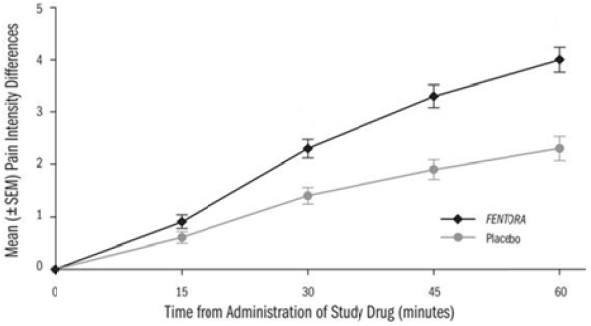
PID=pain intensity difference; SEM=standard error of the mean
16. How is Fentora supplied
FENTORA is supplied in individually sealed, child-resistant blister packages. Each carton contains 7 blister cards with 4 white tablets in each card. The blisters are child-resistant, encased in peelable foil, and provide protection from moisture. Each tablet is debossed on one side with  , and the other side of each dosage strength is uniquely identified by the debossing on the tablet as described in the table below. In addition, the dosage strength is indicated on the blister package and the carton. See blister package and carton for product information.
|
Dosage Strength |
Debossing |
Carton/Blister Package Color |
NDC Number |
|
100 mcg |
1 |
Blue |
NDC 63459-541-28 |
|
200 mcg |
2 |
Orange |
NDC 63459-542-28 |
|
400 mcg |
4 |
Sage green |
NDC 63459-544-28 |
|
600 mcg |
6 |
Magenta (pink) |
NDC 63459-546-28 |
|
800 mcg |
8 |
Yellow |
NDC 63459-548-28 |
Note: Carton/blister package colors are a secondary aid in product identification. Please be sure to confirm the printed dosage before dispensing.
Storage and Handling
Store at 20°C to 25°C (68°F to 77°F) with excursions permitted between 15°C and 30°C (59°F to 86°F) until ready to use. (See USP Controlled Room Temperature.)
Protect FENTORA from freezing and moisture. Do not use if the blister package has been tampered with.
Store FENTORA securely and dispose of properly.
17. Patient Counseling Information
Advise the patient to read the FDA-approved patient labeling (Medication Guide).
Storage and Disposal of Unused and Used FENTORA [see Medication Guide / Instructions for Use].
Because of the risks associated with accidental ingestion, misuse, and abuse, advise patients to store FENTORA securely, out of sight and reach of children, and in a location not accessible by others, including visitors to the home. Inform patients that leaving FENTORA unsecured can pose a deadly risk to others in the home [see Warnings and Precautions (5.1, 5.2), Drug Abuse and Dependence (9.2)].
Advise patients and caregivers that when medicines are no longer needed, they should be disposed of promptly. Expired, unwanted, or unused FENTORA should be disposed of by removing FENTORA from the blister cards and flushing the unused medication down the toilet (if a drug take-back option is not readily available). Do not flush the FENTORA blister packages or cartons down the toilet. Inform patients that they can visit www.fda.gov/drugdisposal for a complete list of medicines recommended for disposal by flushing, as well as additional information on disposal of unused medicines.
Disposal of Unopened FENTORA Blister Packages When No Longer Needed:
- Detailed instructions for the proper storage, administration, disposal, and important instructions for managing an overdose of FENTORA are provided in the FENTORA Medication Guide. Instruct patients to read this information in its entirety and provide an opportunity to have their questions answered.
- In the event that a caregiver requires additional assistance in disposing of excess unusable tablets that remain in the home after a patient has expired, instruct them to call the Teva Pharmaceuticals toll-free number (1-888-483-8279) or seek assistance from their local DEA office.
Addiction, Abuse, and Misuse
Inform patients that the use of FENTORA, even when taken as recommended, can result in addiction, abuse, and misuse, which can lead to overdose and death [see Warnings and Precautions (5.1)]. Instruct patients not to share FENTORA with others and to take steps to protect FENTORA from theft or misuse.
Life-Threatening Respiratory Depression
Inform patients of the risk of life-threatening respiratory depression, including information that the risk is greatest when starting FENTORA or when the dosage is increased, and that it can occur even at recommended dosages.
Educate patients and caregivers on how to recognize respiratory depression and emphasize the importance of calling 911 or getting emergency medical help right away in the event of a known or suspected overdose [see Warnings and Precautions (5.2)].
Accidental Ingestion
- Healthcare providers and dispensing pharmacists must specifically question patients or caregivers about the presence of children in the home (on a full time or visiting basis) and counsel them regarding the dangers to children from inadvertent exposure [see Warnings and Precautions (5.3)].
- Inform patients that accidental ingestion, especially by children, may result in respiratory depression or death [see Warnings and Precautions (5.3)].
- Instruct patients to take steps to store FENTORA securely and to dispose of unused FENTORA [see Dosage and Administration (2.8), Warnings and Precautions (5.3, 5.7)].
- Instruct patients and caregivers to keep both used and unused FENTORA out of the reach of children [see Warnings and Precautions (5.3)].
Interactions with Benzodiazepines and Other CNS Depressants (including Alcohol)
Inform patients that potentially fatal additive effects may occur if FENTORA is used with benzodiazepines or other CNS depressants, including alcohol, and not to use these concomitantly unless supervised by a healthcare provider [see Warnings and Precautions (5.4), Drug Interactions (7)].
Patient Access to Naloxone for the Emergency Treatment of Opioid Overdose
Discuss with the patient and caregiver the availability of naloxone for the emergency treatment of opioid overdose, both when initiating and renewing treatment with FENTORA. Inform patients and caregivers about the various ways to obtain naloxone as permitted by individual state naloxone dispensing and prescribing requirements or guidelines (e.g., by prescription, directly from a pharmacist, or as part of a community-based program) [see Dosage and Administration (2.2), Warnings and Precautions (5.2)].
Educate patients and caregivers on how to recognize the signs and symptoms of an overdose.
Explain to patients and caregivers that naloxone’s effects are temporary, and that they must call 911 or get emergency medical help right away in all cases of known or suspected opioid overdose, even if naloxone is administered [see Overdosage (10)].
If naloxone is prescribed, also advise patients and caregivers:
- How to treat with naloxone in the event of an opioid overdose
- To tell family and friends about their naloxone and to keep it in a place where family and friends can access it in an emergency
- To read the Patient Information (or other educational material) that will come with their naloxone. Emphasize the importance of doing this before an opioid emergency happens, so the patient and caregiver will know what to do.
Transmucosal Immediate-Release Fentanyl (TIRF) REMS
FENTORA is available only through a restricted program called the Transmucosal Immediate Release Fentanyl (TIRF) REMS [see Warnings and Precautions (5.7)]. Inform the patient of the following notable requirements:
- Outpatients must be enrolled in the REMS program
- Patients must be opioid-tolerant to receive FENTORA
FENTORA is available only from certified pharmacies participating in this program. Therefore, provide patients with the telephone number and website for information on how to obtain the product.
Pharmacies, outpatients, and healthcare professionals who prescribe to outpatients are required to enroll in the program. Inpatient pharmacies must develop policies and procedures to verify opioid tolerance in inpatients who require FENTORA while hospitalized [see Warnings and Precautions (5.7)].
Hyperalgesia and Allodynia
Inform patients and caregivers not to increase opioid dosage without first consulting a clinician. Advise patients to seek medical attention if they experience symptoms of hyperalgesia, including worsening pain, increased sensitivity to pain, or new pain [see Warnings and Precautions (5.9), Adverse Reactions (6.2)].
Serotonin Syndrome
Inform patients that opioids could cause a rare but potentially life-threatening condition called serotonin syndrome resulting from concomitant administration of serotonergic drugs. Warn patients of the symptoms of serotonin syndrome and to seek medical attention right away if symptoms develop. Instruct patients to inform their healthcare providers if they are taking, or plan to take serotonergic medications [see Warnings and Precautions (5.10), Drug Interactions (7)].
MAOI Interaction
Inform patients to avoid taking FENTORA while using any drugs that inhibit monoamine oxidase. Patients should not start MAOIs while taking FENTORA [see Warnings and Precautions (5.10), Drug Interactions (7)].
Important Administration Instructions [see Dosage and Administration (2)]
- Instruct patients not to take FENTORA for acute pain, postoperative pain, pain from injuries, headache, migraine or any other short-term pain, even if they have taken other opioid analgesics for these conditions.
- Instruct patients on the meaning of opioid tolerance and that FENTORA is only to be used as a supplemental pain medication for patients with pain requiring around-the-clock opioids, who have developed tolerance to the opioid medication, and who need additional opioid treatment of breakthrough pain episodes.
- Instruct patients that, if they are not taking an opioid medication on a scheduled basis (around-the-clock), they should not take FENTORA.
- Instruct patients that the titration phase is the only period in which they may take more than ONE tablet to achieve a desired dose (e.g., two 100 mcg tablets for a 200 mcg dose).
- Instruct patients that, if the breakthrough pain episode is not relieved after 30 minutes, they may take ONLY ONE ADDITIONAL DOSE OF FENTORA USING THE SAME STRENGTH FOR THAT EPISODE. Thus, patients should take a maximum of two doses of FENTORA for any breakthrough pain episode.
- Instruct patients that they MUST wait at least 4 hours before treating another episode of breakthrough pain with FENTORA.
- Instruct patients NOT to share FENTORA and that sharing FENTORA with anyone else could result in the other individual’s death due to overdose.
- Make patients aware that FENTORA contains fentanyl which is a strong pain medication similar to hydromorphone, methadone, morphine, oxycodone, and oxymorphone.
- Instruct patients not to open the blister until ready to use FENTORA and not to store the tablet in a temporary container such as a pill box, once it has been removed from the blister package.
- Instruct patients that FENTORA tablets are not to be swallowed whole; this will reduce the effectiveness of the medication. Tablets are to be placed between the cheek and gum above a molar tooth or under the tongue and allowed to dissolve. After 30 minutes if remnants of the tablet still remain, patients may swallow it with a glass of water.
- Caution patients to talk to their healthcare provider if breakthrough pain is not alleviated or worsens after taking FENTORA.
- Instruct patients to use FENTORA exactly as prescribed by their healthcare provider and not to take FENTORA more often than prescribed.
- Provide patients and their caregivers with a Medication Guide each time FENTORA is dispensed because new information may be available.
Driving or Operating Heavy Machinery
Inform patients that FENTORA may impair the ability to perform potentially hazardous activities such as driving a car or operating heavy machinery. Advise patients not to perform such tasks until they know how they will react to the medication [see Warnings and Precautions (5.17)].
Constipation
Advise patients of the potential for severe constipation, including management instructions and when to seek medical attention [see Adverse Reactions (6), Clinical Pharmacology (12.2)].
Adrenal Insufficiency
Inform patients that opioids could cause adrenal insufficiency, a potentially life-threatening condition. Adrenal insufficiency may present with non-specific symptoms and signs such as nausea, vomiting, anorexia, fatigue, weakness, dizziness, and low blood pressure. Advise patients to seek medical attention if they experience a constellation of these symptoms [see Warnings and Precautions (5.12)].
Hypotension
Inform patients that FENTORA may cause orthostatic hypotension and syncope. Instruct patients how to recognize symptoms of low blood pressure and how to reduce the risk of serious consequences should hypotension occur (e.g., sit or lie down, carefully rise from a sitting or lying position) [see Warnings and Precautions (5.13)].
Anaphylaxis
Inform patients that anaphylaxis has been reported with ingredients contained in FENTORA. Advise patients how to recognize such a reaction and when to seek medical attention [see Contraindications (4), Adverse Reactions (6)].
Pregnancy
Neonatal Opioid Withdrawal Syndrome
Inform patients that use of FENTORA for an extended period of time during pregnancy can result in neonatal opioid withdrawal syndrome, which may be life-threatening if not recognized and treated [see Warnings and Precautions (5.8), Use in Specific Populations (8.1)].
Embryo-Fetal Toxicity
Inform female patients of reproductive potential that FENTORA can cause fetal harm and to inform their healthcare provider of a known or suspected pregnancy [see Use in Specific Populations (8.1), Nonclinical Toxicology (13.1)].
Lactation
Advise nursing mothers to carefully observe infants for increased sleepiness (more than usual), breathing difficulties, or limpness. Instruct nursing mothers to seek immediate medical care if they notice these signs [see Use in Specific Populations (8.2)].
Infertility
Inform patients that use of opioids for an extended period of time may cause reduced fertility. It is not known whether these effects on fertility are reversible [see Use in Specific Populations (8.3)].
Dispense with Medication Guide available at: www.tevausa.com/medguides
FENT-013
Distributed By:
Teva Pharmaceuticals USA, Inc.
Parsippany, NJ 07054
©2023 Cephalon, LLC.
Medication Guide
Dispense with Medication Guide available at: www.tevausa.com/medguides
|
Medication Guide FENTORA® (fen-tor-a) (fentanyl) buccal tablet, CII |
|
IMPORTANT: Do not use FENTORA unless you are regularly using another opioid pain medicine around-the-clock for at least one week or longer for your cancer pain and your body is used to these medicines (this means that you are opioid tolerant). You can ask your healthcare provider if you are opioid tolerant. Keep FENTORA in a safe place away from children. Get emergency medical help right away if:
These are medical emergencies that can cause death. If possible, try to remove FENTORA from the mouth. |
|
FENTORA is:
|
|
Important information about FENTORA:
|
|
Do not take FENTORA if:
|
|
Before taking FENTORA, tell your healthcare provider if you have a history of:
Tell your healthcare provider if you are:
|
|
When taking FENTORA:
|
|
The possible side effects of FENTORA:
|
|
Get emergency medical help or call 911 right away if you have:
These are not all the possible side effects of FENTORA. Call your doctor for medical advice about side effects. You may report side effects to FDA at 1-800-FDA-1088. For more information go to dailymed.nlm.nih.gov |
How should I store FENTORA?
- Always keep FENTORA in a safe place away from children and from anyone for whom it has not been prescribed. Protect FENTORA from theft.
- Store FENTORA at room temperature, 59°F to 86°F (15°C to 30°C) until ready to use. Do not freeze FENTORA.
- Keep FENTORA in the original blister unit. Do not remove FENTORA from its blister packaging for storage in a temporary container, such as a pill box.
- Keep FENTORA dry.
How should I dispose of unused FENTORA tablets when they are no longer needed?
-
Dispose of any unused FENTORA tablets remaining from a prescription as soon as they are no longer needed.
- Remove the tablets from blister packages and flush them down the toilet.
- Do not flush the FENTORA packaging (card, blister units, or cartons) down the toilet.
- If you need help with disposal of FENTORA, call Teva Pharmaceuticals at 1-888-483-8279 or call your local Drug Enforcement Agency (DEA) office.
General information about FENTORA
Medicines are sometimes prescribed for purposes other than those listed in a Medication Guide. Use FENTORA only for the purpose for which it was prescribed. Do not give FENTORA to other people, even if they have the same symptoms you have. FENTORA can harm other people and even cause death. Sharing FENTORA is against the law.
This Medication Guide summarizes the most important information about FENTORA. If you would like more information, talk with your healthcare provider or pharmacist. You can ask your pharmacist or healthcare provider for information about FENTORA that is written for health professionals.
For more information about the TIRF REMS Access program, go to www.TIRFREMSAccess.com or call 1-866-822-1483.
What are the ingredients in FENTORA?
Active Ingredient: fentanyl citrate
Inactive Ingredients: mannitol, sodium starch glycolate, sodium bicarbonate, sodium carbonate, citric acid, and magnesium stearate.
Patient Instructions for Use
Before you use FENTORA, it is important that you read the Medication Guide and these Instructions for Use. Be sure that you read, understand, and follow these Instructions for Use so that you use FENTORA the right way. Ask your healthcare provider or pharmacist if you have any questions about the right way to use FENTORA.
When you get an episode of breakthrough cancer pain, use the dose of FENTORA prescribed by your healthcare provider as follows:
- FENTORA comes packaged as a blister card containing 4 blister units. Each blister unit contains 1 FENTORA tablet. Do not open a blister until ready to use.
-
Separate one of the blister units from the blister card by tearing apart at the perforations. Bend the blister unit along the line where indicated. The product strength of your FENTORA tablets will be printed in the boxed area shown as
(See Figure 1).

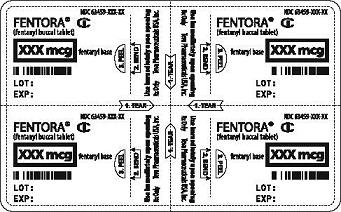
Figure 1
- Peel back foil on blister unit to expose tablet (See Figure 2).
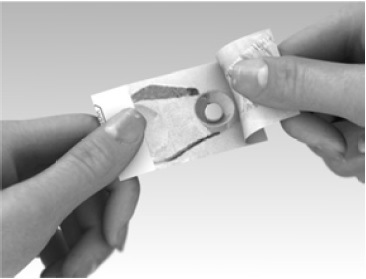
Figure 2
- Do not push the tablet through the foil on the blister unit because this could damage the tablet.
- When removed from the blister unit, FENTORA tablet must be used right away.
- Use FENTORA tablets whole.
- Do not crush, split, suck, or chew FENTORA tablets, or swallow the tablets whole. You will get less relief for your breakthrough cancer pain.
-
You can place a FENTORA tablet:
- in your mouth above a rear molar tooth between the upper cheek and gum (See Figure 3). Switch (alternate) sides of your mouth for each dose.
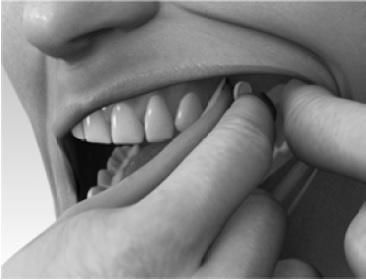
Figure 3
OR,
- on the floor of your mouth, under your tongue (See Figures 4a, 4b, 4c, 4d).
- When placing the tablet under your tongue, first lift your tongue (4b), then place the tablet under your tongue (4c), and lower your tongue over the tablet (4d).
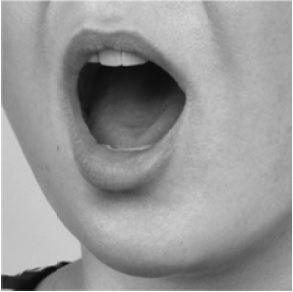
Figure 4a
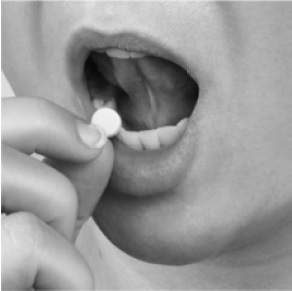
Figure 4b
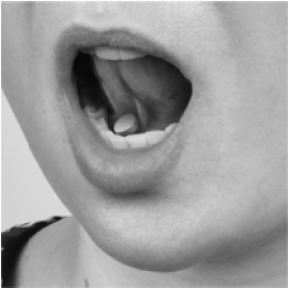
Figure 4c
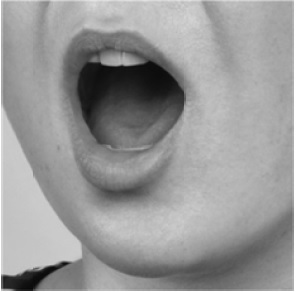
Figure 4d
- Leave the tablet in place until it dissolves. A FENTORA tablet generally takes between 14 to 25 minutes to dissolve.
- After 30 minutes, if there is any FENTORA left in your mouth, you may drink a glass of water to help you swallow the left over medicine.
- If you cannot use FENTORA in this manner, tell your healthcare provider. Your healthcare provider will tell you what to do.
|
Distributed by: |
This Medication Guide has been approved by the U.S. Food and Drug Administration. Revised: 12/2023
Package/Label Display Panel
28 Buccal Tablets (4 tablets X 7 cards)
NDC 63459-541-28
FENTORA® CII
(fentanyl buccal tablet)
equivalent to 100 mcg fentanyl base
Information for Pharmacist:
- Counsel the patient about the use of this product including maximum dosing during a single breakthrough pain episode
- Instruct patients to read the enclosed FENTORA Medication Guide
- FENTORA must only be supplied through the TIRF REMS Access restricted program. For more information call 1-866-822-1483 or visit www.TIRFREMSAccess.com.
WARNING: Keep out of the reach of children
PATIENTS MUST BE TOLERANT TO AROUND-THE-CLOCK OPIOID THERAPY
DO NOT SUBSTITUTE FENTORA FOR OTHER FENTANYL PRODUCTS
FENTORA can be harmful or fatal if given to someone for whom it was not prescribed
For Buccal or Sublingual Administration.
Do NOT Split, Crush, Suck, Chew, or Swallow Tablet.
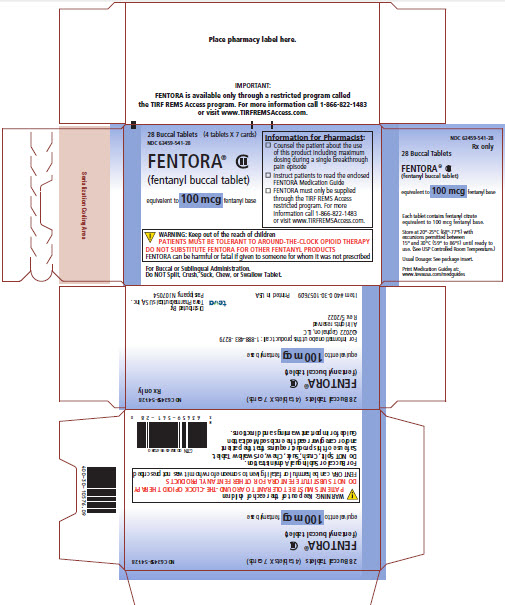
Package/Label Display Panel
28 Buccal Tablets (4 tablets X 7 cards)
NDC 63459-542-28
FENTORA® CII
(fentanyl buccal tablet)
equivalent to 200 mcg fentanyl base
Information for Pharmacist:
- Counsel the patient about the use of this product including maximum dosing during a single breakthrough pain episode
- Instruct patients to read the enclosed FENTORA Medication Guide
- FENTORA must only be supplied through the TIRF REMS Access restricted program. For more information call 1-866-822-1483 or visit www.TIRFREMSAccess.com.
WARNING: Keep out of the reach of children
PATIENTS MUST BE TOLERANT TO AROUND-THE-CLOCK OPIOID THERAPY
DO NOT SUBSTITUTE FENTORA FOR OTHER FENTANYL PRODUCTS
FENTORA can be harmful or fatal if given to someone for whom it was not prescribed
For Buccal or Sublingual Administration.
Do NOT Split, Crush, Suck, Chew, or Swallow Tablet.
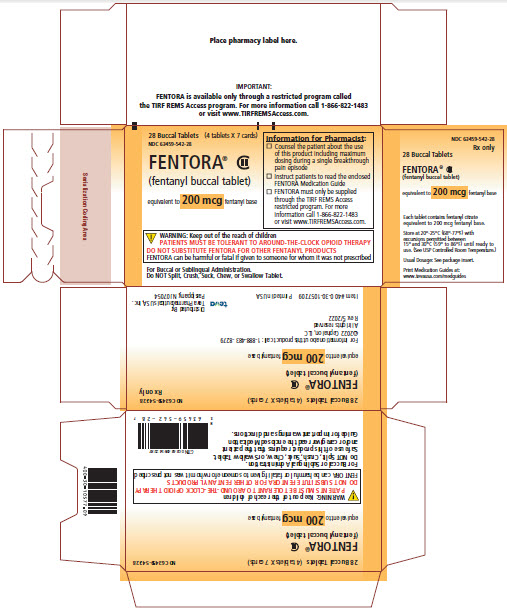
Package/Label Display Panel
28 Buccal Tablets (4 tablets X 7 cards)
NDC 63459-544-28
FENTORA® CII
(fentanyl buccal tablet)
equivalent to 400 mcg fentanyl base
Information for Pharmacist:
- Counsel the patient about the use of this product including maximum dosing during a single breakthrough pain episode
- Instruct patients to read the enclosed FENTORA Medication Guide
- FENTORA must only be supplied through the TIRF REMS Access restricted program. For more information call 1-866-822-1483 or visit www.TIRFREMSAccess.com.
WARNING: Keep out of the reach of children
PATIENTS MUST BE TOLERANT TO AROUND-THE-CLOCK OPIOID THERAPY
DO NOT SUBSTITUTE FENTORA FOR OTHER FENTANYL PRODUCTS
FENTORA can be harmful or fatal if given to someone for whom it was not prescribed
For Buccal or Sublingual Administration.
Do NOT Split, Crush, Suck, Chew, or Swallow Tablet.
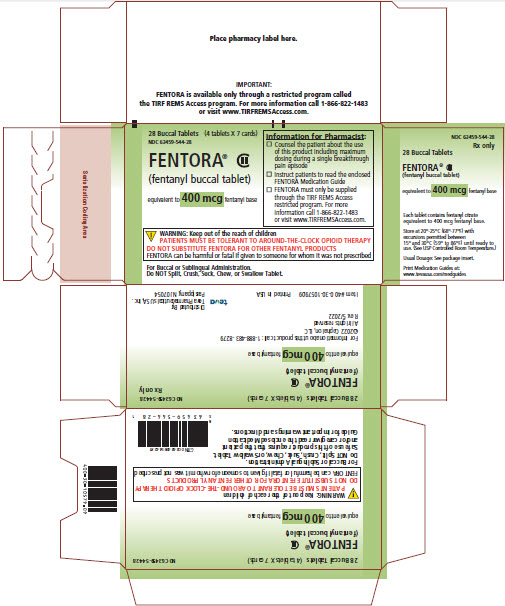
Package/Label Display Panel
28 Buccal Tablets (4 tablets X 7 cards)
NDC 63459-546-28
FENTORA® CII
(fentanyl buccal tablet)
equivalent to 600 mcg fentanyl base
Information for Pharmacist:
- Counsel the patient about the use of this product including maximum dosing during a single breakthrough pain episode
- Instruct patients to read the enclosed FENTORA Medication Guide
- FENTORA must only be supplied through the TIRF REMS Access restricted program. For more information call 1-866-822-1483 or visit www.TIRFREMSAccess.com.
WARNING: Keep out of the reach of children
PATIENTS MUST BE TOLERANT TO AROUND-THE-CLOCK OPIOID THERAPY
DO NOT SUBSTITUTE FENTORA FOR OTHER FENTANYL PRODUCTS
FENTORA can be harmful or fatal if given to someone for whom it was not prescribed
For Buccal or Sublingual Administration.
Do NOT Split, Crush, Suck, Chew, or Swallow Tablet.
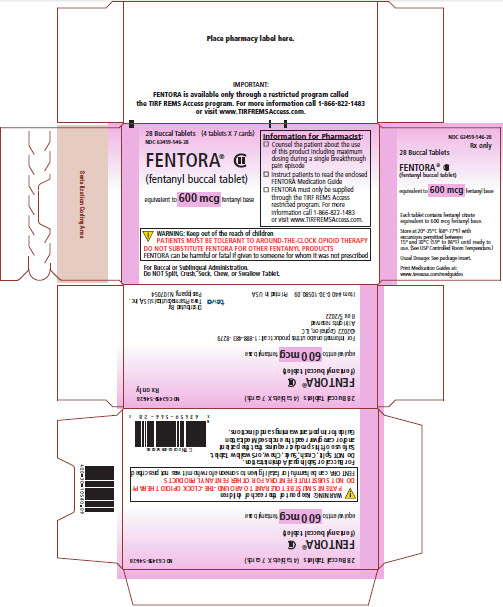
Package/Label Display Panel
28 Buccal Tablets (4 tablets X 7 cards)
NDC 63459-548-28
FENTORA® CII
(fentanyl buccal tablet)
equivalent to 800 mcg fentanyl base
Information for Pharmacist:
- Counsel the patient about the use of this product including maximum dosing during a single breakthrough pain episode
- Instruct patients to read the enclosed FENTORA Medication Guide
- FENTORA must only be supplied through the TIRF REMS Access restricted program. For more information call 1-866-822-1483 or visit www.TIRFREMSAccess.com.
WARNING: Keep out of the reach of children
PATIENTS MUST BE TOLERANT TO AROUND-THE-CLOCK OPIOID THERAPY
DO NOT SUBSTITUTE FENTORA FOR OTHER FENTANYL PRODUCTS
FENTORA can be harmful or fatal if given to someone for whom it was not prescribed
For Buccal or Sublingual Administration.
Do NOT Split, Crush, Suck, Chew, or Swallow Tablet.
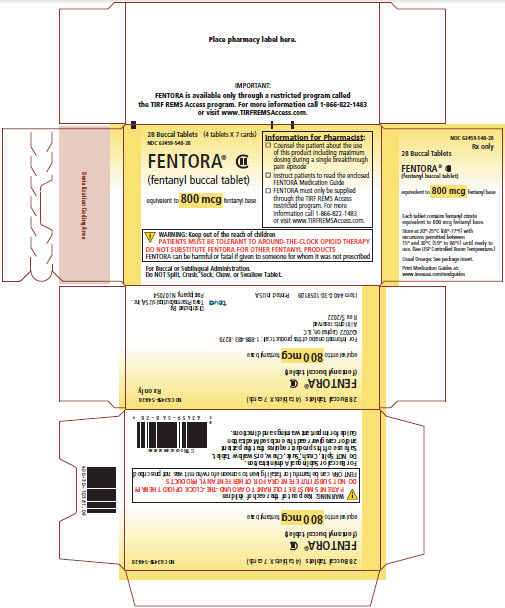
| FENTORA
fentanyl tablet |
||||||||||||||||||||
|
||||||||||||||||||||
|
||||||||||||||||||||
|
||||||||||||||||||||
|
||||||||||||||||||||
|
||||||||||||||||||||
|
||||||||||||||||||||
| FENTORA
fentanyl tablet |
||||||||||||||||||||
|
||||||||||||||||||||
|
||||||||||||||||||||
|
||||||||||||||||||||
|
||||||||||||||||||||
|
||||||||||||||||||||
|
||||||||||||||||||||
| FENTORA
fentanyl tablet |
||||||||||||||||||||
|
||||||||||||||||||||
|
||||||||||||||||||||
|
||||||||||||||||||||
|
||||||||||||||||||||
|
||||||||||||||||||||
|
||||||||||||||||||||
| FENTORA
fentanyl tablet |
||||||||||||||||||||
|
||||||||||||||||||||
|
||||||||||||||||||||
|
||||||||||||||||||||
|
||||||||||||||||||||
|
||||||||||||||||||||
|
||||||||||||||||||||
| FENTORA
fentanyl tablet |
||||||||||||||||||||
|
||||||||||||||||||||
|
||||||||||||||||||||
|
||||||||||||||||||||
|
||||||||||||||||||||
|
||||||||||||||||||||
|
||||||||||||||||||||
| Labeler - Cephalon, LLC (183236314) |
Frequently asked questions
- Which drugs cause opioid-induced constipation?
- Which painkiller should you use?
- How long does Fentanyl stay in your system?
- Why is fentanyl so dangerous?
- Fentanyl test strips: where to get & how to use?
- What are the symptoms of a fentanyl overdose?
- Carfentanil vs Fentanyl: Which is more dangerous?
- How does fentanyl compare to heroin or other opiates?
More about Fentora (fentanyl)
- Check interactions
- Compare alternatives
- Pricing & coupons
- Reviews (14)
- Drug images
- Latest FDA alerts (15)
- Side effects
- Dosage information
- During pregnancy
- FDA approval history
- Drug class: Opioids (narcotic analgesics)
- Breastfeeding
- En español
Patient resources
Professional resources
Other brands
Duragesic, Sublimaze, Subsys, Actiq, ... +2 more