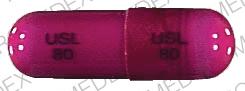
Zinc Sulfate
Medically reviewed by Drugs.com. Last updated on Oct 24, 2024.
Pronunciation
(zink SUL fate)
Index Terms
- ZnSO4 (error-prone abbreviation)
Dosage Forms
Excipient information presented when available (limited, particularly for generics); consult specific product labeling. [DSC] = Discontinued product
Capsule, Oral:
Orazinc: 220 mg
Zinc-220: 220 mg
Generic: 50 mg [DSC], 220 mg
Solution, Intravenous [preservative free]:
Generic: 1 mg/mL (10 mL); 3 mg/mL (10 mL); 5 mg/mL (5 mL)
Solution, Ophthalmic:
Eye-Sed: 0.217% (15 mL [DSC]) [contains benzalkonium chloride, boric acid]
Tablet, Oral:
Orazinc: 110 mg
Zinc 15: 66 mg
Generic: 220 mg
Tablet, Oral [preservative free]:
Generic: 220 mg [DSC]
Brand Names: U.S.
- Eye-Sed [OTC] [DSC]
- Orazinc [OTC]
- Zinc 15 [OTC]
- Zinc-220 [OTC]
Pharmacologic Category
- Trace Element
Absorption
pH-dependent; enhanced at lower pH; (pH <3); impaired by food (Anderson 1998)
Distribution
Stored primarily in skeletal muscle and bone (IOM 2001).
Excretion
Feces and urine (IOM 2001).
Protein Binding
Albumin and alpha 1-macroglobulin (Foote 1984).
Use: Labeled Indications
Trace element added to parenteral nutrition (PN) to prevent deficiency; orally as a dietary supplement.
Contraindications
Injection: Hypersensitivity to zinc or any component of the formulation.
Dosing: Adult
Dietary supplement: Oral: 50 mg (dose expressed as elemental zinc) once daily.
Parenteral nutrition additive, maintenance requirement: IV (dose expressed as elemental zinc): Note: Individualize dose based on the patient's clinical condition, nutritional requirements, and the contribution of oral or enteral zinc intake.
Acute metabolic states: Optimal dose not determined; monitor and replace as clinically indicated (Blaauw 2019).
Metabolically stable: 3 to 5 mg/day (ASPEN 2019).
Replacement for small bowel fluid loss (metabolically stable): Additional zinc replacement may be required for patients with intestinal fistula, ostomy effluent, or severe diarrhea due to excessive zinc losses. Estimated losses range from up to 12 mg zinc/L for GI fluid loss and up to 17 mg zinc/L for stool or ileostomy output (Blaauw 2019; Vanek 2012).
Zinc deficiency (Saper 2009): Oral: Some clinicians recommend daily doses of 2 to 3 times the zinc RDA for mild deficiency and 4 to 5 times the RDA for moderate to severe deficiency for 6 months.
Dosing: Geriatric
Refer to adult dosing.
Dosing: Pediatric
Note: Dosages may be presented in units of mcg or mg; use caution to ensure correct units.
Parenteral nutrition, maintenance zinc requirement:
Note: Dosage expressed in terms of elemental zinc; higher doses may be needed (in some cases between 2 to 3 times the maintenance requirement) if impaired intestinal absorption or an excessive loss of zinc (eg, excessive, prolonged diarrhea; high-output intestinal fistula; burns) (AAP [Kleinman 2019]).
Age-directed dosing (ASPEN [Greene 1988; Vanek 2012]; ESPEN/ESPR/CSPEN [Domellöf 2018]): IV:
Infants <3 months: 250 mcg/kg/day of elemental zinc as an additive to parenteral nutrition solution.
Infants ≥3 months: 50 to 100 mcg/kg/day of elemental zinc as an additive to parenteral nutrition solution.
Children: 50 mcg/kg/day of elemental zinc as an additive to parenteral nutrition solution; maximum daily dose: 5,000 mcg/day.
Weight-directed dosing (ASPEN [Mirtallo 2004]): IV:
Infants <10 kg: 50 to 250 mcg/kg/day of elemental zinc as an additive to parenteral nutrition solution.
Children 10 to 40 kg: 50 to 125 mcg/kg/day of elemental zinc as an additive to parenteral nutrition solution; maximum daily dose: 5,000 mcg/day.
Children and Adolescents >40 kg: 2,000 to 5,000 mcg/day of elemental zinc as an additive to parenteral nutrition solution.
Diarrhea, treatment; malnourished patient: Limited data available (WHO/UNICEF 2004): Note: Dosage expressed in terms of elemental zinc. Zinc should be started in conjunction with oral rehydration solutions at first sign of diarrhea; zinc therapy may shorten the duration and severity of episodes and prevent subsequent episodes (Bhandari 2008; Lazzerini 2016; Lukacik 2008; WHO/UNICEF 2004):
Infants <6 months: Oral: 10 mg once daily for 10 to 14 days (Bhandari 2008; WHO/UNICEF 2004).
Infants ≥6 months and Children: Oral: 20 mg once daily for 10 to 14 days (Bhandari 2008; WHO/UNICEF 2004). Note: Lower doses of 5 mg or 10 mg once daily for 14 days have shown noninferior efficacy and have been associated with less vomiting (Dhingra 2020).
Zinc deficiency; treatment: Limited data available: Note: Dosage expressed in terms of elemental zinc.
Acquired (eg, secondary to cystic fibrosis, liver disease, sickle cell disease, short-bowel syndrome, intestinal failure, etc): Infants, Children, and Adolescents: Oral: 0.5 to 2 mg/kg/day (AAP 1978; AAP [Kleinman 2019]; ASPEN [Corkins 2015]); dose should be individualized; required dose dependent upon multiple factors and may include: Age (younger patients, especially infants, have higher requirements), underlying cause of deficiency, physiologic status of other trace elements, enteral/parenteral nutrition intake (Borowitz 2002; Hotz 2001; Ubesie 2013).
Acrodermatitis enteropathica: Infants, Children, and Adolescents: Oral: 3 mg/kg/day; duration of therapy is typically life-long (Kliegman 2020).
Administration
IV: Not for direct IV infusion; must be prepared and used as an admixture in parenteral nutrition solutions only.
Dietary Considerations
May be taken with food if GI upset occurs.
Dietary adequate intake (AI) (IOM 2001):
1 to 6 months: 2 mg/day
Dietary recommended daily allowance (RDA) (IOM 2001):
7 to 12 months: 3 mg/day
1 to 3 years: 3 mg/day
4 to 8 years: 5 mg/day
9 to 13 years: 8 mg/day
14 to 18 years: Females: 9 mg/day; Males: 11 mg/day; Pregnancy 12 mg/day; Lactation: 13 mg/day
Adults ≥19 years: Females: 8 mg/day: Males: 11 mg/day; Pregnancy: 11 mg/day; Lactation: 12 mg/day
Storage
Capsule: Store at 15°C to 30°C (59°F to 86°F).
Tablet (Orazinc®): Store at 13°C to 24°C (55°F to 76°F).
Injection: Prior to use, store at room temperature of 20°C to 25°C (68°F to 77°F); excursions permitted to 15°C to 30°C (59°F to 86°F).
Drug Interactions
Baloxavir Marboxil: Polyvalent Cation Containing Products may decrease the serum concentration of Baloxavir Marboxil. Avoid combination
Bictegravir: Polyvalent Cation Containing Products may decrease the serum concentration of Bictegravir. Management: Administer bictegravir under fasting conditions at least 2 hours before or 6 hours after polyvalent cation containing products. Coadministration of bictegravir with or 2 hours after most polyvalent cation products is not recommended. Consider therapy modification
Bisphosphonate Derivatives: Polyvalent Cation Containing Products may decrease the serum concentration of Bisphosphonate Derivatives. Management: Avoid administration of oral medications containing polyvalent cations within: 2 hours before or after tiludronate/clodronate/etidronate; 60 minutes after oral ibandronate; or 30 minutes after alendronate/risedronate. Consider therapy modification
Ceftibuten: Zinc Salts may decrease the serum concentration of Ceftibuten. Management: Consider administering oral zinc salts at least 3 hours after ceftibuten. Consider therapy modification
Cephalexin: Zinc Salts may decrease the absorption of Cephalexin. Management: Consider administering oral zinc salts at least 3 hours after cephalexin. Consider therapy modification
Deferiprone: Polyvalent Cation Containing Products may decrease the serum concentration of Deferiprone. Management: Separate administration of deferiprone and oral medications or supplements that contain polyvalent cations by at least 4 hours. Consider therapy modification
Dolutegravir: Zinc Salts may decrease the serum concentration of Dolutegravir. Management: Administer dolutegravir at least 2 hours before or 6 hours after oral zinc salts. Administer the dolutegravir/rilpivirine combination product at least 4 hours before or 6 hours after oral zinc salts. Consider therapy modification
Eltrombopag: Polyvalent Cation Containing Products may decrease the serum concentration of Eltrombopag. Management: Administer eltrombopag at least 2 hours before or 4 hours after oral administration of any polyvalent cation containing product. Consider therapy modification
Elvitegravir: Polyvalent Cation Containing Products may decrease the serum concentration of Elvitegravir. Management: Administer elvitegravir 2 hours before or 6 hours after the administration of polyvalent cation containing products. Consider therapy modification
PenicillAMINE: Polyvalent Cation Containing Products may decrease the serum concentration of PenicillAMINE. Management: Separate the administration of penicillamine and oral polyvalent cation containing products by at least 1 hour. Consider therapy modification
Quinolones: Zinc Salts may decrease the serum concentration of Quinolones. Management: Give oral quinolones at several hours before (4 h for moxi- and sparfloxacin, 2 h for others) or after (8 h for moxi-, 6 h for cipro/dela-, 4 h for lome-, 3 h for gemi-, and 2 h for enox-, levo-, nor-, pe- or ofloxacin or nalidixic acid) oral zinc salts. Consider therapy modification
Raltegravir: Polyvalent Cation Containing Products may decrease the serum concentration of Raltegravir. Management: Administer raltegravir 2 hours before or 6 hours after administration of the polyvalent cations. Dose separation may not adequately minimize the significance of this interaction. Consider therapy modification
Tetracyclines: Zinc Salts may decrease the absorption of Tetracyclines. Only a concern when both products are administered orally. Management: Consider doxycycline as a noninteracting tetracycline derivative. Separate dose administration of oral tetracycline derivative and oral zinc salts by at least 2 hours to minimize interaction. Consider therapy modification
Trientine: Polyvalent Cation Containing Products may decrease the serum concentration of Trientine. Management: Avoid concomitant administration of trientine and oral products that contain polyvalent cations. If oral iron supplements are required, separate the administration by 2 hours. If other oral polyvalent cations are needed, separate administration by 1 hour. Consider therapy modification
Adverse Reactions
There are no adverse reactions listed in the manufacturer's labeling.
Related/similar drugs
Warnings/Precautions
Disease-related concerns:
• Renal impairment: Use with caution in patients with renal impairment.
Concurrent drug therapy issues:
• Copper: IV administration of zinc without copper may cause a decrease in copper serum concentrations.
Dosage form specific issues:
• Aluminum: The parenteral product may contain aluminum; toxic aluminum concentrations may be seen with high doses, prolonged use, or renal dysfunction. Premature neonates are at higher risk due to immature renal function and aluminum intake from other parenteral sources. Parenteral aluminum exposure of >4 to 5 mcg/kg/day is associated with CNS and bone toxicity; tissue loading may occur at lower doses (Federal Register, 2002). See manufacturer's labeling.
Monitoring Parameters
Patients on parenteral nutrition or chronic therapy should have periodic serum copper and serum zinc levels; alkaline phosphatase, taste acuity, mental depression
Pregnancy Considerations
Zinc crosses the placenta and can be measured in the cord blood and placenta. Fetal concentrations are regulated by the placenta (de Moraes 2011).
Patient Education
What is this drug used for?
• It is used to help growth and good health.
WARNING/CAUTION: Even though it may be rare, some people may have very bad and sometimes deadly side effects when taking a drug. Tell your doctor or get medical help right away if you have any of the following signs or symptoms that may be related to a very bad side effect:
• Severe injection site redness, burning, pain, swelling, or irritation
• Signs of an allergic reaction, like rash; hives; itching; red, swollen, blistered, or peeling skin with or without fever; wheezing; tightness in the chest or throat; trouble breathing, swallowing, or talking; unusual hoarseness; or swelling of the mouth, face, lips, tongue, or throat.
Note: This is not a comprehensive list of all side effects. Talk to your doctor if you have questions.
Consumer Information Use and Disclaimer: This information should not be used to decide whether or not to take this medicine or any other medicine. Only the healthcare provider has the knowledge and training to decide which medicines are right for a specific patient. This information does not endorse any medicine as safe, effective, or approved for treating any patient or health condition. This is only a limited summary of general information about the medicine's uses from the patient education leaflet and is not intended to be comprehensive. This limited summary does NOT include all information available about the possible uses, directions, warnings, precautions, interactions, adverse effects, or risks that may apply to this medicine. This information is not intended to provide medical advice, diagnosis or treatment and does not replace information you receive from the healthcare provider. For a more detailed summary of information about the risks and benefits of using this medicine, please speak with your healthcare provider and review the entire patient education leaflet.
Frequently asked questions
More about zinc sulfate
- Check interactions
- Compare alternatives
- Pricing & coupons
- Reviews (2)
- Drug images
- Side effects
- Dosage information
- During pregnancy
- Drug class: minerals and electrolytes
- En español
Patient resources
Other brands
Professional resources
Other brands
Related treatment guides
Further information
Always consult your healthcare provider to ensure the information displayed on this page applies to your personal circumstances.