Neostigmine (Monograph)
Brand name: Bloxiverz
Drug class: Parasympathomimetic (Cholinergic) Agents
Introduction
Anticholinesterase agent.
Uses for Neostigmine
Reversal of Neuromuscular Blockade
Reversal of the effects of nondepolarizing neuromuscular blocking agents (e.g., atracurium, cisatracurium, pancuronium, rocuronium, vecuronium).
Use in conjunction with an anticholinergic agent (atropine sulfate or glycopyrrolate) to counteract adverse muscarinic effects (e.g., bradycardia, bradyarrhythmias, increased secretions, bronchoconstriction).
Reduces time to recovery of neuromuscular function (defined as a return of train-of-four [TOF] twitch ratio to 0.9).
Not effective in antagonizing deep levels of neuromuscular blockade; attempt reversal only after some degree of spontaneous recovery has occurred (e.g., when there is a detectable twitch response to the first TOF stimulus).
Do not use in patients with complete neuromuscular recovery; paradoxical neuromuscular effects (e.g., weakness of upper airway muscles, increased airway collapsibility) may occur.
Not effective and should not be used for reversal of depolarizing neuromuscular agents (e.g., succinylcholine).
Appropriate reversal of neuromuscular blocking agents is critical for preventing postoperative residual neuromuscular blockade. Reversal of neuromuscular blockade should routinely be considered unless there is quantitative evidence indicating that no reversal is needed (TOF >0.9).
Myasthenia Gravis
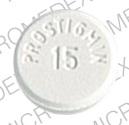
Has been used for symptomatic treatment of myasthenia gravis† [off-label] to improve muscle strength; however, oral preparation (e.g., Prostigmin) previously used for this indication no longer commercially available in the US.
If an anticholinesterase agent is required for symptomatic treatment of myasthenia gravis, pyridostigmine is the preferred drug.
GI Disorders
Has been used for treatment of acute colonic pseudo-obstruction or Ogilvie syndrome† [off-label]. May be effective as second-line therapy in patients who fail conservative therapy.
Has been used as a prokinetic agent in patients with postoperative ileus following surgery† [off-label]; however, clinical usefulness may be limited by adverse muscarinic effects (e.g., bradycardia, increased bronchial secretions).
Has been used in the management of severe constipation in patients with thoracic spinal cord injury† [off-label].
Neostigmine Dosage and Administration
General
Patient Monitoring
-
When used for reversal of neuromuscular blockade, patients must be well ventilated and have a patent airway prior to administration and until complete recovery of normal respiration. Continuous monitoring of neuromuscular function is recommended to ensure adequate reversal from the neuromuscular block. To exclude with certainty the possibility of residual paralysis, use an objective (quantitative) method of monitoring such as peripheral nerve stimulation in conjunction with other clinical assessments (e.g., observation of skeletal muscle tone, respiratory measurements). Adequate recovery of neuromuscular function generally is defined as a train-of-four (TOF) ratio of 0.9 in addition to the patient's ability to maintain satisfactory ventilation and a patent airway. Recovery times may vary based on the patient's medical condition and duration of action of the specific neuromuscular blocking agent used.
Dispensing and Administration Precautions
-
Administer only by trained clinicians experienced in the use of neuromuscular blocking agents and their reversal agents.
-
Always have atropine and medications to treat anaphylaxis (e.g., epinephrine) readily available in case of hypersensitivity reaction.
Other General Considerations
-
Administer IV atropine sulfate or glycopyrrolate immediately prior to or concurrently (in separate syringes) with neostigmine to counteract adverse muscarinic effects. If patient is bradycardic, give IV antimuscarinic before neostigmine.
Administration
Administer by slow IV injection over a period of at least 1 minute. Also has been administered by IM or sub-Q injection. † [off-label]
Dosage
Available as neostigmine methylsulfate; dosage expressed in terms of the salt.
Pediatric Patients
Reversal of Neuromuscular Blockade
IV
Manufacturer states that pediatric patients may receive the same doses recommended for adults. (See Adults under Dosage and Administration.)
Other experts have recommended IV doses of 0.025 to 0.07 mg/kg in neonates, 0.025–0.1 mg/kg in infants, and 0.025–0.08 mg/kg in children.
Adults
Reversal of Neuromuscular Blockade
IV
Manufacturer states that a dose of 0.03–0.07 mg/kg usually is sufficient to achieve adequate recovery of neuromuscular function (i.e., TOF ratio of 0.9) within 10–20 minutes.
Individualize selection of dose based on half-life of neuromuscular blocking agent administered, degree of spontaneous recovery, and need for rapid reversal.
To reverse neuromuscular blocking agents with shorter half-lives (e.g., rocuronium) or shallower blocks (i.e., first twitch response substantially >10% of baseline or when a second twitch is present): 0.03 mg/kg recommended.
To reverse longer-acting neuromuscular blocking agents (e.g., pancuronium, vecuronium) or deeper blocks (i.e., first twitch response not substantially >10% of baseline), or when more rapid recovery is needed: 0.07 mg/kg recommended.
Determine need for additional doses based on TOF monitoring and extent of recovery of neuromuscular function.
Prescribing Limits
Pediatric Patients
Reversal of Neuromuscular Blockade
IV
Maximum total dose of 0.07 mg/kg or 5 mg, whichever is less. Higher doses unlikely to provide additional clinical benefit.
Adults
Reversal of Neuromuscular Blockade
IV
Maximum total dose of 0.07 mg/kg or 5 mg, whichever is less. Higher doses unlikely to provide additional clinical benefit.
Special Populations
Hepatic Impairment
Dosage adjustment not necessary.
Renal Impairment
Dosage adjustment not necessary.
Geriatric Patients
Dosage adjustment not required.
Cautions for Neostigmine
Contraindications
-
Known hypersensitivity to neostigmine.
-
Mechanical obstruction of the intestinal or urinary tract.
-
Peritonitis.
Warnings/Precautions
Warnings
Bradycardia
Bradycardia may occur. Administer atropine or glycopyrrolate prior to neostigmine to lessen risk.
Serious Reactions with Coexisting Conditions
Risk of adverse cardiovascular effects such as bradycardia, hypotension, tachycardia, and cardiac arrhythmias. Use with caution in patients with coronary artery disease, cardiac arrhythmias, recent acute coronary syndrome, or myasthenia gravis; risk of cardiovascular complications may be increased in such patients.
Administer an anticholinergic agent (e.g., atropine) prior to or concomitantly with neostigmine to minimize risk.
Neuromuscular Dysfunction
Paradoxical neuromuscular effects (e.g., weakness of upper airway muscles and increased airway collapsibility) can occur if neostigmine is administered to patients with complete or near complete neuromuscular recovery. Reduce dose if neuromuscular recovery is almost complete.
Cholinergic Crisis
Overdosage may result in cholinergic crisis (e.g., excessive salivation and sweating, miosis, nausea, vomiting, diarrhea, bradycardia or tachycardia, hypotension, confusion, seizures, coma, severe muscle weakness, paralysis); may result in death. If overdosage occurs, withdraw all anticholinesterase drugs, maintain adequate respiration, and administer IV atropine.
Myasthenic crisis, a complication of myasthenia gravis, can also cause extreme muscle weakness. It is extremely important to differentiate between the conditions since treatment methods differ considerably. Whereas more intensive anticholinesterase therapy is required in myasthenic crisis, higher doses of neostigmine can have serious consequences in cholinergic crisis.
Sensitivity Reactions
Hypersensitivity
Hypersensitivity reactions, including urticaria, angioedema, erythema multiforme, generalized rash, facial swelling, peripheral edema, pyrexia, flushing, hypotension, bronchospasm, bradycardia, and anaphylaxis, reported.
Atropine and other drugs for treatment of anaphylaxis should be readily available.
Specific Populations
Pregnancy
Not known whether neostigmine can cause fetal harm when administered to pregnant women or can affect reproductive capacity; use during pregnancy only if clearly indicated.
May induce premature labor if given IV to pregnant women near term.
Lactation
Not known whether neostigmine is distributed into milk. Caution advised.
Pediatric Use
May be used in pediatric patients of all ages to reverse the effects of nondepolarizing neuromuscular blocking agents.
Although some pharmacokinetic parameters may differ in children compared with adults, manufacturer recommends same dosing guideline as in adults.
Smaller doses usually required to reverse neuromuscular blockade in infants and children compared with adults; however, pediatric patients have a greater risk of incomplete reversal of neuromuscular blockade due to decreased respiratory reserve. Risk of administering higher doses of neostigmine (up to maximum recommended dosage) should not outweigh risk associated with incomplete reversal.
Geriatric Use
Use with caution and increased monitoring. Duration of action of neostigmine is prolonged in geriatric patients; however, such patients also experience slower spontaneous recovery from neuromuscular blocking agents. Monitor for longer periods to ensure that additional doses of neostigmine are not necessary to adequately reverse neuromuscular blockade.
Hepatic Impairment
Carefully monitor if neuromuscular blocking agents with hepatic elimination or active metabolites are administered to patients with hepatic impairment; duration of the neuromuscular blocking agent may be prolonged and persist beyond the effects of neostigmine.
Renal Impairment
Closely monitor patients with renal impairment if a renally eliminated neuromuscular blocking agent is administered; effects of the neuromuscular blocking agent may persist beyond those of neostigmine.
Common Adverse Effects
Bradycardia, nausea, vomiting.
Drug Interactions
Drug interaction studies not conducted to date. Clinically important drug interactions not likely to occur if neuromuscular monitoring is employed and both relaxants and reversal agents are titrated to effect.
Drugs Affecting Hepatic Microsomal Enzymes
Metabolized by hepatic microsomal enzymes; caution advised when used concomitantly with drugs that inhibit or induce these enzymes.
Specific Drugs
|
Drug |
Interaction |
Comments |
|---|---|---|
|
Anticholinergic agents (atropine, glycopyrrolate) |
Antagonize muscarinic effects of neostigmine |
Interaction used to therapeutic advantage to counteract muscarinic symptoms of neostigmine toxicity; however, atropine also may mask manifestations of neostigmine overdose and prevent early detection of cholinergic crisis |
|
Neuromuscular blocking agents, depolarizing (e.g., succinylcholine) |
Possible enhanced and/or prolonged neuromuscular blockade |
Neostigmine is not indicated for reversal of depolarizing neuromuscular blocking agents |
|
Neuromuscular blocking agents, nondepolarizing (e.g., atracurium, cisatracurium, pancuronium, rocuronium, vecuronium) |
Antagonism of nondepolarizing muscle relaxant effects |
Interaction used to therapeutic advantage to reverse muscle relaxation induced by neuromuscular blocking agents after surgery |
Neostigmine Pharmacokinetics
Distribution
Extent
Not known whether distributed into human milk.
Plasma Protein Binding
15–25% to serum albumin.
Elimination
Metabolism
Metabolized by microsomal enzymes in the liver.
Elimination Route
Excreted in urine as unchanged drug (50%).
Half-life
IV: 24–113 minutes.
Special Populations
Hepatic impairment: Pharmacokinetics not studied.
Renal impairment reduces neostigmine clearance. Elimination half-life is prolonged in anephric individuals.
Elimination half-life approximately 39, 48, or 67 minutes in infants 2–10 months of age, children 1–6 years of age, or adults 29–48 years of age, respectively.
Stability
Storage
Parenteral
Injection
20–25°C (may be exposed to 15–30°C). Protect from light and store in original carton until use.
Actions
-
Competitively inhibits acetylcholinesterase, reducing degradation of acetylcholine; as a result, acetylcholine accumulates at cholinergic synapses producing prolonged and exaggerated effects. Has direct cholinomimetic effect on skeletal muscle.
-
Increased acetylcholine at neuromuscular junction competes with and reverses the effects of nondepolarizing neuromuscular blocking agents.
-
In patients with myasthenia gravis, enhances neuromuscular transmission, providing symptomatic improvement.
-
Produces generalized cholinergic effects including miosis, bradycardia, increased tonus of intestinal musculature, constriction of bronchi and ureters, and stimulation of secretion by salivary and sweat glands.
-
Does not readily cross blood-brain barrier.
Advice to Patients
-
Importance of informing clinician of existing or contemplated concomitant therapy, including prescription and OTC drugs and dietary or herbal supplements, as well as any concomitant illnesses.
-
Importance of women informing clinicians if they are or plan to become pregnant or plan to breast-feed.
-
Importance of informing patients of other important precautionary information.
Additional Information
The American Society of Health-System Pharmacists, Inc. represents that the information provided in the accompanying monograph was formulated with a reasonable standard of care, and in conformity with professional standards in the field. Readers are advised that decisions regarding use of drugs are complex medical decisions requiring the independent, informed decision of an appropriate health care professional, and that the information contained in the monograph is provided for informational purposes only. The manufacturer’s labeling should be consulted for more detailed information. The American Society of Health-System Pharmacists, Inc. does not endorse or recommend the use of any drug. The information contained in the monograph is not a substitute for medical care.
Preparations
Excipients in commercially available drug preparations may have clinically important effects in some individuals; consult specific product labeling for details.
Please refer to the ASHP Drug Shortages Resource Center for information on shortages of one or more of these preparations.
* available from one or more manufacturer, distributor, and/or repackager by generic (nonproprietary) name
|
Routes |
Dosage Forms |
Strengths |
Brand Names |
Manufacturer |
|---|---|---|---|---|
|
Parenteral |
Injection |
0.5 mg/mL* |
Bloxiverz |
Avadel Legacy |
|
Neostigmine Methylsulfate Injection |
||||
|
1 mg/mL* |
Bloxiverz |
Avadel Legacy |
||
|
Neostigmine Methylsulfate Injection |
AHFS DI Essentials™. © Copyright 2025, Selected Revisions June 10, 2025. American Society of Health-System Pharmacists, Inc., 4500 East-West Highway, Suite 900, Bethesda, Maryland 20814.
† Off-label: Use is not currently included in the labeling approved by the US Food and Drug Administration.
Reload page with references included
Related/similar drugs
Zilbrysq
Zilbrysq (zilucoplan) is a C5 inhibitor used to treat generalized myasthenia gravis (gMG) in AChR ...
Rystiggo
Rystiggo is used for anti-AChR or anti-MuSK antibody-positive generalized myasthenia gravis (gMG) ...
Ultomiris
Ultomiris (ravulizumab-cwvz) is used for the treatment of myasthenia gravis, paroxysmal nocturnal ...
Mestinon
Mestinon (pyridostigmine) is used to increase muscle strength in conditions such as myasthenia ...
Vyvgart
Vyvgart is used to treat generalized myasthenia gravis (gMG) in adults who are anti-acetylcholine ...
Vyvgart Hytrulo
Vyvgart Hytrulo is used to treat adults with generalized myasthenia gravis (gMG) who are ...
Soliris
Soliris infusion is used to treat paroxysmal nocturnal hemoglobinuria (PNH) or neuromyelitis optica ...
Imaavy
Imaavy (nipocalimab-aahu) is a new medication used to treat generalized myasthenia gravis (gMG) ...
Eculizumab
Eculizumab (brand names Soliris, Bkemv, and Epysqli) is used to treat paroxysmal nocturnal ...
More about neostigmine
- Check interactions
- Compare alternatives
- Pricing & coupons
- Reviews (1)
- Latest FDA alerts (1)
- Side effects
- Dosage information
- During pregnancy
- Drug class: cholinergic muscle stimulants
- Breastfeeding
- En español