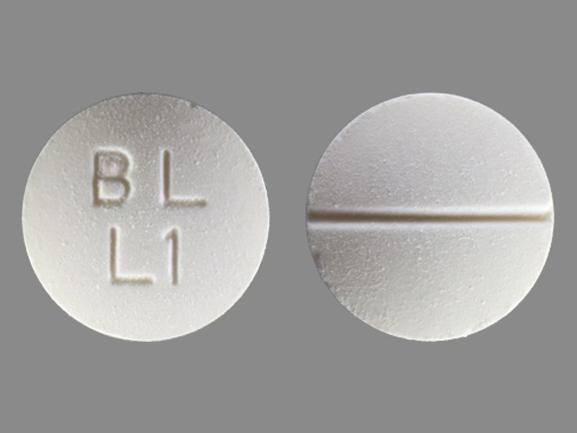
Mitotane (Monograph)
Brand name: Lysodren
Drug class: Antineoplastic Agents
VA class: AN900
Chemical name: 1,1-Dichloro-2-(o-chlorophenyl)-2-(p-chlorophenyl)ethane
Molecular formula: C14H10Cl4
CAS number: 53-19-0
Warning
-
Administer only under supervision of qualified clinicians experienced in use of cytotoxic therapy.
-
Temporarily discontinue therapy following the occurrence of shock, severe trauma, or infection and immediately administer corticosteroids since mitotane inhibits adrenal function and the suppressed adrenal may not secrete steroids. (See Adrenal Effects under Cautions.)
Introduction
Antineoplastic agent; selective inhibitor of adrenocortical function.
Uses for Mitotane
Adrenocortical Carcinoma
Drug of choice for palliative treatment of inoperable functional and nonfunctional adrenocortical carcinoma.
Has been used as an adjunct† [off-label] following surgery in the treatment of adrenocortical carcinoma.
Cushing’s Syndrome
Has been used effectively for management of Cushing’s syndrome† [off-label] secondary to pituitary disorders.
Has been used effectively alone or in conjunction with metyrapone and/or aminoglutethimide for treatment of Cushing’s syndrome† [off-label] secondary to ectopic corticotropin-producing tumors, usually when surgery was not feasible.
Mitotane Dosage and Administration
General
-
Consult specialized references for procedures for proper handling and disposal of antineoplastic drugs.
-
Individualize dosage according to patient response.
-
Replacement steroid therapy recommended when mitotane treatment is initiated. (See Adrenal Effects under Cautions.)
-
Patients should be hospitalized when therapy is initiated and until dosage regimen is stabilized (usually 5–7 days).
Administration
Oral Administration
Administer orally in divided doses, 3 or 4 times daily.
Dosage
Pediatric Patients
Adrenocortical Carcinoma
Oral
Generally, initiate therapy at a dosage of 0.5–1 g daily and increase according to patient’s response and tolerance.
1–4 g daily has been used in children 2–8 years of age.
Adults
Adrenocortical Carcinoma
Oral
Initially, 2–6 g daily given in 3 or 4 divided doses.
Increase dosage incrementally to 9–10 g daily in divided doses; some clinicians increase dosage by 2–4 g daily, every 3–7 days.
In patients who can tolerate higher dosage and in whom improved clinical response appears possible, dosage may be increased until intolerable adverse effects occur.
If severe adverse effects occur, reduce dosage until the maximum tolerated dosage (MTD) is attained.
MTD may range from 2–16 g daily but is usually 9–10 g daily.
Continue as long as clinical benefits are observed (e.g., decreased cortisol secretion rate, plasma cortisol concentration, and urinary free cortisol or steroid excretion; slowed growth or regression of the tumor; maintenance of the patient’s clinical status; symptomatic relief or reduction of physical effects caused by excessive steroid production).
If no clinical benefits occur within 3 months of continuous therapy at the MTD, the patient may be considered unresponsive; however, 10% of patients who had measurable tumor regression required >3 months of therapy at the MTD.
Cushing’s Syndrome† [off-label]
Secondary to Pituitary Disorders
OralInitially, 3–6 g daily given in 3 or 4 divided doses. Maintenance dosages range from 500 mg twice weekly to about 2 g daily.
Mitotane has been administered for as long as 7 years.
Prescribing Limits
Adults
Adrenocortical Carcinoma
Oral
Maximum 18–19 g daily has been used.
Cushing’s Syndrome† [off-label]
Oral
Maximum 12 g daily has been used.
Special Populations
Hepatic Impairment
Use with caution; however, routine dosage reduction not required.
Renal Impairment
No special population dosage recommendations at this time.
Geriatric Patients
Careful dosage selection, starting at the low end of the dosing range, recommended due to possible age-related decrease in hepatic, renal, and/or cardiac function and concomitant disease and drug therapy.
Cautions for Mitotane
Contraindications
-
Known hypersensitivity to mitotane or any ingredient in the formulation.
Warnings/Precautions
Warnings
Rapid Cytotoxic Effect
Rapid cytotoxic effects may result in infarction and hemorrhage in tumors; surgically remove all possible tumor tissue from large metastatic masses prior to initiating mitotane therapy.
Neurotoxicity
Risk of brain damage and functional impairment associated with prolonged administration of high doses of mitotane. Periodic behavioral and neurologic assessments recommended in patients receiving mitotane continuously for >2 years.
Adrenal Effects
Adrenocortical insufficiency occurs in most patients. Replacement corticosteroid therapy usually is required during therapy. Permanent replacement corticosteroid therapy may be required rarely.
Acute adrenocortical insufficiency may be precipitated by shock, severe trauma, or infection; temporarily discontinue therapy and immediately administer corticosteroids following the occurrence of any of these conditions.
Carefully monitor for signs of adrenocortical insufficiency if mitotane is discontinued in patients receiving steroids.
General Precautions
CNS Effects
Possible lethargy, somnolence, dizziness, or vertigo.
Specific Populations
Pregnancy
Category C.
Lactation
Not known whether mitotane is distributed into milk. Discontinue nursing because of potential risk to nursing infants.
Pediatric Use
Safety and efficacy not established.
Geriatric Use
Response in patients ≥65 years of age does not appear to differ from that in younger adults; however, select dosage with caution because of age-related decreases in hepatic, renal, and/or cardiac function and potential for concomitant disease and drug therapy. (See Geriatric Patients under Dosage and Administration.)
Hepatic Impairment
Use with caution; metabolism of mitotane may be reduced with resultant accumulation of the drug. (See Hepatic Impairment under Dosage and Administration.)
Common Adverse Effects
Anorexia, nausea, vomiting, diarrhea, lethargy, somnolence, rash.
Drug Interactions
Induces hepatic microsomal enzymes.
Drugs Affecting or Metabolized by Hepatic Microsomal Enzymes
Possible pharmacokinetic interactions; administer concomitantly with caution with other drugs influenced by hepatic enzyme induction.
Specific Drugs and Laboratory Tests
|
Drug or Test |
Interaction |
Comments |
|---|---|---|
|
Anticoagulants, oral (e.g., warfarin) |
Increased metabolism of warfarin |
Monitor carefully; adjust anticoagulant dosage as necessary |
|
CNS depressants |
Possible additive CNS depression |
|
|
Corticosteroids |
Potential pharmacokinetic interaction (steroid metabolism may be modified) |
Increased steroid dosages may be required |
|
Test for adrenal steroids |
Increased metabolism of cortisol may result in reduced measurable urinary 17-hydroxycorticosteroids (17-OHCS) Decreased urinary excretion of aldosterone metabolites |
Reduction in measurable urinary 17-OHCS may not necessarily reflect a decrease in cortisol secretion rate or plasma cortisol concentration Some clinicians recommend monitoring therapeutic effects of mitotane by determinations of peak diurnal (usually morning) plasma cortisol concentration and urinary free cortisol excretion Decreased urinary excretion of aldosterone metabolites may not necessarily reflect a decrease in serum aldosterone concentration; determinations of serum aldosterone concentration recommended by some clinicians |
|
Test for thyroid function |
Mitotane competitively binds to thyroxine-binding globulin and decreases serum protein-bound iodine |
Total serum thyroxine concentration may be unchanged or slightly decreased; free thyroxine concentrations remain in the normal range; and resin triiodothyronine uptake test results are not affected |
Mitotane Pharmacokinetics
Absorption
Bioavailability
About 40% of an oral dose is absorbed from the GI tract, with peak plasma concentrations usually attained in about 3–5 hours.
Onset
Inhibition of adrenocortical function usually occurs within 2–4 weeks after beginning therapy.
Duration
Plasma and tissue concentrations of mitotane and its metabolites decline slowly. Following discontinuance of mitotane, unchanged drug and trace amounts of metabolites detected in plasma for up to 8 months and 18 months, respectively.
Distribution
Extent
Widely distributed throughout body; fat is the primary storage site. Small amounts of one metabolite detected in CSF.
Not known whether mitotane crosses the placenta or is distributed into milk.
Distribution between plasma and tissues is complete within 12 hours.
Elimination
Metabolism
Metabolized in the liver and other tissues principally to o,p′-dichlorodiphenyl-ethene and -acetate derivatives.
Elimination Route
Excreted in urine (10%) and in bile (1–17%) as metabolites.
Half-life
18–159 days.
Stability
Storage
Oral
Tablets
Tight, light-resistant containers at room temperature.
Actions
-
An adrenocortical cytotoxic agent that inhibits adrenocortical function without causing cellular destruction.
-
Inhibits functional and nonfunctional adrenocortical neoplasms by a direct cytotoxic effect.
-
Causes focal degeneration in the zona fasciculata and reticularis of the adrenal cortex with resultant atrophy; however, only causes minimal degeneration in the zona glomerulosa (site of aldosterone biosynthesis).
-
Inhibits production of corticosteroids and alters extra-adrenal metabolism of endogenous and exogenous steroids.
-
Decreases production of aldosterone by blocking the conversion of corticosterone to 18-hydroxycorticosterone (the immediate precursor of aldosterone).
-
Decreases cortisol secretion rate; plasma cortisol concentration; urinary excretion of free cortisol, 17-hydroxycorticosteroids (17-OHCS), 17-ketosteroids (17-KS), and 17-ketogenic steroids; and adrenocortical response to stimulation by corticotropin (ACTH).
-
Increases the extra-adrenal metabolism of cortisol to 6-β-hydroxycortisol which results in decreased urinary excretion of measurable 17-OHCS.
Advice to Patients
-
Risk of dizziness or fatigue; use caution when driving, operating machinery, or other hazardous activities requiring mental and physical alertness.
-
Importance of informing clinician if injury, infection, or other illness occurs.
-
Importance of informing clinicians of existing or contemplated therapy, including prescription and OTC drugs.
-
Importance of women informing their clinician if they are or plan to become pregnant or plan to breast-feed.
-
Importance of advising patients of other important precautionary information. (See Cautions.)
Preparations
Excipients in commercially available drug preparations may have clinically important effects in some individuals; consult specific product labeling for details.
Please refer to the ASHP Drug Shortages Resource Center for information on shortages of one or more of these preparations.
|
Routes |
Dosage Forms |
Strengths |
Brand Names |
Manufacturer |
|---|---|---|---|---|
|
Oral |
Tablets |
500 mg |
Lysodren (scored) |
Bristol-Myers Squibb |
AHFS DI Essentials™. © Copyright 2025, Selected Revisions June 1, 2006. American Society of Health-System Pharmacists, Inc., 4500 East-West Highway, Suite 900, Bethesda, Maryland 20814.
† Off-label: Use is not currently included in the labeling approved by the US Food and Drug Administration.
Reload page with references included
Related/similar drugs
More about mitotane
- Check interactions
- Compare alternatives
- Side effects
- Dosage information
- During pregnancy
- Drug class: miscellaneous antineoplastics
- En español