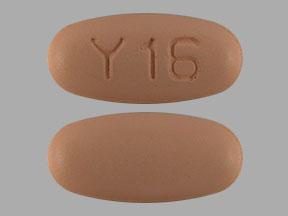
Entacapone (Monograph)
Brand name: Comtan
Drug class: Catechol-O-Methyltransferase (COMT) Inhibitors
- Antiparkinsonian Agents
VA class: CN500
Chemical name: (E)-α-Cyano-N,N-diethyl-1,3,4-dihydroxy-5-nitrocinnamamide
Molecular formula: C14H15N3O5
CAS number: 130929-57-6
Introduction
Selective, reversible inhibitor of catechol-O-methyltransferase (COMT).
Uses for Entacapone
Parkinsonian Syndrome
Adjunct to levodopa-carbidopa in the symptomatic treatment of parkinson disease in patients with manifestations of end-of-dose “wearing-off.”
Not evaluated systematically in patients without manifestations of end-of-dose “wearing-off.”
Entacapone Dosage and Administration
Administration
Oral Administration
Administer orally without regard to meals.
Administer in conjunction with levodopa-carbidopa (conventional tablets, orally disintegrating tablets, or extended-release preparations) or as a fixed-combination preparation containing levodopa, carbidopa, and entacapone (Stalevo).
Administer one tablet of the fixed-combination preparation (Stalevo) per dosing interval; do not divide the tablets.
Dosage
Adults
Parkinsonian Syndrome
Oral
200 mg with each levodopa-carbidopa dose.
May need to reduce daily levodopa dosage or administration frequency to optimize patient response. In clinical studies, most patients receiving ≥800 mg of levodopa daily or experiencing moderate or severe dyskinesias before initiating entacapone therapy required a reduction (average 25%) in levodopa dosage.
Transferring to the Fixed-combination Preparation (Stalevo)
OralPatients receiving levodopa-carbidopa conventional tablets containing a 1:4 ratio of carbidopa to levodopa: Switch to the corresponding strength of Stalevo.
No information on transferring patients receiving extended-release levodopa-carbidopa preparation or levodopa-carbidopa preparations containing a 1:10 ratio of carbidopa to levodopa.
Initiating Entacapone Using the Fixed-combination Preparation (Stalevo)
OralPatients receiving levodopa >600 mg daily or with history of moderate or severe dyskinesias: Administer levodopa-carbidopa (1:4 ratio) and entacapone as separate preparations to determine optimum maintenance dosage and then switch to corresponding strength of Stalevo.
Patients receiving levodopa <600 mg daily (conventional tablet, 1:4 ratio) with no dyskinesias: Switch to the strength of Stalevo that corresponds to the dosage of levodopa-carbidopa being taken. Further adjustment may be needed.
Prescribing Limits
Adults
Parkinsonian Syndrome
Oral
Entacapone: Maximum of 8 doses (1.6 g) daily; clinical experience with dosages >1.6 g daily is limited.
Fixed-combination preparations containing levodopa 50–150 mg, carbidopa 12.5–37.5 mg, and entacapone 200 mg (Stalevo 50, 75, 100, 125, and 150): Maximum of 8 tablets daily; clinical experience with entacapone dosages >1.6 g daily is limited.
Fixed-combination preparation containing levodopa 200 mg, carbidopa 50 mg, and entacapone 200 mg (Stalevo 200): Maximum of 6 tablets daily; clinical experience with carbidopa dosages >300 mg daily is limited.
Cautions for Entacapone
Contraindications
-
Known hypersensitivity to entacapone or any ingredient in the formulation.
Warnings/Precautions
Warnings
Concomitant Use with MAO Inhibitors
Possible inhibition of principal pathways involved in the metabolism of catecholamines if used concomitantly with a nonselective MAO inhibitor (e.g., phenelzine, tranylcypromine); concomitant use not recommended. (See Specific Drugs under Interactions.)
Falling Asleep During Activities of Daily Living
Episodes of falling asleep while engaged in activities of daily living (e.g., driving) have occurred with entacapone and/or levodopa/carbidopa; these episodes have sometimes resulted in accidents. Some patients perceived no warning signs (e.g., excessive drowsiness) and believed they were alert immediately prior to the event.
Falling asleep while engaged in such activities reportedly always occurs in the setting of preexisting somnolence, although patients may not give such a history.
Continually reassess patients for drowsiness or sleepiness during therapy. Patients may not acknowledge drowsiness or sleepiness until directly questioned about such adverse effects during specific activities.
If a patient develops daytime sleepiness or episodes of falling asleep during activities that require active participation (e.g., conversations, eating), generally discontinue entacapone. If a decision is made to continue therapy, advise patient not to drive and to avoid other potentially dangerous activities. (See Advice to Patients.)
Concomitant Use with Drugs Metabolized by COMT
Possible increased heart rate, arrhythmias, and excessive changes in BP when used concomitantly with drugs metabolized by COMT. (See Specific Drugs under Interactions.)
Potential Risk of Prostate Cancer
Higher incidence of prostate cancer was observed in a randomized, controlled study in patients receiving the fixed combination of levodopa, carbidopa, and entacapone (Stalevo) compared with those receiving levodopa-carbidopa without entacapone.
Additional observational studies were subsequently conducted to further investigate this safety concern. No increased risk of prostate cancer was observed with entacapone in these studies. Based on these additional findings, FDA has concluded that entacapone is not associated with an increased risk of prostate cancer.
Clinicians should follow current prostate cancer screening guidelines.
Major Toxicities
Cardiovascular Effects
Enhances levodopa availability; possible increased occurrence of orthostatic hypotension or syncope when administered with levodopa-carbidopa.
Findings from an FDA-conducted meta-analysis, which combined cardiovascular-related findings from 15 clinical trials, suggested an increased risk of cardiovascular events (i.e., MI, stroke, cardiovascular death) with entacapone. However, FDA's subsequent analysis of the available data, including a review of additional analyses, found no evidence to support such an association.
Hallucinations and Psychotic-like Behavior
Hallucinations reported in clinical studies.
In addition, new or worsening mental status and behavioral changes (e.g., paranoid ideation, delusions, hallucinations, confusion, psychotic-like behavior, disorientation, aggressive behavior, agitation, delirium) reported during postmarketing experience. Other antiparkinsonian agents can produce similar effects.
Generally not advised in patients with major psychotic disorder. Concomitant use with antipsychotic agents may exacerbate parkinsonian symptoms and decrease effectiveness of entacapone.
Diarrhea
Diarrhea reported in clinical studies; generally mild to moderate, resolving upon drug discontinuance; in rare cases, diarrhea was severe requiring hospitalization.
Generally occurs during first 4–12 weeks of therapy; may occur as early as first week or as late as several months following initiation of therapy.
Postmarketing experience suggests that diarrhea may be related to drug-induced colitis, primarily lymphocytic colitis. In these cases, patients presented with moderate to severe watery, but nonbloody, diarrhea associated with dehydration, abdominal pain, weight loss, and hypokalemia. Resolution or substantial improvement occurred in the majority of patients when treatment was discontinued.
In patients with prolonged diarrhea, discontinue drug and consider appropriate medical treatment; further diagnostic evaluation may be necessary.
Dyskinesia
May potentiate adverse dopaminergic effects of levodopa and may cause or exacerbate dyskinesias.
Reduction of levodopa dosage may ameliorate dyskinesias; however, many patients in clinical studies continued to experience frequent dyskinesias.
Rhabdomyolysis
Severe rhabdomyolysis reported. Manifestations included fever, altered consciousness, myalgia, and increased concentrations of CPK and myoglobin.
Hyperpyrexia and Confusion
Symptom complex resembling neuroleptic malignant syndrome (NMS) (elevated temperature, muscular rigidity, altered consciousness, elevated CPK) reported in association with abrupt withdrawal or dosage lowering of other dopaminergic agents. Similar episodes possible with entacapone. (See Withdrawal of Therapy under Cautions.)
Respiratory Effects
Retroperitoneal fibrosis, pulmonary infiltrates, pleural effusion, and thickening of the pleura reported with ergot-derivative dopamine receptor agonists (e.g., bromocriptine, pergolide); possibility exists that nonergot-derived drugs that increase dopaminergic activity (e.g., entacapone) may induce similar pulmonary changes.
General Precautions
Use of Fixed Combination
When used in fixed combination with levodopa and carbidopa (e.g., Stalevo), observe the usual precautions and contraindications associated with all the drugs in the preparation.
Withdrawal of Therapy
Slow withdrawal is recommended.
If entacapone therapy is discontinued, closely monitor patient and adjust dosage of dopaminergic therapy accordingly.
If hyperpyrexia or severe rigidity occurs, consider possibility of symptom complex resembling NMS.
Melanoma
Epidemiologic studies indicate patients with parkinsonian syndrome have a twofold to approximately sixfold higher risk of developing melanoma than the general population. Unclear whether increased risk is due to parkinsonian syndrome or other factors (e.g., drugs used to treat the disease).
Monitor for melanoma on a frequent and regular basis. Manufacturer recommends periodic skin examinations performed by appropriately qualified individuals (e.g., dermatologists).
Impulse Control/Compulsive Behaviors
Intense urges (e.g., urge to gamble, increased sexual urges, other intense urges) and inability to control these urges reported in some patients receiving antiparkinsonian agents that increase central dopaminergic tone (including entacapone). In some cases, urges stopped when dosage was reduced or drug was discontinued.
Consider reducing dosage or discontinuing entacapone if a patient develops such urges. (See Advice to Patients.)
Specific Populations
Pregnancy
In animal reproduction studies, adverse fetal effects and developmental abnormalities (e.g., abortions, resorptions, decreased fetal weights, fetal variation, fetal eye anomalies) observed.
Not studied in pregnant women; use during pregnancy only if potential benefits justify potential risks to the fetus.
Lactation
Distributed into milk in rats; not known whether distributed into human milk. Caution if used in nursing women.
Pediatric Use
Safety and effectiveness not established.
Geriatric Use
No substantial differences in safety or pharmacokinetics relative to younger adults.
Hepatic Impairment
Use with caution; possible increased exposure. (See Special Populations under Pharmacokinetics.)
Biliary excretion is main route of elimination; use with caution in patients with biliary obstruction.
Renal Impairment
No substantial effects on pharmacokinetics observed.
Common Adverse Effects
Dyskinesia, nausea, hyperkinesia, diarrhea, urine discoloration, hypokinesia, dizziness, abdominal pain, constipation, fatigue.
Drug Interactions
Inhibits CYP1A2, 2A6, 2C9, 2C19, 2D6, 2E1, and 3A only at very high concentrations. Inhibition of these isoenzymes not expected during clinical use.
Drugs Metabolized by COMT
Possible increased heart rate, arrhythmias, and excessive changes in BP.
Drugs Interfering with Biliary Excretion, Glucuronidation, and Intestinal β-Glucuronidase
Decreased entacapone excretion.
Protein-bound Drugs
No binding displacement between entacapone and other highly protein bound drugs (e.g., warfarin, salicylic acid, phenylbutazone, diazepam).
Specific Drugs
|
Drug |
Interaction |
Comments |
|---|---|---|
|
Anti-infective agents (e.g., ampicillin, chloramphenicol, erythromycin, rifampin) |
Possible decreased entacapone excretion |
Use with caution |
|
Antipsychotic agents |
Possible exacerbation of parkinsonian symptoms; may result in decreased efficacy of entacapone |
|
|
Apomorphine |
Possible increased heart rate, arrhythmias, and excessive changes in BP |
Use with caution |
|
Cholestyramine |
Possible decreased entacapone excretion |
Use with caution |
|
CNS depressants |
Additive sedative effects |
|
|
Imipramine |
Pharmacologic interaction unlikely |
|
|
Levodopa |
Increased plasma levodopa concentrations, resulting in enhanced therapeutic effects Increased risk of levodopa-induced cardiovascular effects and dyskinesia |
|
|
MAO inhibitors |
Potential inhibition of catecholamine metabolism when used concomitantly with nonselective MAO inhibitors (e.g., phenelzine, tranylcypromine) Pharmacologic interaction unlikely with selective MAO-B inhibitors (e.g., selegiline) |
Avoid concomitant use with nonselective MAO inhibitors |
|
Methyldopa |
Possible increased heart rate, arrhythmias, and excessive changes in BP |
Use with caution |
|
Probenecid |
Possible decreased entacapone excretion |
Use with caution |
|
Sympathomimetic (adrenergic) agents (e.g., dobutamine, dopamine, epinephrine, isoproterenol, norepinephrine) |
Possible increased heart rate, arrhythmias, and excessive changes in BP |
Use with caution |
|
Warfarin |
Cases of substantially elevated INR reported |
Monitor INR when entacapone is initiated or when dosage is increased |
Entacapone Pharmacokinetics
Absorption
Bioavailability
Rapidly absorbed following oral administration, with peak plasma concentrations attained within approximately 1 hour.
Absolute bioavailability is 35%.
Food
Food does not affect pharmacokinetics.
Special Populations
Increased peak plasma concentrations and AUC in patients with mild to moderate hepatic impairment.
Distribution
Extent
Does not distribute widely into tissues.
Distributed into milk in rats; not known whether distributed into human milk.
Plasma Protein Binding
98% (mainly albumin).
Elimination
Metabolism
Almost completely metabolized, principally by isomerization followed by glucuronidation to an inactive conjugate.
Elimination Route
Entacapone and its metabolites are eliminated principally in feces (90%) via biliary excretion and to a lesser extent in urine (10%).
Half-life
Approximately 2.4 hours.
Stability
Storage
Oral
Tablets
25°C (may be exposed to 15–30°C).
Actions
-
Structurally and pharmacologically related to tolcapone; however, unlike tolcapone, not associated with hepatotoxicity (e.g., drug-induced hepatitis, fatal liver failure).
-
Inhibits COMT enzyme in peripheral tissues; effects on central COMT activity in humans not studied.
-
Concomitant administration with levodopa and a decarboxylase inhibitor (e.g., carbidopa) results in increased and more sustained plasma levodopa concentrations compared with administration of levodopa and a decarboxylase inhibitor.
-
Lacks antiparkinsonian activity when administered alone.
Advice to Patients
-
Importance of taking entacapone only as prescribed and not discontinuing abruptly.
-
Advise patients of the potential for sedating effects, including somnolence and the possibility of falling asleep while engaged in activities of daily living. Patients should avoid driving, operating machinery, or engaging in other potentially dangerous activities until effects on the individual are known. Importance of advising patients that if increased somnolence or episodes of falling asleep during activities of daily living (e.g., conversations, eating, driving) occur at any time during therapy, they should not drive or participate in potentially dangerous activities until they have contacted their clinician.
-
Advise patients to use caution when taking other CNS depressants concomitantly.
-
Advise patients that entacapone may cause brownish orange discoloration of urine; not clinically important.
-
Advise patients that hallucinations and other psychotic-like behaviors can occur.
-
Importance of informing patients of the risk of exacerbation of dyskinesia.
-
Advise patients that nausea can occur, especially during initiation of therapy.
-
Advise patients that diarrhea may occur and may have a delayed onset; in some cases, diarrhea may be caused by colitis. If diarrhea occurs, advise patients to drink fluids and maintain adequate hydration and monitor for weight loss. Resolution is expected when the drug is discontinued; however, further diagnostic evaluation may be required.
-
Advise patients not to rise rapidly after prolonged sitting or lying down, especially during first few weeks of therapy.
-
Importance of informing clinicians of existing or contemplated concomitant therapy, including prescription and OTC drugs.
-
Importance of asking patients whether they have developed any new or increased gambling urges, sexual urges, or other urges while receiving entacapone and of advising them of the importance of reporting such urges.
-
Importance of women informing clinicians if they are or plan to become pregnant or plan to breast-feed.
-
Importance of informing patients of other important precautionary information. (See Cautions.)
Preparations
Excipients in commercially available drug preparations may have clinically important effects in some individuals; consult specific product labeling for details.
Please refer to the ASHP Drug Shortages Resource Center for information on shortages of one or more of these preparations.
* available from one or more manufacturer, distributor, and/or repackager by generic (nonproprietary) name
|
Routes |
Dosage Forms |
Strengths |
Brand Names |
Manufacturer |
|---|---|---|---|---|
|
Oral |
Tablets, film-coated |
200 mg* |
Comtan |
Novartis |
|
Entacapone Tablets |
|
Routes |
Dosage Forms |
Strengths |
Brand Names |
Manufacturer |
|---|---|---|---|---|
|
Oral |
Tablets, film-coated |
200 mg with Carbidopa 12.5 mg (of anhydrous carbidopa) and Levodopa 50 mg |
Stalevo 50 |
Novartis |
|
200 mg with Carbidopa 18.75 mg (of anhydrous carbidopa) and Levodopa 75 mg |
Stalevo 75 |
Novartis |
||
|
200 mg with Carbidopa 25 mg (of anhydrous carbidopa) and Levodopa 100 mg |
Stalevo 100 |
Novartis |
||
|
200 mg with Carbidopa 31.25 mg (of anhydrous carbidopa) and Levodopa 125 mg |
Stalevo 125 |
Novartis |
||
|
200 mg with Carbidopa 37.5 mg (of anhydrous carbidopa) and Levodopa 150 mg |
Stalevo 150 |
Novartis |
||
|
200 mg with Carbidopa 50 mg (of anhydrous carbidopa) and Levodopa 200 mg |
Stalevo 200 |
Novartis |
AHFS DI Essentials™. © Copyright 2025, Selected Revisions May 24, 2021. American Society of Health-System Pharmacists, Inc., 4500 East-West Highway, Suite 900, Bethesda, Maryland 20814.
Reload page with references included
Related/similar drugs
More about entacapone
- Check interactions
- Compare alternatives
- Pricing & coupons
- Reviews (15)
- Drug images
- Side effects
- Dosage information
- During pregnancy
- Drug class: dopaminergic antiparkinsonism agents
- Breastfeeding
- En español