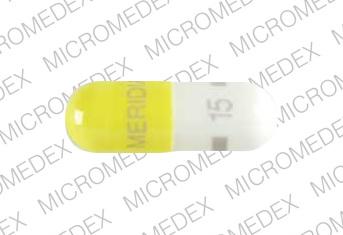
Meridia
Generic name: sibutramine [ si-BUE-tra-meen ]
Drug class: Anorexiants
What is Meridia?
Meridia was withdrawn from the U.S. market in October 2010.
Meridia affects chemicals in the brain that affect weight maintenance.
Meridia is used together with diet and exercise to treat obesity that may be related to diabetes, high cholesterol, or high blood pressure.
Warnings
Meridia was withdrawn from the U.S. market in October 2010.
Do not use Meridia if you have taken an MAO inhibitor such as furazolidone (Furoxone), isocarboxazid (Marplan), phenelzine (Nardil), rasagiline (Azilect), selegiline (Eldepryl, Emsam), or tranylcypromine (Parnate) in the last 14 days. Serious, life threatening side effects can occur if you use Meridia before the MAO inhibitor has cleared from your body. You should not take Meridia if you are allergic to sibutramine, or if you have severe or uncontrolled high blood pressure, an eating disorder (anorexia or bulimia), if you are taking stimulant diet pills, or if you have a history of coronary artery disease, stroke, or heart disease.
Before taking Meridia, tell your doctor if you have glaucoma, high blood pressure, liver or kidney disease, depression, underactive thyroid, seizures, a bleeding disorder, a history of gallstones, or if you are older than 65 or younger than 16.
Tell your doctor about all prescription and over-the-counter medications you use, especially antidepressants, cold or allergy medication, narcotic pain medicine, or migraine headache medicines.
Tell your doctor if you do not lose at least 4 pounds after taking the medication for 4 weeks along with a low calorie diet.
Before taking this medicine
Do not use Meridia if you have taken an MAO inhibitor such as furazolidone (Furoxone), isocarboxazid (Marplan), phenelzine (Nardil), rasagiline (Azilect), selegiline (Eldepryl, Emsam), or tranylcypromine (Parnate) in the last 14 days. Serious, life threatening side effects can occur if you use Meridia before the MAO inhibitor has cleared from your body. You should not take Meridia if you are allergic to Meridia, or if you have:
-
severe or uncontrolled hypertension (high blood pressure);
-
an eating disorder (anorexia or bulimia);
-
a history of coronary artery disease (atherosclerosis);
-
a history of heart disease (congestive heart failure, heart rhythm disorder);
-
a history of heart attack or stroke; or
-
if you are taking stimulant diet pills.
If you have any of these other conditions, you may need to adjust your dose of Meridia or have special tests:
-
glaucoma;
-
high blood pressure;
- liver disease;
- kidney disease;
-
depression;
-
underactive thyroid;
-
epilepsy or seizure disorder;
-
a bleeding or blood clotting disorder;
-
a history of gallstones; or
-
if you are older than 65 or younger than 16.
FDA pregnancy category C. It is not known whether Meridia will harm an unborn baby. Tell your doctor if you are pregnant or plan to become pregnant while using Meridia. It is not known whether sibutramine passes into breast milk or if it could harm a nursing baby. Do not use Meridia without telling your doctor if you are breast-feeding a baby. Do not give this medication to anyone younger than 16 years old.
How should I take Meridia?
Take Meridia exactly as prescribed by your doctor. Do not take in larger or smaller amounts or for longer than recommended. Follow the directions on your prescription label.
Meridia is usually taken once daily. Follow your doctor's instructions.
Your doctor may occasionally change your dose to make sure you get the best results.
Meridia can be taken with or without food.
You should lose at least 4 pounds during the first 4 weeks of taking Meridia and eating a low calorie diet. Tell your doctor if you do not lose at least 4 pounds after taking the medication for 4 weeks.
Your blood pressure and pulse will need to be checked often. Visit your doctor regularly.
Meridia should not be taken for longer than 2 years.
Store at room temperature away from moisture, heat, and light. Do not share Meridia with another person. Keep the medication in a place where others cannot get to it.
What happens if I miss a dose?
Take the missed dose as soon as you remember. Skip the missed dose if it is almost time for your next scheduled dose. Do not take extra medicine to make up the missed dose.
What happens if I overdose?
Seek emergency medical attention or call the Poison Help line at 1-800-222-1222.
Overdose symptoms may include headache, dizziness, and fast heart rate.
What should I avoid?
Meridia may impair your thinking or reactions. Be careful if you drive or do anything that requires you to be alert. Do not take any other prescription or over-the-counter weight-loss products without your doctor's advice.
Avoid taking cough and cold or allergy medications while taking Meridia.
Avoid drinking alcohol while taking Meridia.
Meridia side effects
Get emergency medical help if you have any of these signs of an allergic reaction to Meridia: hives; difficult breathing; swelling of your face, lips, tongue, or throat. Stop using Meridia and call your doctor at once if you have a serious side effect such as:
-
fast, pounding, or uneven heartbeats;
-
new or worsening shortness of breath;
-
agitation, hallucinations, fever, tremor, overactive reflexes, nausea, vomiting, diarrhea, loss of coordination, dilated pupils;
-
very stiff (rigid) muscles, high fever, sweating, confusion, feeling like you might pass out;
-
easy bruising or bleeding (nosebleeds, bleeding gums, or any bleeding that will not stop);
-
dangerously high blood pressure (severe headache, blurred vision, buzzing in your ears, anxiety, seizure);
-
chest pain or heavy feeling, pain spreading to the arm or shoulder, general ill feeling; or
-
sudden numbness or weakness (especially on one side of the body), problems with vision, speech, or balance.
Less serious Meridia side effects may include:
-
dry mouth, upset stomach;
-
changes in appetite;
-
constipation, stomach pain;
-
headache, back pain, joint pain;
-
feeling nervous, dizzy, or depressed;
-
flu symptoms, runny or stuffy nose, sore throat, cough;
-
warmth, redness, or tingly feeling under your skin;
-
trouble sleeping (insomnia); or
-
mild skin rash.
This is not a complete list of side effects and others may occur. Call your doctor for medical advice about side effects. You may report side effects to FDA at 1-800-FDA-1088.
Related/similar drugs
What other drugs will affect Meridia?
Before using Meridia, tell your doctor if you regularly use other medicines that make you sleepy (such as cold or allergy medicine, sedatives, narcotic pain medicine, sleeping pills, muscle relaxers, and medicine for seizures, depression, or anxiety). They can add to sleepiness caused by Meridia.
Ask your doctor before taking any decongestants, cough medicine, or other diet pills.
The following drugs can interact with Meridia. Tell your doctor if you are using any of these:
-
lithium (Lithobid, Eskalith, and others);
-
tryptophan or L-tryptophan;
-
ketoconazole (Nizoral);
-
an antibiotic such as erythromycin (E.E.S., EryPed, Ery-Tab, Erythrocin);
-
an antidepressant such as citalopram (Celexa), desvenlafaxine (Pristiq), duloxetine (Cymbalta), fluoxetine (Prozac, Sarafem, Symbyax), paroxetine (Paxil), sertraline (Zoloft), venlafaxine (Effexor), and others;
-
ergot medicine such as dihydroergotamine (D.H.E. 45, Migranal Nasal Spray), ergonovine (Ergotrate), ergotamine (Ergomar), or methylergonovine (Methergine).
-
migraine headache medicine such as sumatriptan (Imitrex) or zolmitriptan (Zomig); or
-
narcotic pain medication such as fentanyl (Actiq, Duragesic, Fentora, Onsolis), meperidine (Demerol), pentazocine (Talwin).
This list is not complete and other drugs may interact with Meridia. Tell your doctor about all medications you use. This includes prescription, over the counter, vitamin, and herbal products. Do not start a new medication without telling your doctor.
More about Meridia (sibutramine)
- Check interactions
- Compare alternatives
- Reviews (69)
- Drug images
- Side effects
- Dosage information
- During pregnancy
- Drug class: anorexiants
- Breastfeeding
Related treatment guides
Further information
Remember, keep this and all other medicines out of the reach of children, never share your medicines with others, and use this medication only for the indication prescribed
Always consult your healthcare provider to ensure the information displayed on this page applies to your personal circumstances.
Copyright 1996-2025 Cerner Multum, Inc. Version: 5.01.