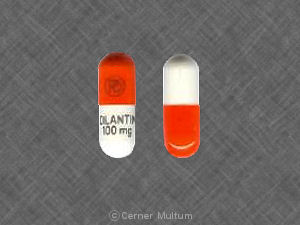
Dilantin and Alcohol/Food Interactions
There is 1 alcohol/food/lifestyle interaction with Dilantin (phenytoin).
Phenytoin Food
Moderate Food Interaction
Phenytoin levels may decrease when the suspension is given with enteral feedings. This could lead to a loss of seizure control. You could interrupt the feeding for 2 hours before and after the phenytoin dose. Alternatively, you may give the phenytoin suspension diluted in water and flush the tube with water after administration. These would make it easier for your body to absorb the medication. However, this still may not entirely avoid the interaction and may not always be feasible. You should have your phenytoin levels checked upon starting and stopping of enteral feedings. In addition, using phenytoin together with food may alter the effects of phenytoin. Contact your doctor if you experience worsening of seizure control or symptoms of toxicity, including twitching eye movements, slurred speech, loss of balance, tremor, muscle stiffness or weakness, nausea, vomiting, feeling light-headed, fainting, and slow or shallow breathing. If your doctor does prescribe these medications together, you may need a dose adjustment or special test to safely use both medications. It is important to tell your doctor about all other medications you use, including vitamins and herbs. Ask your doctor before making any changes to your therapy.
Dilantin drug interactions
There are 839 drug interactions with Dilantin (phenytoin).
Dilantin disease interactions
There are 12 disease interactions with Dilantin (phenytoin) which include:
- blood dyscrasias
- liver disease
- porphyria
- renal dysfunction
- cardiotoxicity
- suicidal tendency
- arrhythmias
- hyperglycemia
- megaloblastic anemia
- osteomalacia
- alcoholism
- thyroid function tests
Report options

More about Dilantin (phenytoin)
- Dilantin consumer information
- Check interactions
- Compare alternatives
- Pricing & coupons
- Reviews (78)
- Drug images
- Latest FDA alerts (3)
- Side effects
- Dosage information
- During pregnancy
- Generic availability
- Drug class: group I antiarrhythmics
- Breastfeeding
Related treatment guides
Drug Interaction Classification
| Highly clinically significant. Avoid combinations; the risk of the interaction outweighs the benefit. | |
| Moderately clinically significant. Usually avoid combinations; use it only under special circumstances. | |
| Minimally clinically significant. Minimize risk; assess risk and consider an alternative drug, take steps to circumvent the interaction risk and/or institute a monitoring plan. | |
| No interaction information available. |
Further information
Always consult your healthcare provider to ensure the information displayed on this page applies to your personal circumstances.