Renal Caps: Package Insert / Prescribing Info
Package insert / product label
Generic name: acid, thiamine mononitrate, riboflavin, niacinamide, pyridoxine hydrochloride, folic acid, cyanocobalamin, biotin and calcium pantothenate
Dosage form: capsule, liquid filled
Drug class: Vitamin and mineral combinations
Medically reviewed by Drugs.com. Last updated on Mar 25, 2025.
On This Page
Renal Caps Description
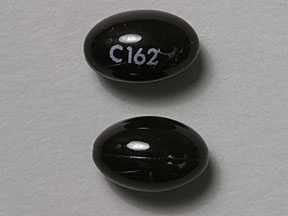
Renal Caps are opaque black oval softgels imprinted "C 162". These softgels provide water-soluble vitamins. Renal Caps contain the following inactive ingredients: Blue 1 Lake, gelatin, glycerin, lecithin, Red 40 Lake, soybean oil, starch, titanium dioxide, Yellow # 6 Lake, yellow beeswax.
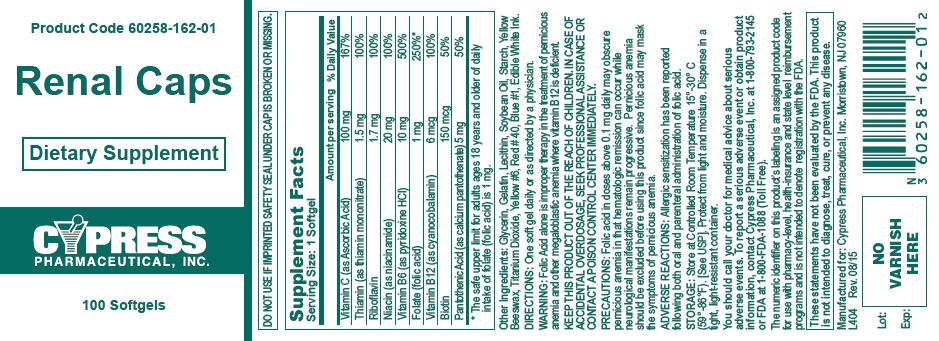
Each softgel contains:
Vitamin C (ascorbic acid).....100 mg
Thiamine (as thiamine mononitrate).....1.5 mg
Riboflavin.....1.7 mg
Niacin (as niacinamide).....20 mg
Vitamin B6 (as pyridoxine HCl).....10 mg
Folate (folic acid).....1mg
Vitamin B12 (as cyanocobalamin).....6 mcg
Biotin.....150 mcg
Pantothenic Acid (as calcium pantothenate)..5 mg
Indications and Usage for Renal Caps
Renal Caps is indicated in the wasting syndrome of chronic renal failure; uremia and impaired metabolic functions of the kidney. Renal Caps is also highly effective as a stress vitamin.
Precautions
Folic acid may mask the symptoms of pernicious anemia in that hematologic remission may occur while neurological manifestations progress.
Related/similar drugs
Renal Caps Dosage and Administration
One softgel daily, or as directed by physician. If on dialysis, take after treatment.
| RENAL CAPS
DIALYSIS/STRESS VITAMIN SUPPLEMENT
ascorbic acid, thiamine mononitrate,riboflavin, niacinamide, pyridoxine hydrochloride, folic acid, cyanocobalamin, biotin, calcium pantothenate, capsule, liquid filled |
|||||||||||||||||||||||||||||||||
|
|||||||||||||||||||||||||||||||||
|
|||||||||||||||||||||||||||||||||
|
|||||||||||||||||||||||||||||||||
|
|||||||||||||||||||||||||||||||||
|
|||||||||||||||||||||||||||||||||
| Labeler - Cypress Pharmaceutical, Inc. (790248942) |
| Registrant - Cypress Pharmaceutical, Inc. (790248942) |
| Establishment | |||
| Name | Address | ID/FEI | Business Operations |
|---|---|---|---|
| Accucaps Industries Limited | 248441727 | manufacture(60258-162) | |
Frequently asked questions
More about Renal Caps (multivitamin)
- Check interactions
- Compare alternatives
- Drug images
- Side effects
- Dosage information
- Drug class: vitamin and mineral combinations
Professional resources
Other brands
Nephrocaps, Folinex, Folplex, Nephplex Rx, ... +12 more