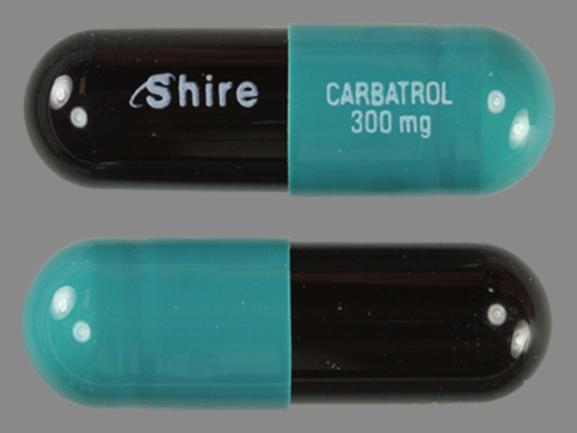
Carbatrol Disease Interactions
There are 13 disease interactions with Carbatrol (carbamazepine).
- Depression
- Liver disease
- Renal dysfunction
- Blood dyscrasias
- History of porphyria
- Hyponatremia
- Suicidal tendency
- Arrhythmias
- Anticholinergic effects
- Fructose intolerance
- Psychosis
- Seizures
- Thyroid function tests
Anticonvulsants (applies to Carbatrol) depression
Major Potential Hazard, Moderate plausibility.
Antiepileptic drugs can increase depression and suicidal thoughts or behaviors in patients receiving these drugs for any indication. Patients should be monitored for the emergence or worsening of depression, suicidal thoughts and unusual changes in mood or behavior. Caregivers and family should be alert for the emergence or worsening of symptoms. Behaviors of concern should be reported immediately to the healthcare providers.
References
- "Product Information. Tegretol (carbamazepine)." Novartis Pharmaceuticals PROD (2002):
- "Product Information. Depakene (valproic acid)." Abbott Pharmaceutical PROD (2001):
- "Product Information. Depakote (divalproex sodium)." Abbott Pharmaceutical PROD (2001):
- "Product Information. Lamictal (lamotrigine)." Glaxo Wellcome PROD (2001):
- "Product Information. Magnesium Sulfate (magnesium sulfate)." Abbott Pharmaceutical PROD (2001):
- "Product Information. Trileptal (oxcarbazepine)." Novartis Pharmaceuticals PROD (2001):
- "Product Information. Vimpat (lacosamide)." UCB Pharma Inc (2008):
- "Product Information. Banzel (rufinamide)." Eisai Inc (2008):
- "Product Information. Aptiom (eslicarbazepine)." Sunovion Pharmaceuticals Inc (2013):
Anticonvulsants (applies to Carbatrol) liver disease
Major Potential Hazard, Moderate plausibility.
Most anticonvulsants are primarily metabolized by the liver. Metabolic activity may be decreased in patients with liver disease, resulting in elevated drug levels and increased risk of toxicity. Therapy with anticonvulsants should be administered cautiously in patients with mild and moderate liver impairment. Therapy with these drugs is mostly not recommended in patients with severe liver impairment. Caution is also advised when treating patients with a history of liver disease, since the use of some anticonvulsants has been associated with hepatotoxicity. Baseline and periodic evaluation of liver function is recommended. Therapy should be discontinued and not readministered if evidence of liver damage is observed and felt to be drug-related.
References
- "Product Information. Tegretol (carbamazepine)." Novartis Pharmaceuticals PROD (2002):
- "Product Information. Banzel (rufinamide)." Eisai Inc (2008):
- "Product Information. Aptiom (eslicarbazepine)." Sunovion Pharmaceuticals Inc (2013):
- "Product Information. Oxtellar XR (oxcarbazepine)." Supernus Pharmaceuticals Inc (2014):
Anticonvulsants (applies to Carbatrol) renal dysfunction
Major Potential Hazard, Moderate plausibility.
Most anticonvulsants are primarily excreted by the kidney. The plasma clearance may be decreased and the half-life prolonged in patients with impaired renal function. Therapy with anticonvulsants should be administered cautiously in patients with significant renal dysfunction. In most cases it is recommended to adjust the dosage in patients with CrCl <50 mL/min to half the usual starting dose and then increase slowly to achieve the desired clinical response. The renal function should be monitored regularly in patients receiving therapy.
References
- "Product Information. Tegretol (carbamazepine)." Novartis Pharmaceuticals PROD (2002):
- "Product Information. Trileptal (oxcarbazepine)." Novartis Pharmaceuticals PROD (2001):
- "Product Information. Banzel (rufinamide)." Eisai Inc (2008):
- "Product Information. Aptiom (eslicarbazepine)." Sunovion Pharmaceuticals Inc (2013):
Carbamazepine (applies to Carbatrol) blood dyscrasias
Major Potential Hazard, Moderate plausibility. Applicable conditions: Bone Marrow Depression/Low Blood Counts
The use of carbamazepine has been associated with hematologic toxicities such as leukopenia, neutropenia, thrombocytopenia and, rarely, aplastic anemia and agranulocytosis. Carbamazepine should not be used in patients with history of bone marrow depression. Complete blood counts, including platelets and possibly reticulocytes and serum iron, should be performed prior to initiating therapy and regularly during therapy. Patients who exhibit decreases in blood counts at any time during treatment should be monitored more closely. Marked depression of blood counts may be indication for permanent withdrawal of carbamazepine therapy.
References
- "Product Information. Tegretol (carbamazepine)." Novartis Pharmaceuticals PROD (2002):
Carbamazepine (applies to Carbatrol) history of porphyria
Major Potential Hazard, Moderate plausibility.
The use of carbamazepine should be avoided in patients with a history of hepatic porphyria (e.g., acute intermittent porphyria, variegate porphyria, porphyria cutanea tarda). Acute attacks have been reported in such patients receiving carbamazepine therapy.
References
- "Product Information. Tegretol (carbamazepine)." Novartis Pharmaceuticals PROD (2002):
Anticonvulsants (applies to Carbatrol) hyponatremia
Moderate Potential Hazard, Moderate plausibility. Applicable conditions: Hypothyroidism, Adrenal Insufficiency, Congestive Heart Failure, SIADH
Some anticonvulsants can cause clinically significant hyponatremia (Na < 125 mmol/L). Therapy with these drugs should be administered cautiously in patients with conditions predisposing to hyponatremia, such as SIADH, use of diuretics or drugs associated with inappropriate antidiuretic hormone secretion, adrenal insufficiency, hypothyroidism, primary polydipsia, and edema (e.g., due to liver cirrhosis, congestive heart failure, or nephrotic syndrome). Serum sodium levels should be monitored during maintenance therapy, and patients should be monitored for signs and symptoms possibly indicating hyponatremia such as nausea, malaise, headache, lethargy, confusion, obtundation, and increase in seizure frequency or severity. If hyponatremia occurs, conservative measures such as fluid restriction, a reduction in dosage, or discontinuation of therapy will usually suffice.
References
- "Product Information. Tegretol (carbamazepine)." Novartis Pharmaceuticals PROD (2002):
- "Product Information. Trileptal (oxcarbazepine)." Novartis Pharmaceuticals PROD (2001):
- "Product Information. Aptiom (eslicarbazepine)." Sunovion Pharmaceuticals Inc (2013):
Antiepileptics (applies to Carbatrol) suicidal tendency
Moderate Potential Hazard, Moderate plausibility. Applicable conditions: Psychosis, Depression
Antiepileptic drugs (AEDs) have been associated with an increased risk of suicidal thoughts or behavior in patients taking these drugs for any indication. Pooled analyses of 199 placebo-controlled clinical studies involving the use of 11 different AEDs showed that patients receiving AEDs had approximately twice the risk of suicidal thinking or behavior compared to patients receiving placebo. AEDs should be administered cautiously in patients with depression or other psychiatric disorders; phentermine-topiramate should be avoided in patients with history of suicidal attempts or active suicidal ideation. The risk of suicidal thoughts and behavior should be carefully assessed against the risk of untreated illness, bearing in mind that epilepsy and many other conditions for which AEDs are prescribed are themselves associated with morbidity and mortality and an increased risk of suicidal thoughts and behavior. Patients, caregivers, and families should be alert to the emergence or worsening of signs and symptoms of depression, any unusual changes in mood or behavior, or the emergence of suicidal thoughts or behavior. If patients have symptoms of suicidal ideation or behavior, a dosage reduction or treatment discontinuation should be considered.
References
- "Product Information. Tegretol (carbamazepine)." Novartis Pharmaceuticals PROD (2002):
- "Product Information. Klonopin (clonazepam)." Roche Laboratories PROD (2001):
- "Product Information. Dilantin (phenytoin)." Parke-Davis PROD (2001):
- "Product Information. Cerebyx (fosphenytoin)." Parke-Davis PROD (2001):
- "Product Information. Mysoline (primidone)." Elan Pharmaceuticals PROD (2001):
- "Product Information. Lyrica (pregabalin)." Pfizer U.S. Pharmaceuticals Group (2005):
- "Product Information. Sabril (vigabatrin)." Lundbeck Inc (2009):
- "Product Information. Potiga (ezogabine)." GlaxoSmithKline (2011):
- "Product Information. Fycompa (perampanel)." Eisai Inc (2012):
- "Product Information. Briviact (brivaracetam)." UCB Pharma Inc (2016):
- "Product Information. Epidiolex (cannabidiol)." Greenwich Biosciences LLC (2018):
- "Product Information. Xcopri (cenobamate)." SK Life Science, Inc. (2020):
- "Product Information. Fintepla (fenfluramine)." Zogenix, Inc (2020):
- "Product Information. Ztalmy (ganaxolone)." Marinus Pharmaceuticals, Inc (2022):
- "Product Information. Diacomit (stiripentol)." Biocodex USA SUPPL-3 (2022):
- "Product Information. Qsymia (phentermine-topiramate)." Vivus Inc SUPPL-23 (2023):
- "Product Information. Topamax (topiramate)." Janssen Pharmaceuticals SUPPL-65 (2023):
Aromatic antiepileptic drugs (applies to Carbatrol) arrhythmias
Moderate Potential Hazard, Moderate plausibility. Applicable conditions: Cardiovascular Disease
Aromatic antiepileptic drugs such as phenytoin, carbamazepine, and oxcarbazepine, inhibit voltage- gated sodium channels and reduce membrane excitability in neurons and muscle and can be associated with cardiovascular effects. Individual agents have demonstrated AV heart block, including second and third-degree block following treatment. This occurred generally, but not solely in patients with underlying EKG abnormalities or risk factors for conduction abnormalities. Therapy with these agents should be considered and administered cautiously in patients with a history of cardiovascular disease and conduction abnormalities.
References
- "Product Information. Tegretol (carbamazepine)." Novartis Pharmaceuticals PROD (2002):
Carbamazepine (applies to Carbatrol) anticholinergic effects
Moderate Potential Hazard, Moderate plausibility. Applicable conditions: Glaucoma/Intraocular Hypertension, Urinary Retention
Carbamazepine is structurally related to the tricyclic antidepressants and has shown mild anticholinergic activity. Therapy with carbamazepine should be administered cautiously in patients with conditions that may be exacerbated by anticholinergic activity, such as urinary retention or obstruction and elevated intraocular pressure, especially angle-closure glaucoma, untreated intraocular hypertension, or uncontrolled primary open-angle glaucoma.
References
- Hockings N, Pall A, Moody J, et al. "The effects of age on carbamazepine pharmacokinetics and adverse effects." Br J Clin Pharmacol 22 (1986): 725-8
- "Product Information. Tegretol (carbamazepine)." Novartis Pharmaceuticals PROD (2002):
- Tormey WP "Mechanisms of carbamazepine-induced antidiuresis." J Neurol Neurosurg Psychiatry 56 (1993): 567
Carbamazepine (applies to Carbatrol) fructose intolerance
Moderate Potential Hazard, Moderate plausibility.
Carbamazepine in chewable tablets and suspension contains sorbitol and should not be administered to patients with rare hereditary problems of fructose intolerance.
References
- "Product Information. Tegretol (carbamazepine)." Novartis Pharmaceuticals PROD (2002):
Carbamazepine (applies to Carbatrol) psychosis
Moderate Potential Hazard, Moderate plausibility.
Carbamazepine is structurally related to the tricyclic antidepressants (TCAs). The possibility of activation of a latent psychosis or exacerbation of psychotic symptoms, especially in elderly patients, should be borne in mind.
References
- Pellock JM "Carbamazepine side effects in children and adults." Epilepsia 28 (1987): s64-70
- Hockings N, Pall A, Moody J, et al. "The effects of age on carbamazepine pharmacokinetics and adverse effects." Br J Clin Pharmacol 22 (1986): 725-8
- "Product Information. Tegretol (carbamazepine)." Novartis Pharmaceuticals PROD (2002):
- Smith KR, Goulding PM, Wilderman D, Goldfader PR, Holtermanhommes P, Wei FF "Neurobehavioral effects of phenytoin and carbamazepine in patients recovering from brain trauma: a comparative study." Arch Neurol 51 (1994): 653-60
Carbamazepine (applies to Carbatrol) seizures
Moderate Potential Hazard, Moderate plausibility.
Carbamazepine should be used with caution in patients with mixed seizure disorder that includes atypical absence seizures, as in these patients it has been associated with increased frequency of generalized convulsions.
References
- "Product Information. Tegretol (carbamazepine)." Novartis Pharmaceuticals PROD (2002):
Carbamazepine (applies to Carbatrol) thyroid function tests
Moderate Potential Hazard, Moderate plausibility. Applicable conditions: Thyroid Disease
Decreased values for thyroid function tests have been observed with carbamazepine administration. One study reported decreased serum levels of T4, FT4, and T3. In that study, TSH concentrations were not significantly altered. Clinicians should be cognizant of these effects when prescribing or administering carbamazepine therapy to patients with thyroid disorders.
References
- Strandjord RE, AAnderud S, Myking OL, Johannessen SI "Influence of carbamazepine on serum thyroxine and triiodothyronine in patients with epilepsy." Acta Neurol Scand 63 (1981): 111-21
- "Product Information. Tegretol (carbamazepine)." Novartis Pharmaceuticals PROD (2002):
- Isojarvi JI, Airaksinen KE, Repo M, Pakarinen AJ, Salmela P, Myllyla VV "Carbamazepine, serum thyroid hormones and myocardial function in epileptic patients." J Neurol Neurosurg Psychiatry 56 (1993): 710-2
- Delzompo M, Bocchetta A, Loviselli A, Martino E, Post RM, Ketter TA "Thyroid function during carbamazepine." Biol Psychiatry 36 (1994): 135-6
Carbatrol drug interactions
There are 760 drug interactions with Carbatrol (carbamazepine).
Carbatrol alcohol/food interactions
There is 1 alcohol/food interaction with Carbatrol (carbamazepine).
Report options

More about Carbatrol (carbamazepine)
- Carbatrol consumer information
- Check interactions
- Compare alternatives
- Pricing & coupons
- Reviews (14)
- Drug images
- Side effects
- Dosage information
- During pregnancy
- Generic availability
- Drug class: dibenzazepine anticonvulsants
- Breastfeeding
- En español
Related treatment guides
Drug Interaction Classification
| Highly clinically significant. Avoid combinations; the risk of the interaction outweighs the benefit. | |
| Moderately clinically significant. Usually avoid combinations; use it only under special circumstances. | |
| Minimally clinically significant. Minimize risk; assess risk and consider an alternative drug, take steps to circumvent the interaction risk and/or institute a monitoring plan. | |
| No interaction information available. |
Further information
Always consult your healthcare provider to ensure the information displayed on this page applies to your personal circumstances.