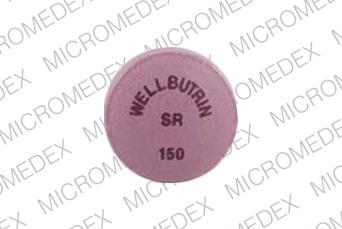
Wellbutrin SR Disease Interactions
There are 7 disease interactions with Wellbutrin SR (bupropion).
- Suicidality
- Seizure disorders
- Angle closure glaucoma
- Liver disease
- Mixed/manic episode
- Renal dysfunction
- Weight loss
Antidepressants (applies to Wellbutrin SR) suicidality
Major Potential Hazard, Moderate plausibility. Applicable conditions: Depression, Bipolar Disorder
Antidepressants increased the risk of suicidal thoughts and behavior in children, adolescents, and young adults in short-term trials; these trials did not show increased risk in patients older than 24 years and risk was reduced in patients 65 years and older. Adult and pediatric patients with major depressive disorder may experience worsening of their depression and/or the emergence of suicidal ideation and behavior (suicidality) or unusual changes in behavior, whether or not they are taking antidepressants; this risk may persist until significant remission occurs. Suicide is a known risk of depression and certain other psychiatric disorders; such disorders are the strongest predictors of suicide. Patients of all ages treated with antidepressants for any indication should be monitored appropriately and observed closely for clinical worsening, suicidality, and unusual changes in behavior, especially during the first few months of drug therapy, and at times of dose changes. Family members/caregivers should be advised to monitor for changes in behavior and to notify the health care provider. Changing the therapeutic regimen (including discontinuing the medication) should be considered in patients whose depression is persistently worse, or who are experiencing emergent suicidal thoughts or behaviors.
Bupropion (applies to Wellbutrin SR) seizure disorders
Major Potential Hazard, Moderate plausibility. Applicable conditions: Liver Disease, Seizures, Head Injury, Anorexia Nervosa, Bulimia, Diabetes Mellitus, Alcoholism, Drug Abuse/Dependence, Brain/Intracranial Tumor, CNS Infection, Hypoglycemia, Hyponatremia
Bupropion is contraindicated in patients with a seizure disorder. Bupropion can cause seizure; the risk is dose-related. In 1 study, the seizure incidence was about 0.4% with immediate-release bupropion hydrochloride (HCl) in the range of 300 to 450 mg/day (equal to 348 to 522 mg/day of extended-release bupropion hydrobromide [HBr]); the incidence of seizures increases dramatically at higher dosages (almost 10-fold between 450 and 600 mg/day as bupropion HCl [equal to 522 and 696 mg/day as bupropion HBr]). The risk of seizures (related to patient factors, clinical situations, and concomitant medications that lower the seizure threshold) should be considered before starting bupropion. Bupropion is also contraindicated in patients with current/prior diagnosis of bulimia or anorexia nervosa (a higher incidence of seizures was observed in such patients treated with immediate-release bupropion) and in patients undergoing abrupt discontinuation of alcohol, benzodiazepines, barbiturates, and antiepileptic drugs. Bupropion should be administered with caution in patients with conditions that increase the risk of seizure or who have other predisposing conditions including severe head injury; arteriovenous malformation; CNS infection or CNS tumor; severe stroke; metabolic disorders (e.g., hypoglycemia, hyponatremia, severe hepatic impairment, hypoxia); excessive use of alcohol, benzodiazepines, sedative/hypnotics, or opiates; use of illicit drugs (e.g., cocaine); abuse/misuse of prescription drugs (e.g., CNS stimulants); diabetes mellitus treated with oral hypoglycemic agents or insulin; use of anorectic agents; and concomitant use of medications that lower the seizure threshold. The risk of seizure can be reduced if the maximum recommended dosage is not exceeded (e.g., 450 mg/day [as 150 mg 3 times a day] for immediate-release bupropion HCl; 400 mg/day [as 200 mg twice a day] for sustained-release bupropion HCl; 450 mg once a day for extended-release bupropion HCl; 522 mg once a day for extended-release bupropion HBr), and the titration rate is gradual. Bupropion should be discontinued and should not be restarted if the patient has a seizure.
Bupropion (applies to Wellbutrin SR) angle closure glaucoma
Moderate Potential Hazard, Moderate plausibility. Applicable conditions: Glaucoma (Narrow Angle)
The pupillary dilation that occurs after use of many antidepressant drugs (including bupropion) can induce increased intraocular pressure and result in angle-closure (narrow-angle) glaucoma in a patient with anatomically narrow angles who does not have a patent iridectomy. Patients may want to be examined to determine whether they are susceptible to angle closure, and have a prophylactic procedure (e.g., iridectomy), if they are susceptible. The use of antidepressants (including bupropion-dextromethorphan) should be avoided in patients with untreated anatomically narrow angles.
Bupropion (applies to Wellbutrin SR) liver disease
Moderate Potential Hazard, Moderate plausibility.
Bupropion is primarily metabolized by the liver. The systemic exposure and half-life of bupropion and its metabolites may be increased in patients with liver dysfunction. A reduced dose and/or dosing frequency should be considered in patients with mild liver dysfunction (Child-Pugh score: 5 to 6). A dosage reduction is required in patients with moderate to severe liver dysfunction (Child-Pugh score: 7 to 15) who are using a single-ingredient bupropion product; the dosage should not exceed 75 mg/day with immediate-release bupropion hydrochloride (HCl), 100 mg/day or 150 mg every other day with sustained-release bupropion HCl, 150 mg every other day with extended-release bupropion HCl, and 174 mg every other day with extended-release bupropion hydrobromide. Bupropion-dextromethorphan is not recommended for patients with severe liver dysfunction (Child-Pugh C), and no dose adjustment of bupropion-dextromethorphan is recommended in patients with mild or moderate liver dysfunction (Child-Pugh A or B).
Bupropion (applies to Wellbutrin SR) mixed/manic episode
Moderate Potential Hazard, Moderate plausibility. Applicable conditions: Bipolar Disorder, Mania
Bupropion is not approved for the treatment of bipolar depression. Antidepressant therapy can trigger a manic, mixed, or hypomanic episode; the risk appears increased in patients with bipolar disorder or with risk factors for bipolar disorder. Before starting bupropion, patients should be screened for history of bipolar disorder and risk factors for bipolar disorder (e.g., family history of bipolar disorder, suicide, or depression). Depressed patients treated with bupropion have had various neuropsychiatric signs/symptoms, including delusions, hallucinations, psychosis, concentration disturbance, confusion, and paranoia; some of these patients had a diagnosis of bipolar disorder. In some cases, these symptoms abated with dose reduction and/or discontinuation of therapy. Bupropion should be discontinued if such reactions occur.
Bupropion (applies to Wellbutrin SR) renal dysfunction
Moderate Potential Hazard, Moderate plausibility.
Bupropion and its metabolites, some of which are pharmacologically active with one-fifth to one-half the potency of the parent drug, are cleared renally and may accumulate in patients with renal dysfunction (GFR less than 90 mL/min) to a greater extent than usual. Therefore, bupropion should be used with caution in patients with renal dysfunction. A reduced dose and/or dosing frequency should be considered, and patients should be closely monitored for adverse effects that could indicate high bupropion or metabolite exposures. Bupropion-dextromethorphan is not recommended for patients with severe renal dysfunction (estimated GFR 15 to 29 mL/min/1.73 m2); dosage adjustment of bupropion-dextromethorphan is recommended in patients with moderate renal dysfunction (estimated GFR 30 to 59 mL/min/1.73 m2).
Bupropion (applies to Wellbutrin SR) weight loss
Minor Potential Hazard, Moderate plausibility. Applicable conditions: Malnourished
The use of bupropion is associated with weight alterations. Both weight gain and weight loss may occur, although the latter is much more common. Weight loss greater than 2.27 kg was reported in up to 28% of patients, which may be undesirable in patients suffering from anorexia, malnutrition, or excessive weight loss. Weight change should be monitored during therapy if bupropion is used in these patients.
Wellbutrin SR drug interactions
There are 502 drug interactions with Wellbutrin SR (bupropion).
Wellbutrin SR alcohol/food interactions
There is 1 alcohol/food interaction with Wellbutrin SR (bupropion).
Report options

More about Wellbutrin SR (bupropion)
- Wellbutrin SR consumer information
- Check interactions
- Compare alternatives
- Pricing & coupons
- Reviews (145)
- Drug images
- Side effects
- Dosage information
- During pregnancy
- Generic availability
- Support group
- Drug class: miscellaneous antidepressants
- Breastfeeding
- En español
Related treatment guides
Drug Interaction Classification
| Highly clinically significant. Avoid combinations; the risk of the interaction outweighs the benefit. | |
| Moderately clinically significant. Usually avoid combinations; use it only under special circumstances. | |
| Minimally clinically significant. Minimize risk; assess risk and consider an alternative drug, take steps to circumvent the interaction risk and/or institute a monitoring plan. | |
| No interaction information available. |
Further information
Always consult your healthcare provider to ensure the information displayed on this page applies to your personal circumstances.