
Prostatitis
Medically reviewed by Drugs.com. Last updated on Sep 1, 2024.
What is prostatitis?
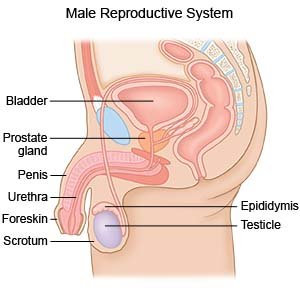
Prostatitis is inflammation of the prostate gland. The prostate gland is the male sex gland that produces a fluid that is part of semen. It is about the size of a walnut and is located under the bladder. Prostatitis is not contagious. Prostatitis may be an acute (short-term) or chronic (long-term) condition. You can get prostatitis at any age and more than 1 time.
 |
What increases my risk for prostatitis?
Prostatitis may be caused by a bacterial infection or inflammation, or the cause may be unknown. The following may increase your risk:
- Age 30 to 50 years
- A urinary catheter (tube placed in your urethra to drain urine)
- An injury to your genital area, a procedure such as a prostate biopsy, or an enlarged prostate
- Narrowed urethra (tube that carries urine from the bladder) or hardened calcium that forms in the prostate
- Sex that is not protected, or a sexually transmitted infection (STI), such as chlamydia or HIV
- Recent bladder infection, having urinary tract infections often, or urinary retention (trouble urinating)
- Dehydration
What are the signs and symptoms of prostatitis?
You may have no signs or symptoms, or you may have any of the following:
- Deep pain in the area between your scrotum and anus or your lower back
- Pain during a bowel movement
- Pain during or right after sexual intercourse
- Burning during urination
- Feeling like you have not emptied your bladder
- Urine does not flow right away when you start to urinate
- Feeling the need to urinate often or right away, especially at night
- Fever, chills, and fatigue
- Blood in your urine or semen
How is prostatitis diagnosed?
Your healthcare provider will ask you about your symptoms. He or she will do a physical exam of your prostate. Any of the following may be used to find the cause of your symptoms:
- Blood tests may be used to check for an infection.
- A urine, prostate fluid, or semen sample may be sent to a lab for tests.
- Ultrasound pictures of your scrotum may be taken if you have pain in your testicles.
- CT scan may be used if you have pain in your abdomen. You may be given contrast liquid to help problems show up better in the pictures. Tell the healthcare provider if you have ever had an allergic reaction to contrast liquid.
- A urine volume test is used to measure the amount of urine left in your bladder after you urinate. Ultrasound pictures or a catheter guided into your bladder may be used for this test.
How is prostatitis treated?
Treatment will depend on the cause of your prostatitis, your signs and symptoms, and other factors. Prostatitis may be treated with the following:
- Prostate massage may be used to treat chronic prostatitis. Massage can help decrease fullness and prevent infection. Healthcare providers can teach you how to do a prostate massage.
- Alpha blockers relax the muscles in your prostate and bladder to help you urinate more easily.
- Antibiotics may be given to treat a bacterial infection.
- NSAIDs help decrease swelling and pain or fever. This medicine is available with or without a doctor's order. NSAIDs can cause stomach bleeding or kidney problems in certain people. If you take blood thinner medicine, always ask your healthcare provider if NSAIDs are safe for you. Always read the medicine label and follow directions.
- Prescription pain medicine may be given. Ask your healthcare provider how to take this medicine safely. Some prescription pain medicines contain acetaminophen. Do not take other medicines that contain acetaminophen without talking to your healthcare provider. Too much acetaminophen may cause liver damage. Prescription pain medicine may cause constipation. Ask your healthcare provider how to prevent or treat constipation.
- Surgery may be used if other kinds of treatment do not work. Surgery may be used to drain an abscess. Less commonly, surgery called transurethral resection of the prostate (TURP) may be used to make your prostate smaller.
Treatment options
The following list of medications are related to or used in the treatment of this condition.
What can I do to manage prostatitis?
- Place a heating pad on the area. Heat may help blood flow to your prostate area. Warm baths may decrease prostate fullness and discomfort.
- Drink plenty of liquids to prevent dehydration. Ask your healthcare provider how much liquid to drink each day and which liquids are best for you.
- Do not drink alcohol or eat spicy foods until you have finished treatment for prostatitis. Limit the amount of caffeine you drink.
- Urinate often. Do not wait to urinate.
- You may have sex if you feel well.
When should I call my doctor?
- You have a fever.
- You see blood in your urine.
- You cannot urinate.
- Your symptoms are getting worse, or they return after you have been treated.
- You have questions or concerns about your condition or care.
Care Agreement
You have the right to help plan your care. Learn about your health condition and how it may be treated. Discuss treatment options with your healthcare providers to decide what care you want to receive. You always have the right to refuse treatment. The above information is an educational aid only. It is not intended as medical advice for individual conditions or treatments. Talk to your doctor, nurse or pharmacist before following any medical regimen to see if it is safe and effective for you.© Copyright Merative 2024 Information is for End User's use only and may not be sold, redistributed or otherwise used for commercial purposes.
Learn more about Prostatitis
- Antibiotic Resistance: The Top 10 List
- Antibiotic Shortages: A Serious Safety Concern
- Antibiotics 101
- Antibiotics and Birth Control Pill Interactions
- Antibiotics For UTI Treatment - What Are My Options?
- Anticholinergic Drugs to Avoid in the Elderly
- Benign Prostatic Hyperplasia (BPH): Symptoms and Treatment
- Can You Drink Alcohol with Antibiotics?
- Common Side Effects from Antibiotics, and Allergies and Reactions
- Enlarged Prostate (BPH) Medications and Alcohol Interactions
- Why Don’t Antibiotics Kill Viruses?
Treatment options
- Medications for Benign Prostatic Hyperplasia
- Medications for Prostatitis
- Medications for Urinary Tract Infection
Care guides
Symptoms and treatments
Medicine.com guides (external)
Further information
Always consult your healthcare provider to ensure the information displayed on this page applies to your personal circumstances.