
Muscular Dystrophy
Medically reviewed by Drugs.com. Last updated on Aug 4, 2025.
Muscular dystrophy (MD) is an inherited disease that causes weakness and loss of muscle. There are several types, such as Duchenne and Becker muscular dystrophy, that affect muscles in different parts of your body. Muscle weakness may lead to difficulty walking. In some cases, it can also lead to difficulty eating, drinking, or breathing.
WHILE YOU ARE HERE:
Informed consent
is a legal document that explains the tests, treatments, or procedures that you may need. Informed consent means you understand what will be done and can make decisions about what you want. You give your permission when you sign the consent form. You can have someone sign this form for you if you are not able to sign it. You have the right to understand your medical care in words you know. Before you sign the consent form, understand the risks and benefits of what will be done. Make sure all your questions are answered.
Medicine:
- Muscle relaxers help decrease pain and muscle spasms.
- Pain medicine may be given. Do not wait until the pain is severe before you ask for more medicine.
- Steroids are given to decrease inflammation and slow muscle loss.
Related medications
Tests:
- Blood tests are done to check for muscle damage and genetic markers of MD.
- An EKG test records your heart rhythm and how fast your heart beats.
- An MRI takes pictures of your muscles to show if you have MD. You may be given contrast liquid to help the muscles show up better in the pictures. Tell the healthcare provider if you have ever had an allergic reaction to contrast liquid. Do not enter the MRI room with anything metal. Metal can cause serious injury. Tell the healthcare provider if you have any metal in or on your body.
- An electromyography measures the electrical activity of your muscles at rest and with movement.
- A biopsy is a procedure to remove a small sample of muscle. Your healthcare provider will send the sample to a lab for tests.
- Neurological tests will check your reflexes, coordination, and muscle strength.
- A barium swallow , or esophagram, is an x-ray of your throat and esophagus. You will drink a thick liquid called barium. Barium helps your esophagus and stomach show up better on x-rays. Follow the instructions of your healthcare provider before and after the test.
Treatment:
- Assistive devices, such as braces, crutches, or wheelchairs, help you move. They can also help protect and support your body to prevent injury.
- Physical, occupational, or speech, therapy are programs to help you learn how to take care of yourself. A physical therapist will teach you exercises to help improve movement and strength, and to decrease pain. An occupational therapist will teach you skills to help with your daily activities. A speech therapist will help you strengthen the muscles in your face that you use to speak. A speech therapist may also work with you if you have trouble swallowing. He or she will show you safer ways to swallow and teach you which foods and liquids are safe to eat and drink. He or she may also recommend soft foods or thick liquids to make it easier to swallow.
- IV nutrition or a feeding tube may be given. A feeding tube goes through your nose or mouth and into your stomach. It can be used to give you nutrition and medicines.
- Respiratory therapy may be needed to help prevent or manage breathing problems. It may include the use of devices that help you breathe better.
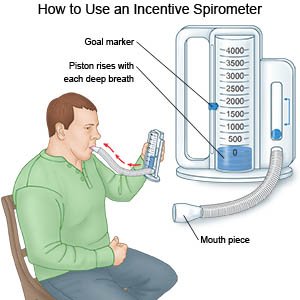
- Deep breathing exercises will decrease your risk for a lung infection. Take deep breaths and cough 10 times each hour. Take a deep breath and hold it for as long as you can. Let the air out and then cough strongly. Deep breaths help open your airway. You may be given an incentive spirometer to help you take deep breaths. Put the plastic piece in your mouth and take a slow, deep breath. Then let the air out and cough.
- Surgery may be done to release tight muscles so it is easier for you to move.
RISKS:
MD gradually gets worse over time. It may affect other organs such as your heart or lungs, and can become life-threatening.
CARE AGREEMENT:
You have the right to help plan your care. Learn about your health condition and how it may be treated. Discuss treatment options with your healthcare providers to decide what care you want to receive. You always have the right to refuse treatment.© Copyright Merative 2025 Information is for End User's use only and may not be sold, redistributed or otherwise used for commercial purposes.
The above information is an educational aid only. It is not intended as medical advice for individual conditions or treatments. Talk to your doctor, nurse or pharmacist before following any medical regimen to see if it is safe and effective for you.
Learn more about Muscular Dystrophy
Treatment options
- Medications for Familial Periodic Paralysis
- Medications for Muscular Dystrophy
- Medications for Myopathy
Care guides
Symptoms and treatments
Medicine.com guides (external)
Further information
Always consult your healthcare provider to ensure the information displayed on this page applies to your personal circumstances.