
Hypothyroidism
Medically reviewed by Drugs.com. Last updated on Sep 1, 2024.
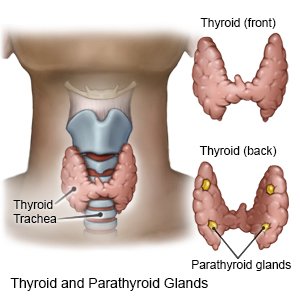
Hypothyroidism is a condition that develops when the thyroid gland does not make enough thyroid hormone. Thyroid hormones help control body temperature, heart rate, growth, and weight.
 |
WHILE YOU ARE HERE:
Informed consent
is a legal document that explains the tests, treatments, or procedures that you may need. Informed consent means you understand what will be done and can make decisions about what you want. You give your permission when you sign the consent form. You can have someone sign this form for you if you are not able to sign it. You have the right to understand your medical care in words you know. Before you sign the consent form, understand the risks and benefits of what will be done. Make sure all your questions are answered.
You may need extra oxygen
if your blood oxygen level is lower than it should be. You may get oxygen through a mask placed over your nose and mouth or through small tubes placed in your nostrils. Ask your healthcare provider before you take off the mask or oxygen tubing.
Medicines:
- Thyroid hormone replacement helps bring your thyroid hormone level back to normal.
- Heart medicine may help strengthen or regulate your heartbeat.
Tests:
- Blood tests may be done to monitor your thyroid hormone level.
- A thyroid scan may show how well your thyroid is working. Radioactive liquid is put into your IV or is given to you to drink. The part of your thyroid gland that still works absorbs the liquid. Two to 48 hours later, healthcare providers use a machine called a scintillator to take pictures of your thyroid. Tell the provider if you know or think you may be pregnant. The radioactive liquid may harm an unborn baby.
- An ultrasound uses sound waves to show pictures of your thyroid on a monitor.
- An EKG test records your heart rhythm and how fast your heart beats.
Treatment options
The following list of medications are related to or used in the treatment of this condition.
RISKS:
You may develop high cholesterol. Without treatment, hypothyroidism can become a life-threatening condition called myxedema. Myxedema can cause swelling in your legs, lungs, or around your heart.
CARE AGREEMENT:
You have the right to help plan your care. Learn about your health condition and how it may be treated. Discuss treatment options with your healthcare providers to decide what care you want to receive. You always have the right to refuse treatment.© Copyright Merative 2024 Information is for End User's use only and may not be sold, redistributed or otherwise used for commercial purposes.
The above information is an educational aid only. It is not intended as medical advice for individual conditions or treatments. Talk to your doctor, nurse or pharmacist before following any medical regimen to see if it is safe and effective for you.
Learn more about Hypothyroidism
Treatment options
Care guides
- Acquired Hypothyroidism in Children
- Hypothyroidism
- Induced Thyroid Disorders
- Subclinical Hypothyroidism
Symptoms and treatments
Medicine.com guides (external)
Further information
Always consult your healthcare provider to ensure the information displayed on this page applies to your personal circumstances.