
Hemorrhoids
Medically reviewed by Drugs.com. Last updated on Aug 4, 2025.
What are hemorrhoids?
Hemorrhoids are swollen blood vessels inside your rectum (internal hemorrhoids) or on your anus (external hemorrhoids). Sometimes a hemorrhoid may prolapse. This means it extends out of your anus.
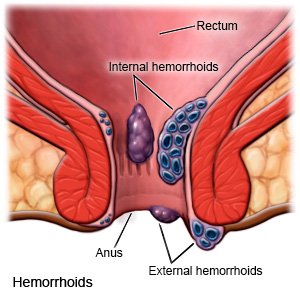 |
What increases my risk for hemorrhoids?
- Pregnancy or obesity
- Straining or sitting for a long time during bowel movements
- Liver disease
- Weak muscles around the anus caused by older age, rectal surgery, or anal intercourse
- A lack of physical activity
- Chronic diarrhea or constipation
- A low-fiber diet
What are the signs and symptoms of hemorrhoids?
- Pain or itching around your anus or inside your rectum
- Swelling or bumps around your anus
- Bright red blood in your bowel movement, on the toilet paper, or in the toilet bowl
- Tissue bulging out of your anus (prolapsed hemorrhoids)
- Incontinence (poor control over urine or bowel movements)
How are hemorrhoids diagnosed?
Your healthcare provider will ask about your symptoms, the foods you eat, and your bowel movements. You may need the following:
- A digital rectal exam is a test to check for hemorrhoids. Your provider will feel around and inside your anus.
- A colonoscopy or sigmoidoscopy is used to examine your intestines and check for any cause of bleeding. The scope (small tube with a light and camera on the end) is inserted through your anus.
- An anoscopy is used to see the inside of your anus and examine internal hemorrhoids. A scope is also used for this procedure.
Related medications
How are hemorrhoids treated?
Treatment will depend on your symptoms. You may need any of the following:
- Medicines can help decrease pain and swelling, and soften your bowel movement. The medicine may be a pill, pad, cream, or ointment.
- Procedures may be used to shrink or remove your hemorrhoid. Examples include rubber-band ligation, sclerotherapy, and infrared coagulation, also called photocoagulation. These procedures may be done in your healthcare provider's office. Ask your healthcare provider for more information about these procedures.
- Surgery may be needed to shrink or remove your hemorrhoids.
Treatment options
The following list of medications are related to or used in the treatment of this condition.
How can I manage my symptoms or prevent hemorrhoids?
- Eat a variety of high-fiber foods. Examples include fruits, vegetables, and whole grains. Fiber is an important part of hemorrhoid treatment. High-fiber foods soften your bowel movements and increase the bulk. This helps you avoid straining. Ask your provider how much fiber you need each day. In general, 25 to 35 grams of fiber a day may be recommended. Over-the-counter fiber supplements may also help.

- Do not strain to have a bowel movement. Straining can increase pressure on the tissues in your rectum and anus. When you sit on the toilet, do it for short periods of time if you are able, such as 3 to 5 minutes.
- Take a sitz bath. Fill a bathtub with 4 to 6 inches of warm water. You may also use a sitz bath pan that fits inside a toilet bowl. Sit in the sitz bath for 15 minutes, 3 to 5 times a day. The warm water can help decrease pain and swelling.
- Keep your anal area clean. Gently wash the area with warm water daily. Soap may irritate the area. After a bowel movement, gently wipe with moist towelettes or wet toilet paper. Dry toilet paper can irritate the area. Bidet toilet seats that spray water can be connected to your toilet. Portable spray bottle bidets can be used to clean your anal area. They can also be attached to a water bottle.
- Drink plenty of liquids. Liquids can help prevent constipation and keep your bowel movements soft. Ask how much liquid to drink each day and which liquids are best for you. In general, 2 liters of water a day may be recommended. Avoid caffeine and alcohol.
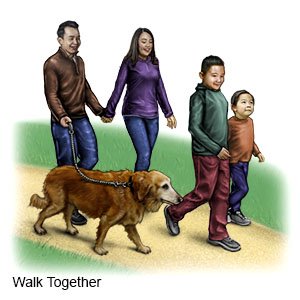
- Exercise as directed. Exercise, such as walking, may help prevent constipation and make it easier to have a bowel movement. Work with your provider to create an exercise plan.
- Avoid heavy lifting. This can cause you to strain and increase your risk for another hemorrhoid.
When should I seek immediate care?
- You have severe pain in your rectum or around your anus.
- You have severe pain in your abdomen, and you are vomiting.
- You have bleeding from your anus that soaks through your underwear.
When should I call my doctor?
- You have frequent and painful bowel movements.
- Your hemorrhoid looks or feels more swollen than usual.
- You do not have a bowel movement for 2 days or more.
- You see or feel tissue coming through your anus.
- You have blood in your bowel movements.
- You have questions or concerns about your condition or care.
Care Agreement
You have the right to help plan your care. Learn about your health condition and how it may be treated. Discuss treatment options with your healthcare providers to decide what care you want to receive. You always have the right to refuse treatment. The above information is an educational aid only. It is not intended as medical advice for individual conditions or treatments. Talk to your doctor, nurse or pharmacist before following any medical regimen to see if it is safe and effective for you.© Copyright Merative 2025 Information is for End User's use only and may not be sold, redistributed or otherwise used for commercial purposes.
Learn more about Hemorrhoids
Treatment options
Care guides
Symptoms and treatments
Further information
Always consult your healthcare provider to ensure the information displayed on this page applies to your personal circumstances.