
Deep Vein Thrombosis
Medically reviewed by Drugs.com. Last updated on Jun 30, 2025.
What is a deep vein thrombosis (DVT)?
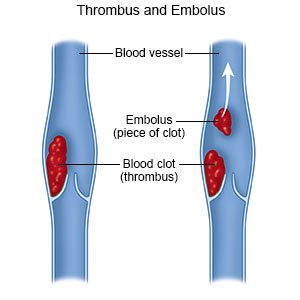
A DVT is a blood clot that forms in a deep vein of the body. The deep veins in the legs, thighs, and hips are the most common sites for DVT. A DVT can also occur in a deep vein within your arms. The clot prevents the normal flow of blood in the vein. The blood backs up and causes pain and swelling. The DVT can break into smaller pieces and travel to your lungs and cause a blockage called a pulmonary embolism (PE). A PE can become life-threatening.
 |
What increases my risk for a DVT?
After you have a DVT, your risk for another increases. Anyone can get a DVT, but any of the following increases your risk:
- A family history of blood clots
- Limited activity caused by bed rest, a leg cast, or sitting for long periods
- Injury to a deep vein, or surgery
- A blood disorder that makes your blood clot faster than normal, such as factor V Leiden mutation
- Age older than 60 years
- Hormone replacement therapy
- Birth control pills, especially in women who smoke or are older than 35 years
- Pregnancy, and for 6 weeks after childbirth
- Cancer or heart failure
- A catheter placed in a large vein
- Smoking cigarettes
- Obesity or varicose veins
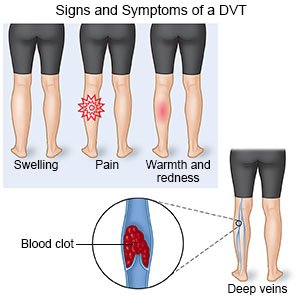
What are the signs and symptoms of a DVT?
- Swelling
- Redness
- Warmth, pain, or tenderness
 |
How is a DVT diagnosed?
- A D-dimer blood test may be done to check for signs of a blood clot.
- An ultrasound uses sound waves to show pictures on a monitor. An ultrasound may be done to show a clot in your vein.
- Contrast venography is an x-ray of a vein. Contrast liquid is used to make the vein easier to see on the x-ray. Tell a healthcare provider if you have ever had an allergic reaction to contrast liquid.
How is a DVT treated?
- Blood thinners help prevent blood clots. Clots can cause strokes, heart attacks, and death. Many types of blood thinners are available. Your healthcare provider will give you specific instructions for the type you are given. The following are general safety guidelines to follow while you are taking a blood thinner:
- Watch for bleeding and bruising. Watch for bleeding from your gums or nose. Watch for blood in your urine and bowel movements. Use a soft washcloth on your skin, and a soft toothbrush to brush your teeth. This can keep your skin and gums from bleeding. If you shave, use an electric shaver. Do not play contact sports.
- Tell your dentist and other healthcare providers that you take a blood thinner. Wear a bracelet or necklace that says you take this medicine.
- Do not start or stop any other medicines or supplements unless your healthcare provider tells you to. Many medicines and supplements cannot be used with blood thinners.
- Take your blood thinner exactly as prescribed by your healthcare provider. Do not skip a dose or take less than prescribed. Tell your provider right away if you forget to take your blood thinner, or if you take too much.
- Clot busters are emergency medicines that work to dissolve blood clots.
- A vena cava filter may be placed inside your vena cava to treat your DVT. The vena cava is a large vein that brings blood from your lower body up to your heart. The filter may help trap pieces of a blood clot and prevent them from going into your lungs.
- Surgery called a thrombectomy may be done to remove the clot. A procedure called thrombolysis may instead be done to inject a clot buster that helps break the clot apart.
Treatment options
The following list of medications are related to or used in the treatment of this condition.
What can I do to manage a DVT?
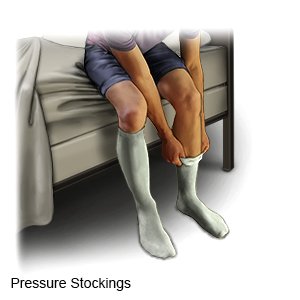
- Wear a compression device as directed. Examples include pressure stockings, intermittent pneumatic compression, and sequential compression devices. A compression device puts pressure on your lower legs to help keep blood from pooling in your leg veins. Your healthcare provider can prescribe the right device for you. Do not buy over-the-counter devices unless your provider says it is okay. They may not fit correctly or may have elastic that cuts off your circulation. Ask your provider when to start wearing a compression device and how long to wear it.
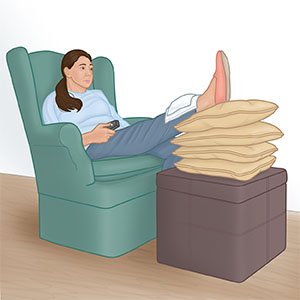
- Elevate your legs above the level of your heart. Elevate your legs when you sit or lie down, as often as you can. This will help decrease swelling and pain. Prop your legs on pillows or blankets to keep them elevated comfortably.
What can I do to prevent a DVT?
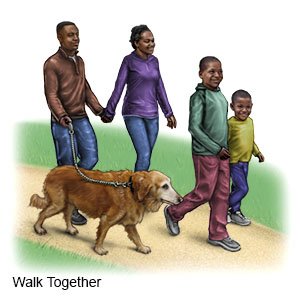
- Exercise regularly to help increase your blood flow. Walking is a good low-impact exercise. Talk to your healthcare provider about the best exercise plan for you.
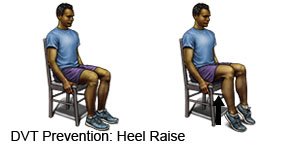
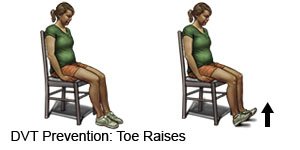
- Change your body position or move around often. Move and stretch in your seat several times each hour if you travel by car or work at a desk. In an airplane, get up and walk every hour. Move your legs by tightening and releasing your leg muscles while sitting. You can move your legs while sitting by raising and lowering your heels. Keep your toes on the floor while you do this. You can also raise and lower your toes while keeping your heels on the floor.
- Maintain a healthy weight. Ask your provider what a healthy weight is for you. Ask your provider to help you create a weight loss plan, if needed.
- Do not smoke. Nicotine and other chemicals in cigarettes and cigars can damage blood vessels and make it more difficult to manage your DVT. Ask your provider for information if you currently smoke and need help to quit. E-cigarettes or smokeless tobacco still contain nicotine. Talk to your provider before you use these products.
- Ask about birth control if you take the pill. Birth control pills increase the risk for PE if you are older than 35, smoke cigarettes, or have a clotting disorder. Talk to your provider about other ways to prevent pregnancy, such as a cervical cap or intrauterine device (IUD).
Related medications
Coumadin
Coumadin is used to prevent heart attacks, strokes, and blood clots in veins and arteries. Learn ...
Heparin Sodium
Heparin Sodium is used for angina, anticoagulation during pregnancy, antiphospholipid syndrome ...
Botox
Botox is used cosmetically to reduce facial lines and wrinkles and for medical purposes for ...
Activase
Activase is used for heart attack, ischemic stroke, pulmonary embolism, thrombotic/thromboembolic ...
Jantoven
Jantoven is used for antiphospholipid syndrome, chronic central venous catheterization, deep vein ...
Cathflo Activase
Cathflo Activase is used for IV Catheter Clot, thrombotic/thromboembolic disorder
Urokinase
Urokinase is used for deep vein thrombosis, heart attack, pulmonary embolism ...
Alteplase
Alteplase is used for heart attack, ischemic stroke, IV Catheter Clot, pulmonary embolism ...
Call your local emergency number (911 in the US) or have someone call if:
- You feel lightheaded, short of breath, and have chest pain.
- You cough up blood.
When should I seek immediate care?
- Your arm or leg feels warm, tender, and painful. It may look swollen and red.
When should I call my doctor or hematologist?
- You have questions or concerns about your condition or care.
Care Agreement
You have the right to help plan your care. Learn about your health condition and how it may be treated. Discuss treatment options with your healthcare providers to decide what care you want to receive. You always have the right to refuse treatment. The above information is an educational aid only. It is not intended as medical advice for individual conditions or treatments. Talk to your doctor, nurse or pharmacist before following any medical regimen to see if it is safe and effective for you.© Copyright Merative 2025 Information is for End User's use only and may not be sold, redistributed or otherwise used for commercial purposes.
Learn more about Deep Vein Thrombosis
Treatment options
Care guides
Symptoms and treatments
Medicine.com guides (external)
Further information
Always consult your healthcare provider to ensure the information displayed on this page applies to your personal circumstances.