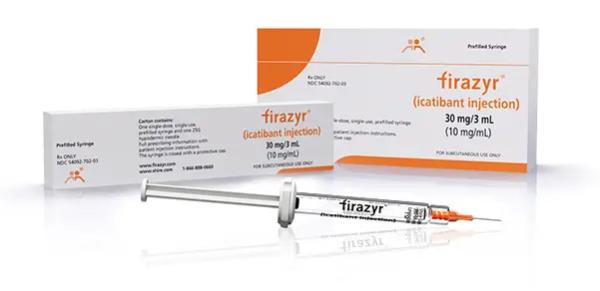
Icatibant
Pronunciation: eye-KAT-i-bant
Generic name: icatibant
Brand name: Firazyr
Dosage form: injection for subcutaneous use
Drug class: Hereditary angioedema agents
What is icatibant?
Icatibant is an injection used to treat acute attacks of hereditary angioedema (HAE) in adults. It can be self-administered under the skin (subcutaneously). Icatibant is not a cure for hereditary angioedema.
Icatibant works within an average of 2 to 2.5 hours to relieve symptoms of HAE according to clinical trials. 92.4% of attacks responded to a single dose.
Icatibant gained FDA approval on August 25, 2011, under the brand name Firazyr. A generic is available under the name icatibant, as well as a branded generic (Sajazir).
How does icatibant work?
HAE stems from a genetic deficiency and those affected have either insufficient amounts or dysfunctional versions of a protein called C1-esterase inhibitor. Without this protein, the body experiences unchecked production of bradykinin. This substance makes blood vessels widen and become leaky, which causes the characteristic symptoms of HAE attacks: localized swelling, inflammation, and often severe pain in various body regions.
Icatibant's mechanism of action involves targeting bradykinin B2 receptors on cell surfaces, preventing bradykinin from binding and activating them. This helps reduce the severity and duration of HAE attacks.
Icatibant belongs to the drug class called hereditary angioedema agents.
Icatibant side effects
The most common side effects of icatibant are:
- injection site reactions, such as redness, bruising, swelling, warmth, burning, itching, irritation, hives, numbness, pressure, or pain
- fever
- high levels of transaminase
- dizziness or nausea
- headache
- a rash.
Tell your healthcare provider if you have any side effect that bothers you or does not go away. These are not all of the possible side effects of this medicine. For more information, ask your healthcare provider or pharmacist.
Call your doctor for medical advice about side effects. You may report side effects to the FDA at 1-800-FDA-1088.
Serious side effects and warnings
If you have a laryngeal attack, inject icatibant and then go to the nearest hospital emergency room right away. Laryngeal attacks can become life-threatening.
Icatibant may cause an allergic reaction with symptoms similar to the signs of hereditary angioedema, such as hives, trouble breathing, or swelling of your face, lips, tongue, or throat.
Do not use more than 3 icatibant injections within a 24-hour period. Call your doctor if your symptoms do not improve, or if they get worse after using this medication.
Related/similar drugs
Before taking this medicine
Do not use this medicine if you are allergic to icatibant, Firazyr, Sajazir, or any inactive ingredients in the injection.
Before using icatibant tell your doctor about all your medical conditions including:
- any allergies
- all medicines you take, including heart or blood pressure medications
- if you are pregnant or intending to become pregnant
- if you are breastfeeding or intending to breastfeed.
Older adults may be more sensitive to the effects of this medicine.
Icatibant is not approved for use by anyone younger than 18 years old.
Pregnancy
It is not known if icatibant can harm an unborn baby.
Breastfeeding
It is not known if icatibant passes into breast milk.
How should I use icatibant?
Read the Instructions for Use at the end of the icatibant Package Insert for detailed instructions about the
right way to use this medicine.
Use icatibant exactly as your healthcare provider tells you to.
- Your healthcare provider will prescribe the right dose for you and tell you when to use it.
- You or a caregiver should know how to self-administer this medicine upon recognition of an HAE attack.
- Icatibant is injected under the skin. A healthcare provider will also teach you or a caregiver about how to give the injection.
- If you still have symptoms of angioedema after the first injection, or they come back, you may use another injection after at least 6 hours have passed.
- Do not use more than 3 icatibant injections within 24 hours.
If you have a laryngeal attack, inject icatibant and then go to the nearest hospital emergency room right away.
Call your doctor if your symptoms do not improve, or they get worse after using this medicine.
How to inject an icatibant injection
Wash your hands with soap and water before preparing your injection.
Prepare an injection only when you are ready to give it. Do not use the medicine if it has changed colors, looks cloudy, or has particles in it. Call your pharmacist for new medicine.
- Remove the prefilled syringe and needle from the carton.
- Twist the needle cap to break the seal. The needle should remain inside the protective needle cap. Screw the needle on the prefilled syringe.
- Choose your injection site. This should be a fold of skin on your stomach, about 2 to 4 inches (5 to 10 cm) below your belly button on either side.
- Do not inject icatibant into an area that is painful, swollen, scarred, or bruised.
- Clean the site with an alcohol swab and allow it to dry.
- Remove the needle from the needle cap.
- Hold the syringe in your hand between your fingers and thumb.
- Use your other hand to gently pinch up the fold of skin.
- Hold the syringe at a 45 to 90-degree angle to your skin and quickly insert the needle into the skin fold.
- Push the plunger at the top of the syringe for at least 30 seconds until no icatibant is in the syringe.
- Release the skin fold and gently pull the needle out.
- Dispose of your used prefilled syringe in an FDA-cleared sharps disposal container. Follow state or local laws about how to dispose of this container. Keep it out of the reach of children and pets.
See How do you administer/inject Firazyr for more information.
Each prefilled syringe is for one use only. Throw it away after one use, even if there is still medicine left inside.
Dosing information
Usual Adult Dose of Icatibant for Hereditary Angioedema:
- 30 mg subcutaneously once, in the abdominal area.
- Additional injections of 30 mg may be administered at intervals of at least 6 hours.
- Do not administer more than 3 injections in 24 hours.
- Maximum dose: 90 mg/day
What happens if I miss a dose?
Since icatibant is used when needed, it does not have a daily dosing schedule. Call your doctor if your symptoms do not improve after using this medicine.
What happens if I overdose?
Seek emergency medical attention or call the Poison Help line at 1-800-222-1222.
Overdose symptoms may include redness, itching, or feeling like you might pass out.
What should I avoid after using icatibant?
Tiredness, drowsiness, and dizziness can happen in people who take icatibant. If this happens, do not drive a car, use machinery, or do anything that needs you to be alert.
Storage
Store the prefilled syringe in its original container in a refrigerator or at room temperature. Do not freeze.
What other drugs will affect icatibant?
Tell your doctor about all your other medicines, especially heart or blood pressure medication.
Other drugs may interact with icatibant, including prescription and over-the-counter medicines, vitamins, and herbal products. Tell your doctor about all your current medicines and any medicine you start or stop using.
Ingredients
Active ingredient: icatibant acetate
Inactive Ingredients (Firazyr): sodium chloride (isotonicity reagent), glacial acetic acid (pH adjuster), sodium hydroxide (pH adjuster), and water.
Available as a 10 mg/mL injection.
Who makes icatibant?
Jerini AG originally developed icatibant under the brand name Firazyr, but Shire Pharmaceuticals later acquired the company. Shire was subsequently brought out by the Takeda Pharmaceutical Company in 2019.
Takeda's global headquarters are located in Tokyo, Japan, though they have major operational hubs in several countries. Some other notable drugs manufactured by Takeda include:
- Vyvanse (lisdexamfetamine) for ADHD
- Entyvio (vedolizumab) for ulcerative colitis and Crohn's disease
- Advate for hemophilia A
- Ninlaro (ixazomib) for multiple myeloma
- Alunbrig (brigatinib) for non-small cell lung cancer.
Frequently asked questions
References
More about icatibant
- Check interactions
- Compare alternatives
- Pricing & coupons
- Reviews (10)
- Side effects
- Dosage information
- During pregnancy
- Drug class: hereditary angioedema agents
- Breastfeeding
- En español
Patient resources
Other brands
Professional resources
Other brands
Related treatment guides
Further information
Always consult your healthcare provider to ensure the information displayed on this page applies to your personal circumstances.