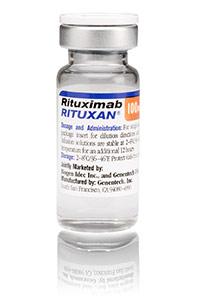
Rituximab
Pronunciation: ri-TUX-i-mab
Generic name: rituximab
Brand names: Rituxan, Riabni, Ruxience, Truxima
Dosage form: injection for intravenous infusion (100 mg/10 mL, 500 mg/50 mL)
Drug classes: Antirheumatics, CD20 monoclonal antibodies
What is rituximab?
Rituximab infusion is used to treat certain leukemias and lymphomas and some non-cancer conditions, such as rheumatoid arthritis, polyangiitis, and pemphigus vulgaris, depending on the brand. Brand names include Rituxan, Riabni, Ruxience, and Truxima. Rituximab is given by IV infusion (an infusion into a vein) by a healthcare provider.
Rituximab is not chemotherapy, it is a type of immunotherapy called a targeted cancer treatment.
Rituximab gained FDA approval on November 26, 1997, under the brand name Rituxan. Biosimilars to Rituxan followed, with:
- Truxima (rituximab-abbs), approved on November 28, 2018
- Ruxience (rituximab-pvvr), approved on July 23, 2019
- Riabni (rituximab-arrx), approved on December 17, 2020.
Truxima, Ruxience, and Riabni are not approved for use in children or for pemphigus vulgaris. Only Rituxan can be used in children or for pemphigus vulgaris.
FDA approvals and indications
Rituximab (Rituxan, Truxima, Ruxience, Riabri) is approved to treat:
-
Non-Hodgkin's lymphoma in adults alone or with other chemotherapy medicines
-
Chronic lymphocytic leukemia in adults, in combination with the chemotherapy medicines fludarabine and cyclophosphamide
-
Rheumatoid arthritis (RA) in adults, in combination with methotrexate, to reduce signs and symptoms of moderate to severely active RA after an inadequate response to treatment with a Tumor Necrosis Factor (TNF) antagonist
-
Granulomatosis with Polyangiitis (GPA, Wegener's granulomatosis) and Microscopic Polyangiitis (MPA) in adults, in combination with glucocorticoids.
The Rituxan brand of rituximab is also approved to treat:
- Mature B-cell Non-Hodgkin's lymphoma (NHL) and mature B-cell acute leukemia (B-AL) in children 6 months and older, in combination with chemotherapy medicines
-
Granulomatosis with Polyangiitis (GPA, Wegener's granulomatosis) and Microscopic Polyangiitis (MPA) in children 2 years and older, in combination with glucocorticoids
-
Moderate to severe pemphigus vulgaris in adults.
Rituximab is not approved for:
- Children aged less than 2 years with GPA or MPA
- Children less than 6 months of age with mature B-cell NHL and B-AL
- Children with conditions other than GPA, MPA, B-cell NHL, and B-AL.
How rituximab works
Rituximab is a targeted therapy that attaches to CD20, a protein found on the surface of B cells. As a type of white blood cell in your immune system, B cells normally help fight infections, but they can also contribute to certain diseases. When rituximab binds to the CD20 protein, it triggers two key mechanisms to destroy these B cells:
- It activates your body's complement system, which directly attacks and eliminates the B cells
- It flags the B cells for destruction by other immune cells in a process called antibody-dependent cell-mediated cytotoxicity.
This targeted elimination of B cells makes rituximab effective for treating various conditions where B cells play a harmful role, including:
- B-cell cancers such as Non-Hodgkin lymphoma and chronic lymphocytic leukemia (CLL)
- Autoimmune disorders like rheumatoid arthritis, where B cells contribute to inflammation and joint damage.
By precisely targeting problematic B cells, rituximab helps control these conditions while minimizing impact on other parts of the immune system.
Side effects
The most common side effects of rituximab are:
- infusion-related reactions
- infections (may include fever, chills)
- body aches
- tiredness
- nausea.
In adults with GPA or MPA, the most common side effects of rituximab also include:
- low white and red blood cells
- swelling
- diarrhea
- muscle spasms.
In children with B-cell NHL or B-AL who receive rituximab with chemotherapy, the most common side effects are:
- decreased white blood cells with fever
- mouth sores
- inflammation of the upper intestine
- serious infection throughout the body and organs (sepsis)
- changes in liver function blood tests
- low level of potassium in the blood
Other side effects of rituximab are:
- aching joints during or within hours of receiving an infusion
- more frequent upper respiratory tract infections.
These are not all of the possible side effects of rituximab. Call your doctor for medical advice about side effects. You may report side effects to the FDA at 1-800-FDA-1088.
Serious side effects and warnings
Rituximab carries a Boxed Warning for fatal infusion-related reactions, severe skin reactions, hepatitis B virus reactivation, and a rare brain condition called progressive multifocal leukoencephalopathy (PML).
Rituximab can cause the following serious side effects:
- Infusion-related reactions. These are very common side effects of rituximab treatment. Serious infusion-related reactions can happen during your or your child’s infusion or within 24 hours after. Your healthcare provider should give you or your child medicines before your rituximab infusion to decrease the chance of having a severe infusion-related reaction. Tell your healthcare provider or get medical help right away if you or your child gets any of these symptoms during or after an infusion:
- hives (red itchy welts) or rash
- shortness of breath, difficulty breathing, or wheezing
- itching
- weakness
- swelling of your lips, tongue, throat, or face
- dizziness or feeling faint
- sudden cough
- palpitations (feel like your heart is racing or fluttering)
- chest pain.
- Severe skin and mouth reactions. Tell your healthcare provider or get medical help right away if you or your child gets any of these symptoms at any time during your treatment with rituximab:
- painful sores or ulcers on your skin, lips, or in your mouth
- blisters
- peeling skin
- rash
- pustules.
- Hepatitis B virus (HBV) reactivation. Before you or your child receives rituximab treatment, your healthcare provider will do blood tests to check for HBV infection. If you or your child has had hepatitis B or is a carrier of the hepatitis B virus, receiving rituximab could cause the virus to become an active infection again. Hepatitis B reactivation may cause serious liver problems, including liver failure and death. You or your child should not receive rituximab if you or your child has active hepatitis B liver disease. Your healthcare provider will monitor you or your child for hepatitis B infection during and for several months after you or your child stops receiving rituximab. Tell your healthcare provider immediately if you or your child gets worsening tiredness, or yellowing of your or your child’s skin or white part of your eyes, during treatment.
- Progressive Multifocal Leukoencephalopathy (PML). PML is a rare, serious brain infection caused by a virus that can happen in people who receive rituximab. People with weakened immune systems can get PML. PML can result in death or severe disability. There is no known treatment, prevention, or cure for PML. Tell your healthcare provider right away if you or your child has any new or worsening symptoms or if anyone close to you notices these symptoms:
- confusion
- dizziness or loss of balance
- decreased strength or weakness on one side of your body
- difficulty walking or talking
- vision problems.
- Tumor Lysis Syndrome (TLS). TLS is caused by the fast breakdown of cancer cells. TLS can cause you or your child to have:
- kidney failure and need dialysis treatment
- an abnormal heart rhythm.
TLS can happen within 12 to 24 hours after an infusion of rituximab. Your healthcare provider may do blood tests to check you or your child for TLS. Your healthcare provider may give you or your child medicine to help prevent TLS. Tell your healthcare provider right away if you or your child has any of the following signs or symptoms of TLS:
-
- nausea
- diarrhea
- vomiting
- lack of energy.
- Serious infections. Serious infections can happen during and after treatment with rituximab, and can lead to death. Rituximab can increase your or your child’s risk of getting infections and can lower the ability of your or your child’s immune system to fight infections. Types of serious infections that can happen with rituximab include bacterial, fungal, and viral infections. After receiving rituximab, some people have developed low levels of certain antibodies in their blood for a long period (longer than 11 months). Some of these people with low antibody levels developed infections. People with serious infections should not receive rituximab. Tell your healthcare provider right away if you or your child has any symptoms of infection:
- fever
- cold symptoms, such as a runny nose or sore throat, that do not go away
- flu symptoms, such as cough, tiredness, and body aches
- earache or headache
- pain during urination
- cold sores in the mouth or throat
- cuts, scrapes, or incisions that are red, warm, swollen, or painful.
- Heart problems. Rituximab may cause chest pain, irregular heartbeats, and a heart attack. Your healthcare provider may monitor your or your child’s heart during and after treatment with rituximab if you or your child has symptoms or heart problems or has a history of heart problems. Tell your healthcare provider right away if you or your child has chest pain or irregular heartbeats during treatment with rituximab.
- Kidney problems, especially if you or your child is receiving rituximab for NHL. Rituximab can cause severe kidney problems that can lead to death. Your healthcare provider should do blood tests to check how well your or your child’s kidneys are working.
- Stomach and serious bowel problems that can sometimes lead to death. Bowel problems, including blockage or tears in the bowel, can happen if you or your child receives rituximab with chemotherapy medicines. Tell your healthcare provider right away if you or your child has any severe stomach-area (abdomen) pain or repeated vomiting during treatment with rituximab.
Your healthcare provider will stop treatment with rituximab if you have severe, serious, or life-threatening side effects.
Get emergency medical help if you have signs of an allergic reaction to rituximab, such as hives, difficulty breathing, swelling in your face or throat, or a severe skin reaction (symptoms may include fever, sore throat, burning eyes, skin pain, red or purple skin rash with blistering and peeling).
These are not all of the possible side effects of rituximab. Call your doctor for medical advice about side effects. You may report side effects to the FDA at 1-800-FDA-1088
Related/similar drugs
Before taking this medicine
Before you or your child receives rituximab, tell your healthcare provider about all of your or your child’s medical conditions, including if you or your child:
- have had a severe reaction to rituximab, Rituxan, Riabni, Ruxience, Truxima, or any ingredients in the injection
- have a history of heart problems, irregular heartbeat, or chest pain
- have lung, liver, or kidney problems
- have an infection or a weakened immune system
- have or have had any severe infections, including:
- Hepatitis B virus (HBV)
- Parvovirus B19
- Hepatitis C virus (HCV)
- Varicella zoster virus (chickenpox or shingles)
- Cytomegalovirus (CMV)
- West Nile Virus
- Herpes simplex virus (HSV).
- have had a recent vaccination or are scheduled to receive vaccinations. You or your child should not receive certain vaccines before or during treatment with rituximab. You should be up-to-date on any needed immunizations before starting treatment with rituximab.
- are pregnant or plan to become pregnant
- are breastfeeding or plan to breastfeed.
Pregnancy
Rituximab may harm an unborn baby. Talk to your healthcare provider about the risks to an unborn baby if you or someone you are caring for receives rituximab during pregnancy. If you are a female who can become pregnant, your healthcare provider should do a pregnancy test to check for pregnancy before starting rituximab.
Effective birth control (contraception) should be used during treatment with rituximab and for 12 months after the last dose. Talk to your healthcare provider about effective birth control.
Tell your healthcare provider right away if you or your child becomes pregnant or think you may be pregnant during treatment with rituximab.
Breastfeeding
Rituximab may pass into your breast milk. It is not safe to breastfeed a baby while you are using this medicine. Do not breastfeed during treatment and for 6 months after your or your child’s last dose of rituximab.
How is rituximab administered?
Rituximab is given by infusion through your or your child’s central catheter or a needle placed in a vein (intravenous infusion), in your arm or your child’s arm. A healthcare provider will give you this injection.
- Your healthcare provider may prescribe medicines before each infusion of rituximab to reduce infusion side effects such as fever and chills.
- Rituximab is not given daily. Your rituximab dosing schedule will depend on the condition being treated. Follow your doctor's dosing instructions very carefully.
- Your healthcare provider should do blood tests regularly to check for side effects of rituximab.
- Before each rituximab treatment, your healthcare provider or nurse will ask you questions about your or your child’s general health. Tell your healthcare provider or nurse about any new symptoms.
If you need surgery, tell the surgeon beforehand that you are using this medicine.
Call your doctor at once if you have any of these other side effects, even if they occur several months after you receive rituximab, or after your treatment ends.
-
painful skin or mouth sores, or a severe skin rash with blistering, peeling, or pus
-
redness, warmth, or swelling of the skin
-
severe stomach pain, vomiting, constipation, bloody or tarry stools
-
irregular heartbeats, chest pain or pressure, pain spreading to your jaw or shoulder
-
tiredness or jaundice (yellowing of the skin or eyes)
-
signs of infection - fever, chills, cold or flu symptoms, cough, sore throat, mouth sores, headache, earache, pain or burning when you urinate
-
signs of tumor cell breakdown - confusion, weakness, muscle cramps, nausea, vomiting, fast or slow heart rate, decreased urination, tingling in your hands and feet, or around your mouth.
What happens if I miss a dose?
Call your doctor if you miss an appointment for your rituximab infusion.
What happens if I overdose?
Since this medication is given by a healthcare professional in a medical setting, an overdose is unlikely to occur.
What should I avoid while receiving rituximab?
Do not receive a "live" vaccine while receiving rituximab, and avoid coming into contact with anyone who has recently received a live vaccine.
There is a chance that the virus could be passed on to you. Live vaccines include measles, mumps, rubella (MMR), rotavirus, typhoid, yellow fever, varicella (chickenpox), and the nasal flu (influenza) vaccine.
What other drugs will affect rituximab?
Tell your healthcare provider about all the medicines you or your child takes, including prescription and over-the-counter medicines, vitamins, and herbal supplements. Especially tell your healthcare provider if you or your child takes or has taken:
- a Tumor Necrosis Factor (TNF) inhibitor medicine such as adalimumab, certolizumab, etanercept, or golimumab, infliximab
- a Disease Modifying Anti-Rheumatic Drug (DMARD) such as leflunomide, methotrexate, or sulfasalazine
- chemotherapy drugs, especially cisplatin.
If you are not sure if your or your child’s medicine is one listed above, ask your healthcare provider. This list is not complete. Other drugs may interact with rituximab, including prescription and over-the-counter medicines, vitamins, and herbal products. Not all possible drug interactions are listed here.
Ingredients
Available as an injection for infusion, 100 mg/10 mL (10 mg/mL) and 500 mg/50 mL (10 mg/mL) solution in single-dose vials.
Rituxan
Active ingredient: rituximab
Inactive ingredients: polysorbate 80, sodium chloride, sodium citrate dihydrate, and water for injection, USP.
Truxima
Active ingredient: rituximab-abbs
Inactive ingredients: polysorbate 80, sodium chloride, tri-sodium citrate dihydrate, and Water for Injection, USP.
Ruxience
Active ingredient: rituximab-pvvr
Inactive ingredients: edetate disodium dihydrate, L-histidine, L-histidine hydrochloride monohydrate, polysorbate 80, sucrose, and Water for Injection.
Riabni
Active ingredient: rituximab-arrx
Inactive ingredients: polysorbate 80, sodium chloride, sodium citrate dihydrate, and Water for Injection, USP.
Hydrochloric acid is used to adjust the buffer solution pH.
Manufacturer
Manufacturers of rituximab and its biosimilars are:
- Rituxan: Jointly marketed by Genentech (San Francisco, CA) and Biogen (Cambridge, MA)
- Truxima: Celltrion, Inc., Yeonsu-gu, Incheon, Republic of Korea
- Ruxience: Pfizer Ireland Pharmaceuticals, Cork, Ireland
- Riabni: Amgen, Inc., One Amgen Center Drive, Thousand Oaks, CA.
Rituximab Biosimilars
Biosimilar and interchangeable products are biological products that are highly similar to and have no clinically meaningful differences from the reference product.
Reference products
These are biological products that have already been approved by the FDA, against which biosimilar products are compared. There is 1 for rituximab.
Rituxan (rituximab) - Genentech, Inc.
| Formulation type | Strength |
|---|---|
| Single-Dose Vial | 100 mg/10 mL (10 mg/mL) |
| Single-Dose Vial | 500 mg/50 mL (10 mg/mL) |
View Rituxan information in detail.
Rituxan biosimilar products
Biosimilar products can only be dispensed in place of the reference product if the healthcare provider specifically prescribes the biosimilar product by name.
Pharmacy laws for biosimilar prescribing may vary by state
Riabni (rituximab-arrx) - Amgen Inc.
| Formulation type | Strength |
|---|---|
| Single-Dose Vial | 100 mg/10 mL (10 mg/mL) |
| Single-Dose Vial | 500 mg/50 mL (10 mg/mL) |
View Riabni information in detail.
Ruxience (rituximab-pvvr) - Pfizer Ireland Pharmaceuticals
| Formulation type | Strength |
|---|---|
| Single-Dose Vial | 100 mg/10 mL (10 mg/mL) |
| Single-Dose Vial | 500 mg/50 mL (10 mg/mL) |
View Ruxience information in detail.
Truxima (rituximab-abbs) - CELLTRION, Inc.
| Formulation type | Strength |
|---|---|
| Single-Dose Vial | 100 mg/10 mL (10 mg/mL) |
| Single-Dose Vial | 500 mg/50 mL (10 mg/mL) |
View Truxima information in detail.
Popular FAQ
How soon can you start chemo after port placement?
Chemotherapy can typically begin within a few days to 2 weeks after port placement, depending on factors like healing progress and treatment urgency.
Continue readingWhat is the difference between Truxima and Rituxan?
Truxima (rituximab-abbs) is a biosimilar to Rituxan (rituximab). While both drugs are CD20-directed cytolytic antibodies used to treat non-Hodgkin’s lymphoma (NHL), Rituxan has additional FDA-approved indications beyond NHL. Continue reading
What is the success rate of Rituxan (rituximab) in patients with blood cancers?
In patients with hematological or blood cancers, including non-Hodgkin's lymphoma (NHL) and chronic lymphocytic leukemia (CLL), Rituxan’s success is measured in a number of ways. It is measured by looking at how long patients responded to treatment (median duration of response), how long they live without their disease progressing (progression-free survival) and how many patients respond to treatment (response rate).
Rituxan treatment improves outcomes in certain patients with NHL. Adding Rituxan alongside standard therapies enhances the response patients have to treatment and improves overall outcomes, including increasing the time patients live for without experiencing a progression of their disease.
Rituxan helps to improve overall survival in certain patients with CLL and also helps to increase the time patients live for without experiencing disease progression. Adding Rituxan alongside standard therapy enhances the response patients have to therapy. Continue reading
What is a chemotherapy regimen?
A chemotherapy (chemo) regimen consists of anti-cancer medicines you receive over a set period of time (usually over several cycles). Chemo regimens, such as R-CHOP, are often abbreviated by using the first letter of the drug names. For example, R-CHOP is an abbreviation for a 5-drug chemotherapy regimen used to treat non-Hodgkin’s lymphoma, a type of blood cancer.
Continue readingWhat is the success rate of Rituxan (rituximab) in rheumatoid arthritis?
Treatment with Rituxan (rituximab) successfully improves patient outcomes in patients with rheumatoid arthritis including reducing symptoms, reducing levels of fatigue and disability, and increasing health-related quality of life. It also slows the progression of structural damage in joints. Continue reading
What causes infusion reactions to rituximab?
Rituximab infusion reactions are caused primarily by cytokine release in the body. Cytokines are immune system proteins in the body that help to fight infections but can cause an inflammatory response. Infusion reactions may cause hives, itching, shortness of breath, chest pain or dizziness and are a very common side effect of treatment with rituximab (Rituxan). Continue reading
What is the difference between Rituxan and Rituxan Hycela?
Rituxan (rituximab) is administered intravenously (IV), while Rituxan Hycela is given subcutaneously (SC). Continue reading
More FAQ
References
More about rituximab
- Check interactions
- Compare alternatives
- Reviews (181)
- Side effects
- Dosage information
- Patient tips
- During pregnancy
- Support group
- Drug class: antirheumatics
- Breastfeeding
- En español
Patient resources
Other brands
Rituxan, Ruxience, Truxima, Riabni
Professional resources
Other brands
Rituxan, Ruxience, Truxima, Riabni
Related treatment guides
Further information
Always consult your healthcare provider to ensure the information displayed on this page applies to your personal circumstances.