
Spectramast LC (Canada)
This treatment applies to the following species: Company: Zoetis
ceftiofur suspension
Sterile
DIN 02298325
Veterinary Use Only
Lactating Cow Mastitis Treatment
For Intramammary Infusion Only
Description
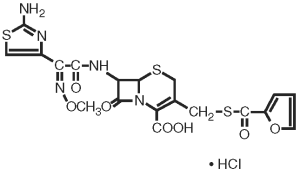
SPECTRAMAST® LC sterile suspension is an oil-based sterile suspension containing 125 mg of ceftiofur (as ceftiofur hydrochloride) per 10 mL disposable syringe. Ceftiofur is a broad-spectrum cephalosporin antibiotic that exerts its effect by inhibiting bacterial cell wall synthesis. Like other β-lactam antimicrobial agents, the cephalosporins inhibit cell wall synthesis by interfering with the enzymes essential for peptidoglycan synthesis. This effect results in lysis of the bacterial cell and accounts for the bactericidal nature of these agents. The chemical name of ceftiofur hydrochloride is 5-Thia-1-azabicyclo[4.2.0]oct-2-ene-2-carboxylic acid, 7-[[2-(2-amino-4-thiazolyl)-2-(methoxyimino)acetyl]amino]-3-[[(2-furanylcarbonyl)thio]methyl]-8-oxo, hydrochloride.
Chemical Structure:
INDICATIONS: SPECTRAMAST LC sterile suspension is indicated for use in lactating dairy cows for (1) the treatment of clinical mastitis caused by Escherichia coli, Streptococcus dysgalactiae and coagulase negative staphylococci and (2) the treatment of diagnosed subclinical mastitis associated with coagulase-negative staphylococci and Streptococcus dysgalactiae. Cows with systemic clinical signs caused by mastitis should receive other appropriate therapy under direction of a licensed veterinarian.
Note: To limit the development of antimicrobial resistance, treatment of subclinical mastitis with SPECTRAMAST LC should be initiated under veterinary oversight and only after a diagnosis has been supported by a positive culture or other pathogen-specific diagnostic test.
Dosage and Administration
Infuse one (1) syringe (10 mL) into each infected quarter. Repeat this treatment once in 24 hours.Directions For Use
Wash teats thoroughly with warm water containing a suitable dairy antiseptic. Dry the teats thoroughly. Milk out the udder completely. Using an appropriate antiseptic teat wipe (containing at least 70% isopropyl alcohol), wipe off the end of the affected teat using a separate wipe for each teat. Choose the desired insertion length (full or partial) and insert tip into the teat canal; push plunger to dispense the entire contents, massage the quarter to distribute the solution into the milk cistern. Following infusion it is advisable to dip all teats in an approved teat dip.
DIRECTIONS FOR USING THE PLASTET™ DISPOSABLE SYRINGE
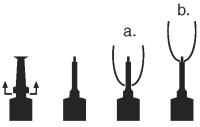
The syringe is designed to provide the choice of either insertion of the full cannula as has traditionally been practiced, or insertion of no more than 1/8 inch of the cannula, as reported by Eberhart, R.J. et. al. 1987. Current Concepts of Bovine Mastitis, 3rd Edition, National Mastitis Council, Arlington, VA.
a. Full insertion: Remove the white end cap by pulling straight up as shown. Gently insert the full cannula into the teat canal; carefully infuse the product.
b. Partial insertion: Remove the white end cap by pulling straight up as shown. Gently insert the exposed white tip into the teat canal; carefully infuse the product.
CLINICAL EFFICACY: In 1999-2000, the efficacy of ceftiofur was demonstrated in a pivotal field dose confirmation efficacy study in lactating dairy cattle with clinical mastitis in one quarter. Ceftiofur was formulated in stable cotton seed oil sterile suspension. Cows with mastitis were enrolled in the study if characterized with visually abnormal milk (clots, flakes, or watery secretion) or if udder swelling, heat, pain or redness were present and the milk was not yet visually abnormal but California Mastitis Test (CMT) gave results of 2 or greater. A total of 13 trial sites enrolled 352 cows in the study. Cows were assigned to one of three treatment groups: non-treated control, 62.5 mg ceftiofur, and 125 mg ceftiofur (SPECTRAMAST LC sterile suspension). Each treatment group received an intramammary infusion twice at a 24-hour interval in the affected quarter. The non-treated controls received no therapy. Three different definitions for cure were used for analysis purposes: 1) a clinical cure was defined as the milk and udder returning to normal 14 days after the last treatment and remaining normal at the 21 day time point; 2) a bacterial cure was defined as the absence of the pre-treatment pathogen at 14 and 21 days post-treatment; and 3) a protocol cure was defined as the absence of the pre-treatment pathogen at 14 and 21 days post-treatment and return to normal 14 days after the last treatment and remaining normal at the 21 day time point. Of the 337 cows analyzed, the clinical cure rate for the non-treated control group was 54.7% (64/117) compared to 69.4% (75/108) for the 62.5 mg treatment group and 78.6% (88/112) for the 125 mg treatment group. The 125 mg treatment group’s clinical cure rate was significantly greater than the non-treated control (P=0.002). Of the 146 cows analyzed, the bacterial cure rates were 41.3% (19/46) for the non-treated control group, 45.6% (21/46) for the 62.5 mg treatment group and 70.4% (38/54) for the 125 mg treatment group. The 125 mg treatment group was significantly better than the non-treated control group (P=0.006). For the 146 cows analyzed, the protocol cure rate was 63.0% (34/54) for the 125 mg treatment group, 41.3% (19/46) for the 62.5 mg treatment group and 23.9% (11/46) for the non-treated control group. The 125 mg treatment group was significantly better than the non-treated control (P<0.001) for treatment of clinical mastitis.
Based on this pivotal study, 125 mg of ceftiofur administered via intramammary infusion twice at a 24-hour interval was effective in the treatment of clinical mastitis in lactating dairy cows caused by Streptococcus dysgalactiae, Escherichia coli, and coagulase negative staphylococci.
The efficacy of ceftiofur for the treatment of subclinical mastitis was demonstrated in a 10-site field study in lactating dairy cattle in 2013. Cows with subclinical mastitis were enrolled in the study if milk and udders were visually normal, composite quantitative somatic cell count (SCC) was >400,000 cells/mL, and milk culture was positive for a mastitis-causing pathogen. Cows were assigned to one of two treatment groups: SPECTRAMAST LC (125 mg ceftiofur equivalents per dose) or an equivalent volume of saline. Each treatment group received an intramammary infusion twice at a 24-hour interval in the affected quarter. Treatment success (bacteriological cure) was defined as the absence of the pre-treatment pathogen at 14 and 20 days post-treatment. Three hundred thirty-six cows were analyzed for bacteriological cure rates. Treatment success was significantly different, with cure rates in the SPECTRAMAST LC-treated group at 44% (75/164) compared to 4% (8/172) in the saline treated controls (P < 0.0001). Additionally, a clinically relevant ratio of treatment successes to failures was observed in the SPECTRAMAST LC-treated group compared to the saline-treated group for evaluable cases of subclinical mastitis associated with coagulase negative staphylococci and with S. dysgalactiae. The clinical benefit of treating subclinical mastitis caused by coagulase negative staphylococci may be strain dependent.
ANIMAL SAFETY: A pivotal udder irritation study was conducted in which udder irritation was assessed in 17 cows, following the intramammary infusion of SPECTRAMAST LC sterile suspension twice at a 24-hour interval. A slight increase in SCC to levels <150,000 cell/mL was observed following infusion in normal cows with very low pre-infusion SCC (<41,000 cell/mL). This elevation is not unexpected with oil-based suspensions. No changes in body temperature were noted during this study. Mild increases in udder palpation scores were noted in 8/17 cows; moderate increases in udder palpation scores were noted in 3/17 cows; moderate increases in strip cup scores were noted in 3/17 cows; a marked increase in strip cup score was noted in 1/17 cows. These increases were transient, and could be related to microbial infections. This pivotal safety study demonstrated that SPECTRAMAST LC sterile suspension is clinically safe for use in lactating dairy cows. In two clinical field efficacy studies involving 971 lactating dairy cows, no reports of udder irritation or adverse events were noted following infusion. Collectively, these three studies demonstrate that the intramammary infusion of SPECTRAMAST LC sterile suspension twice at a 24-hour interval is clinically safe for use in lactating dairy cows.
Warnings
(1) Milk taken from treated cows during treatment and within 96 hours after the latest treatment must not be used as food. (2) No meat withdrawal period is required when this product is used according to label directions and dosage. (3) To limit the development of antimicrobial resistance: SPECTRAMAST LC should only be used to treat individual cases of clinical and subclinical mastitis. The choice of this product as the most appropriate treatment should be confirmed by clinical experience supported where possible by pathogen culture and drug susceptibility testing. To assure responsible antimicrobial drug use, subclinical mastitis should be diagnosed using a positive culture or other diagnostic test that identifies the pathogen, in addition to appropriate veterinary medical evaluation prior to treatment. The extra label use of this product is not recommended. (4) Penicillins and cephalosporins can cause allergic reactions in sensitized individuals. Topical exposure to such antimicrobials, including ceftiofur, may elicit mild to severe allergic reactions in some individuals. Repeated or prolonged exposure may lead to sensitization. Avoid direct contact of the product with the skin, eyes, mouth and clothing. Sensitization of the skin may be avoided by wearing latex gloves. (5) Persons with a known hypersensitivity to penicillin or cephalosporins should avoid exposure to this product. (6) In case of accidental eye exposure, flush with water for 15 minutes. In case of accidental skin exposure, wash with soap and water. Remove contaminated clothing. If allergic reaction occurs (e.g., skin rash, hives, difficult breathing), seek medical attention. KEEP OUT OF THE REACH OF CHILDREN.The material safety data sheet contains more detailed occupational safety information. To report adverse effects in users, to obtain more information or to obtain a material safety data sheet, call 1-800-461-0917.
Contraindications
As with all drugs, the use of SPECTRAMAST LC sterile suspension is contraindicated in animals previously found to be hypersensitive to the drug.
CAUTIONS: Cows with systemic clinical signs caused by mastitis should receive other appropriate therapy under the direction of a licensed veterinarian. Do not reuse. If redness, swelling and/or abnormal milk persists, discontinue use and consult a veterinarian. It is recommended that milk cultures be used to aid in decision-making for clinical mastitis therapy.
CLINICAL MICROBIOLOGY: Ceftiofur has demonstrated in vitro and clinical activity against Streptococcus dysgalactiae, Escherichia coli and coagulase negative staphylococci. The in vitro activity of ceftiofur against mastitis pathogens are summarized in Tables 1 and 2.
Table 1. Ceftiofur Minimum Inhibitory Concentration (MIC) Values of isolates from Field Studies Evaluating Clinical Mastitis in Dairy Cows in the U.S. during 2000.
|
Pathogen |
Number of Isolates |
MIC Range |
MIC90* |
|
Coagulase-negative staphylococci (CNS) |
33 |
≤0.06-2.0 |
1.0 |
|
Streptococcus dysgalactiae |
32 |
≤0.06-0.5 |
≤0.06 |
|
Escherichia coli |
35 |
≤0.06-1.0 |
0.5 |
* MIC for 90% of the isolates
Table 2. Ceftiofur MIC Values* for Mastitis Pathogens from Diagnostic Laboratories in the U.S. and Canada during 2009-2013.
|
Organism |
Country of Isolation |
Number of Isolates |
Summary (µg/mL) |
|
|
Range |
MIC90* |
|||
|
Streptococcus dysgalactiae |
United States, Canada |
1174 |
≤0.06-2 |
≤0.06 |
|
Escherichia coli |
United States, Canada |
1389 |
≤0.06->64 |
0.5 |
|
Coagulase (-) staphylococci |
United States, Canada |
1198 |
≤0.06-16 |
1 |
* MIC for 90% of the isolates
Based on pharmacokinetic, milk residue and clinical effectiveness studies in dairy cattle following intramammary infusion of ceftiofur and the MIC and disk (30 µg) diffusion data from mastitis pathogens, the following breakpoints are recommended by the Clinical and Laboratories Standards Institute (CLSI) (Table 3).
Table 3. Current recommended interpretative criteria established by CLSI for ceftiofur for bovine mastitis.
|
Bovine Mastitis Organisms |
Disk Content |
Zone Diameter (mm) |
MIC Breakpoint (µg/mL) |
||||
|
S |
I |
R |
S |
I |
R |
||
|
Staphylococcus aureus |
30 µg |
≥21 |
18-20 |
≤17 |
≤2.0 |
4.0 |
≥8.0 |
|
Streptococcus dysgalactiae |
|||||||
|
Streptococcus uberis |
|||||||
|
Streptococcus agalactiae |
|||||||
|
Escherichia coli |
|||||||
S - Susceptible
I - Intermediate
R - Resistant
Standardized procedures require the use of laboratory control organisms for both standardized diffusion techniques and standardized dilution techniques. The 30 µg ceftiofur sodium disk should give the following zone diameters and the ceftiofur sodium standard reference powder (or disk) should provide the following MIC values for the reference strain. Ceftiofur sodium disks or powder reference standard is appropriate for ceftiofur hydrochloride and ceftiofur sodium (Table 4).
Table 4. Acceptable Quality Control Ranges for ceftiofur against CLSI recommended American Type Culture Collection (ATCC) reference strains.
|
Organism Name (ATCC No) |
Zone Diameter (Disk Content 30 µg/mL) |
MIC Range (µg/mL) |
|
Escherichia coli (25922) |
26-31 |
0.25-1.0 |
|
Staphylococcus aureus (29213) |
- |
0.25-1.0 |
|
Staphylococcus aureus (25923) |
27-31 |
- |
Storage
Store between 15 and 25°C. Store PLASTETS in carton or pail until used. Protect from light.PRESENTATION: SPECTRAMAST LC is available in cartons of 12 and pails of 144 x 10 mL PLASTET disposable syringes.
Zoetis® and Spectramast are registered trademarks of Zoetis or its licensors.
Zoetis Canada Inc., Kirkland QC H9H 4M7
1507-11-3
40048022
July 2024
CPN: 1198347.6
16,740 TRANS-CANADA HIGHWAY, KIRKLAND, QC, H9H 4M7
| Order Desk: | 800-663-8888 | |
| Technical Services Canada: | 800-461-0917 | |
| Technical Services USA: | 800-366-5288 | |
| Website: | www.zoetis.ca |
 |
THIS SERVICE AND DATA ARE PROVIDED "AS IS". Animalytix assumes no liability, and each user assumes full risk, responsibility, and liability, related to its use of the Animalytix service and data. See the Terms of Use for further details. |

Copyright © 2024 Animalytix LLC. Updated: 2024-08-26