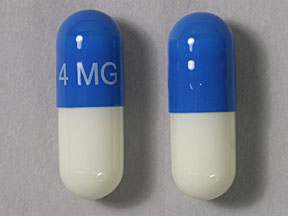
Drug Information
Side Effects > Zanaflex

Zanaflex Side Effects

Generic Name: tizanidine

Please note - some side effects for Zanaflex may not be reported. Always consult your doctor or healthcare specialist for medical advice. You may also report side effects to the FDA at http://www.fda.gov/medwatch/ or 1-800-FDA-1088 (1-800-332-1088).


Side Effects of Zanaflex - for the Consumer

Zanaflex

All medicines may cause side effects, but many people have no, or minor side effects. Check with your doctor if any of these most COMMON side effects persist or become bothersome when using Zanaflex:

Constipation; dizziness; drowsiness; dry mouth; flushing; tiredness; weakness.

Seek medical attention right away if any of these SEVERE side effects occur when using Zanaflex:

Severe allergic reactions (rash; hives; itching; difficulty breathing; tightness in the chest; swelling of the mouth, face, lips, or tongue); change in emotions, mood, or behavior; hallucinations; increased muscle spasms; muscle weakness; slow heartbeat; trouble urinating or lack of bladder control; urinary tract infection; yellowing of the skin or eyes.

Top

Zanaflex Side Effects - for the Professional

Zanaflex

In multiple dose, placebo-controlled clinical studies, 264 patients were treated with tizanidine and 261 with placebo. Adverse events, including severe adverse events, were more frequently reported with tizanidine than with placebo.

COMMON ADVERSE EVENTS LEADING TO DISCONTINUATION

Forty-five of 264 (17%) patients receiving tizanidine and 13 of 261 (5%) of patients receiving placebo in three multiple dose, placebo-controlled clinical studies, discontinued treatment for adverse events. When patients withdrew from the study, they frequently had more than one reason for discontinuing. The adverse events most frequently leading to withdrawal of tizanidine treated patients in the controlled clinical studies were asthenia (weakness, fatigue and/or tiredness) (3%), somnolence (3%), dry mouth (3%), increased spasm or tone (2%), and dizziness (2%).

MOST FREQUENT ADVERSE CLINICAL EVENTS SEEN IN ASSOCIATION WITH THE USE OF TIZANIDINE

In multiple dose, placebo-controlled clinical studies involving 264 patients with spasticity, the most frequent adverse effects were dry mouth, somnolence/sedation, asthenia (weakness, fatigue and/or tiredness) and dizziness. Three-quarters of the patients rated the events as mild to moderate and one-quarter of the patients rated the events as being severe. These events appeared to be dose related.

ADVERSE EVENTS REPORTED IN CONTROLLED STUDIES

The events cited reflect experience gained under closely monitored conditions of clinical studies in a highly selected patient population. In actual clinical practice or in other clinical studies, these frequency estimates may not apply, as the conditions of use, reporting behavior, and the kinds of patients treated may differ. Table 1 lists treatment emergent signs and symptoms that were reported in greater than 2% of patients in three multiple dose, placebo-controlled studies who received tizanidine where the frequency in the tizanidine group was at least as common as in the placebo group. These events are not necessarily related to tizanidine treatment. For comparison purposes, the corresponding frequency of the event (per 100 patients) among placebo treated patients is also provided.

Table 1: Multiple Dose, Placebo-Controlled Studies—Frequent (> 2%) Adverse Events Reported for Which Tizanidine Tablets Incidence is Greater than Placebo
Event Placebo
N = 261
%
Zanaflex Tablet
N = 264
%
*
(weakness, fatigue, and/or tiredness)
Dry mouth 10 49
Somnolence 10 48
Asthenia* 16 41
Dizziness 4 16
UTI 7 10
Infection 5 6
Constipation 1 4
Liver function tests abnormal <1 3
Vomiting 0 3
Speech disorder 0 3
Amblyopia (blurred vision) <1 3
Urinary frequency 2 3
Flu syndrome 2 3
SGPT/ALT increased <1 3
Dyskinesia 0 3
Nervousness <1 3
Pharyngitis 1 3
Rhinitis 2 3

In the single dose, placebo-controlled study involving 142 patients with spasticity, the patients were specifically asked if they had experienced any of the four most common adverse events: dry mouth, somnolence (drowsiness), asthenia (weakness, fatigue and/or tiredness) and dizziness. In addition, hypotension and bradycardia were observed. The occurrence of these adverse effects is summarized in Table 2. Other events were, in general, reported at a rate of 2% or less.

Table 2: Single Dose, Placebo-Controlled Study—Common Adverse Events Reported
Event Placebo
N = 48
%
Tizanidine Tablet,
8mg, N = 45
%
Tizanidine Tablet,
16 mg, N = 49
%
*
(weakness, fatigue, and/or tiredness)
Somnolence 31 78 92
Dry mouth 35 76 88
Asthenia* 40 67 78
Dizziness 4 22 45
Hypotension 0 16 33
Bradycardia 0 2 10

OTHER ADVERSE EVENTS OBSERVED DURING THE EVALUATION OF TIZANIDINE

Tizanidine was administered to 1385 patients in additional clinical studies where adverse event information was available. The conditions and duration of exposure varied greatly, and included (in overlapping categories) double-blind and open-label studies, uncontrolled and controlled studies, inpatient and outpatient studies, and titration studies. Untoward events associated with this exposure were recorded by clinical investigators using terminology of their own choosing. Consequently, it is not possible to provide a meaningful estimate of the proportion of individuals experiencing adverse events without first grouping similar types of untoward events into a smaller number of standardized event categories.

In the tabulations that follow, reported adverse events were classified using a standard COSTART-based dictionary terminology. The frequencies presented, therefore, represent the proportion of the 1385 patients exposed to tizanidine who experienced an event of the type cited on at least one occasion while receiving tizanidine. All reported events are included except those already listed in Table 1. If the COSTART term for an event was so general as to be uninformative, it was replaced by a more informative term. It is important to emphasize that, although the events reported occurred during treatment with tizanidine, they were not necessarily caused by it.

Events are further categorized by body system and listed in order of decreasing frequency according to the following definitions: frequent adverse events are those occurring on one or more occasions in at least 1/100 patients (only those not already listed in the tabulated results from placebo-controlled studies appear in this listing); infrequent adverse events are those occurring in 1/100 to 1/1000 patients; rare adverse events are those occurring in fewer than 1/1000 patients.

BODY AS A WHOLE
Frequent: Fever
Infrequent: Allergic reaction, moniliasis, malaise, abscess, neck pain, sepsis, cellulites, death, overdose
Rare: Carcinoma, congenital anomaly, suicide attempt
CARDIOVASCULAR SYSTEM
Infrequent: Vasodilatation, postural hypotension, syncope, migraine, arrhythmia
Rare: Angina pectoris, coronary artery disorder, heart failure, myocardial infarct, phlebitis, pulmonary embolus, ventricular extrasystoles, ventricular tachycardia
DIGESTIVE SYSTEM
Frequent: Abdomen pain, diarrhea, dyspepsia
Infrequent: Dysphagia, cholelithiasis, fecal impaction, flatulence, gastrointestinal hemorrhage, hepatitis, melena,
Rare: Gastroenteritis, hematemesis, hepatoma, intestinal obstruction, liver damage
HEMIC AND LYMPHATIC SYSTEM
Infrequent: Ecchymosis, hypercholesteremia, anemia, hyperlipemia, leukopenia, leukocytosis, sepsis
Rare: Petechia, purpura, thrombocythemia, thrombocytopenia
METABOLIC AND NUTRITIONAL SYSTEM
Infrequent: Edema, hypothyroidism, weight loss
Rare: Adrenal cortex insufficiency, hyperglycemia, hypokalemia, hyponatremia, hypoproteinemia, respiratory acidosis
MUSCULOSKELETAL SYSTEM
Frequent: Myasthenia, back pain
Infrequent: Pathological fracture, arthralgia, arthritis, bursitis
NERVOUS SYSTEM
Frequent: Depression, anxiety, paresthesia
Infrequent: Tremor, emotional lability, convulsion, paralysis, thinking abnormal, vertigo, abnormal dreams, agitation, depersonalization, euphoria, migraine, stupor, dysautonomia, neuralgia
Rare: Dementia, hemiplegia, neuropathy
RESPIRATORY SYSTEM
Infrequent: Sinusitis, pneumonia, bronchitis
Rare: Asthma
SKIN AND APPENDAGES
Frequent: Rash, sweating, skin ulcer
Infrequent: Pruritus, dry skin, acne, alopecia, urticaria
Rare: Exfoliative dermatitis, herpes simplex, herpes zoster, skin carcinoma
SPECIAL SENSES
Infrequent: Ear pain, tinnitus, deafness, glaucoma, conjunctivitis, eye pain, optic neuritis, otitis media, retinal hemorrhage, visual field defect
Rare: Iritis, keratitis, optic atrophy
UROGENITAL SYSTEM
Infrequent: Urinary urgency, cystitis, menorrhagia, pyelonephritis, urinary retention, kidney calculus, uterine fibroids enlarged, vaginal moniliasis, vaginitis
Rare: Albuminuria, glycosuria, hematuria, metrorrhagia
Top

Side Effects by Body System

Nervous system

Visual hallucinations were observed in 3% (n=5) of patients in 2 clinical trials. Patients were aware the events were not real in most cases, and in only one case did problems persist following discontinuation. Sedation appears to be dose related in single dose studies and may in approximately 10% of cases be severe enough to interfere with daily activities. In multiple dose studies, however, the incidence of sedation peaked following one week of treatment, and remained stable thereafter.

Nervous system side effects have frequently been associated with the use of this tizanidine. Sedation, somnolence, and asthenia have been reported in up to 48% of patients. Dizziness has been reported in 16% of patients. Duskiness, hallucinations, nervousness, insomnia, and speech disorder have been reported rarely.

Gastrointestinal

Gastrointestinal side effects have included dry mouth in approximately 50% and constipation or vomiting in less than 4% of patients.

Hepatic

Most cases of elevated liver function tests in patients receiving tizanidine rapidly resolved upon removal of the medication. Of the three deaths reported, two patients had symptoms of liver disease following 2 months of treatment while one occurred following 11 days. Two of the patients were receiving other medications that have been associated with hepatic toxicity.

Hepatic side effects associated with the use of tizanidine have included elevations of liver function tests to greater than 3 times the upper normal limit in 5% of patients. Three deaths associated with liver failure have been reported during postmarketing surveillance in patients receiving tizanidine.

Cardiovascular

Cardiovascular side effects have included hypotension and bradycardia. Rarely, severe hypotension associated with use of this drug has required IV fluids, epinephrine, and dopamine.

The manufacturer reports a single dose study that found hypotension in 16% and 30% of patients following an 8 and 16 mg dose, respectively. The occurrence of bradycardia under the same circumstances was 2% and 10%.

Ocular

Ocular side effects including blurred vision have been reported rarely.

Dermatologic

Dermatologic side effects have been isolated to rashes.

Other

Other side effects have included three cases of rebound symptoms on sudden withdrawal of tizanidine. Withdrawal symptoms included hypertension, tachycardia, hypertonia, tremor, and anxiety.

The withdrawal case reports suggested that these patients were also misusing narcotics.

Top

More resources:

Drugs.com Zanaflex

PDR Zanaflex

MedFacts Zanaflex

Micromedex Zanaflex - Includes detailed dosage instructions.

FDA Zanaflex

FDA Tizanidine

Disclaimer: Every effort has been made to ensure that the information provided is accurate, up-to-date, and complete, but no guarantee is made to that effect. In addition, the drug information contained herein may be time sensitive and should not be utilized as a reference resource beyond the date hereof. This information does not endorse drugs, diagnose patients, or recommend therapy. This drug information is a reference resource designed as supplement to, and not a substitute for, the expertise, skill , knowledge, and judgement of healthcare practitioners in patient care. The absence of a warning for a given drug or drug combination in no way should be construed to indicate that the drug of drug combination is safe, effective, or appropriate for any given patient. Drugs.com does not assume any responsibility for any aspect of healthcare administered with the aid of information provided. The information contained herein is not intended to cover all possible uses, directions, precautions, warnings, drug interactions, allergic reactions, or adverse effects. If you have questions about the drugs you are taking, check with your doctor, nurse, or pharmacist.


MedNotes
Advertisement

(web3)