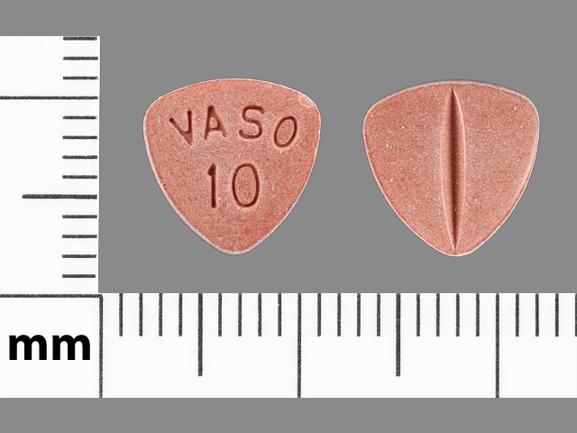
Vasotec Side Effects
Generic name: enalapril
Medically reviewed by Drugs.com. Last updated on Oct 26, 2023.
Note: This document provides detailed information about Vasotec Side Effects associated with enalapril. Some dosage forms listed on this page may not apply specifically to the brand name Vasotec.
Applies to enalapril: oral solution, oral tablet.
Important warnings
This medicine can cause some serious health issues
Oral route (tablet; solution; powder for solution)
Discontinue enalapril maleate as soon as possible when pregnancy is detected, since fetal toxicity, including injury and death to the developing fetus, can be caused by drugs that act directly on the renin-angiotensin system.
Serious side effects of Vasotec
Along with its needed effects, enalapril (the active ingredient contained in Vasotec) may cause some unwanted effects. Although not all of these side effects may occur, if they do occur they may need medical attention.
Check with your doctor immediately if any of the following side effects occur while taking enalapril:
More common
- blurred vision
- confusion
- dizziness, faintness, or lightheadedness when getting up suddenly from a lying or sitting position
- sweating
- unusual tiredness or weakness
Less common
- chest pain
- cough producing mucus
- diarrhea
- difficult or labored breathing
- fainting
- fever or chills
- nausea
- sneezing
- sore throat
- tightness in the chest
- vomiting
Other side effects of Vasotec
Some side effects of enalapril may occur that usually do not need medical attention. These side effects may go away during treatment as your body adjusts to the medicine. Also, your health care professional may be able to tell you about ways to prevent or reduce some of these side effects.
Check with your health care professional if any of the following side effects continue or are bothersome or if you have any questions about them:
More common
- dizziness
Less common
- lack or loss of strength
- rash
For healthcare professionals
Applies to enalapril: compounding powder, intravenous solution, oral liquid, oral tablet.
Cardiovascular
- Very common (10% or more): Hypotension
- Common (1% to 10%): Edema
- Uncommon (0.1% to 1%): Angioedema[Ref]
Predisposing risk factors for hypotension after enalapril (the active ingredient contained in Vasotec) administration are decreased intravascular volume (angiotensin-dependency), hyponatremia, and concurrent use of a diuretic agent.[Ref]
Nervous system
- Very common (10% or more): Headache
- Common (1% to 10%): Vertigo, fatigue, peripheral paresthesias, insomnia, dizziness, syncope[Ref]
Renal
- Common (1% to 10%): Increased serum creatinine, uric acid, and potassium[Ref]
Enalapril, like other angiotensin converting enzyme inhibitors, may decrease serum aldosterone levels, resulting in mild to moderate hyperkalemia. Diuretic use and advanced age increase the risk of renal impairment. Enalapril reduced the risk of renal impairment compared to placebo in diabetic patients. The concomitant use of beta blockers with enalapril has been shown to be renoprotective.
Enalapril may worsen renal insufficiency, especially if the patient is hypovolemic or hypotensive.
Patients with underlying congestive heart failure are predisposed to renal side effects associated with enalapril.[Ref]
Hepatic
- Frequency not reported: Cholestatic jaundice, centrilobular necrosis, fulminant hepatic necrosis, death[Ref]
Rare case reports of enalapril-associated hepatitis, where liver function tests rose despite resolution of congestive heart failure, are reported.
A 54-year-old woman with hypertension developed asymptomatic abnormal liver function tests associated with eosinophilia and relatively normal abdominal ultrasonography seven weeks after beginning enalapril. An extensive work-up revealed no evidence of infection; liver biopsy revealed cellular degeneration, portal eosinophilic and mononuclear infiltration, and centrilobular necrosis. The signs and symptoms of hepatitis resolved upon discontinuation of enalapril.
An 80-year-old woman with hypertension and mild heart failure developed hepatomegaly and icterus accompanied by increased conjugated bilirubin, alkaline phosphatase, and aspartate aminotransferase thirty days after beginning enalapril treatment. The patient had not been taking any other medications or herbal products. Tests for hemochromatosis, Wilson's disease, and alpha-1 antitrypsin deficiency returned with normal results. Serology for hepatitis A, B, C and autoimmune screen were negative. Other infectious causes were ruled out. Twenty days after admission, the patient developed grade III encephalopathy and severe coagulation disorders and died 30 days after admission.
In patients with liver dysfunction, frequent monitoring of liver function tests during enalapril administration is recommended.[Ref]
Hypersensitivity
- Uncommon (0.1% to 1%): Photosensitivity, urticaria
- Frequency not reported: Angioedema, obstructive laryngeal and glossal angioedema, intestinal angioedema, Henoch-Schonlein purpura[Ref]
Late-onset enalapril-induced angioedema (more than three months) is reported in at least one patient who had taken enalapril without incident for three years. Patients with intestinal angioedema generally present with abdominal pain (with or without nausea or vomiting) and in some cases there was no prior history of facial angioedema, and C-1 esterase levels were normal. These symptoms resolve after stopping the ACE inhibitor.[Ref]
Respiratory
- Common (1% to 10%): Dry, nonproductive cough
- Frequency not reported: New bronchial hyperactivity, rhinorrhea, exacerbation of obstructive sleep apnea[Ref]
Rare case reports of asthma associated with some angiotensin converting enzyme inhibitors suggest that these drugs seem to play a role in the genesis and metabolism of bronchodilatory mediators. For this reason, some experts recommend cautious use of enalapril in patients with preexisting asthma.
A retrospective study has revealed a significantly higher incidence of discontinuation of angiotensin converting enzyme (ACE) inhibitor therapy due to cough among black patients compared with non-black patients (9.6% vs. 2.4%).
Several agents have been studied for treating cough with ACE inhibitors. No long term trials exist to allow a definitive treatment option. Cromolyn has the most data showing some benefit. Other agents studied include baclofen, theophylline, sulindac, and benzonatate.[Ref]
Hematologic
- Rare (less than 0.1%): Neutropenia, agranulocytosis[Ref]
Rare, reversible cases of agranulocytosis associated with enalapril and other angiotensin converting enzyme (ACE) inhibitors have been reported. ACE inhibitors have been used to treat post renal transplant erythrocytosis. Data have shown that they may decrease circulating erythropoietin levels in these patients.[Ref]
Gastrointestinal
- Common (1% to 10%): Nausea, vomiting, diarrhea
- Uncommon (0.1% to 1%): Dysgeusia
- Frequency not reported: Pancreatitis, acute small bowel mucosal edema[Ref]
A 56-year-old woman with hypertension and diabetes developed acute abdominal pain, nausea, and vomiting associated upper abdominal tenderness, hyperamylasemia, hyperlipasemia, and normal upper abdominal ultrasonography within 24 hours of starting enalapril. The signs and symptoms of pancreatitis resolved over the next several days once the drug was discontinued. No rechallenge was performed.
A 65-year-old woman was diagnosed with acute pancreatitis by ultrasonography, CT scan, and serum amylase level of 980 units/L. The patient had been receiving enalapril, HCTZ, and amiloride for one year. The pancreatitis resolved over 7 days. The patient upon rechallenge with enalapril developed severe upper abdominal pain, vomiting, and hypotension. CT scan showed intrapancreatic necrosis and peripancreatic fluid. Four weeks later a CT scan showed three pseudocysts that took 4 months to resolve. The author of the report concluded that rechallenging patients who develop acute pancreatitis while on enalapril is not recommended.[Ref]
Dermatologic
- Common (1% to 10%): Pruritic, maculopapular eruption
- Uncommon (0.1% to 1%): Rash
- Frequency not reported: Alopecia, photosensitive lichenoid eruptions, erythema with vasculitis, bullous pemphigoid, pemphigus foliaceous, toxic pustuloderma[Ref]
A 52-year-old Korean woman with hypertension experienced a generalized, erythematous, scaly rash associated with a positive Nikolsky sign and biopsy results consistent with pemphigus foliaceous within three weeks after beginning enalapril. Direct immunofluorescence revealed intercellular IgG deposition. The pemphigus remained active at least 12 months after enalapril was discontinued.
A 35-year-old woman with hypertension developed alopecia during enalapril therapy, which resolved upon discontinuation of the drug, and recurred upon rechallenge.
A 77-year-old man with heart failure developed a generalized morbilliform rash after starting enalapril. Biopsy was consistent with toxic pustuloderma.[Ref]
Psychiatric
- Frequency not reported: Depression, acute psychosis[Ref]
A 52-year-old woman with hypertension and a history of depression associated with the use of beta-blockers, developed fatigue, malaise, and clinical signs and symptoms of depression, including suicidal ideation, within five weeks after starting enalapril (the active ingredient contained in Vasotec) The depression gradually resolved with substitution of a thiazide diuretic and a low sodium diet. Rechallenge resulted in recurrent depression.
A 41-year-old man with hypertension became agitated, anxious, depressed, and unable to sleep four weeks after starting enalapril. The psychosis resolved when enalapril was stopped, and recurred upon rechallenge.[Ref]
Endocrine
- Frequency not reported: Syndrome of inappropriate ADH secretion, gynecomastia[Ref]
A 69-year-old woman with diabetes mellitus and hypertension developed symptomatic hyponatremia associated with decreased plasma and increased urine osmolalities, normal thyroid and basal cortisol studies, and a positive water load test four months after beginning enalapril (the active ingredient contained in Vasotec) The syndrome resolved upon discontinuation of enalapril, and recurred upon rechallenge.[Ref]
Musculoskeletal
- Frequency not reported: Severe arthralgias and myalgias[Ref]
A 76-year-old woman with hypertension, on enalapril monotherapy for three weeks, developed progressive myalgias, asthenia, morning stiffness, and weakness associated with no abnormal laboratory values. Due to the absence of other apparent causes, enalapril was discontinued, and the patient's myalgias disappeared. In at least one other case, rechallenge resulted in recurrent symptoms.[Ref]
Immunologic
- Frequency not reported: Positive fluorescent antinuclear antibody test[Ref]
Genitourinary
- Frequency not reported: Vulvovaginal pruritus, dysuria, incontinence[Ref]
References
1. Todd PA, Heel RC (1986) "Enalapril: a review of its pharmacodynamic and pharmacokinetic properties, and therapeutic use in hypertension and congestive heart failure." Drugs, 31, p. 198-248
2. Bajaj AK (1988) "Topics in clinical pharmacology: enalapril, a second-generation angiotensin converting enzyme inhibitor." Am J Med Sci, 296, p. 332-5
3. Todd PA, Goa KL (1992) "Enalapril: a reappraisal of its pharmacology and therapeutic use in hypertension." Drugs, 43, p. 346-81
4. Roberts JR, Wuerz RC (1991) "Clinical characteristics of angiotensin-converting enzyme inhibitor-induced angioedema." Ann Emerg Med, 20, p. 555-8
5. Francis GS, Rucinska EJ (1989) "Long-term effects of a once-a-day versus twice-a-day regimen of enalapril for congestive heart failure." Am J Cardiol, 63, d17-21
6. Russell RM, Jones RM (1989) "Postoperative hypotension associated with enalapril." Anaesthesia, 44, p. 837-8
7. Chin HL, Buchan DA (1990) "Severe angioedema after long-term use of an angiotensin-converting enzyme inhibitor ." Ann Intern Med, 112, p. 312-3
8. Inman WH, Rawson NS, Wilton LV, et al. (1988) "Postmarketing surveillance of enalapril. I: results of prescription-event monitoring." Br Med J, 297, p. 826-9
9. Fagher B, Katzman P, Hulthen UL, et al. (1991) "Antihypertensive efficacy and tolerability of enalapril and slow-release verapamil in essential hypertension: a double-blind, cross-over study." J Intern Med, 230, p. 219-26
10. Orfan N, Patterson R, Dykewicz MS (1990) "Severe angioedema related to ACE inhibitors in patients with a history of idiopathic angioedema." JAMA, 264, p. 1287-9
11. Eisner GM, Johnson BF, McMahon FG, et al. (1991) "A multicenter comparison of the safety and efficacy of isradipine and enalapril in the treatment of hypertension." Am J Hypertens, 4, s154-7
12. Cooper WD, Sheldon D, Brown D, et al. (1987) "Post-marketing surveillance of enalapril: experience in 11,710 hypertensive patients in general practice." J R Coll Gen Pract, 37, p. 346-9
13. (2002) "Product Information. Vasotec (enalapril)." Merck & Co., Inc
14. Leon AS (1993) "Efficacy and safety of enalapril versus extended-release nifedipine for the treatment of mild-to-moderate hypertension - a multicenter 22-week study." Clin Ther, 15, p. 1094-107
15. Kostis JB, Shelton BJ, Yusuf S, Weiss MB, Capone RJ, Pepine CJ, Gosselin G, Delahaye F, Probstfield JL, Cahill L, Dutton D (1994) "Tolerability of enalapril initiation by patients with left ventricular dysfunction: results of the medication challenge phase of the studies of left ventricular dysfunction." Am Heart J, 128, p. 358-64
16. Lang RM, Dibianco R, Broderick GT, Gottlieb SS, Kostis J, Lyle PA, Makris L, Rajfer SI, Rucinska EJ (1994) "First-dose effects of enalapril 2.5 mg and captopril 6.25 mg in patients with heart failure: a double-blind, randomized, multicenter study." Am Heart J, 128, p. 551-6
17. Gimenez JC (1995) "Angioneurotic edema produced by enalapril." Ann Pharmacother, 29, p. 317
18. Johnson BF, Eisner GM, Mcmahon FG, Jain AK, Rudd P, Sowers JR (1995) "A multicenter comparison of adverse reaction profiles of isradipine and enalapril at equipotent doses in patients with essential hypertension." J Clin Pharmacol, 35, p. 484-92
19. Dickstein K, Chang P, Willenheimer R, Haunso S, Remes J, Hall C, Kjekshus J (1995) "Comparison of the effects of losartan and enalapril on clinical status and exercise performance in patients with moderate or severe chronic heart failure." J Am Coll Cardiol, 26, p. 438-45
20. Forslund T, Tohmo H, Weckstrom G, Stenborg M, Jarvinen S (1995) "Angio-oedema induced by enalapril." J Intern Med, 238, p. 179-81
21. Antonios TFT, Macgregor GA (1995) "Angiotensin converting enzyme inhibitors in hypertension: potential problems." J Hypertens, 13 Suppl, s11-6
22. Alderman CP (1996) "Adverse effects of the angiotensin-converting enzyme inhibitors." Ann Pharmacother, 30, p. 55-61
23. Kostis JB, Shelton B, Gosselin G, Goulet C, Hood WB, Kohn RM, Kubo SH, Schron E, Weiss MB, Willis PW, Young JB, Probstfie (1996) "Adverse effects of enalapril in the studies of left ventricular dysfunction (SOLVD)." Am Heart J, 131, p. 350-5
24. Annane D, Bellissant E, Pussard E, Asmar R, Lacombe F, Lanata E, Madonna O, Safar M, Giudicelli JF, Gajdos P (1996) "Placebo-controlled, randomized, double-blind study of intravenous enalaprilat efficacy and safety in acute cardiogenic pulmonary edema." Circulation, 94, p. 1316-24
25. Hormigo A, Alves M (1992) "Peripheral neuropathy in a patient receiving enalapril." Br Med J, 305, p. 1332
26. Rengo F, Acanfora D, Furgi G, Papa A, Nicolino A, Picone C, Vitale DF, Rengo C (1995) "Comparison of the safety and efficacy of delapril with enalapril in patients with congestive heart failure." Am J Cardiol, 75, f25-8
27. Dallavolta S (1995) "Safety and efficacy study of delapril versus enalapril in patients with congestive heart failure." Am J Cardiol, 75, f44-9
28. Ahmad S (1995) "Enalapril and peripheral neuropathy." J Am Geriatr Soc, 43, p. 1182-3
29. Lowenthal DT, Saris SD, Haratz A, et al. (1984) "The clinical pharmacology of antihypertensive drugs." J Hypertens, 2, p. 13-24
30. Lant AF, McNabb RW, Noormohamed FH (1984) "Kinetic and metabolic aspects of enalapril action." J Hypertens, 2, p. 37-42
31. Schwartz D, Averbuch M, Pines A, et al. (1991) "Renal toxicity of enalapril in very elderly patients with progressive, severe congestive heart failure." Chest, 100, p. 1558-61
32. Ljungman S, Kjekshus J, Swedberg K (1992) "Renal function in severe congestive heart failure during treatment with enalapril." Am J Cardiol, 70, p. 479-87
33. Thind GS (1985) "Renal insufficiency during angiotensin-converting enzyme inhibitor therapy in hypertensive patients with no renal artery stenosis." J Clin Hypertens, 1, p. 337-43
34. Champ JD (1993) "Case report: azotemia secondary to enalapril and diuretic use and the diagnosis of renovascular hypertension." Am J Med Sci, 305, p. 25-7
35. O'Donnell D (1988) "Renal failure due to enalapril and captopril in bilateral renal artery stenosis: greater awareness needed." Med J Aust, 148, p. 525-7
36. Hume AL, Murphy JL, Lauerman SE (1989) "Angiotensin-converting enzyme inhibitor-induced cough." Pharmacotherapy, 9, p. 88-90
37. Murray BM, Venuto RC, Kohli R, Cunningham EE (1990) "Enalapril-associated acute renal failure in renal transplants: possible role of cyclosporine." Am J Kidney Dis, 16, p. 66-9
38. Ravid M, Brosh D, Levi Z, Bar-Dayan Y, Ravid D, Rachmani R (1998) "Use of enalapril to attenuate decline in renal function in normotensive, normoalbuminuric patients with type 2 diabetes mellitus: a controlled, randomised trial." Ann Intern Med, 128, p. 982-8
39. Wynckel A, Ebikili B, Melin JP, Randoux C, Lavaud S, Chanard J (1998) "Long-term follow-up of acute renal failure caused by angiotensin converting enzyme inhibitors." Am J Hypertens, 11, p. 1080-6
40. Knight EL, Glynn RJ, McIntyre KM, Mogun H, Avorn J (1999) "Predictors of decreased renal function in patients with hear, failure during angiotensin-converting enzyme inhibitor therapy: Results from the Studies of Left Ventricular Dysfunction (SOLVD)." Am Heart J, 138, p. 849-55
41. Shionoiri H, Nomura S, Oda H, et al. (1987) "Hepatitis associated with captopril and enalapril but not with delapril in a patient with congestive heart failure receiving chronic hemodialysis." Curr Ther Res Clin Exp, 42, p. 1171-6
42. Rosellini SR, Costa PL, Gaudio M, et al. (1989) "Hepatic injury related to enalapril ." Gastroenterology, 97, p. 810
43. Kitai E, Sandiuk A, Zalewski S (1991) "Enalapril-induced immunologic impairment of hepatic function." J Fam Pract, 33, p. 301-2
44. Todd P, Levison D, Farthing MJ (1990) "Enalapril-related cholestatic jaundice." J R Soc Med, 83, p. 271-2
45. Gonzalez de la Puente MA, Calderon E, Espinosa R, Rincon M, Varela JM (2001) "Fatal hepatotoxicity associated with enalapril." Ann Pharmacother, 35, p. 1492
46. Moots RJ, Keeling PJ, Morgan SH (1992) "Adult schonlein-henoch purpura after enalapril." Lancet, 340, p. 304-5
47. Gianos ME, Klaustermeyer WB, Kurohara M, et al. (1990) "Enalapril induced angioedema." Am J Emerg Med, 8, p. 124-6
48. Gonnering RS, Hirsch SR (1990) "Delayed drug-induced periorbital angioedema ." Am J Ophthalmol, 110, p. 566-8
49. Abidin MR, Eisele DW (1991) "Angioedema after long-term use of angiotensin-converting enzyme inhibitor ." Arch Otolaryngol Head Neck Surg, 117, p. 1059
50. Jain M, Armstrong L, Hall J (1992) "Predisposition to and late onset of upper airway obstruction following angiotensin-converting enzyme inhibitor therapy." Chest, 102, p. 871-4
51. Gannon TH, Eby TL (1990) "Angioedema from angiotensin converting enzyme inhibitors: a cause of upper airway obstruction." Laryngoscope, 100, p. 1156-60
52. Mullins PD, Choudhury SL (1994) "Enalapril and bullous eruptions." BMJ, 309, p. 1411
53. Roten SV, Mainetti C, Donath R, Saurat JH (1995) "Enalapril-induced lichen planus-like eruption." J Am Acad Dermatol, 32, p. 293-5
54. Ferguson JE, Chalmers RJG (1996) "Enalapril-induced toxic pustuloderma." Clin Exp Dermatol, 21, p. 54-5
55. Gunkel AR, Thurner KH, Kanonier G, Sprinzl GM, Thumfart WF (1996) "Angioneurotic edema as a reaction to angiotensin-converting enzyme inhibitors." Am J Otolaryngol, 17, p. 87-91
56. Schiller PI, Messmer SL, Haefeli WE, Schlienger RG, Bircher AJ (1997) "Angiotensin-converting enzyme inhibitor-induced angioedema: Late onset, irregular course, and potential role of triggers." Allergy, 52, p. 432-5
57. Brown NJ, Snowden M, Griffin MR (1997) "Recurrent angiotensin-converting enzyme inhibitor-associated angioedema." JAMA, 278, p. 232-3
58. Murray A, Crowther J (1998) "ACE inhibitor use and severe angioedema." Postgrad Med J, 74, p. 571-2
59. Kostis JB, Kim HJ, Rusnak J, et al. (2005) "Incidence and characteristics of angioedema associated with enalapril." Arch Intern Med, 165, p. 1637-42
60. Kaufman J, Casanova JE, Riendl P, Schlueter DP (1989) "Bronchial hyperreactivity and cough due to angiotensin-converting enzyme inhibitors." Chest, 95, p. 544-8
61. Cichelli AV, Lenchner GS, Promisloff RA, Segal SL (1987) "Enalapril-induced cough ." Am J Med, 83, p. 1009-10
62. Roth A (1990) "Chronic cough caused by angiotensin converting enzyme inhibitors." Ann Allergy, 64, p. 47-8
63. McEwan JR, Choudry N, Street R, Fuller RW (1989) "Change in cough reflex after treatment with enalapril and ramipril." Br Med J, 299, p. 13-6
64. Lindgren BR, Rosenqvist U, Ekstrom T, et al. (1989) "Increased bronchial reactivity and potentiated skin responses in hypertensive subjects suffering from coughs during ACE-inhibitor therapy." Chest, 95, p. 1225-30
65. Fennerty A, Littley M, Reid P (1986) "Enalapril-induced nasal blockage ." Lancet, 2, p. 1395-6
66. Semple PF, Herd GW (1986) "Cough and wheeze caused by inhibitors of angiotensin-converting enzyme ." N Engl J Med, 314, p. 61
67. Mue S, Tamura G, Yamauchi K, et al. (1990) "Bronchial responses to enalapril in asthmatic, hypertensive patients." Clin Ther, 12, p. 335-43
68. Andersson RGG, Persson K (1994) "ACE inhibitors and their influence on inflammation, bronchial reactivity and cough." Eur Heart J, 15, p. 52-6
69. Yeo WW, Higgins KS, Foster G, Jackson PR, Ramsay LE (1995) "Effect of dose adjustment on enalapril-induced cough and the response to inhaled capsaicin." Br J Clin Pharmacol, 39, p. 271-6
70. Visser LE, Stricker BHC, Vandervelden J, Paes AHP, Bakker A (1995) "Angiotensin converting enzyme inhibitor associated cough: a population-based case-control study." J Clin Epidemiol, 48, p. 851-7
71. Woo KS, Nicholls MG (1995) "High prevalence of persistent cough with angiotensin converting enzyme inhibitors in chinese." Br J Clin Pharmacol, 40, p. 141-4
72. Semple PF (1995) "Putative mechanisms of cough after treatment with angiotensin converting enzyme inhibitors." J Hypertens, 13 Suppl, s17-21
73. Elliott WJ (1996) "Higher incidence of discontinuation of angiotensin converting enzyme inhibitors due to cough in black subjects." Clin Pharmacol Ther, 60, p. 582-8
74. Luque CA, Ortiz MV (1999) "Treatment of ACE inhibitor-induced cough." Pharmacotherapy, 19, p. 804-10
75. Cicolin A, Mangiardi L, Mutani R, Bucca C (2006) "Angiotensin-converting enzyme inhibitors and obstructive sleep apnea." Mayo Clin Proc, 81, p. 53-5
76. Davies RO, Irvin JD, Kramsch PK, Walker JF, Moncloa F (1984) "Enalapril worldwide experience." Am J Med, 77, p. 23-35
77. Vlahakos DV, Canzanello VJ, Madaio MP, Madias NE (1991) "Enalapril-associated anemia in renal transplant recipients treated for hypertension." Am J Kidney Dis, 17, p. 199-205
78. Loftus WK, Ierino F, Mathew TH (1988) "Enalapril and anaemia ." Med J Aust, 148, p. 209-10
79. Elis A, Lishner M, Lang R, Ravid M (1991) "Agranulocytosis associated with enalapril." Drug Intell Clin Pharm, 25, p. 461-2
80. Lal SM, Trivedi HS, Ross G (1995) "Long term effects of ACE inhibitors on the erythrocytosis in renal transplant recipients." Int J Artif Organs, 18, p. 13-6
81. Gossmann J, Thurmann P, Bachmann T, Weller S, Kachel HG, Schoeppe W, Scheuermann EH (1996) "Mechanism of angiotensin converting enzyme inhibitor-related anemia in renal transplant recipients." Kidney Int, 50, p. 973-8
82. Montanaro D, Gropuzzo M, Boscutti G, Risaliti A, Bresadola F, Mioni G (2000) "Long-term therapy for postrenal transplant erythrocytosis with ACE inhibitors: efficacy, safety and action mechanisms." Clin Nephrol, 53, b47-51
83. Donadio C, Lucchesi A (2001) "Neutropenia after treatment of posttransplantation erythrocytosis with enalapril." Transplantation, 72, p. 553-4
84. Ripamonti V, Racca V, Calvo MG, Castiglioni P, Ferratini M (2006) "Angiotensin-converting enzyme inhibitors slow recovery from anemia following cardiac surgery." Chest, 130, p. 79-84
85. Farraye FA, Peppercorn MA, Steer ML, et al. (1988) "Acute small-bowel mucosal edema following enalapril use ." JAMA, 259, p. 3131
86. Firth NA, Reade PC (1989) "Angiotensin-converting enzyme inhibitors implicated in oral mucosal lichenoid reactions." Oral Surg Oral Med Oral Pathol, 67, p. 41-4
87. Maringhini A, Termini A, Patti R, Ciambra M, Biffarella P, Pagliaro L (1997) "Enalapril-associated acute pancreatitis: recurrence after rechallenge." Am J Gastroenterol, 92, p. 166-7
88. Singh S (2006) "Angiotensin-converting enzyme (ACE) inhibitor-induced acute pancreatitis: in search of the evidence." South Med J, 99, p. 1327-8
89. Ahmad S (1991) "Enalapril and reversible alopecia ." Arch Intern Med, 151, p. 404
90. Shelton RM (1991) "Pemphigus foliaceus associated with enalapril." J Am Acad Dermatol, 24, p. 503-4
91. Smith EP, Taylor TB, Meyer LJ, Zone JJ (1993) "Antigen identification in drug-induced bullous pemphigoid." J Am Acad Dermatol, 29, p. 879-82
92. Carrington PR, Sanusi ID, Zahradka S, Winder PR (1993) "Enalapril-associated erythema and vasculitis." Cutis, 51, p. 121-3
93. Kanwar AJ, Dhar S, Ghosh S (1993) "Photosensitive lichenoid eruption due to enalapril." Dermatology, 187, p. 80
94. Vignes S, Paul C, Flageul B, Dubertret L (1996) "Ramipril-induced superficial pemphigus." Br J Dermatol, 135, p. 657-8
95. Patterson JF (1989) "Depression associated with enalapril." South Med J, 82, p. 402-3
96. Ahmad S (1991) "Enalapril-induced acute psychosis ." Drug Intell Clin Pharm, 25, p. 558-9
97. Milavetz JJ, Popovtzer MM (1992) "Angiotensin-converting enzyme inhibitors and glycosuria." Arch Intern Med, 152, p. 1081-3
98. Castrillon JL, Mediavilla A, Mendez MA, et al. (1993) "Syndrome of inappropriate antidiuretic hormone secretion (SIADH) and enalapril." J Intern Med, 233, p. 89-91
99. Pratt MC, Lewisbarned NJ, Walker RJ (1993) "A comparison between enalapril and captopril on insulin sensitivity in normotensive healthy volunteers." Aust N Z J Med, 23, p. 652-5
100. Llop R, Gomez-Farran F, Figueras A, Capella D, LaPorte JR (1994) "Gynecomastia associated with enalapril and diazepam." Ann Pharmacother, 28, p. 671-2
101. Herings RMC, Deboer A, Stricker BHC, Leufkens HGM, Porsius A (1995) "Hypoglycaemia associated with use of inhibitors of angiotensin converting enzyme." Lancet, 345, p. 1195-8
102. Leloet X, Moore N, Deshayes P (1989) "Pseudopolymyalgia rheumatica during treatment with enalapril." Br Med J, 298, p. 325
103. Peppers MP (1995) "Myalgia and arthralgia associated with enalapril and ramipril." Am J Health Syst Pharm, 52, p. 203-4
104. Schwartz D, Pines A, Averbuch M, Levo Y (1990) "Enalapril-induced antinuclear antibodies ." Lancet, 336, p. 187
105. Heckerling PS (1990) "Enalapril and vulvovaginal pruritis ." Ann Intern Med, 112, p. 879-80
106. Casanova JE (1990) "Incontinence after use of enalapril ." J Urol, 143, p. 1237-8
Frequently asked questions
More about Vasotec (enalapril)
- Check interactions
- Compare alternatives
- Pricing & coupons
- Reviews (4)
- Drug images
- Dosage information
- During pregnancy
- Generic availability
- Drug class: Angiotensin Converting Enzyme Inhibitors
- Breastfeeding
- En español
Patient resources
Other brands
Professional resources
Other brands
Related treatment guides
Further information
Vasotec side effects can vary depending on the individual. Always consult your healthcare provider to ensure the information displayed on this page applies to your personal circumstances.
Some side effects may not be reported. You may report them to the FDA.