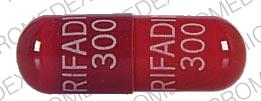
Rifadin Side Effects
Generic name: rifampin
Medically reviewed by Drugs.com. Last updated on Jul 15, 2024.
Note: This document provides detailed information about Rifadin Side Effects associated with rifampin. Some dosage forms listed on this page may not apply specifically to the brand name Rifadin.
Applies to rifampin: oral capsule.
Other dosage forms:
Serious side effects of Rifadin
Along with its needed effects, rifampin (the active ingredient contained in Rifadin) may cause some unwanted effects. Although not all of these side effects may occur, if they do occur they may need medical attention.
Check with your doctor immediately if any of the following side effects occur while taking rifampin:
Rare
- agitation
- bleeding gums
- blood in the urine or stools
- bruising
- chest tightness
- confusion
- cough
- coughing or vomiting blood
- dark urine
- darkening of the skin
- decreased frequency or amount of urine
- difficulty in breathing and swallowing
- dizziness
- fainting
- fast heartbeat
- fever with or without chills
- general feeling of tiredness or weakness
- headache
- hives
- hoarseness
- hostility
- increased blood pressure
- increased thirst
- irritability
- light-colored stools
- loss of appetite
- lower back or side pain
- mental depression
- nausea
- painful or difficult urination
- persistent bleeding or oozing from puncture sites, mouth, or nose
- puffiness or swelling of the eyelids or around the eyes, face, lips, or tongue
- skin itching, rash, or redness
- sores, ulcers, or white spots on the lips or in the mouth
- stomach pain
- swelling of the face, ankles, fingers, hands, or lower legs
- unusual bleeding or bruising
- unusual drowsiness, dullness, tiredness, weakness, or feeling of sluggishness
- vomiting
- weight gain
- yellow eyes or skin
Incidence not known
- bleeding under the skin
- blistering, peeling, or loosening of the skin
- bloating
- bloody, severe, or watery diarrhea
- bloody nose
- bone pain
- chest pain
- chills
- cold, clammy skin
- diarrhea
- difficulty with speaking
- double vision
- dry cough
- fast, weak pulse
- general feeling of discomfort or illness
- heavier menstrual periods
- inability to move the arms, legs, or facial muscles
- inability to speak
- increased menstrual flow or vaginal bleeding
- joint or muscle pain
- lightheadedness
- muscle aches
- night sweats
- nosebleeds
- pale skin
- paralysis
- pinpoint red spots on the skin
- prolonged bleeding from cuts
- red or black, tarry stools
- red or dark brown urine
- red skin lesions, often with a purple center
- red, irritated eyes
- runny nose
- shivering
- slow speech
- sore throat
- sores, welts, blisters
- sweating
- swelling of the fingers, feet, or lower legs
- swelling or puffiness of the face
- swollen glands
- trouble sleeping
- unpleasant breath odor
- unusual weight loss
Get emergency help immediately if any of the following symptoms of overdose occur while taking rifampin:
Symptoms of overdose
- blurred vision
- dizziness, faintness, or lightheadedness when getting up suddenly from a lying or sitting position
- fast, pounding, or irregular heartbeat or pulse
- feeling of fullness in the upper abdomen or stomach
- low blood pressure or slow pulse
- pain in the upper abdomen or stomach
- reddish-orange to reddish-brown color of the urine, stool, saliva, sputum, sweat, and tears
- seizures
- swelling around the eyes or face
- unconsciousness
- yellow eyes or skin
Other side effects of Rifadin
Some side effects of rifampin may occur that usually do not need medical attention. These side effects may go away during treatment as your body adjusts to the medicine. Also, your health care professional may be able to tell you about ways to prevent or reduce some of these side effects.
Check with your health care professional if any of the following side effects continue or are bothersome or if you have any questions about them:
Rare
- feeling that others are watching you or controlling your behavior
- feeling that others can hear your thoughts
- feeling, seeing, or hearing things that are not there
- muscle tenderness, wasting, or weakness
- severe mood or mental changes
- unusual behavior
Incidence not known
- belching
- bloated or full feeling
- excess air or gas in the stomach or bowels
- indigestion
- not able to concentrate
- pain or discomfort in the chest, upper stomach, or throat
- tooth discoloration
For healthcare professionals
Applies to rifampin: compounding powder, intravenous powder for injection, oral capsule.
Dermatologic
- Uncommon (0.1% to 1%): Serious cutaneous reactions
- Frequency not reported: Drug reaction with eosinophilia and systemic symptoms (DRESS) syndrome, erythema multiforme, face edema, itching with/without rash, mild cutaneous reactions, pemphigoid reaction, pruritus, rash, self-limiting cutaneous reactions, Stevens-Johnson syndrome, toxic epidermal necrolysis, urticaria[Ref]
Hypersensitivity
- Uncommon (0.1% to 1%): Hypersensitivity reactions
- Rare (0.01% to 0.1%): Anaphylaxis[Ref]
Hypersensitivity reactions included acute renal failure, acute tubular necrosis, hematuria, hemoglobinuria, hemolysis, interstitial nephritis, renal insufficiency, and serious cutaneous reactions.[Ref]
Renal
- Rare (0.01% to 0.1%): Acute renal failure, acute tubular necrosis, interstitial nephritis, renal insufficiency
- Frequency not reported: Blood urea nitrogen elevations[Ref]
Acute renal failure, acute tubular necrosis, interstitial necrosis, renal insufficiency were hypersensitivity reactions and usually occurred during intermittent therapy or during the resumption of intentional/accidental interruption of a daily dosage regimen. The effects were usually reversible when treatment was discontinued and appropriate therapy was instituted.[Ref]
Hematologic
- Rare (0.01% to 0.1%): Disseminated intravascular coagulation, hemolysis, thrombocytopenia
- Very rare (less than 0.01%): Agranulocytosis
- Frequency not reported: Decreased hemoglobin, eosinophilia, hemolytic anemia, leukopenia[Ref]
Thrombocytopenia usually occurred with high-dose intermittent therapy, but has occurred with well-supervised daily therapy and after resumption of interrupted treatment; the effect is reversible if treatment is discontinued as soon as purpura occurs.
Hemolysis was a hypersensitivity reaction and usually occurred during intermittent therapy or during the resumption of intentional/accidental interruption of a daily dosage regimen. This effect was usually reversible when treatment was discontinued and appropriate therapy was instituted.[Ref]
Hepatic
- Rare (0.01% to 0.1%): Abnormal liver function tests, hepatitis, shock-like syndrome with hepatic involvement
- Frequency not reported: Jaundice, transient liver function test abnormalities, serum bilirubin elevations, serum transaminase elevations[Ref]
Genitourinary
- Rare (0.01% to 0.1%): Hematuria, hemoglobinuria
- Frequency not reported: Menstrual disturbances[Ref]
Hematuria and hemoglobinuria were hypersensitivity reactions and usually occurred during intermittent therapy or during the resumption of intentional/accidental interruption of a daily dosage regimen. The effects were usually reversible when treatment was discontinued and appropriate therapy was instituted.[Ref]
Musculoskeletal
- Rare (0.01% to 0.1%): Myopathy
- Frequency not reported: Bone pain, extremity pain, muscular weakness[Ref]
Bone pain was included in flu syndrome, and occurred in patients receiving intermittent regimens; however, this event may occur in patients taking this drug irregularly or if daily administration is resumed after a drug-free interval.[Ref]
Psychiatric
- Rare (0.01% to 0.1%): Psychoses
- Frequency not reported: Behavioral changes, mental confusion[Ref]
Endocrine
- Rare (0.01% to 0.1%): Adrenal insufficiency[Ref]
Adrenal insufficiency occurred in patients with compromised adrenal function.[Ref]
Gastrointestinal
- Frequency not reported: Cramps, diarrhea, epigastric distress, flatulence, heartburn, nausea, pseudomembranous colitis, sore mouth, sore tongue, tooth discoloration/permanent tooth discoloration, vomiting[Ref]
Nervous system
- Frequency not reported: Ataxia, cerebral hemorrhage, dizziness, drowsiness, generalized numbness, headache, inability to concentrate[Ref]
Cerebral hemorrhage occurred in patients who continued or resumed treatment after the appearance of purpura.
Dizziness and headache were included in flu syndrome, and occurred in patients receiving intermittent regimens; however, the events may occur in patients taking this drug irregularly or if daily administration is resumed after a drug-free interval.[Ref]
Cardiovascular
- Frequency not reported: Decreased blood pressure, extremity edema, flushing with/without rash, shock, vasculitis[Ref]
Decreased blood pressure and shock were included in flu syndrome, and occurred in patients receiving intermittent regimens; however, the events may occur in patients taking this drug irregularly or if daily administration is resumed after a drug-free interval.[Ref]
Other
- Frequency not reported: Chills, fatalities, fatigue, fever[Ref]
Chills and fever were included in flu syndrome, and occurred in patients receiving intermittent regimens; however, the events may occur in patients taking this drug irregularly or if daily administration is resumed after a drug-free interval.
Fatalities occurred in patients who continued or resumed treatment after the appearance of purpura.[Ref]
Metabolic
- Frequency not reported: Alkaline phosphatase elevations, anorexia, serum uric acid elevations[Ref]
Ocular
- Frequency not reported: Conjunctivitis, visual disturbances[Ref]
Immunologic
- Frequency not reported: Flu syndrome[Ref]
Flu syndrome occurred in patients receiving intermittent regimens, but may occur in patients taking this drug irregularly or if daily administration is resumed after a drug-free interval.[Ref]
Respiratory
- Frequency not reported: Shortness of breath, wheezing[Ref]
Shortness of breath and wheezing were included in flu syndrome, and occurred in patients receiving intermittent regimens; however, the events may occur in patients taking this drug irregularly or if daily administration is resumed after a drug-free interval.[Ref]
References
1. (2001) "Product Information. Rifadin (rifampin)." Hoechst Marion Roussel
2. (2001) "Product Information. Rifamate (rifampin)." Hoechst Marion Roussel
Frequently asked questions
More about Rifadin (rifampin)
- Check interactions
- Compare alternatives
- Reviews (1)
- Drug images
- Dosage information
- During pregnancy
- Drug class: rifamycin derivatives
- Breastfeeding
- En español
Patient resources
Other brands
Professional resources
Other formulations
Related treatment guides
Further information
Rifadin side effects can vary depending on the individual. Always consult your healthcare provider to ensure the information displayed on this page applies to your personal circumstances.
Some side effects may not be reported. You may report them to the FDA.