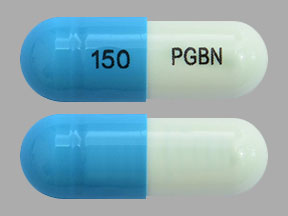
Pregabalin Side Effects
Medically reviewed by Drugs.com. Last updated on Nov 23, 2023.
Applies to pregabalin: oral capsule, oral solution, oral tablet extended release.
Serious side effects of Pregabalin
Along with its needed effects, pregabalin may cause some unwanted effects. Although not all of these side effects may occur, if they do occur they may need medical attention.
Check with your doctor immediately if any of the following side effects occur while taking pregabalin:
Less common
- Chest pain
- cold sweats
- cool, pale skin
- cough producing mucus
- difficult or labored breathing
- muscle aches, twitching or jerking, or weakness
- noisy breathing
- seizures
- tightness in the chest
Rare
- Blistering, peeling, or loosening of the skin
- bloating or swelling of the face, arms, hands, lower legs, or feet
- chills
- cough
- diarrhea
- difficulty with swallowing
- dizziness
- fast heartbeat
- hives, itching, skin rash
- joint or muscle pain
- puffiness or swelling of the eyelids or around the eyes, face, lips, or tongue
- red skin lesions, often with a purple center
- red, irritated eyes
- sore throat
- sores, ulcers, or white spots in the mouth or on the lips
- unusual tiredness or weakness
Incidence not known
- Blue lips, fingernails, or skin
- irregular, fast or slow, or shallow breathing
- loss of consciousness
- nausea
- severe constipation
- stomach cramps or pain
- vomiting
Other side effects of Pregabalin
Some side effects of pregabalin may occur that usually do not need medical attention. These side effects may go away during treatment as your body adjusts to the medicine. Also, your health care professional may be able to tell you about ways to prevent or reduce some of these side effects.
Check with your health care professional if any of the following side effects continue or are bothersome or if you have any questions about them:
More common
- Accidental injury
- blurred vision
- burning, tingling, numbness or pain in the hands, arms, feet, or legs
- change in walking and balance
- clumsiness
- confusion
- difficulty having a bowel movement
- difficulty with speaking
- double vision
- dry mouth
- false beliefs that cannot be changed by facts
- fever
- headache
- hoarseness
- increased appetite
- lack of coordination
- loss of memory
- lower back or side pain
- painful or difficult urination
- poor insight and judgment
- problems with memory or speech
- rapid weight gain
- sensation of pins and needles
- shakiness
- sleepiness
- stabbing pain
- trembling, or other problems with muscle control or coordination
- trouble recognizing objects
- trouble thinking and planning
- unsteady walk
- unusual drowsiness
- unusual weight gain or loss
Less common
- Anxiety
- bloated or feeling of fullness
- decrease or change in vision
- depression
- excess air or gas in the stomach or bowels
- eye disorder
- false or unusual sense of well-being
- general feeling of discomfort or illness
- increased hunger
- loss of appetite
- loss of bladder control
- loss of strength or energy
- nervousness
- nightmares
- pain
- passing gas
- rhythmic movement of the muscles
- runny nose
- shivering
- slurred speech
- sweating
- trouble sleeping
- twitching
- uncontrolled eye movements
Incidence not known
- Breast enlargement
- swelling of the breasts or breast soreness in both females and males
For Healthcare Professionals
Applies to pregabalin: oral capsule, oral solution, oral tablet extended release.
General
The most common adverse reactions to this drug are dizziness, somnolence, dry mouth, edema, blurred vision, weight gain, and "thinking abnormal" (primarily difficulty with concentration/attention); the more commonly reported events in pediatric patients include increased weight and increased appetite.[Ref]
Nervous system
Among pediatric patients receiving this drug for the treatment of partial onset seizures, somnolence was reported in 21% of drug treated patients and 14% of placebo patients, occurring more frequently at higher doses. Somnolence includes related terms of lethargy, sluggishness, and hypersomnia.
Patients treated for central neuropathic pain due to spinal cord injury have experienced an increased incidence of CNS adverse effects, especially somnolence. This may be due to an additive effect with concomitant medications.
There are postmarketing reports of respiratory failure and coma in patients taking pregabalin and other CNS depressant agents.[Ref]
Very common (10% or more): Dizziness (up to 37%), somnolence (up to 25%)
Common (1% to 10%): Neuropathy, ataxia, vertigo, incoordination, tremor, abnormal gait, headache, speech disorder, twitching
Uncommon (0.1% to 1%): Syncope, stupor, myoclonus, psychomotor hyperactivity, dyskinesia, dizziness postural, intention tremor, nystagmus, hyporeflexia, hyperesthesia, burning sensation, ageusia, malaise
Rare (less than 0.1%): Convulsions, parosmia, hypokinesia, dysgraphia, shock, circumoral paresthesia, dysarthria, hyperalgesia, hyperkinesia, hypokinesia, hypotonia, myoclonus, neuralgia cerebellar syndrome, cogwheel rigidity, coma, dysautonomia, dystonia, encephalopathy, extrapyramidal syndrome, Guillain-Barre syndrome, hypalgesia, intracranial hypertension, torticollis, trismus, peripheral neuritis
Postmarketing reports: Coma[Ref]
Cardiovascular
Very common (10% or more): Peripheral edema (up to 12%)
Common (1% to 10%): Chest pain
Uncommon (0.1% to 1%): Hypotension, hypertension, hot flushes, flushing, peripheral coldness, heart failure, postural hypotension, syncope
Rare (less than 0.1%): ST depressed, ventricular fibrillation
Frequency not reported: PR interval prolongation[Ref]
In controlled clinical trials in adult patients, peripheral edema was reported in 6% of patients receiving this drug compared with 2% in the placebo group; 0.5% and 0.2% of patients withdrew due to peripheral edema in the drug treated group and the placebo group, respectively.
Analyses of clinical trial ECG data has shown the mean PR interval increase was 3 to 6 msec at doses greater than or equal to 300 mg/day. Subgroup analyses did not identify an increased risk of PR prolongation in patients with baseline PR prolongation or those taking other PR prolonging medications, although the number of patients in the study was not sufficient to draw a definitive conclusion.[Ref]
Psychiatric
Common (1% to 10%): Confusion, euphoria, amnesia, nervousness, irritability, disorientation, insomnia, libido decreased, disturbance in attention, anxiety, depersonalization, stupor, abnormal thinking
Uncommon (0.1% to 1%): Cognitive disorder, mental impairment, abnormal dreams, agitation, apathy, aphasia, hallucinations, hostility
Rare (less than 0.1%): Delirium, delusions, manic reaction, paranoid reaction, personality disorder, psychotic depression, schizophrenic reaction, sleep disorder, disinhibition[Ref]
Hypersensitivity
Uncommon (0.1% to 1%): Hypersensitivity
Rare (0.01% to 0.1%): Allergic reaction, anaphylactic reaction[Ref]
Dermatologic
Symptoms of angioedema have included swelling of the face, mouth (tongue, lips, and gums), and neck (throat and larynx). There have also been reports of life-threatening angioedema with respiratory compromise requiring emergency treatment. Therapy should be discontinued immediately in patients with these symptoms. Caution is recommended if this drug is used in patients who have had a previous episode of angioedema. Patients who are taking other drugs associated with angioedema (e.g., angiotensin converting enzyme inhibitors [ACE inhibitors]) may be at increased risk of developing angioedema.[Ref]
Common (1% to 10%): Ecchymosis, pruritus
Uncommon (0.1% to 1%): Angioedema, rash papular, urticaria, hyperhidrosis, abscess, cellulitis, alopecia, dry skin, eczema, hirsutism, skin ulcer, urticaria, vesiculobullous rash
Rare (less than 0.1%): Stevens Johnson syndrome, cold sweat, angioedema, exfoliative dermatitis, lichenoid dermatitis, melanosis, nail disorder, petechial rash, purpuric rash, pustular rash, skin atrophy, skin necrosis, skin nodule, subcutaneous nodule[Ref]
Gastrointestinal
Common (1% to 10%): Dry mouth, constipation, nausea, vomiting, diarrhea, flatulence, abdominal distention, gastroenteritis
Uncommon (0.1% to 1%): Gastroesophageal reflux disease, salivary hypersecretion, hypoesthesia oral, cholecystitis, cholelithiasis, colitis, dysphagia, esophagitis, gastritis, GI hemorrhage, melena, mouth ulceration, pancreatitis, rectal hemorrhage, tongue edema
Rare (less than 0.1%): Ascites, granuloma
Postmarketing reports: Reduced lower gastrointestinal function events (e.g., intestinal obstruction, paralytic ileus, constipation)[Ref]
Postmarketing reports of reduced lower gastrointestinal function events have been reported when co-administered with medications that have the potential to produce constipation, such as opioids.[Ref]
Genitourinary
Common (1% to 10%): Urinary incontinence, erectile dysfunction, impotence, urinary frequency, urinary incontinence
Uncommon (0.1% to 1%): Sexual dysfunction, ejaculation delayed, dysmenorrhea, breast pain, anorgasmia, albuminuria, dysuria, hematuria, kidney calculus, leukorrhea, menorrhagia, metrorrhagia, oliguria, urinary retention, urine abnormality, abnormal ejaculation, albuminuria, amenorrhea, dysmenorrhea, kidney calculus, menorrhagia, metrorrhagia, oliguria
Rare (less than 0.1%): Breast discharge, breast enlargement, gynecomastia, pelvic pain, balanitis, bladder neoplasm, cervicitis, dyspareunia, epididymitis, glomerulitis, ovarian disorder[Ref]
Hematologic
Uncommon (0.1% to 1%): Neutropenia, blood creatine phosphokinase increased, alanine aminotransferase increased, aspartate aminotransferase increased, platelet count decreased, blood creatinine increased, blood potassium decreased, deep thrombophlebitis
Rare (less than 0.1%): White blood cell count decreased, anemia, eosinophilia, hypochromic anemia, leukocytosis, leukopenia, lymphadenopathy, thrombocytopenia
Rare (0.01% to 0.1%): Myelofibrosis, polycythemia, prothrombin decreased, purpura[Ref]
Immunologic
Very common (10% or more): Infection (up to 14%)
Common (1% to 10%): Influenza syndrome[Ref]
Musculoskeletal
Common (1% to 10%): Myasthenia, muscle cramp, arthralgia, back pain, pain in limb, cervical spasm, leg cramps
Uncommon (0.1% to 1%): Joint swelling, myalgia, muscle twitching, neck pain, muscle stiffness, neck rigidity, arthrosis
Rare (less than 0.1%): Rhabdomyolysis, chondrodystrophy, generalized spasm[Ref]
Ocular
Very common (10% or more): Visual field changes (13%)
Common (1% to 10%): Blurry vision, abnormal vision, diplopia, conjunctivitis
Uncommon (0.1% to 1%): Peripheral vision loss, visual disturbance, eye swelling, visual field defect, visual acuity reduced, eye pain, asthenopia, photopsia, photosensitivity reaction, dry eye, lacrimation increased, eye irritation, retinal vascular disorder, abnormality of accommodation, blepharitis, dry eyes, eye hemorrhage, hyperacusis, photophobia, retinal edema
Rare (0.01% to 0.1%): Vision loss, keratitis, oscillopsia, altered visual depth perception, mydriasis, strabismus, visual brightness, anisocoria, blindness, corneal ulcer, exophthalmos, extraocular palsy, iritis, keratitis, keratoconjunctivitis, miosis, mydriasis, night blindness, ophthalmoplegia, optic atrophy, papilledema, parosmia, ptosis, uveitis[Ref]
Other
Common (1% to 10%): Asthenia, accidental injury, face edema, pain, otitis media, tinnitus
Uncommon (less than 0.1% to 1%): Generalized edema, pain, pyrexia, chills, thirst
Rare (0.01% to 0.1%): Retroperitoneal fibrosis, retinal vascular disorder, taste loss, taste perversion
Frequency not reported: Withdrawal effects following rapid discontinuation[Ref]
Some patients have reported withdrawal effects following abrupt/rapid discontinuation. These symptoms included insomnia, nausea, headache, anxiety, hyperhidrosis, and diarrhea.[Ref]
Respiratory
Common (1% to 10%): Dyspnea, bronchitis, nasopharyngitis
Uncommon (0.1% to 1%): Epistaxis, cough, nasal congestion, rhinitis, snoring, nasal dryness
Rare (less than 0.1%): Pulmonary edema, throat tightness, apnea, atelectasis, bronchiolitis, hiccup, laryngismus, lung fibrosis, yawn
Postmarketing reports: Respiratory failure[Ref]
There are postmarketing reports of respiratory failure and coma in patients taking pregabalin and other CNS depressant agents.[Ref]
Metabolic
Common (1% to 10%): Weight gain, edema, hypoglycemia, increased appetite
Uncommon (0.1% to 1%): Weight decreased, blood glucose increased
Rare (0.01% to 0.1%): Glucose tolerance decreased, urate crystalluria[Ref]
Hepatic
Uncommon (0.1% to 1%): Nephritis
Rare (0.01% to 0.1%): Acute kidney failure, pyelonephritis[Ref]
Endocrine
Postmarketing reports: Gynecomastia, breast enlargement
Frequently asked questions
- Lyrica vs Gabapentin: What's the difference?
- How long does it take for Lyrica to work?
- How long does Lyrica stay in your system?
- Can you stop Lyrica cold turkey?
- Is Lyrica a controlled substance / narcotic?
- Does Lyrica make you sleepy?
More about pregabalin
- Check interactions
- Compare alternatives
- Pricing & coupons
- Reviews (1,635)
- Drug images
- Latest FDA alerts (2)
- Dosage information
- Patient tips
- During pregnancy
- Support group
- Drug class: gamma-aminobutyric acid analogs
- Breastfeeding
- En español
Patient resources
- Pregabalin drug information
- Pregabalin Extended-Release Tablets
- Pregabalin Capsules
- Pregabalin Oral Solution
Other brands
Professional resources
- Pregabalin monograph
- Pregabalin (FDA)
- Pregabalin Capsules (FDA)
- Pregabalin ER Tablets (FDA)
- Pregabalin Oral Solution (FDA)
Other brands
Related treatment guides
References
1. Product Information. Lyrica (pregabalin). Pfizer U.S. Pharmaceuticals Group. 2005.
2. Cerner Multum, Inc. UK Summary of Product Characteristics.
3. Cerner Multum, Inc. Australian Product Information.
Further information
Always consult your healthcare provider to ensure the information displayed on this page applies to your personal circumstances.
Some side effects may not be reported. You may report them to the FDA.