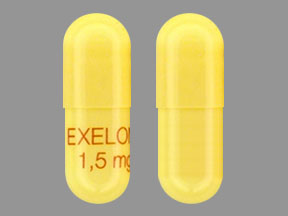
Exelon Side Effects
Generic Name: rivastigmine
Please note - some side effects for Exelon may not be reported. Always consult your doctor or healthcare specialist for medical advice. You may also report side effects to the FDA.
Side Effects of Exelon - for the Consumer
Exelon
All medicines may cause side effects, but many people have no, or minor, side effects. Check with your doctor if any of these most COMMON side effects persist or become bothersome when using Exelon:
Seek medical attention right away if any of these SEVERE side effects occur when using Exelon:Diarrhea; dizziness; drowsiness; headache; increased sweating; loss of appetite; nausea; stomach upset or pain; tiredness; trouble sleeping; vomiting; weakness; weight loss.
Severe allergic reactions (rash; hives; itching; difficulty breathing; tightness in the chest; swelling of the mouth, face, lips, or tongue); anxiety; bloody or black, tarry stools; chest pain; confusion; decreased coordination; decreased, increased, or painful urination; fainting; fever; new or worsening mental or mood changes (eg, depression); new or worsening tremor or uncontrolled muscle movements; new or worsening trouble walking; seizures; severe or persistent diarrhea, nausea, stomach pain, or vomiting; severe or persistent dizziness, tiredness, or weakness; severe or persistent loss of appetite or weight loss; slow or irregular heartbeat; trouble speaking or swallowing; twitching of the face or tongue; vomit that looks like blood or coffee grounds.
This is not a complete list of all side effects that may occur. If you have questions about side effects, contact your health care provider. Call your doctor for medical advice about side effects. To report side effects to the appropriate agency, please read the Guide to Reporting Problems to FDA.
Exelon Patch
All medicines may cause side effects, but many people have no, or minor, side effects. Check with your doctor if any of these most COMMON side effects persist or become bothersome when using Exelon Patch:
Seek medical attention right away if any of these SEVERE side effects occur when using Exelon Patch:Diarrhea; dizziness; headache; loss of appetite; nausea; stomach upset or pain; tiredness; trouble sleeping; vomiting; weakness; weight loss.
Severe allergic reactions (rash; hives; itching; difficulty breathing; tightness in the chest; swelling of the mouth, face, lips, or tongue); anxiety; bloody or black, tarry stools; chest pain; confusion; decreased coordination; decreased, increased, or painful urination; fainting; fever; new or worsening mental or mood changes (eg, depression); new or worsening tremor or uncontrolled muscle movements; new or worsening trouble walking; seizures; severe or persistent diarrhea, nausea, stomach pain, or vomiting; severe or persistent dizziness, tiredness, or weakness; severe or persistent loss of appetite or weight loss; slow or irregular heartbeat; trouble speaking or swallowing; twitching of the face or tongue; vomit that looks like blood or coffee grounds.
This is not a complete list of all side effects that may occur. If you have questions about side effects, contact your health care provider. Call your doctor for medical advice about side effects. To report side effects to the appropriate agency, please read the Guide to Reporting Problems to FDA.
Exelon Solution
All medicines may cause side effects, but many people have no, or minor, side effects. Check with your doctor if any of these most COMMON side effects persist or become bothersome when using Exelon Solution:
Seek medical attention right away if any of these SEVERE side effects occur when using Exelon Solution:Diarrhea; dizziness; drowsiness; headache; increased sweating; loss of appetite; nausea; stomach upset or pain; tiredness; trouble sleeping; vomiting; weakness; weight loss.
Severe allergic reactions (rash; hives; itching; difficulty breathing; tightness in the chest; swelling of the mouth, face, lips, or tongue); anxiety; bloody or black, tarry stools; chest pain; confusion; decreased coordination; decreased, increased, or painful urination; fainting; fever; new or worsening mental or mood changes (eg, depression); new or worsening tremor or uncontrolled muscle movements; new or worsening trouble walking; seizures; severe or persistent dizziness, tiredness, or weakness; severe or persistent diarrhea, nausea, stomach pain, or vomiting; severe or persistent loss of appetite or weight loss; slow or irregular heartbeat; trouble speaking or swallowing; twitching of the face or tongue; vomit that looks like blood or coffee grounds.
This is not a complete list of all side effects that may occur. If you have questions about side effects, contact your health care provider. Call your doctor for medical advice about side effects. To report side effects to the appropriate agency, please read the Guide to Reporting Problems to FDA.
TopExelon Side Effects - for the Professional
Exelon
Dementia of the Alzheimer’s Type
Adverse Events Leading to DiscontinuationThe rate of discontinuation due to adverse events in controlled clinical trials of Exelon® (rivastigmine tartrate) was 15% for patients receiving 6-12 mg/day compared to 5% for patients on placebo during forced weekly dose titration. While on a maintenance dose, the rates were 6% for patients on Exelon compared to 4% for those on placebo.
The most common adverse events leading to discontinuation, defined as those occurring in at least 2% of patients and at twice the incidence seen in placebo patients, are shown in Table 1.
| Study Phase | Titration | Maintenance | Overall | |||
| Placebo | Exelon® ≥6-12 mg/day |
Placebo | Exelon® ≥6-12 mg/day |
|
| (n=868) | (n=1,189) | (n=788) | (n=987) | (n=868) | (n=1,189) | |
| Event/% Discontinuing |
||||||
| Nausea | <1 | 8 | <1 | 1 | 1 | 8 |
| Vomiting | <1 | 4 | <1 | 1 | <1 | 5 |
| Anorexia | 0 | 2 | <1 | 1 | <1 | 3 |
| Dizziness | <1 | 2 | <1 | 1 | <1 | 2 |
The most common adverse events, defined as those occurring at a frequency of at least 5% and twice the placebo rate, are largely predicted by Exelon's cholinergic effects. These include nausea, vomiting, anorexia, dyspepsia, and asthenia.
Gastrointestinal Adverse Reactions
Exelon use is associated with significant nausea, vomiting, and weight loss.
Adverse Events Reported in Controlled TrialsTable 2 lists treatment-emergent signs and symptoms that were reported in at least 2% of patients in placebo-controlled trials and for which the rate of occurrence was greater for patients treated with Exelon doses of 6-12 mg/day than for those treated with placebo. The prescriber should be aware that these figures cannot be used to predict the frequency of adverse events in the course of usual medical practice when patient characteristics and other factors may differ from those prevailing during clinical studies. Similarly, the cited frequencies cannot be directly compared with figures obtained from other clinical investigations involving different treatments, uses, or investigators. An inspection of these frequencies, however, does provide the prescriber with one basis by which to estimate the relative contribution of drug and non-drug factors to the adverse event incidences in the population studied.
In general, adverse reactions were less frequent later in the course of treatment.
No systematic effect of race or age could be determined from the incidence of adverse events in the controlled studies. Nausea, vomiting and weight loss were more frequent in women than men.
Body System/Adverse Event |
Placebo (n=868) |
Exelon® (6-12 mg/day) (n=1,189) |
| Percent of Patients with any Adverse Event | 79 | 92 |
| Autonomic Nervous System | ||
| Sweating Increased | 1 | 4 |
| Syncope | 2 | 3 |
| Body as a Whole | ||
| Accidental Trauma | 9 | 10 |
| Fatigue | 5 | 9 |
| Asthenia | 2 | 6 |
| Malaise | 2 | 5 |
| Influenza-like Symptoms | 2 | 3 |
| Weight Decrease | <1 | 3 |
| Cardiovascular Disorders, General | ||
| Hypertension | 2 | 3 |
| Central and Peripheral Nervous System | ||
| Dizziness | 11 | 21 |
| Headache | 12 | 17 |
| Somnolence | 3 | 5 |
| Tremor | 1 | 4 |
| Gastrointestinal System | ||
| Nausea | 12 | 47 |
| Vomiting | 6 | 31 |
| Diarrhea | 11 | 19 |
| Anorexia | 3 | 17 |
| Abdominal Pain | 6 | 13 |
| Dyspepsia | 4 | 9 |
| Constipation | 4 | 5 |
| Flatulence | 2 | 4 |
| Eructation | 1 | 2 |
| Psychiatric Disorders | ||
| Insomnia | 7 | 9 |
| Confusion | 7 | 8 |
| Depression | 4 | 6 |
| Anxiety | 3 | 5 |
| Hallucination | 3 | 4 |
| Aggressive Reaction | 2 | 3 |
| Resistance Mechanism Disorders | ||
| Urinary Tract Infection | 6 | 7 |
| Respiratory System | ||
| Rhinitis | 3 | 4 |
Other adverse events observed at a rate of 2% or more on Exelon 6-12 mg/day but at a greater or equal rate on placebo were chest pain, peripheral edema, vertigo, back pain, arthralgia, pain, bone fracture, agitation, nervousness, delusion, paranoid reaction, upper respiratory tract infection, infection (general), coughing, pharyngitis, bronchitis, rash (general), urinary incontinence.
Dementia Associated with Parkinson’s Disease
Adverse Events Leading to DiscontinuationThe rate of discontinuation due to adverse events in the single controlled trial of Exelon (rivastigmine tartrate) was 18.2% for patients receiving 3-12 mg/day compared to 11.2% for patients on placebo during the 24-week study.
The most frequent adverse events that led to discontinuation from this study, defined as those occurring in at least 1% of patients receiving Exelon and more frequent than those receiving placebo, were nausea (3.6% Exelon vs. 0.6% placebo), vomiting (1.9% Exelon vs. 0.6% placebo), and tremor (1.7% Exelon vs. 0.0% placebo).
Most Frequent Adverse Clinical Events Seen in Association with the Use of Exelon
The most common adverse events, defined as those occurring at a frequency of at least 5% and twice the placebo rate, are largely predicted by Exelon's cholinergic effects. These include nausea, vomiting, tremor, anorexia, and dizziness.
Adverse Events Reported in Controlled Trials
Table 3 lists treatment-emergent signs and symptoms that were reported in at least 2% of patients in placebo-controlled trials and for which the rate of occurrence was greater for patients treated with Exelon doses of 3-12 mg/day than for those treated with placebo. The prescriber should be aware that these figures cannot be used to predict the frequency of adverse events in the course of usual medical practice when patient characteristics and other factors may differ from those prevailing during clinical studies. Similarly, the cited frequencies cannot be directly compared with figures obtained from other clinical investigations involving different treatments, uses, or investigators. An inspection of these frequencies, however, does provide the prescriber with one basis by which to estimate the relative contribution of drug and non-drug factors to the adverse event incidences in the population studied.
In general, adverse reactions were less frequent later in the course of treatment.
Body System/Adverse Event |
Placebo (n=179) |
Exelon® (3-12 mg/day) (n=362) |
| Percent of Patients with any Adverse Event | 71 | 84 |
| Gastrointestinal Disorders | ||
| Nausea | 11 | 29 |
| Vomiting | 2 | 17 |
| Diarrhea | 4 | 7 |
| Upper Abdominal Pain | 1 | 4 |
| General Disorders and Administrative Site Conditions | ||
| Fatigue | 3 | 4 |
| Asthenia | 1 | 2 |
| Metabolism and Nutritional Disorders | ||
| Anorexia | 3 | 6 |
| Dehydration | 1 | 2 |
| Nervous System Disorders | ||
| Tremor | 4 | 10 |
| Dizziness | 1 | 6 |
| Headache | 3 | 4 |
| Somnolence | 3 | 4 |
| Parkinson’s Disease (worsening) | 1 | 3 |
| Parkinsonism | 1 | 2 |
| Psychiatric Disorders | ||
| Anxiety | 1 | 4 |
| Insomnia | 2 | 3 |
Other Adverse Events Observed During Clinical Trials
Dementia of the Alzheimer’s TypeExelon has been administered to over 5,297 individuals during clinical trials worldwide. Of these, 4,326 patients have been treated for at least 3 months, 3,407 patients have been treated for at least 6 months, 2,150 patients have been treated for 1 year, 1,250 patients have been treated for 2 years, and 168 patients have been treated for over 3 years. With regard to exposure to the highest dose, 2,809 patients were exposed to doses of 10-12 mg, 2,615 patients treated for 3 months, 2,328 patients treated for 6 months, 1,378 patients treated for 1 year, 917 patients treated for 2 years, and 129 patients treated for over 3 years.
Treatment-emergent signs and symptoms that occurred during 8 controlled clinical trials and 9 open-label trials in North America, Western Europe, Australia, South Africa, and Japan were recorded as adverse events by the clinical investigators using terminology of their own choosing. To provide an overall estimate of the proportion of individuals having similar types of events, the events were grouped into a smaller number of standardized categories using a modified WHO dictionary, and event frequencies were calculated across all studies. These categories are used in the listing below. The frequencies represent the proportion of 5,297 patients from these trials who experienced that event while receiving Exelon. All adverse events occurring in at least 6 patients (approximately 0.1%) are included, except for those already listed elsewhere in labeling, WHO terms too general to be informative, relatively minor events, or events unlikely to be drug-caused. Events are classified by body system and listed using the following definitions: frequent adverse events – those occurring in at least 1/100 patients; infrequent adverse events – those occurring in 1/100 to 1/1,000 patients. These adverse events are not necessarily related to Exelon treatment and in most cases were observed at a similar frequency in placebo-treated patients in the controlled studies.
Autonomic Nervous System: Infrequent: Cold clammy skin, dry mouth, flushing, increased saliva.
Body as a Whole: Frequent: Accidental trauma, fever, edema, allergy, hot flushes, rigors. Infrequent: Edema periorbital or facial, hypothermia, edema, feeling cold, halitosis.
Cardiovascular System: Frequent: Hypotension, postural hypotension, cardiac failure.
Central and Peripheral Nervous System: Frequent: Abnormal gait, ataxia, paresthesia, convulsions. Infrequent: Paresis, apraxia, aphasia, dysphonia, hyperkinesia, hyperreflexia, hypertonia, hypoesthesia, hypokinesia, migraine, neuralgia, nystagmus, peripheral neuropathy.
Endocrine System: Infrequent: Goiter, hypothyroidism.
Gastrointestinal System: Frequent: Fecal incontinence, gastritis. Infrequent: Dysphagia, esophagitis, gastric ulcer, gastroesophageal reflux, GI hemorrhage, hernia, intestinal obstruction, melena, rectal hemorrhage, gastroenteritis, ulcerative stomatitis, duodenal ulcer, hematemesis, gingivitis, tenesmus, pancreatitis, colitis, glossitis.
Hearing and Vestibular Disorders: Frequent: Tinnitus.
Heart Rate and Rhythm Disorders: Frequent: Atrial fibrillation, bradycardia, palpitation. Infrequent: AV block, bundle branch block, sick sinus syndrome, cardiac arrest, supraventricular tachycardia, extrasystoles, tachycardia.
Liver and Biliary System Disorders: Infrequent: Abnormal hepatic function, cholecystitis.
Metabolic and Nutritional Disorders: Frequent: Dehydration, hypokalemia. Infrequent: Diabetes mellitus, gout, hypercholesterolemia, hyperlipemia, hypoglycemia, cachexia, thirst, hyperglycemia, hyponatremia.
Musculoskeletal Disorders: Frequent: Arthritis, leg cramps, myalgia. Infrequent: Cramps, hernia, muscle weakness.
Myo-, Endo-, Pericardial and Valve Disorders: Frequent: Angina pectoris, myocardial infarction.
Platelet, Bleeding, and Clotting Disorders: Frequent: Epistaxis. Infrequent: Hematoma, thrombocytopenia, purpura.
Psychiatric Disorders: Frequent: Paranoid reaction, confusion. Infrequent: Abnormal dreaming, amnesia, apathy, delirium, dementia, depersonalization, emotional lability, impaired concentration, decreased libido, personality disorder, suicide attempt, increased libido, neurosis, suicidal ideation, psychosis.
Red Blood Cell Disorders: Frequent: Anemia. Infrequent: Hypochromic anemia.
Reproductive Disorders (Female & Male): Infrequent: Breast pain, impotence, atrophic vaginitis.
Resistance Mechanism Disorders: Infrequent: Cellulitis, cystitis, herpes simplex, otitis media.
Respiratory System: Infrequent: Bronchospasm, laryngitis, apnea.
Skin and Appendages: Frequent: Rashes of various kinds (maculopapular, eczema, bullous, exfoliative, psoriaform, erythematous). Infrequent: Alopecia, skin ulceration, urticaria, contact dermatitis.
Special Senses: Infrequent: Perversion of taste, loss of taste.
Urinary System Disorders: Frequent: Hematuria. Infrequent: Albuminuria, oliguria, acute renal failure, dysuria, micturition urgency, nocturia, polyuria, renal calculus, urinary retention.
Vascular (extracardiac) Disorders: Infrequent: Hemorrhoids, peripheral ischemia, pulmonary embolism, thrombosis, deep thrombophlebitis, aneurysm, intracranial hemorrhage.
Vision Disorders: Frequent: Cataract. Infrequent: Conjunctival hemorrhage, blepharitis, diplopia, eye pain, glaucoma.
White Cell and Resistance Disorders: Infrequent: Lymphadenopathy, leukocytosis.
Dementia Associated with Parkinson’s DiseaseExelon has been administered to 485 individuals during clinical trials worldwide. Of these, 413 patients have been treated for at least 3 months, 253 patients have been treated for at least 6 months, and 113 patients have been treated for 1 year.
Additional treatment-emergent adverse events in patients with Parkinson’s disease dementia occurring in at least 1 patient (approximately 0.3%) are listed below, excluding events that are already listed above for the dementia of the Alzheimer’s type or elsewhere in labeling, WHO terms too general to be informative, relatively minor events, or events unlikely to be drug-caused. Events are classified by body system and listed using the following definitions: frequent adverse events – those occurring in at least 1/100 patients; infrequent adverse events – those occurring in 1/100 to 1/1,000 patients. These adverse events are not necessarily related to Exelon treatment and in most cases were observed at a similar frequency in placebo-treated patients in the controlled studies.
Cardiovascular System: Frequent: Chest pain. Infrequent: Sudden cardiac death.
Central and Peripheral Nervous System: Frequent: Dyskinesia, bradykinesia, restlessness, transient ischemic attack. Infrequent: Dystonia, hemiparesis, epilepsy, restless leg syndrome.
Endocrine System: Infrequent: Elevated prolactin level.
Gastrointestinal System: Frequent: Dyspepsia. Infrequent: Fecaloma, dysphagia, diverticulitis, peritonitis.
Hearing and Vestibular Disorders: Frequent: Vertigo. Infrequent: Meniere’s disease.
Heart Rate and Rhythm Disorders: Infrequent: Adam-Stokes syndrome.
Liver and Biliary System Disorders: Infrequent: Elevated alkaline phosphatase level, elevated gamma-glutamyltransferase level.
Musculoskeletal Disorders: Frequent: Back pain. Infrequent: Muscle stiffness, myoclonus, freezing phenomenon.
Psychiatric Disorders: Frequent: Agitation, depression. Infrequent: Delusion, insomnia.
Reproductive Disorders (Female & Male): Infrequent: endometrial hypertrophy, mastitis, prostatic adenoma.
Respiratory System: Frequent: Dyspnea. Infrequent: Cough.
Urinary System Disorders: Infrequent: Urinary incontinence, neurogenic bladder.
Vascular (extracardiac) Disorders: Infrequent: Vasovagal syncope, vasculitis.
Vision Disorders: Infrequent: Blurred vision, blepharospasm, conjunctivitis, retinopathy.
Post-Introduction Reports
Voluntary reports of adverse events temporally associated with Exelon that have been received since market introduction that are not listed above, and that may or may not be causally related to the drug include the following:
Skin and Appendages: Stevens-Johnson syndrome.
TopSide Effects by Body System - for Healthcare Professionals
Gastrointestinal
Gastrointestinal effects including nausea (47%), vomiting (31%), diarrhea (19%), anorexia (17%), abdominal pain (13%), dyspepsia (9%), constipation (5%), flatulence (4%), and eructation (2%) have been reported. There has also been one postmarketing report of severe vomiting with esophageal rupture following inappropriate reinitiation of treatment. Postmarketing reports have included duodenal ulcers.
When treatment is interrupted for longer than several days, treatment must be reinitiated with the lowest daily dose to reduce the possibility of severe vomiting and its potentially serious sequelae.
Nervous system
Nervous system side effects including dizziness (21%), headache (17%), somnolence (5%), tremor (4%), increased sweating (4%), and syncope (3%) have been reported. Postmarketing reports have included confusion.
General
General side effects including accidental trauma (10%), fatigue (9%), asthenia (6%), malaise (5%), influenza-like symptoms (3%), and decreased weight (3%) have been reported.
Psychiatric
Psychiatric side effects including insomnia (9%), confusion (8%), depression (6%), anxiety (5%), hallucination (4%), and aggressive reaction (3%) have been reported.
Dermatologic
Dermatologic side effects including Stevens-Johnson syndrome have been reported. A case of erythematous macropapular eruption due to rivastigmine therapy has also been reported.
Genitourinary
Genitourinary side effects including urinary tract infection (7%) have been reported.
Respiratory
Respiratory side effects including rhinitis (4%) have been reported.
Cardiovascular
Cardiovascular side effects including hypertension (3%) have been reported. A case of complete atrioventricular block has also been reported.
Hepatic
Hepatic side effects have included abnormal liver function tests.
TopMore Exelon resources
- Exelon Prescribing Information (FDA)
- Exelon Consumer Overview
- Exelon Monograph (AHFS DI)
- Exelon MedFacts Consumer Leaflet (Wolters Kluwer)
- Exelon Advanced Consumer (Micromedex) - Includes Dosage Information
- Rivastigmine Prescribing Information (FDA)
- Rivastigmine Professional Patient Advice (Wolters Kluwer)
Disclaimer: Every effort has been made to ensure that the information provided is accurate, up-to-date, and complete, but no guarantee is made to that effect. In addition, the drug information contained herein may be time sensitive and should not be utilized as a reference resource beyond the date hereof. This information does not endorse drugs, diagnose patients, or recommend therapy. This drug information is a reference resource designed as supplement to, and not a substitute for, the expertise, skill , knowledge, and judgement of healthcare practitioners in patient care. The absence of a warning for a given drug or drug combination in no way should be construed to indicate that the drug of drug combination is safe, effective, or appropriate for any given patient. Drugs.com does not assume any responsibility for any aspect of healthcare administered with the aid of information provided. The information contained herein is not intended to cover all possible uses, directions, precautions, warnings, drug interactions, allergic reactions, or adverse effects. If you have questions about the drugs you are taking, check with your doctor, nurse, or pharmacist.