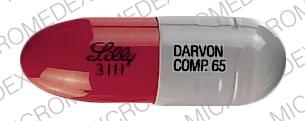
Darvon Compound-65 Side Effects
Generic name: aspirin / caffeine / propoxyphene
Note: This document contains side effect information about aspirin / caffeine / propoxyphene. Some dosage forms listed on this page may not apply to the brand name Darvon Compound-65.
Applies to aspirin/caffeine/propoxyphene: oral capsule.
Warning
Propoxyphene may be habit forming. Physical and/or psychological dependence can occur, and withdrawal effects are possible if the medication is stopped suddenly after prolonged or high-dose treatment. Do not stop taking aspirin / caffeine / propoxyphene suddenly without first talking to your doctor if you have been taking it continuously for more than 5 to 7 days. Your doctor may want to gradually reduce the dose.
Avoid alcohol while taking aspirin / caffeine / propoxyphene. Alcohol can increase drowsiness and dizziness caused by the medication which could be dangerous. Also, alcohol increases the risk of stomach bleeding when taking aspirin.
Do not take more of this medication than is prescribed. If the pain is not being adequately treated, talk to your doctor.
Do not take other over-the-counter and prescription products that contain aspirin. Too much aspirin could be dangerous. Talk to your doctor or pharmacist before taking any over-the-counter preparations.
Drowsiness or dizziness caused by aspirin / caffeine / propoxyphene may be increased by other drugs such as antidepressants, alcohol, antihistamines, sedatives (used to treat insomnia), other pain relievers, anxiety medicines, and muscle relaxants. Together, these medicines may cause dangerous sedation, possibly resulting in unconsciousness or death. Tell your doctor about all medicines that you are taking, and do not take any medicine without first talking to your doctor.
If you experience any of the following serious side effects, stop taking aspirin / caffeine / propoxyphene and seek emergency medical attention or contact your doctor immediately:
-
an allergic reaction (difficulty breathing; closing of the throat; swelling of the lips, tongue, or face; or hives);
-
slow, weak breathing;
-
seizures;
-
cold, clammy skin;
-
severe weakness or dizziness;
-
unconsciousness; or
-
black, bloody, or tarry stools or blood in your urine or vomit.
Other, less serious side effects may be more likely to occur. Continue to take aspirin / caffeine / propoxyphene and talk to your doctor if you experience
-
constipation;
-
dry mouth, nausea, vomiting, or decreased appetite;
-
dizziness, tiredness, or lightheadedness;
-
muscle twitches;
-
sweating;
-
itching
-
decreased urination;
-
decreased sex drive; or
-
ringing in the ears.
Propoxyphene may be habit forming. Physical and/or psychological dependence can occur, and withdrawal effects are possible if the medication is stopped suddenly after prolonged or high-dose treatment. Do not stop taking aspirin / caffeine / propoxyphene suddenly without first talking to your doctor if you have been taking it continuously for more than 5 to 7 days. Your doctor may want to gradually reduce the dose.
Side effects other than those listed here may also occur. Talk to your doctor about any side effect that seems unusual or that is especially bothersome.
For Healthcare Professionals
Applies to aspirin / caffeine / propoxyphene: oral capsule.
Gastrointestinal
Endoscopically identifiable gastric mucosal lesions occur in most patients who receive a single dose of aspirin. Clinically evident gastrointestinal bleeding has been reported in as many as 3% of treated elderly patients. Anorectal ulceration and rectal stenosis have been reported in patients who abuse aspirin-containing rectal suppositories. One case-controlled study has suggested that an association between aspirin (and other NSAID) consumption and appendicitis may exist.
A case of ischemic colitis has been reported following an overdose of propoxyphene which was complicated by severe hypotension.[Ref]
Gastrointestinal side effects have been common and included epigastric distress (in as many as 83% of patients treated with regular aspirin), abdominal discomfort or pain, endoscopically identifiable gastric mucosal lesions, nausea, and vomiting. More serious gastrointestinal effects have included hemorrhage, peptic ulcers, perforation, and esophageal ulcerations.
In clinical trials of caffeine citrate, five cases of necrotizing enterocolitis were reported among the 46 infants exposed to the caffeine citrate injection.
Gastrointestinal side effects of propoxyphene have included nausea, vomiting, and constipation which have been relatively common. Gastrointestinal bleeding and acute pancreatitis have also been reported with the use of propoxyphene.[Ref]
Renal
Renal side effects of aspirin have included reduction in glomerular filtration rate (particularly in patients who are sodium restricted or who exhibit diminished effective arterial blood volume, such as patients with advanced heart failure or cirrhosis), interstitial nephritis, papillary necrosis, elevations in serum creatinine, elevations in blood urea nitrogen, proteinuria, hematuria, and renal failure.
Renal side effects of propoxyphene have included a single case of nephrogenic diabetes insipidus following an overdose of propoxyphene (however, other causes of diabetes insipidus in that patient were not rigorously excluded).[Ref]
The mechanism of an aspirin-induced decrease in renal function may be related to inhibition of renal prostaglandin synthesis with consequent decreases in renal blood flow. Vasodilating renal prostaglandins may be particularly important in patients who exhibit arterial underfilling (i.e. heart failure, cirrhosis). The administration of high doses of NSAIDs to such patients has produced acute renal failure in rare instances.[Ref]
Hematologic
Hematologic side effects of aspirin (in addition to predictable antiplatelet effects which may result in hemorrhage) have included increased blood fibrinolytic activity. In addition, hypoprothrombinemia, thrombocytopenia, thrombocyturia, megaloblastic anemia, and pancytopenia have been reported rarely. Aplastic anemia has also been reported.
Hematologic side effects of propoxyphene have rarely included cases of hemolytic anemia, pancytopenia, and disseminated intravascular coagulation after administration (or abuse) of propoxyphene-containing compounds.[Ref]
Hypersensitivity
Hypersensitivity side effects to aspirin have included bronchospasm, rhinitis, conjunctivitis, urticaria, angioedema, and anaphylaxis. Approximately 10% to 30% of asthmatics are aspirin-sensitive (with the clinical triad of aspirin sensitivity, bronchial asthma, and nasal polyps).
Hypersensitivity side effects to propoxyphene have also been reported.[Ref]
The mechanism of aspirin-induced hypersensitivity may be related to an up-regulation of the 5-lipoxygenase pathway of arachidonic acid metabolism with a resulting increase in the products of 5-lipoxygenase (such as leukotrienes).[Ref]
General
In general, many side effects noted with aspirin use have been dose related.
Consumption of higher doses of caffeine (greater than 600 mg/day) has lead to caffeinism. Caffeinism is a syndrome characterized by anxiety, restlessness, and sleep disorders (similar to anxiety states). It has also been reported that chronic, heavy caffeine ingestion may be associated with depression. Caffeine may cause anxiety and panic in panic disorder patients and may aggravate PMS.
General side effects including drug tolerance and influenza type illness have been reported with the use of propoxyphene.[Ref]
Other
Other side effects have rarely included Reye's syndrome which has been associated with aspirin use in children with an acute viral illness. Reye's syndrome has also been reported even more rarely in adults.
In one study of the effects of caffeine, 634 women with fibrocystic breast disease (compared to 1066 women without the disease), the occurrence of fibrocystic breast disease was positively associated with average daily consumption of caffeine. Women who consumed 31 to 250 mg/day of caffeine were reported to have a 1.5 times increase in odds to have the disease. Women who consumed over 500 mg/day of caffeine were reported to have a 2.3 times increase in odds.
Other side effects of propoxyphene have included dependence (although the abuse liability of propoxyphene has been less than that of some other narcotic analgesics). Withdrawal symptoms after either abrupt cessation or fast tapering may occur and include agitation, restlessness, anxiety, insomnia, tremor, tachycardia, hallucinations, psychosis, abdominal cramps, vomiting, sweating, and seizures.
Drug toxicity, multiple drug overdose, and narcotic overdose have also been reported with propoxyphene.
Sensorineural deafness has been reported following chronic abuse and/or large doses of propoxyphene-containing compounds. Optic atrophy has been reported following overdose.[Ref]
Reye's syndrome typically involves vomiting, neurologic dysfunction, and hepatic dysfunction during or shortly after an acute viral infection.[Ref]
Dermatologic
Dermatologic side effects from the use of aspirin have been reported rarely and have included Stevens-Johnson syndrome and a lichenoid eruption.
Dermatologic side effects of propoxyphene including rashes and itch have been reported.[Ref]
Hepatic
Hepatic side effects including cases of aspirin-induced hepatotoxicity and cholestatic hepatitis, particularly at high doses, have been reported rarely.
Hepatic side effects of propoxyphene have included elevated liver function tests, jaundice, hepatic steatosis, hepatomegaly, hepatocellular injury, and hepatotoxicity.[Ref]
Oncologic
Oncologic side effects of chronic aspirin use have included a possible decrease in the risk of large bowel neoplasms. This has been suggested in several epidemiologic studies. Other studies have not found such a beneficial effect.[Ref]
Metabolic
Metabolic side effects of aspirin have included dehydration and hyperkalemia. Respiratory alkalosis and metabolic acidosis, particularly during salicylate toxicity, have been reported. A case of hypoglycemia has been reported in a patient on hemodialysis. Salicylates have also been reported to displace triiodothyronine (T3) and thyroxine (T4) from protein binding sites. The initial effect is an increase in serum free T4 concentrations.
Metabolic side effects including metabolic acidosis have been reported with the use of propoxyphene. Cases of severe hypoglycemia have been reported in patients with chronic renal failure.[Ref]
Cardiovascular
Cardiovascular side effects of aspirin have been reported rarely and have included salicylate-induced variant angina, ventricular ectopy, conduction abnormalities, and hypotension, particularly during salicylate toxicity.
Cardiovascular side effects of propoxyphene have included arrhythmia, bradycardia, cardiac/respiratory arrest, congestive arrest, congestive heart failure (CHF), tachycardia, myocardial infarction (MI), hypotension, decreased blood pressure, elevated heart rate, abnormal heart rate, and dizziness. A variety of arrhythmias (including heart block) have been reported most often in association with propoxyphene overdose.[Ref]
Some of the cardiotoxic effects reported in association with propoxyphene may be attributable to its major active metabolite, norpropoxyphene.[Ref]
Nervous system
Nervous system side effects in patients receiving aspirin have included agitation, cerebral edema, coma, confusion, dizziness, headache, cranial hemorrhage, lethargy, and seizures. Tinnitus and subjective hearing loss (or both) may occur. Some investigators have reported that modest doses may result in decreased frequency selectivity and may therefore impair hearing performance, particularly in the setting of background noise.
Nervous system side effects from propoxyphene have included dizziness, sedation, stupor, delirium, somnolence, ataxia, coma, syncope, and respiratory depression. The sedative effects of propoxyphene have been associated with a 60% increased risk of hip fracture in elderly patients.[Ref]
Regarding the use of aspirin, some investigators have suggested that tinnitus may be a less reliable indicator of salicylate toxicity than previously believed. Patients with high frequency hearing loss may have difficulty perceiving tinnitus. In a study of rheumatoid arthritis patients, those with tinnitus had no greater salicylate levels than those without tinnitus. Elderly patients may be less likely to perceive tinnitus than younger patients.[Ref]
Musculoskeletal
Musculoskeletal side effects including rhabdomyolysis have occurred in patients receiving aspirin.
Musculoskeletal side effects of propoxyphene including myopathy and rhabdomyolysis have been reported after chronic oral use.[Ref]
Respiratory
Respiratory side effects including hyperpnea, pulmonary edema, and tachypnea have occurred in patients receiving aspirin.
Respiratory side effects including dyspnea have been reported with the use of propoxyphene.[Ref]
Genitourinary
Genitourinary side effects of interstitial nephritis, papillary necrosis, proteinuria, renal insufficiency, and renal failure have occurred in patients receiving aspirin.
Genitourinary side effects of propoxyphene including a case of retroperitoneal fibrosis have been reported.[Ref]
Endocrine
Endocrine side effects of aspirin use have included hypoglycemia (children) and hyperglycemia.[Ref]
Ocular
Ocular side effects including cases of localized periorbital edema have been reported rarely in patients receiving aspirin.
Ocular side effects including eye swelling and vision blurred have been reported with the use of propoxyphene.[Ref]
Psychiatric
Psychiatric side effects including abnormal behavior, confusional state, hallucinations, and mental status change have been reported with the use of propoxyphene.[Ref]
More about Darvon Compound-65 (aspirin / caffeine / propoxyphene)
- Check interactions
- Compare alternatives
- Reviews (4)
- Drug images
- Dosage information
- During pregnancy
- Drug class: narcotic analgesic combinations
Related treatment guides
References
1. Product Information. Darvon (propoxyphene). Lilly, Eli and Company. 2001;PROD.
2. Lanas A, Serrano P, Bajador E, Esteva F, Benito R, Sainz R. Evidence of aspirin use in both upper and lower gastrointestinal perforation. Gastroenterology. 1997;112:683-9.
3. Dickinson JP, Prentice CRM. Aspirin: benefit and risk in thromboprophylaxis. Qjm Mon J Assoc Physician. 1998;91:523-38.
4. He J, Whelton PK, Vu B, Klag MJ. Aspirin and risk of hemorrhagic stroke: a meta-analysis of randomized controlled trials. JAMA. 1998;280:1930-35.
5. Boissel JP. Individualizing aspirin therapy for prevention of cardiovascular events. JAMA. 1998;280:1949-50.
6. Petty GW, Brown RD, Whisnant JP, Sicks JD, O'Fallon WM, Wiebers DO. Frequency of major complications of aspirin, warfarin, and intravenous heparin for secondary stroke prevention: a population study. Ann Intern Med. 1999;130:14-22.
7. Wiederholt IC, Genco M, Foley JM. Recurrent episodes of hypoglycemia induced by propoxyphene. Neurology. 1967;17:703-6.
8. Singer I, Forrest JN Jr. Drug-induced states of nephrogenic diabetes insipidus. Kidney Int. 1976;10:82-95.
9. Almirall J, Montoliu J, Torras A, Revert L. Propoxyphene-induced hypoglycemia in a patient with chronic renal failure. Nephron. 1989;53:273-5.
10. Fisch HP, Wands J, Yeung J, Davis PJ. Pulmonary edema and disseminated intravascular coagulation after intravenous abuse of d-propoxyphene (darvon). South Med J. 1972;65:493-5.
11. Product Information. Bayer Aspirin (acetylsalicylsyra). Bayer. PROD.
12. Clementz GL, Dailey JW. Psychotropic effects of caffeine. Am Fam Physician. 1988;37:167-72.
13. Sawynok J. Pharmacological rationale for the clinical use of caffeine. Drugs. 1995;49:37-50.
14. Collins GB, Kiefer KS. Propoxyphene dependence: an update. Postgrad Med. 1981;70:57-61.
15. Ng B, Alvear M. Dextropropoxyphene addiction--a drug of primary abuse. Am J Drug Alcohol Abuse. 1993;19:153-8.
16. Boyle CA, Berkowitz GS, LiVolsi VA, Ort S, Merino MJ, White C, Kelsey JL. Caffeine consumption and fibrocystic breast disease: a case-control epidemiologic study. J Natl Cancer Inst. 1984;72:1015-9.
17. Dextropropoxyphene. Med J Aust. 1979;2:494.
18. Surks MI, Sievert R. Drugs and thyroid function. N Engl J Med. 1995;333:1688-94.
19. Critchley J, Illingworth RN, Pottage A, Proudfoot AT, Prescott L. Acute poisoning with distalgesic. Br Med J. 1979;1:342-3.
20. Hedenmalm K. A case of severe withdrawal syndrome due to dextropropoxyphene. Ann Intern Med. 1995;123:473.
21. Restrepo JF, Guzman R, Pena MA, Lizarazo H, Mendez O, Rondon F, Iglesias A. Fibrous myopathy induced by propoxyphene injections. J Rheumatol. 1993;20:596-7.
Further information
Always consult your healthcare provider to ensure the information displayed on this page applies to your personal circumstances.
Some side effects may not be reported. You may report them to the FDA.