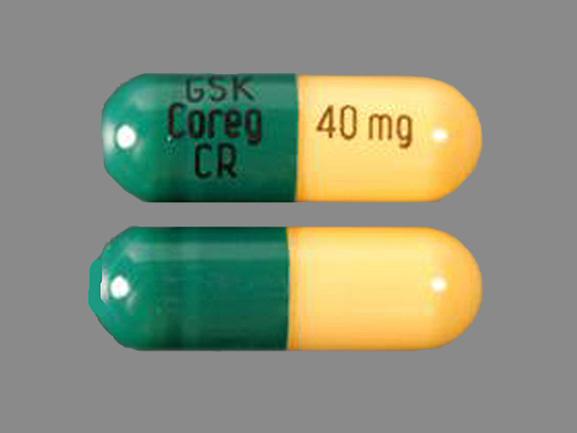
Coreg CR Side Effects
Generic name: carvedilol
Medically reviewed by Drugs.com. Last updated on Feb 8, 2024.
Note: This document provides detailed information about Coreg CR Side Effects associated with carvedilol. Some dosage forms listed on this page may not apply specifically to the brand name Coreg CR.
Applies to carvedilol: oral capsule extended release, oral tablet.
Serious side effects of Coreg CR
Along with its needed effects, carvedilol (the active ingredient contained in Coreg CR) may cause some unwanted effects. Although not all of these side effects may occur, if they do occur they may need medical attention.
Check with your doctor immediately if any of the following side effects occur while taking carvedilol:
More common
- allergy
- chest pain, discomfort, tightness, or heaviness
- dizziness, lightheadedness, or fainting
- generalized swelling or swelling of the feet, ankles, or lower legs
- pain
- slow heartbeat
- trouble breathing
- weight gain
Less common
- ankle, knee, or great toe joint pain
- anxiety
- arm, back, or jaw pain
- blood in the urine
- bloody, black or tarry stools
- chills
- cloudy urine
- cold sweats
- coma
- confusion
- cool pale skin
- cough
- dark urine
- decreased appetite
- decreased frequency or amount of urine
- depression
- difficulty with breathing
- dizziness, faintness, or lightheadedness when getting up suddenly from a lying position
- dry mouth
- fainting
- fast or irregular heartbeat
- fever
- flu-like symptoms
- flushed, dry skin
- fruit-like breath odor
- headache, sudden and severe
- inability to speak
- increased blood pressure
- increased hunger
- increased thirst
- increased urination
- itching
- joint stiffness or swelling
- large amount of cholesterol in the blood
- loss of appetite
- loss of consciousness
- lower back, side, or stomach pain
- mental depression
- muscle pain or cramps
- nervousness
- nightmares
- noisy, rattling breathing
- numbness or tingling in the hands, feet, or lips
- pinpoint red or purple spots on the skin
- pounding in the ears
- pounding, slow heartbeat
- rapid breathing
- seizures
- shakiness
- slurred speech
- stomachache
- sweating
- swelling of the fingers or hands
- temporary blindness
- tenderness on the upper right side of the body
- trouble with breathing even at rest
- unexplained weight loss
- unusual bleeding or bruising
- weakness in the arm and/or leg on one side of the body, sudden and severe
- weakness or heaviness of the legs
- yellow eyes or skin
Incidence not known
- blistering, peeling, or loosening of the skin
- diarrhea
- joint or muscle pain
- red irritated eyes
- red skin lesions, often with a purple center
- sores, ulcers, or white spots on the lips or in the mouth
- swollen or painful glands
- unusual tiredness or weakness
Other side effects of Coreg CR
Some side effects of carvedilol may occur that usually do not need medical attention. These side effects may go away during treatment as your body adjusts to the medicine. Also, your health care professional may be able to tell you about ways to prevent or reduce some of these side effects.
Check with your health care professional if any of the following side effects continue or are bothersome or if you have any questions about them:
More common
- back pain
- diarrhea
- prickling or tingling sensation
- unusual tiredness or weakness
Less common
- bleeding gums
- blurred vision
- burning, crawling, itching, numbness, prickling, "pins and needles", or tingling feelings
- changes in vision
- cold hands and feet
- decreased interest in sexual intercourse
- decreased tearing
- difficulty with moving
- feeling of constant movement of self or surroundings
- general feeling of discomfort or illness
- headache
- inability to have or keep an erection
- increased sweating
- joint or muscle pain
- lack or loss of strength
- loose teeth
- loss of sexual ability, desire, or performance
- loss of strength or energy
- muscle aches, stiffness, or weakness
- nausea
- persistent breath odor or bad taste in your mouth
- redness and swelling of the gums
- sensation of spinning
- sleepiness or unusual drowsiness
- sore throat
- stomach pain
- stuffy or runny nose
- sugar in the urine
- trouble sleeping
- unusual weak feeling
- vomiting
- weight loss
For healthcare professionals
Applies to carvedilol: oral capsule extended release, oral tablet.
General
The frequency of adverse reactions is not dose-dependent, with the exception of dizziness, abnormal vision and bradycardia.[Ref]
Cardiovascular
- Very common (10% or more): Chest pain (15%), hypotension, cardiac failure
- Common (1% to 10%): Bradycardia, edema, hypervolemia, orthostatic hypotension, hypertension, syncope, disturbances of peripheral circulation (e.g., cold extremities, peripheral vascular disease, exacerbation of intermittent claudication, Raynaud's phenomenon)
- Uncommon (0.1% to 1%): Atrioventricular block, angina pectoris, tachycardia
- Rare (less than 0.1%): Complete AV block, bundle branch block, myocardial ischemia, cerebrovascular disorder[Ref]
Dermatologic
- Uncommon (0.1% to 1%): Allergic exanthema, dermatitis, urticaria, pruritus, psoriatic and lichen planus like skin lesions, increased sweating, alopecia, erythematous rash, maculopapular rash, photosensitivity reaction
- Rare (less than 0.1%): Stevens-Johnson syndrome, toxic epidermal necrolysis, erythema multiforme[Ref]
Gastrointestinal
- Common (1% to 10%): Nausea, diarrhea, vomiting, dyspepsia, abdominal pain, melena, periodontitis[Ref]
Genitourinary
- Common (1% to 10%): Urinary tract infection, micturition disorders, hematuria
- Uncommon (0.1% to 1%): Erectile dysfunction
- Postmarketing reports: Urinary incontinence in women[Ref]
Metabolic
- Common (1% to 10%): Weight increase, hypercholesterolemia, impaired blood glucose control (hyperglycemia, hypoglycemia) in patients with preexisting diabetes, gout, BUN increased, dehydration, hypervolemia[Ref]
Hematologic
- Common (1% to 10%): Anemia, purpura, prothrombin decrease
- Rare (0.01% to 0.1%): Thrombocytopenia, aplastic anemia
- Very rare (less than 0.01%): Leukopenia[Ref]
Hepatic
- Very rare (less than 0.01%): Alanine aminotransferase (ALT) increased, aspartate aminotransferase (AST) increased, gamma-glutamyltransferase (GGT) increased[Ref]
Hypersensitivity
- Rare (less than 0.1%): Hypersensitivity reactions (including anaphylactic reactions, angioedema, and urticaria)[Ref]
Musculoskeletal
- Common (1% to 10%): Pain in extremities, back pain, arthralgia, myalgia[Ref]
Nervous system
- Common (1% to 10%): Dizziness, headache, hyperesthesia, vertigo
- Uncommon (0.1% to 1%): Presyncope, syncope, paresthesia,
- Rare (0.01% to 0.1%): Convulsions, migraine, neuralgia, paresis, hypokinesia, neuralgia[Ref]
Ocular
- Common (1% to 10%): Visual impairment, abnormal vision, blurred vision, lacrimation decreased (dry eye), eye irritation[Ref]
Other
- Very common (10% or more): Fatigue (24%), asthenia
- Common (1% to 10%): Pain, malaise, fever
- Uncommon (0.1% to 1%): Tinnitus[Ref]
Psychiatric
- Common (1% to 10%): Depression, depressed mood, somnolence
- Uncommon (0.1% to 1%): Sleep disorders, confusion, impaired concentration, abnormal thinking, paranoia, emotional lability, nervousness[Ref]
Renal
- Common (1% to 10%): Renal failure and renal function abnormalities (in patients with diffuse vascular disease and/or underlying renal insufficiency), albuminuria[Ref]
Respiratory
- Very common (10% or more): Upper respiratory tract infection (18%)
- Common (1% to 10%): Bronchitis, pneumonia, dyspnea, pulmonary edema, asthma (in predisposed patients), sinusitis, pharyngitis, rhinitis, cough, rales[Ref]
References
1. (2001) "Product Information. Coreg (carvedilol)." SmithKline Beecham
2. Cerner Multum, Inc. "UK Summary of Product Characteristics."
3. Cerner Multum, Inc. "Australian Product Information."
More about Coreg CR (carvedilol)
- Check interactions
- Compare alternatives
- Pricing & coupons
- Reviews (6)
- Drug images
- Dosage information
- During pregnancy
- Generic availability
- Drug class: non-cardioselective beta blockers
- Breastfeeding
- En español
Patient resources
Professional resources
Other formulations
Related treatment guides
Further information
Coreg CR side effects can vary depending on the individual. Always consult your healthcare provider to ensure the information displayed on this page applies to your personal circumstances.
Some side effects may not be reported. You may report them to the FDA.