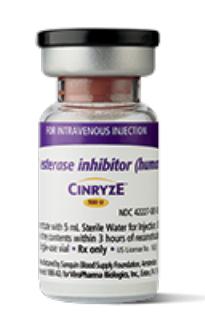
Cinryze Side Effects
Generic name: C1 esterase inhibitor (human)
Note: This document provides detailed information about Cinryze Side Effects associated with C1 esterase inhibitor (human). Some dosage forms listed on this page may not apply specifically to the brand name Cinryze.
Applies to C1 esterase inhibitor (human): intravenous powder for solution.
Other dosage forms:
Common side effects of Cinryze
Some side effects of C1 esterase inhibitor (human) may occur that usually do not need medical attention. These side effects may go away during treatment as your body adjusts to the medicine. Also, your health care professional may be able to tell you about ways to prevent or reduce some of these side effects.
Check with your health care professional if any of the following side effects continue or are bothersome or if you have any questions about them:
More common
Less common
Incidence not known
- abdominal or stomach pain
Serious side effects of Cinryze
Along with its needed effects, C1 esterase inhibitor (human) may cause some unwanted effects. Although not all of these side effects may occur, if they do occur they may need medical attention.
Check with your doctor or nurse immediately if any of the following side effects occur while taking C1 esterase inhibitor (human):
Less common
- large, hive-like swelling on the face, eyelids, lips, tongue, throat, hands, legs, feet, or sex organs
Incidence not known
- cough
- difficulty swallowing
- dizziness
- fast heartbeat
- hives, itching, or skin rash
- pains in the chest, groin, or legs, especially calves of the legs
- severe headaches of sudden onset
- shortness of breath
- sudden loss of coordination
- sudden onset of shortness of breath for no apparent reason
- sudden onset of slurred speech
- sudden vision changes
- tightness in the chest
- unusual tiredness or weakness
For healthcare professionals
Applies to C1 esterase inhibitor (human): intravenous kit, intravenous powder for injection, subcutaneous powder for injection.
Respiratory
Respiratory side effects have included sinusitis, bronchitis, upper respiratory tract infection, and viral upper respiratory tract infection.[Ref]
Nervous system
Nervous system side effects have included headache.[Ref]
Musculoskeletal
Musculoskeletal side effects have included limb injury, back pain, and pain in extremity.[Ref]
Dermatologic
Dermatologic side effects have included pruritus.[Ref]
Cardiovascular
Cardiovascular side effects have included postmarketing reports of thrombotic events including deep vein thrombosis, myocardial infarction, and transient ischemic attack.[Ref]
References
1. (2022) "Product Information. Cinryze (C1 esterase inhibitor, human)." ViroPharma Incorporated
2. Gandhi PK, Gentry WM, Bottorff MB (2012) "Thrombotic events associated with C1 esterase inhibitor products in patients with hereditary angioedema: investigation from the United States Food and Drug Administration adverse event reporting system database." Pharmacotherapy, 32, p. 902-9
Frequently asked questions
- What is Cinryze used for and how does it work?
- What is Haegarda used for and how does it work?
- How is Berinert administered?
- What is Ruconest used for and how does it work?
- How does Berinert work for Hereditary Angioedema (HAE)?
More about Cinryze (C1 esterase inhibitor (human))
- Check interactions
- Compare alternatives
- Pricing & coupons
- Reviews (3)
- Drug images
- Dosage information
- Patient tips
- During pregnancy
- FDA approval history
- Drug class: hereditary angioedema agents
- Breastfeeding
- En español
Patient resources
Other brands
Professional resources
Other brands
Related treatment guides
Further information
Cinryze side effects can vary depending on the individual. Always consult your healthcare provider to ensure the information displayed on this page applies to your personal circumstances.
Some side effects may not be reported. You may report them to the FDA.