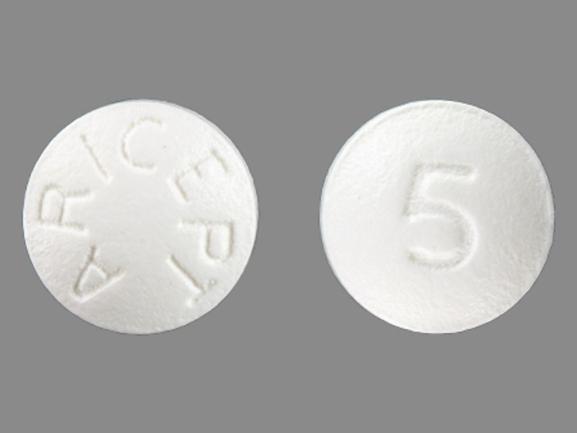
Aricept Side Effects
Generic name: donepezil
Medically reviewed by Drugs.com. Last updated on Jan 31, 2025.
Note: This document provides detailed information about Aricept Side Effects associated with donepezil. Some dosage forms listed on this page may not apply specifically to the brand name Aricept.
Applies to donepezil: oral tablet, oral tablet disintegrating.
Other dosage forms:
Serious side effects of Aricept
Along with its needed effects, donepezil (the active ingredient contained in Aricept) may cause some unwanted effects. Although not all of these side effects may occur, if they do occur they may need medical attention.
Check with your doctor as soon as possible if any of the following side effects occur while taking donepezil:
More common side effects
- diarrhea
- loss of appetite
- muscle cramps
- nausea
- trouble in sleeping
- unusual tiredness or weakness
- vomiting
Less common side effects
- abnormal dreams
- constipation
- dizziness
- drowsiness
- fainting
- frequent urination
- headache
- joint pain, stiffness, or swelling
- mental depression
- pain
- unusual bleeding or bruising
- weight loss
Rare side effects
- black, tarry stools
- bloating
- bloody or cloudy urine
- blurred vision
- burning, prickling, or tingling sensations
- cataract
- chills
- clumsiness or unsteadiness
- confusion
- cough
- decreased urination
- difficult or painful urination
- dryness of mouth
- eye irritation
- fever
- flushing of skin
- frequent urge to urinate
- high or low blood pressure
- hives
- hot flashes
- increase in sexual desire or performance
- increased heart rate and breathing
- increased sweating
- increased urge to urinate during the night
- irregular heartbeat
- itching
- loss of bladder control
- loss of bowel control
- mood or mental changes, including abnormal crying, aggression, agitation, delusions, irritability, nervousness, or restlessness
- nasal congestion
- pain in chest, upper stomach, or throat
- problems with speech
- runny nose
- severe thirst
- shortness of breath
- sneezing
- sore throat
- sunken eyes
- tightness in chest
- tremor
- troubled breathing
- wheezing
- wrinkled skin
Incidence not known
- back, leg, or stomach pains
- bleeding gums
- chest pain or discomfort
- coma
- convulsions
- dark urine
- difficulty breathing
- fast or irregular heartbeat
- fatigue
- general body swelling
- general tiredness and weakness
- high fever
- increased thirst
- indigestion
- light-colored stools
- muscle pain or cramps
- nausea and vomiting
- nosebleeds
- pains in stomach, side, or abdomen, possibly radiating to the back
- pale skin
- rash
- seeing, hearing, or feeling things that are not there
- seizures
- severe muscle stiffness
- severe nausea
- slow or irregular heartbeat
- stomach pain
- sweating
- swelling of face, ankles, or hands
- tiredness
- unusually pale skin
- upper right abdominal or stomach pain
- yellow eyes and skin
Symptoms of overdose
- convulsions (seizures)
- increased sweating
- increased watering of mouth
- increasing muscle weakness
- low blood pressure
- severe nausea
- severe vomiting
- slow heartbeat
- troubled breathing
For healthcare professionals
Applies to donepezil: oral tablet, oral tablet disintegrating, transdermal film.
General adverse events
The most common adverse events were diarrhea, muscle cramps, fatigue, nausea, vomiting, anorexia and insomnia. Most adverse events are mild in severity and transient in nature.[Ref]
Frequency of common adverse effects may be influenced by the rate of titration.[Ref]
Gastrointestinal
- Very common (10% or more): Diarrhea, nausea
- Common (1% to 10%): Vomiting, abdominal disturbance, tooth ache, fecal incontinence, gastrointestinal bleeding, bloating, epigastric pain
- Uncommon (0.1% to 1%): Gastrointestinal hemorrhage, gastric and duodenal ulcers, eructation, gingivitis, flatulence, periodontal abscess, cholelithiasis, drooling, dry mouth, fever sore, gastritis, irritable colon, tongue edema, epigastric distress, gastroenteritis, increased transaminases, hemorrhoids, ileus, increased thirst, jaundice, melena, polydipsia, duodenal ulcer, stomach ulcer, hernia hiatal[Ref]
Nervous system
- Very common (10% or more): Headache
- Common (1% to 10%): Dizziness, insomnia, somnolence, tremor, paresthesia, ataxia, nervousness, aphasia
- Uncommon (0.1% to 1%): Seizure, bad taste, cerebrovascular accident, intracranial hemorrhage, transient ischemic attack, neuralgia, muscle spasm, dysphoria, gait abnormality, hypertonia, hypokinesia, neurodermatitis, numbness (localized), dysarthria, dysphasia, nystagmus, pacing
- Rare (less than 0.1%): Extrapyramidal symptoms
- Very rare (less than 0.01%): Neuroleptic malignant syndrome[Ref]
Cardiovascular
- Common (1% to 10%): Hypertension, hemorrhage, syncope, vasodilation, atrial fibrillation, hot flashes, hypotension
- Uncommon (0.1% to 1%): Bradycardia, angina pectoris, postural hypotension, myocardial infarction, AV block (first degree), congestive heart failure, arteritis, peripheral vascular disease, supraventricular tachycardia, deep vein thrombosis.
- Rare (less than 0.1%): SA block, AV block[Ref]
Dermatologic
- Common (1% to 10%): Eczema rash, pruritus, ecchymosis, diaphoresis, urticaria
- Uncommon (0.1% to 1%): Dermatitis, erythema, skin discoloration, hyperkeratosis, alopecia, fungal dermatitis, hirsutism, skin striae, night sweats, skin ulcer[Ref]
Genitourinary
- Common (1% to 10%): Urinary incontinence, nocturia
- Uncommon (0.1% to 1%): Dysuria, hematuria, urinary urgency, metrorrhagia, cystitis, enuresis, prostate hypertrophy, pyelonephritis, inability to empty bladder, breast fibroadenosis, fibrocystic breast, mastitis, pyuria, renal failure, vaginitis[Ref]
Metabolic
- Common (1% to 10%): Anorexia, decreased weight, dehydration
- Uncommon (0.1% to 1%): Increased appetite, gout, hypokalemia, hyperglycemia, increased lactate dehydrogenase[Ref]
Musculoskeletal
- Common (1% to 10%): Muscle cramps, arthritis, bone fracture
- Uncommon (0.1% to 1%): Muscle weakness, muscle fasciculation[Ref]
Ocular
- Common (1% to 10%): Cataract, eye irritation, vision blurred
- Uncommon (0.1% to 1%): Dry eyes, glaucoma, blepharitis, retinal hemorrhage, conjunctival hemorrhage, spots before eyes, periorbital edema[Ref]
Other
- Common (1% to 10%): Fatigue, pain, accidental overdose, vertigo, abnormal crying
- Uncommon (0.1% to 1%): Minor increase in serum concentration of muscle creatine kinase, diverticulitis, earache, tinnitus, decreased hearing, otitis externa, otitis media, ear buzzing, motion sickness, herpes zoster, coldness (localized), fever, edema face, abscess, cellulitis, chills, generalized coldness, head fullness[Ref]
Psychiatric
- Common (1% to 10%): Hallucinations, agitation, aggressive behavior, abnormal dreams, nightmares, delusions, irritability, aggression, increased libido, restlessness
- Uncommon (0.1% to 1%): Emotional lability, paranoia, hostility, decreased libido, melancholia, emotional withdrawal, listlessness[Ref]
Respiratory
- Common (1% to 10%): Common cold, influenza, chest pain, dyspnea, sore throat, bronchitis
- Uncommon (0.1% to 1%): Epistaxis, post nasal drip, pneumonia, hyperventilation, pulmonary congestion, wheezing, hypoxia, pharyngitis, pleurisy, pulmonary collapse, sleep apnea, snoring[Ref]
Endocrine
- Uncommon (0.1% to 1%): Diabetes mellitus, goiter[Ref]
Hematologic
- Uncommon (0.1% to 1%): Anemia, thrombocythemia, thrombocytopenia, eosinophilia, erythrocytopenia[Ref]
Hepatic
- Rare (less than 0.1%): Liver dysfunction (including hepatitis)[Ref]
References
1. (2001) "Product Information. Aricept (donepezil)." Pfizer U.S. Pharmaceuticals
2. Cerner Multum, Inc. "UK Summary of Product Characteristics."
3. Cerner Multum, Inc. "Australian Product Information."
4. Rogers SL, Friedhoff LT (1996) "The efficacy and safety of donepezil in patients with Alzheimer's disease: results of a US multicentre, randomized, double-blind, placebo-controlled trial." Dementia, 7, p. 293-303
5. Lam W (2002) "Pharmacological treatment of cognitive deficits in Alzheimer's disease." Med J Aust, 176, 297; discussion 297-8
6. Mihara M, Ohnishi A, Tomono Y, Hasegawa J, Shimamura Y, Yamazaki K, Morishita N (1993) "Pharmacokinetics of E2020, a new compound for Alzheimer's disease, in healthy male volunteers." Int J Clin Pharmacol Ther Toxicol, 31, p. 223-9
7. Bourke D (1998) "Possible association between donepezil and worsening Parkinson's disease." Ann Pharmacother, 32, p. 610-11
8. Babic T, Zurak N (1999) "Convulsions induced by donepezil." J Neurol Neurosurg Psychiat, 66, p. 410
9. Amouyal-Barkate K, Bagheri-Charabiani H, Montastruc JL, Moulias S, Vellas B (2000) "Abnormal movements with doneprzil in Alzheimer disease." Ann Pharmacother, 34, p. 1347
10. Miyaoka T, Seno H, Yamamori C, Inagaki T, Itoga M, Tsubouchi K, Horiguchi J (2001) "Pisa syndrome due to a cholinesterase inhibitor (Donepezil): A case report." J Clin Psychiatry, 62, p. 573-4
11. Kawashima T, Yamada S (2002) "Delirium caused by donepezil: a case study." J Clin Psychiatry, 63, p. 250-1
12. Onofrj M, Thomas A (2003) "Severe worsening of parkinsonism in Lewy body dementia due to donepezil." Neurology, 61, p. 1452
13. Rozzini L, Ghianda D, Trabucchi M, Padovani A (2004) "Severe worsening of parkinsonism in Lewy body dementia due to donepezil." Neurology, 63, 1543-4; author reply 1543-4
14. Bryant CA, Ouldred E, Jackson SHD, Kinirons MT (1998) "Drug points: Purpuric rash with donepezil treatment." BMJ, 317, p. 787
15. Hashimoto M, Imamura T, Tanimukai S, Kazui H, Mori E (2000) "Urinary incontinence: an unrecognised adverse effect with donepezil." Lancet, 356, p. 568
16. Iraqi A, Hughes TL (2009) "An unusual case of nightmares with galantamine." J Am Geriatr Soc, 57, p. 565
Frequently asked questions
- Can Aricept be stopped abruptly?
- What are 7 key Aricept side effects to watch out for?
- When is the best time to take Aricept (donepezil)?
- How long does it take for Aricept to work?
- How does Aricept work?
More about Aricept (donepezil)
- Check interactions
- Compare alternatives
- Pricing & coupons
- Reviews (48)
- Drug images
- Dosage information
- During pregnancy
- Generic availability
- Support group
- Drug class: cholinesterase inhibitors
- En español
Patient resources
Other brands
Professional resources
Other brands
Other formulations
Related treatment guides
Further information
Aricept side effects can vary depending on the individual. Always consult your healthcare provider to ensure the information displayed on this page applies to your personal circumstances.
Note: Medication side effects may be underreported. If you are experiencing side effects that are not listed, submit a report to the FDA by following this guide.