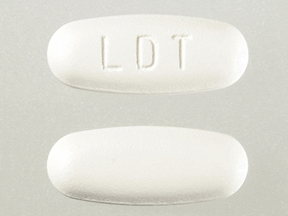
Telbivudine
Medically reviewed by Drugs.com. Last updated on May 23, 2025.
Pronunciation
(tel BI vyoo deen)
Index Terms
- L-Deoxythymidine
- LdT
Dosage Forms
Excipient information presented when available (limited, particularly for generics); consult specific product labeling. [DSC] = Discontinued product
Tablet, Oral:
Tyzeka: 600 mg [DSC]
Brand Names: U.S.
- Tyzeka [DSC]
Pharmacologic Category
- Antihepadnaviral, Reverse Transcriptase Inhibitor, Nucleoside (Anti-HBV)
Pharmacology
Telbivudine, a synthetic thymidine nucleoside analogue (L-enantiomer of thymidine), is intracellularly phosphorylated to the active triphosphate form, which competes with the natural substrate, thymidine 5'-triphosphate, to inhibit hepatitis B viral DNA polymerase; enzyme inhibition blocks reverse transcriptase activity thereby reducing viral DNA replication.
Distribution
Vd > total body water
Metabolism
No metabolites detected
Excretion
Urine (~42% as unchanged drug)
Time to Peak
1-4 hours
Half-Life Elimination
Terminal: 40-49 hours
Protein Binding
~3%
Use: Labeled Indications
Treatment of chronic hepatitis B with evidence of viral replication and either persistent transaminase elevations or histologically-active disease
Contraindications
Concurrent use with peginterferon alfa-2a
Canadian labeling: Additional contraindications (not in US labeling): Hypersensitivity to telbivudine or any component of the formulation
Dosing: Adult
Note: Tyzeka has been discontinued in the US for more than 1 year.
Chronic hepatitis B: Oral: 600 mg once daily.
Treatment duration (AASLD practice guidelines): Treatment duration for nucleos(t)ide analog-based therapy (eg, telbivudine) is variable and influenced by HBeAg status, duration of HBV suppression, and presence of cirrhosis/decompensation (AASLD [Terrault 2016]):
Patients without cirrhosis:
Hepatitis B e antigen (HBeAg) positive immune-active chronic hepatitis: Treat until HBeAg seroconversion; after seroconversion, prolonged duration of therapy is often required in patients treated with nucleos(t)ide analogues. Optimal duration is unknown; however, consolidation therapy is generally a minimum of 12 months of persistently normal ALT and undetectable serum HBV DNA levels after HBeAg seroconversion.
HBeAg-negative immune-active chronic hepatitis: Indefinite antiviral therapy is suggested unless there is competing rationale for discontinuation (risk/benefit decision); treatment discontinuation may be considered in patients with loss of HBsAg; however, there is insufficient evidence to guide decisions in these patients.
Patients with cirrhosis:
HBeAg-positive immune-active chronic hepatitis: In patients who seroconvert on therapy, continue antiviral therapy indefinitely due to concerns with decompensation and death, unless there is a strong competing rationale for discontinuation.
HBeAg-negative immune-active chronic hepatitis: Treatment discontinuation is not recommended due to potential for decompensation and death (limited data).
Viral breakthrough (AASLD practice guidelines): Patients with confirmed viral breakthrough (HBV DNA ≥100 units/mL with previously undetectable levels [<10 units/mL] or >1 log increase in HBV DNA) should either be switched to an alternative antiviral monotherapy agent with a high genetic barrier to resistance or receive a second antiviral agent with a complementary resistance profile; consult current clinical practice guidelines for recommended agents (AASLD [Terrault 2016]).
Dosing: Pediatric
Note: Tyzeka has been discontinued in the US for more than 1 year.
Chronic hepatitis B: Oral: Adolescents ≥16 years: Refer to adult dosing.
Administration
May be administered without regard to food.
Storage
Store at 25°C (77°F); excursions permitted to 15°C to 30°C (59°F to 86°F).
Drug Interactions
Cladribine: Agents that Undergo Intracellular Phosphorylation may diminish the therapeutic effect of Cladribine. Avoid combination
Interferon Alfa-2b: May enhance the adverse/toxic effect of Telbivudine. Specifically, the risk for peripheral neuropathy may be increased. Avoid combination
Peginterferon Alfa-2a: May enhance the adverse/toxic effect of Telbivudine. Specifically, the risk for peripheral neuropathy may be increased. Avoid combination
Peginterferon Alfa-2b: May enhance the adverse/toxic effect of Telbivudine. Specifically, the risk for peripheral neuropathy may be increased. Avoid combination
Adverse Reactions
The following adverse drug reactions and incidences are derived from product labeling unless otherwise specified.
>10%:
Central nervous system: Fatigue (13%)
Neuromuscular & skeletal: Increased creatine phosphokinase (79%; grades 3/4: 16%, most asymptomatic and transient)
1% to 10%:
Central nervous system: Headache (10%), dizziness (4%), fever (4%), insomnia (3%)
Dermatologic: Skin rash (4%), pruritus (2%)
Endocrine & metabolic: Increased serum lipase (grades 3/4: 2%)
Gastrointestinal: Diarrhea (6%), abdominal pain (3% to 6%), nausea (5%), abdominal distension (3%), dyspepsia (3%)
Hematologic & oncologic: Neutropenia (grades 3/4: 2%)
Hepatic: Increased serum ALT (grades 3/4: 5% to 7%), increased serum AST (grades 3/4: 6%)
Infection: Exacerbation of hepatitis B (2%)
Neuromuscular & skeletal: Arthralgia (4%), back pain (4%), myalgia (3%)
Respiratory: Cough (6%), pharyngolaryngeal pain (5%)
<1%, postmarketing, and/or case reports: Hepatomegaly, hyperbilirubinemia, hypoesthesia, increased amylase, lactic acidosis, liver steatosis, myopathy, myositis, paresthesia, peripheral neuropathy, rhabdomyolysis, thrombocytopenia
Related/similar drugs
ALERT: U.S. Boxed Warning
Chronic hepatitis:Severe, acute exacerbations of hepatitis B have been reported in patients who have discontinued anti–hepatitis B therapy, including telbivudine. Hepatic function should be closely monitored with both clinical and laboratory follow-up for at least several months in patients who discontinue anti-hepatitis B therapy. If appropriate, resumption of anti-hepatitis B therapy may be warranted.
Warnings/Precautions
Concerns related to adverse effects:
• Lactic acidosis/hepatomegaly: Lactic acidosis and severe hepatomegaly with steatosis have been reported with nucleoside analogues, including fatal cases. Postmarketing cases of lactic acidosis were often associated with other conditions (rhabdomyolysis) and/or muscle-related events (eg, myopathy, myositis); some cases were also associated with pancreatitis, liver failure/hepatic steatosis, and renal failure. Suspend treatment in any patient who develops clinical or laboratory findings suggestive of lactic acidosis or hepatotoxicity (transaminase elevation may/may not accompany hepatomegaly and steatosis).
• Myopathy/rhabdomyolysis: Myopathy, myositis, and rhabdomyolysis (including fatalities) have been reported; some cases have been associated with lactic acidosis. Myopathy (unexplained muscle aches and/or muscle weakness in conjunction with serum creatine kinase increases) may occur several weeks to months after initiation. Interrupt therapy if myopathy or rhabdomyolysis is suspected and discontinue therapy if myopathy or rhabdomyolysis is diagnosed. Patients taking concomitant medications associated with myopathy should be monitored closely.
• Peripheral neuropathy: May occur alone or in combination with pegylated interferon alfa-2a (concurrent use is contraindicated) or possibly other interferons. Symptoms have been observed within 3 months after initiation of therapy. Interrupt treatment for suspected peripheral neuropathy and discontinue if confirmed; symptoms may be reversible with discontinuation.
Disease-related concerns:
• Chronic hepatitis B: [US Boxed Warning]: Severe, acute exacerbation of hepatitis B may occur upon discontinuation. Monitor liver function several months after stopping treatment; reinitiation of anti-hepatitis B therapy may be required.
• Human immunodeficiency virus: Telbivudine does not exhibit any clinically-relevant activity against HIV type 1.
• Renal impairment: Use caution in patients with moderate-to-severe renal dysfunction and ESRD; dosing adjustment required (CrCl <50 mL/minute).
Special populations:
• African-American or Hispanic patients: Safety and efficacy have not been established in Black/African-American or Hispanic patients.
• Coinfections: Safety and efficacy have not been studied in patients coinfected with HIV, hepatitis C virus (HCV) or hepatitis D virus (HDV).
• Liver transplant recipients: Safety and efficacy in liver transplant patients have not been established; monitor renal function in patients receiving concurrent therapy of cyclosporine or tacrolimus.
Other warnings/precautions:
• Appropriate use: Current clinical hepatitis B practice guidelines do not recommend telbivudine for initial use in the management of chronic HBV due to high rates of developing resistance rapidly; other antiviral agents with a high genetic barrier to drug resistance are preferred (eg, tenofovir or entecavir) (AASLD [Terrault 2016]).
• Resistance: Cross-resistance among hepatitis B antivirals may develop; use caution in patients failing previous lamivudine therapy.
Monitoring Parameters
Manufacturer’s labeling: LFTs (eg, AST and ALT) periodically during therapy and for several months following discontinuation of therapy; renal function prior to initiation and periodically during treatment; signs and symptoms of peripheral neuropathy (eg, weakness, paresthesia, leg pain) or myopathy (eg, unexplained muscle pain, tenderness or weakness); serum creatine kinase.
Alternate recommendations: Chronic hepatitis B: HBV DNA and ALT (HBV DNA usually done every 3 months until undetectable and then every 3 to 6 months thereafter); HBeAg; anti-HBe (in patients who are HBeAg-positive to monitor for seroconversion); HBsAg; consider monitoring creatine kinase and lactic acidosis if symptoms are concerning; monitor for peripheral neuropathy; following discontinuation, monitor for recurrent viremia, ALT flares, seroreversion, and clinical decompensation every 3 months for at least 1 year (AASLD [Terrault 2016]). As antivirals do not eliminate the risk of hepatocellular carcinoma, continued monitoring for this complication is recommended in at-risk patients.
Pregnancy Considerations
In hepatitis B-infected women (not coinfected with HIV), the AASLD chronic hepatitis B treatment guidelines suggest antiviral therapy to reduce the risk of perinatal transmission of hepatitis B in HBsAg-positive pregnant women with an HBV DNA >200,000 units/mL. There are limited data on the level of HBV DNA for when antiviral therapy is routinely recommended (>200,000 units/mL is a conservative recommendation); however, the AASLD recommends against antiviral therapy to reduce the risk of perinatal transmission in HBsAg-positive pregnant women with an HBV DNA ≤200,000 units/mL. Telbivudine is one of the antivirals that has been studied in pregnant women, with most studies initiating antiviral therapy at 28 to 32 weeks gestation and discontinuing antiviral therapy between birth to 3 months postpartum (monitor for ALT flares every 3 months for 6 months following discontinuation). There is insufficient long-term safety data in infants born to mothers who took antiviral agents during pregnancy (AASLD [Terrault 2016]).
Health professionals are encouraged to contact the antiretroviral pregnancy registry to monitor outcomes of pregnant women exposed to antiretroviral medications (1-800-258-4263).
Patient Education
What is this drug used for?
• It is used to treat hepatitis B infection.
All drugs may cause side effects. However, many people have no side effects or only have minor side effects. Call your doctor or get medical help if any of these side effects or any other side effects bother you or do not go away:
• Abdominal pain
• Headache
• Loss of strength and energy
• Joint pain
• Trouble sleeping
• Back pain
• Dizziness
• Cough
• Sore throat
• Nausea
• Diarrhea
WARNING/CAUTION: Even though it may be rare, some people may have very bad and sometimes deadly side effects when taking a drug. Tell your doctor or get medical help right away if you have any of the following signs or symptoms that may be related to a very bad side effect:
• Liver problems like dark urine, fatigue, lack of appetite, nausea, abdominal pain, light-colored stools, vomiting, or yellow skin.
• Lactic acidosis like fast breathing, fast heartbeat, abnormal heartbeat, vomiting, fatigue, shortness of breath, severe loss of strength and energy, severe dizziness, feeling cold, or muscle pain or cramps.
• Pancreatitis like severe abdominal pain, severe back pain, severe nausea, or vomiting.
• Burning or numbness feeling
• Change in balance
• Abnormal gait
• Unable to pass urine
• Change in amount of urine passed
• Abdominal swelling
• Muscle pain
• Muscle weakness
• Signs of an allergic reaction, like rash; hives; itching; red, swollen, blistered, or peeling skin with or without fever; wheezing; tightness in the chest or throat; trouble breathing, swallowing, or talking; unusual hoarseness; or swelling of the mouth, face, lips, tongue, or throat.
Note: This is not a comprehensive list of all side effects. Talk to your doctor if you have questions.
Consumer Information Use and Disclaimer: This information should not be used to decide whether or not to take this medicine or any other medicine. Only the healthcare provider has the knowledge and training to decide which medicines are right for a specific patient. This information does not endorse any medicine as safe, effective, or approved for treating any patient or health condition. This is only a limited summary of general information about the medicine's uses from the patient education leaflet and is not intended to be comprehensive. This limited summary does NOT include all information available about the possible uses, directions, warnings, precautions, interactions, adverse effects, or risks that may apply to this medicine. This information is not intended to provide medical advice, diagnosis or treatment and does not replace information you receive from the healthcare provider. For a more detailed summary of information about the risks and benefits of using this medicine, please speak with your healthcare provider and review the entire patient education leaflet.
More about telbivudine
- Check interactions
- Compare alternatives
- Side effects
- Dosage information
- During pregnancy
- Drug class: nucleoside reverse transcriptase inhibitors (NRTIs)
- Breastfeeding
Patient resources
Other brands
Professional resources
Other brands
Related treatment guides
Further information
Always consult your healthcare provider to ensure the information displayed on this page applies to your personal circumstances.