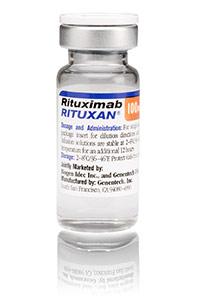
Rituximab (Monograph)
Brand name: Rituxan
Drug class: Antineoplastic Agents
Chemical name: Disulfide with human-mouse monoclonal IDEC-C2B8 κ-chain immunoglobulin G 1 (human-mouse monoclonal IDEC-C2B8 γ1-chain anti-human antigen CD20) dimer
CAS number: 174722-31-7
Warning
- Fatal Infusion-related Reactions
-
Severe, sometimes fatal infusion-related effects reported.
-
Death has occurred within 24 hours of administration.
-
Approximately 80% of fatal reactions have occurred with the first dose.
-
Monitor patients carefully during infusions. If grade 3 or 4 infusion reactions occur, discontinue rituximab infusion and institute appropriate treatment. (See Infusion-related Effects under Cautions.)
- Severe Mucocutaneous Reactions
-
Risk of severe, sometimes fatal, mucocutaneous reactions. (See Mucocutaneous Reactions under Cautions.)
- HBV Reactivation
-
Reactivation of HBV infection (including fulminant hepatitis and hepatic failure), sometimes fatal, reported.
-
Screen all patients for HBV infection prior to initiation of therapy.
-
Discontinue rituximab and concomitant chemotherapy if HBV reactivation occurs. (See HBV Reactivation under Cautions.)
- Progressive Multifocal Leukoencephalopathy (PML)
-
Risk of potentially fatal PML, secondary to JC virus infection. (See Progressive Multifocal Leukoencephalopathy under Cautions.)
Introduction
Antineoplastic agent; a chimeric human-murine anti-human antigen CD20 monoclonal antibody.
Uses for Rituximab
Non-Hodgkin’s Lymphoma
Used as monotherapy for treatment of relapsed or refractory low-grade or follicular, antigen CD20-positive, B-cell non-Hodgkin’s lymphoma (NHL).
Treatment of previously untreated follicular, antigen CD20-positive, B-cell NHL; used in combination with chemotherapy.
Used as monotherapy for treatment of nonprogressing (e.g., stable disease), low-grade, antigen CD20-positive, B-cell NHL following first-line treatment with CVP chemotherapy.
Treatment of previously untreated diffuse large B-cell, antigen CD20-positive, NHL; used in combination with CHOP (cyclophosphamide, doxorubicin, vincristine, and prednisone) or other anthracycline-based chemotherapy.
Shown to offer benefit as maintenance therapy† [off-label] in patients with relapsed or refractory indolent NHL following induction chemotherapy (with or without rituximab).
Designated an orphan drug by FDA for the treatment of NHL.
Used as a required component of a therapeutic regimen with ibritumomab tiuxetan (ibritumomab tiuxetan therapeutic regimen) for treatment of relapsed or refractory low-grade or follicular B-cell NHL, including follicular NHL that is refractory to rituximab therapy; also as part of the ibritumomab tiuxetan therapeutic regimen for consolidation treatment of newly diagnosed follicular NHL in patients who have achieved partial or complete response to first-line induction chemotherapy. Rituximab is used prior to ibritumomab to deplete peripheral B cells and to improve distribution of the radioimmunotherapeutic agent.
Responses to rituximab have been observed in patients with recurrent aggressive antigen CD20-positive NHL† [off-label].
Has been used in the treatment of lymphoplasmacytic lymphoma (Waldenstrom's macroglobulinemia)† [off-label].
Use in combination with bendamustine† [off-label] for treatment of previously untreated advanced-stage indolent NHL or for treatment of previously untreated advanced-stage mantle cell lymphoma† [off-label] is a reasonable choice (accepted, with possible conditions); however, consider histologic subtype of NHL when selecting a combination chemotherapy regimen.
Use in combination with bendamustine† for treatment of relapsed or refractory indolent NHL or for treatment of relapsed or refractory mantle cell lymphoma† is recommended (accepted).
Has been used in the treatment of relapsed or refractory hairy cell leukemia.†
Chronic Lymphocytic Leukemia
Used in combination with fludarabine and cyclophosphamide (FC) for treatment of previously untreated and previously treated antigen CD20-positive chronic lymphocytic leukemia (CLL).
Designated an orphan drug by FDA for the treatment of CLL.
Prolonged progression-free survival observed in previously untreated and previously treated patients with CLL. However, no benefit of adding rituximab to fludarabine/cyclophosphamide observed in previously untreated patients ≥70 years of age or in previously treated patients ≥65 years of age.
Rheumatoid Arthritis
Used in conjunction with methotrexate for treatment of moderately to severely active rheumatoid arthritis (RA) in adults with disease that has shown an inadequate response to ≥1 tumor necrosis factor (TNF; TNF-α) blocking agents. Manufacturer states that use in patients who have not demonstrated an inadequate response to ≥1 TNF blocking agents is not recommended.
Although efficacy has been demonstrated in clinical studies in patients with prior inadequate response to nonbiologic disease-modifying antirheumatic drugs (DMARDs) and in methotrexate-naive patients, manufacturer states that favorable risk-to-benefit ratio has not been established in these populations.
Idiopathic Thrombocytopenic Purpura
Has been used in adults with idiopathic thrombocytopenic purpura (ITP; also known as immune thrombocytopenic purpura)†. However, because efficacy compared with standard treatments cannot be determined (due to lack of controlled randomized studies), avoid indiscriminate use.
Has been used in children with severe chronic ITP that is refractory to standard therapy†. However, because of low response rate (30–60%) and potentially serious adverse effects (including PML, some experts recommend use only in patients who have failed splenectomy.
Pemphigus Vulgaris
Has been used in combination with immune globulin IV in the treatment of refractory pemphigus vulgaris†.
Rituximab Dosage and Administration
General
-
To minimize the risk of infusion-related events, premedication with acetaminophen and an antihistamine is recommended before each infusion. In patients receiving rituximab over 90 minutes, administer glucocorticoid component of the chemotherapy regimen prior to each rituximab infusion. (See Rate of Administration under Dosage and Administration.) Premedication with methylprednisolone 100 mg IV (or equivalent) is recommended 30 minutes prior to each infusion in patients with rheumatoid arthritis (given in conjunction with antihistamines and acetaminophen in clinical studies). (See Infusion-related Effects under Cautions.)
-
Monitor patients during infusion; appropriate diagnostic and treatment facilities, including medications for the treatment of severe adverse reactions (e.g., infusion-related reactions, cardiac arrhythmias) must be readily available. (See Infusion-related Effects and also Cardiac Effects under Cautions.)
-
Prophylaxis against Pneumocystis jiroveci (formerly Pneumocystis carinii) pneumonia (PCP) and herpes virus infection recommended in patients with CLL during treatment and for up to 12 months after completion of therapy.
Administration
IV Administration
For solution and drug compatibility information, see Compatibility under Stability.
Administer by IV infusion; do not administer by rapid IV injection (e.g., IV push or bolus).
Do not admix with other drugs or administer other drugs in the same IV line with rituximab infusion.
Dilution
Must be diluted prior to IV infusion.
Use aseptic technique since drug product contains no preservative.
Withdraw the appropriate dose of rituximab concentrate and dilute in an appropriate volume of 0.9% sodium chloride or 5% dextrose injection to yield a final rituximab concentration of 1–4 mg/mL; gently invert infusion bag several times to ensure complete mixing.
Discard any unused solution remaining in the vial.
Rate of Administration
Infuse initial dose at an initial rate of 50 mg/hour; if infusion-related events do not occur, infusion rate may be increased in increments of 50 mg/hour every 30 minutes to a maximum infusion rate of 400 mg/hour.
If first infusion is tolerated well, administer subsequent infusions at an initial rate of 100 mg/hour; infusion rate may be increased in increments of 100 mg/hour every 30 minutes as tolerated to a maximum infusion rate of 400 mg/hour.
Alternatively, an accelerated (90-minute) infusion may be used beginning with the second dose in patients with previously untreated follicular NHL or previously untreated diffuse large B-cell NHL who are receiving rituximab with a glucocorticoid-containing chemotherapy regimen if they tolerated the first dose (administered at the standard rate) without experiencing grade 3 or 4 infusion-related events. To administer dose over 90 minutes, administer 20% of total dose over 30 minutes and remaining 80% of dose over next 60 minutes. If infusion is tolerated, the same 90-minute infusion rate may be used for subsequent doses (through cycle 6 or 8).
Do not administer over 90 minutes in patients with clinically important cardiovascular disease (i.e., uncontrolled hypertension, MI, unstable angina, NYHA class II or greater CHF, ventricular arrhythmia requiring medication within the past year, NYHA class II or greater peripheral vascular disease) or those with high circulating lymphocyte count (≥5000/mm3) before cycle 2.
Decrease infusion rate or interrupt infusion if infusion-related events occur. Employ a slower infusion rate (i.e., at least 50% reduction in rate) when therapy is resumed following complete resolution of symptoms.
Dosage
Adults
Non-Hodgkin’s Lymphoma
Relapsed or Refractory Low-grade or Follicular, Antigen CD20-positive, B-cell NHL
IV375 mg/m2 once weekly for 4 weeks or 8 weeks.
If disease subsequently progresses following response to previous rituximab therapy, administer an additional course of 375 mg/m2 once weekly for 4 weeks.
Relapsed or Refractory Indolent NHL or Relapsed or Refractory Mantle Cell Lymphoma†
IV375 mg/m2 has been administered on day 1 of a 28-day cycle for a total of 4–6 cycles, in combination with bendamustine hydrochloride† (90 mg/m2 IV on days 2 and 3). An additional dose of rituximab has been administered one week prior to the first bendamustine-rituximab treatment cycle and repeated at 28 days following the last bendamustine-rituximab treatment cycle.
Previously Untreated Follicular, Antigen CD20-Positive, B-Cell NHL
IV375 mg/m2 on day 1 of each chemotherapy cycle for up to 8 doses.
Previously Untreated Advanced-stage Indolent NHL or Previously Untreated Advanced-stage Mantle Cell Lymphoma†
IV375 mg/m2 has been administered on day 1 of a 28-day cycle for up to 8 cycles, in combination with bendamustine hydrochloride† (90 mg/m2 IV on days 1 and 2).
Nonprogressing, Low-Grade, Antigen CD20-Positive, B-Cell NHL
IVFor patients with nonprogressing (including stable disease) who have received first-line therapy with 6–8 cycles of CVP chemotherapy, 375 mg/m2 once weekly for 4 weeks; repeat every 6 months for up to 16 doses.
Previously Untreated Diffuse Large B-cell, Antigen CD20-positive, NHL
IV375 mg/m2 on day 1 of each chemotherapy cycle for up to 8 doses.
Radioimmunotherapy with Rituximab and Ibritumomab
IVStep 1 (day 1): Administer rituximab 250 mg/m2.
Step 2 (day 7, 8, or 9): Administer rituximab 250 mg/m2, followed (within 4 hours) by a therapeutic dose of yttrium Y 90 ibritumomab tiuxetan.
CLL
Previously Untreated Antigen CD20-Positive CLL
IVCycle 1: 375 mg/m2 on day 0 (one day prior to FC chemotherapy).
Cycles 2–6: 500 mg/m2 on day 1 of each FC chemotherapy cycle; repeat every 28 days for up to 5 doses.
Previously Treated Antigen CD20-Positive Chronic Lymphocytic Leukemia
IVCycle 1: 375 mg/m2 on day 0 (one day prior to FC chemotherapy).
Cycles 2–6: 500 mg/m2 on day 1 of each FC chemotherapy cycle; repeat every 28 days for up to 5 doses.
Rheumatoid Arthritis
IV
1 g administered 2 weeks apart, on days 1 and 15 (for a total of 2 doses). May repeat course every 24 weeks or based on clinical response, but no sooner than every 16 weeks between courses.
Therapy Interruptions or Discontinuance for Toxicity
Depending on the nature and severity of rituximab-related toxicities, slowing of the infusion rate, interruption of the infusion, or discontinuance of the drug may be required; provide appropriate treatment as indicated. (See Cautions and see Rate of Administration under Dosage and Administration.)
Prescribing Limits
Adults
Non-Hodgkin’s Lymphoma
Previously Untreated Follicular, Antigen CD20-Positive, B-Cell NHL
IVMaximum 8 infusions.
Nonprogressing, Low-Grade, Antigen CD20-Positive, B-Cell NHL
IVMaximum 16 infusions.
Previously Untreated Diffuse Large B-cell, Antigen CD20-positive, NHL
IVMaximum 8 infusions.
CLL
Previously Untreated Antigen CD20-Positive CLL
IVMaximum 6 cycles of therapy (i.e., 6 rituximab infusions recommended).
Previously Treated Antigen CD20-Positive CLL
IVMaximum 6 cycles of therapy (i.e., 6 rituximab infusions recommended).
Rheumatoid Arthritis
IV
Course of rituximab and methotrexate should not be repeated sooner than every 16 weeks.
Special Populations
No special population dosage recommendations at this time.
Cautions for Rituximab
Contraindications
No known contraindications.
Warnings/Precautions
Warnings
Appropriate diagnostic and treatment facilities, including medications for the treatment of severe adverse reactions (e.g., infusion-related reactions, cardiac arrhythmias) must be readily available.
Infusion-related Effects
Risk of severe and sometimes fatal infusion-related reactions (e.g., urticaria, hypotension, angioedema, hypoxia, bronchospasm, pulmonary infiltrates, acute respiratory distress syndrome, MI, VF, cardiogenic shock, anaphylactoid events). (See Fatal Infusion-related Reactions in Boxed Warning.)
Incidence of infusion reactions is highest with the first infusion and decreases with each subsequent infusion. Reactions usually occur between 30–120 minutes after starting infusion.
If signs and symptoms of a severe infusion reaction occur, interrupt infusion and institute appropriate therapy (e.g., epinephrine, oxygen, bronchodilators, corticosteroids). Monitor closely until complete resolution occurs. When symptoms have completely resolved, consider resuming infusion at a slower infusion rate (i.e., at least 50% reduction in rate), depending on severity of reaction and required interventions.
Close monitoring required in patients with preexisting cardiac and/or pulmonary conditions, patients with prior adverse cardiopulmonary events, and patients with high numbers of circulating malignant cells (≥25,000/mm3).
In patients with NHL, infusion reactions consisting of fever, chills/rigors, nausea, pruritus, angioedema, hypotension, headache, bronchospasm, urticaria, rash, vomiting, myalgia, dizziness, or hypertension usually resolved with slowing or interruption of the infusion and administration of supportive care (e.g., diphenhydramine, acetaminophen, IV sodium chloride injection).
Mucocutaneous Reactions
Severe and sometimes fatal mucocutaneous reactions, including paraneoplastic pemphigus, Stevens-Johnson syndrome, lichenoid dermatitis, vesiculobullous dermatitis, and toxic epidermal necrolysis, have been reported. Onset is variable but may occur as early as the first day of rituximab administration.
Discontinue therapy if a severe mucocutaneous reaction occurs. Safety of administering additional courses of rituximab in patients who have experienced a mucocutaneous reaction has not been determined.
HBV Reactivation
Reactivation of HBV infection (including fulminant hepatitis, hepatic failure, and death) reported in patients receiving anti-CD20 monoclonal antibodies, including rituximab.
Reactivation reported in patients with the following serologic markers: hepatitis B surface antigen-positive [HBsAg-positive]; HBsAg-negative and hepatitis B core antibody-positive [anti-HBc-positive]; or HBsAg-negative, anti-HBc-positive, and hepatitis B surface antibody-positive [anti-HBs-positive].
FDA's review of 109 reports of fatal HBV-related acute liver injury in patients receiving rituximab or ofatumumab revealed highly variable onset of HBV reactivation (from 63 days after initiation of therapy to 12 months after last dose) and recent or concomitant use of other immunosuppressive agents in all 32 patients with documented (by seroconversion or serum HBV DNA) HBV reactivation. Longer intervals to HBV reactivation (up to 24 months after completion of rituximab therapy) also reported.
Screen all patients for HBV infection prior to initiation of rituximab therapy. Consult hepatitis expert regarding monitoring and antiviral prophylaxis for patients with evidence of HBV infection (HBsAg-positive with any antibody status or HBsAg-negative and anti-HBc-positive). Monitor patients with evidence of current or prior HBV infection for clinical or laboratory manifestations of hepatitis or HBV reactivation during therapy and for several months thereafter.
If HBV reactivation occurs, discontinue rituximab and any concomitant chemotherapy immediately and initiate appropriate treatment (e.g., antiviral therapy). Discontinue concomitant chemotherapy until control or resolution of HBV infection is achieved. Consult expert in managing HBV infection regarding resumption of rituximab once control of HBV reactivation has been achieved. Safety of resuming rituximab not known.
Progressive Multifocal Leukoencephalopathy
PML (sometimes fatal) reported in patients with hematologic malignancies or autoimmune diseases (i.e., RA, systemic lupus erythematosus [SLE]†) receiving rituximab. Most patients with hematologic malignancies had received rituximab in combination with chemotherapy or as a component of hematopoietic stem cell transplantation. Patients with autoimmune diseases had received prior or concurrent therapy with immunosuppressive agents or had possible risk factors for PML (e.g., prior chemotherapy and radiation therapy, long-standing lymphopenia); PML also reported in at least one patient with RA who had not received prior therapy with a TNF antagonist. PML caused by reactivation of JC virus (latent form present in up to 80% of healthy adults); may occur up to 12 months following discontinuance of rituximab. Usually causes death or severe disability; no known treatment, prevention, or cure.
Inform patients of risk of PML prior to initiation of rituximab. Consider PML in any patient presenting with new neurologic manifestations. (See Advice to Patients.) Consider brain magnetic resonance imaging (MRI), lumbar puncture, and consultation with a neurologist as clinically indicated.
If PML develops, discontinue rituximab and consider dosage reduction or discontinuance of any concomitant chemotherapy or immunosuppressive therapy.
Other Warnings/Precautions
Tumor Lysis Syndrome
Potentially fatal tumor lysis syndrome (i.e., rapid reduction in tumor volume followed by acute renal failure, hyperkalemia, hypocalcemia, hyperuricemia, or hyperphosphatemia) may occur within 12–24 hours of completion of the initial infusion.
Increased risk in patients with a large tumor burden or a large number of circulating malignant cells (≥25,000/mm3); administer aggressive IV hydration and anti-hyperuricemic therapy in these patients.
Closely monitor for development of tumor lysis syndrome, including manifestations of renal failure. If tumor lysis syndrome develops, institute appropriate medical treatment (e.g., correction of electrolyte abnormalities, monitoring of renal function and fluid balance, any necessary supportive care [e.g., dialysis]).
Infections
Serious (sometimes fatal) bacterial, fungal, and new or reactivated viral infections reported during and following discontinuance of rituximab therapy.
Infections in patients with prolonged hypogammaglobulinemia reported.
New or reactivated viral infections include herpes simplex virus, cytomegalovirus, parvovirus B19, varicella-zoster virus, West Nile virus, HCV, and HBV. If serious infections occur, discontinue rituximab and institute appropriate anti-infective therapy.
JC virus infection resulting in progressive multifocal leukoencephalopathy, sometimes fatal, reported. (See Progressive Multifocal Leukoencephalopathy under Cautions.)
Prophylaxis against PCP (i.e., co-trimoxazole) and herpes virus (i.e., acyclovir or valacyclovir) recommended in patients with CLL during treatment and for up to 12 months after completion of therapy.
Use not recommended in patients with severe, active infections.
Cardiac Effects
Possible development or recurrence of clinically important arrhythmias and angina. Cardiac failure reported rarely. Discontinue rituximab for serious or life-threatening cardiac arrhythmias.
Cardiac monitoring recommended during and after all infusions in patients who develop clinically important arrhythmias or who have a history of cardiac conditions (e.g., arrhythmias, angina).
Renal Effects
Severe and sometimes fatal renal toxicity can occur after rituximab administration in patients with NHL. Acute renal failure requiring dialysis, sometimes resulting in death, reported in patients who experience tumor lysis syndrome (see Tumor Lysis Syndrome under Cautions).
Renal toxicity reported in patients with NHL receiving investigational regimen consisting of rituximab and cisplatin.
Monitor patients closely for signs of renal failure. Discontinue rituximab therapy if oliguria or increases in Scr occur.
Bowel Obstruction and Perforation
Abdominal pain, bowel obstruction, and perforation, sometimes fatal, reported in patients receiving rituximab in combination with chemotherapy. Mean time to documented GI perforation was 6 days (range: 1–77 days) in patients with NHL.
If abdominal pain or repeated vomiting develops, evaluate patient for bowel obstruction.
Adequate Patient Monitoring and Evaluation
NHL and CLL patients receiving rituximab as monotherapy: monitor CBCs and platelet counts prior to each rituximab course.
NHL and CLL patients receiving rituximab in combination with chemotherapy: monitor CBCs and platelet counts weekly or monthly during therapy; monitor more frequently if cytopenias develop.
RA patients: monitor CBCs and platelet counts every 2–4 months during treatment.
Concomitant Therapy for Rheumatoid Arthritis
Limited data are available regarding safety of concomitant use with biologic agents or DMARDs other than methotrexate. If such agents are used concomitantly, monitor patient closely for infections.
Sensitivity Reactions
Anaphylactoid reactions have occurred as severe infusion-related effects. If severe infusion-related reactions occur, interrupt the infusion and provide appropriate medications and supportive care as clinically indicated. (See Infusion-related Effects under Cautions.)
Hematologic Effects
Adverse hematologic effects (mainly lymphopenia but also neutropenia, leukopenia, thrombocytopenia, and anemia ) may be severe. Cytopenias may persist for an extended duration (i.e., months) following discontinuance of therapy.
Respiratory Effects
Severe, sometimes fatal, respiratory events reported as manifestations or sequelae of infusion-related reactions. (See Infusion-related Effects under Cautions.)
Delayed pulmonary toxicity (e.g., bronchiolitis obliterans [presenting during and up to 6 months following rituximab infusion], pneumonitis [including interstitial pneumonitis]), sometimes fatal, reported. Most common manifestations include dyspnea, fever, and cough. If interstitial lung disease is suspected, some clinicians recommend discontinuance of rituximab and initiation of corticosteroid (i.e., glucocorticoid) therapy, along with other clinically appropriate measures (e.g., antibiotics). Manufacturer states safety of continuing or reinitiating rituximab in patients experiencing pneumonitis or bronchiolitis obliterans not established. Interstitial pneumonitis reportedly recurred in a limited number of patients following rechallenge with rituximab.
Immunization
Assess vaccination status prior to initiating rituximab therapy.
Manufacturer makes no specific recommendations regarding vaccination in patients with NHL receiving rituximab; consult CDC and US Public Health Service Advisory Committee on Immunization Practices (ACIP) guidelines for recommendations on use of vaccines in individuals with altered immunocompetence.
For patients with RA, follow CDC guidelines for adult immunization and administer non-live (e.g., inactivated) vaccines at least 4 weeks prior to a course of rituximab. According to some experts, may administer certain vaccines (e.g., influenza virus vaccine) during rituximab therapy when clinically indicated; however, immune responses are submaximal.
Manufacturer recommends avoiding administration of live viral vaccines prior to or during rituximab therapy; however, according to some experts, may administer such vaccines in patients with RA before initiation of rituximab therapy. (See Live Viral Vaccines under Interactions.)
Immunologic Effects
Produces rapid and sustained depletion of B cells from the peripheral blood and tissues.
In patients with NHL, sustained and clinically important reductions in serum IgM and IgG concentrations observed 5–11 months following rituximab therapy; serum IgG and/or IgM decreased to below normal range in 14% of patients. In patients with rheumatoid arthritis, serum immunoglobulin concentrations were reduced at 6 months, with greatest change observed in IgM concentrations. Clinical importance of decreased immunoglobulin concentrations in patients receiving rituximab for rheumatoid arthritis is uncertain.
Positive human antichimeric antibody (HACA) responses detected in about 1% of patients with low-grade or follicular NHL and 11% of patients with RA. No increase in infusion reactions in HACA-positive rheumatoid arthritis patients retreated with rituximab. Clinical importance of HACA formation in patients receiving rituximab is unclear.
Reduced immune response to certain vaccines (e.g., pneumococcal vaccine) observed in patients with RA. (See Immunization under Cautions.)
Electrolyte Effects
Hypophosphatemia and hyperuricemia reported in patients with RA. Hypophosphatemia occurred more commonly in patients receiving concomitant corticosteroids.
Specific Populations
Pregnancy
Category C.
Women of childbearing potential should use effective contraceptive methods during therapy and for at least 12 months following completion of therapy.
Lactation
Distributed into milk in monkeys. Not known whether rituximab is distributed into human milk. IgG is distributed into human milk; however, antibodies in breast milk do not appear to enter neonatal and infant circulations in substantial amounts. Weigh unknown risks to infant against known benefits of breastfeeding.
Pediatric Use
Safety and efficacy not established.
Pharmacokinetics not evaluated in pediatric patients.
Geriatric Use
Low-grade or follicular NHL: Insufficient experience in patients ≥65 years of age to determine whether geriatric patients respond differently than younger adults.
Diffuse large B-cell NHL: No substantial differences in efficacy relative to younger adults; however, adverse cardiac events (mainly supraventricular arrhythmias) and serious pulmonary events (e.g., pneumonia, pneumonitis) were more common in geriatric patients than in younger adults.
CLL: No benefit in progression-free survival from addition of rituximab to chemotherapy (fludarabine and cyclophosphamide) among previously treated patients ≥65 years of age or previously untreated patients ≥70 years of age. Compared with younger patients, patients ≥70 years of age experienced higher incidence of grade 3 or 4 adverse effects, including neutropenia, febrile neutropenia, anemia, and pancytopenia (among patients with previously untreated CLL) and neutropenia, anemia, thrombocytopenia, pancytopenia, and infections (among patients with previously treated CLL).
RA: Increased rate of serious adverse events, including severe infections, malignancies, and cardiovascular events, in older patients.
Hepatic Impairment
Effects of hepatic impairment on pharmacokinetic disposition of rituximab not formally studied.
Renal Impairment
Effects of renal impairment on pharmacokinetic disposition of rituximab not formally studied.
Common Adverse Effects
Patients with NHL (incidence ≥25%): Fever, chills, lymphopenia, infection, asthenia, infusion reactions.
Patients with CLL (incidence ≥25%): infusion reactions, neutropenia.
Patients with rheumatoid arthritis (incidence ≥10%): infusion reactions, upper respiratory tract infection, nasopharyngitis, urinary tract infection, bronchitis.
Drug Interactions
No formal drug interaction studies to date.
Live Viral Vaccines
Safety and efficacy of live viral vaccines administered following rituximab therapy have not been established; manufacturer states use not recommended prior to or during rituximab therapy. However, according to some experts, may administer live viral vaccines in patients with RA before initiation of rituximab therapy.
Disease Modifying Anti-Rheumatic Drugs (DMARDS)
Limited data available on the safety of concomitant use with DMARDs other than methotrexate. (See Concomitant Therapy for Rheumatoid Arthritis under Cautions.)
Biologic Agents
Limited data available on the safety of concomitant use with biologic agents. (See Concomitant Therapy for Rheumatoid Arthritis under Cautions.)
Specific Drugs
|
Drug |
Interaction |
Comments |
|---|---|---|
|
CHOP (cyclophosphamide, doxorubicin, vincristine, prednisone) |
Pharmacokinetic disposition of rituximab not altered with concomitant use |
|
|
Cisplatin |
Increased risk of renal toxicity (see Renal Effects under Cautions) |
Extreme caution should be used if administered concomitantly; monitor patients closely for signs of renal toxicity |
|
Cyclophosphamide |
Pharmacokinetic disposition of rituximab not altered with concomitant use Systemic exposure to cyclophosphamide not altered with concomitant use |
|
|
Fludarabine |
Systemic exposure to fludarabine not altered with concomitant use |
|
|
Methotrexate |
Pharmacokinetic disposition of rituximab not altered with concomitant use |
Rituximab Pharmacokinetics
Absorption
Onset
Circulating B cells depleted within 3 weeks after the first dose in patients with NHL. Depletion of circulating B cells is nearly complete within 2 weeks after the first dose in patients with RA.
Duration
Depletion of circulating B cells lasted for up to 6–9 months in 83% of patients with NHL in one study. Following completion of rituximab therapy, recovery of B cells begins at approximately 6 months, and median levels of B cells return to normal by 12 months.
Depletion of circulating B cells generally lasts for ≥6 months in patients with RA, followed by gradual return to normal. Depletion may be prolonged (>3 years) in small percentage of patients.
Plasma Concentrations
Serum concentrations detectable for 3–6 months following completion of 4-dose course of therapy for NHL.
Distribution
Extent
Binding of rituximab observed on lymphoid cells in the thymus, the white pulp of the spleen, and most B cells in peripheral blood and lymph nodes. Little or no binding observed on nonlymphoid tissues.
Rituximab crosses the placenta. Not known whether rituximab distributes into milk in humans; however, human IgG distributes into milk. (See Lactation under Cautions.)
Elimination
Half-life
Terminal half-life is approximately 22 days (range: 6.1–52 days) in patients with NHL. Clearance is increased in patients with higher CD19-positive cell count or larger tumor burden.
Terminal half-life is approximately 32 days (range: 14–62 days) in patients with CLL.
Mean terminal elimination half-life is 18 days (range: 5–78 days) in patients with RA. Clearance is 0.335 L/day (approximately 0.014 L/hour).
Special Populations
Pharmacokinetics not affected by age or gender in patients with non-Hodgkin's lymphoma.
Pharmacokinetics not affected by age, weight, and gender in patients with rheumatoid arthritis.
Pharmacokinetics not evaluated in patients with renal or hepatic impairment.
Stability
Storage
Parenteral
Injection Concentrate
2–8°C; protect from direct sunlight; do not freeze or shake.
Following dilution as recommended, store for up to 24 hours at 2–8°C.
Compatibility
Parenteral
No incompatibilities between rituximab and PVC or polyethylene bags have been observed.
Solution Compatibility
|
Compatible |
|---|
|
Dextrose 5% in water |
|
Sodium chloride 0.9% |
Actions
-
An IgG1 kappa immunoglobulin containing murine light-chain and heavy-chain variable region sequences and human constant region sequences.
-
Binds specifically to antigen CD20 (human B-lymphocyte-restricted differentiation antigen, Bp35), a hydrophobic transmembrane protein located on pre-B and mature B lymphocytes. Antigen CD20 is expressed on >90% of B-cell NHL but is not found on hematopoietic stem cells, early pre-B cells, normal plasma cells, or other normal tissues.
-
Following binding of the Fab domain of rituximab to antigen CD20 on B lymphocytes, the Fc domain triggers a host immune response causing lysis of normal and malignant B cells.
-
The exact mechanism of cell lysis has not been fully elucidated but may involve complement-dependent cytotoxicity (CDC) and antibody-dependent cell-mediated cytotoxicity (ADCC).
-
Produces a rapid and sustained depletion of B cells from the peripheral blood and tissues.
-
Inhibits cellular proliferation and induces apoptosis in some NHL cell lines. Also increases the in vitro sensitivity of certain chemoresistant human lymphoma cell lines to some cytotoxic agents, including doxorubicin.
-
Associated with reductions of certain biologic markers of inflammation (including interleukin-6, C-reactive protein, rheumatoid factor) in patients with RA.
Advice to Patients
-
Importance of reading the manufacturer's patient information (medication guide) before each infusion.
-
Risk of serious and sometimes fatal adverse effects, including cardiac effects, infusion-related effects, mucocutaneous reactions, tumor lysis syndrome, and progressive multifocal leukoencephalopathy. Importance of immediately informing clinician if hives, swelling, dizziness, blurred vision, drowsiness, weakness, feeling faint, headache, cough, shortness of breath, wheezing, or trouble breathing occurs; if severe skin reactions (painful sores, ulcers, blisters, peeling skin, rash, or pustules) occur; if new or worsening medical problems (confusion, trouble thinking, loss of balance, change in walking or talking, decreased strength or weakness on one side of body, or blurred or loss of vision) occur; or if heart problems (chest pain, irregular heart beats) occur.
-
Risk of reactivation of HBV infection. Importance of informing clinician of presence of HBV carrier state or of any history of HBV infection.
-
Risk of other potentially serious infections. Importance of promptly reporting flu-like symptoms, persistent cough, fever, chills, congestion, tiredness, body aches, earache, headache, pain during urination, white patches in mouth or throat, or cuts/scrapes/incisions that are red, warm, swollen, or painful.
-
Importance of promptly reporting abdominal pain.
-
Importance of informing clinicians of existing or contemplated therapy, including prescription (e.g., TNF inhibitor, disease modifying anti-rheumatic drug) and OTC drugs, contemplated vaccinations, as well as any concomitant illnesses (e.g., cardiovascular or respiratory disease, current or recurrent infections).
-
Importance of women informing their clinician if they are or plan to become pregnant or plan to breast-feed.
-
Importance of informing patients of other important precautionary information. (See Cautions.)
Additional Information
The American Society of Health-System Pharmacists, Inc. represents that the information provided in the accompanying monograph was formulated with a reasonable standard of care, and in conformity with professional standards in the field. Readers are advised that decisions regarding use of drugs are complex medical decisions requiring the independent, informed decision of an appropriate health care professional, and that the information contained in the monograph is provided for informational purposes only. The manufacturer’s labeling should be consulted for more detailed information. The American Society of Health-System Pharmacists, Inc. does not endorse or recommend the use of any drug. The information contained in the monograph is not a substitute for medical care.
Preparations
Excipients in commercially available drug preparations may have clinically important effects in some individuals; consult specific product labeling for details.
Please refer to the ASHP Drug Shortages Resource Center for information on shortages of one or more of these preparations.
|
Routes |
Dosage Forms |
Strengths |
Brand Names |
Manufacturer |
|---|---|---|---|---|
|
Parenteral |
For injection concentrate, for IV infusion |
10 mg/mL (100 and 500 mg) |
Rituxan |
IDEC |
AHFS DI Essentials™. © Copyright 2025, Selected Revisions June 10, 2024. American Society of Health-System Pharmacists, Inc., 4500 East-West Highway, Suite 900, Bethesda, Maryland 20814.
† Off-label: Use is not currently included in the labeling approved by the US Food and Drug Administration.
Reload page with references included
Related/similar drugs
Rituxan
Rituxan infusion is used to treat certain leukemias and lymphomas and some non-cancer conditions ...
Monjuvi
Monjuvi is used to treat diffuse large B-cell lymphoma (DLBCL) in combination with lenalidomide ...
Truxima
Truxima is used to treat non-Hodgkin's lymphoma, chronic lymphocytic leukemia, rheumatoid ...
Breyanzi
Breyanzi is a CAR T cell therapy for large B-cell lymphoma, CLL/SLL, follicular lymphoma, mantle ...
Kymriah
Kymriah is used to treat B-cell precursor acute lymphoblastic leukemia (ALL), large B-cell ...
Polivy
Polivy (polatuzumab vedotin-piiq) is a targeted treatment that may be used to treat diffuse large ...
Yescarta
Yescarta is used to treat large B-cell lymphoma and follicular lymphoma (FL) in adults. It is a p ...
Zynlonta
Zynlonta (loncastuximab tesirine) is used to treat relapsed or refractory diffuse large B-cell ...
Xpovio
Xpovio is used to treat multiple myeloma (MM) or relapsed/refractory diffuse large B-cell lymphoma ...
Biological Products Related to rituximab
Find detailed information on biosimilars for this medication.
Frequently asked questions
- What are the new drugs for rheumatoid arthritis (RA)?
- How soon can you start chemo after port placement?
- What is the difference between Truxima and Rituxan?
- What is the success rate of Rituxan (rituximab) in patients with blood cancers?
- What is a chemotherapy regimen?
- What is the success rate of Rituxan (rituximab) in rheumatoid arthritis?
- What causes infusion reactions to rituximab?
- What is the difference between Rituxan and Rituxan Hycela?
- What are biologic drugs and how do they work?
More about rituximab
- Check interactions
- Compare alternatives
- Reviews (175)
- Side effects
- Dosage information
- Patient tips
- During pregnancy
- Support group
- Drug class: antirheumatics
- Breastfeeding
- En español
Patient resources
Professional resources
Other brands
Rituxan, Ruxience, Truxima, Riabni