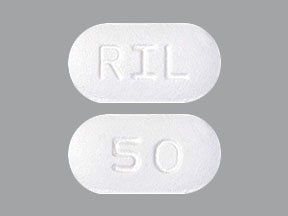
Riluzole (Monograph)
Brand name: Tiglutik
Drug class: Amyotrophic Lateral Sclerosis (ALS) Agents
Introduction
Antiglutamate agent that acts in the CNS.
Uses for Riluzole
Amyotrophic Lateral Sclerosis
Management of amyotrophic lateral sclerosis (ALS, Lou Gehrig disease, Charcot sclerosis); designated an orphan drug by FDA for this use.
Has been shown to slow disease progression and prolong survival to a modest degree (e.g., by about 2–3 months); because of this possible benefit, experts recommend that the drug should be offered to patients with ALS.
The American Academy of Neurology published an evidence-based review of treatments for ALS in 2009; however, the only disease-modifying drug available at that time was riluzole. Additional agents (e.g., edaravone, tofersen) are currently available; however, these drugs have not been shown to provide much, if any, improvement in survival. Referral to a specialized multidisciplinary clinic should be considered for patients with ALS.
Riluzole Dosage and Administration
General
Patient Monitoring
-
Monitor serum aminotransferases, including ALT levels, before and during riluzole therapy.
-
Monitor for signs and symptoms of hepatic injury (monthly for the first 3 months of treatment, then periodically thereafter).
Administration
Oral Administration
Administer orally twice daily, 1 hour before or 2 hours after a meal.
Available as tablets or oral suspension.
Oral Suspension
Gently shake bottle for at least 30 seconds prior to administration.
May administer by mouth or via percutaneous endoscopic gastrostomy tubes (i.e., silicone or polyurethane PEG tubes).
Dosage
Adults
Amyotrophic Lateral Sclerosis
Oral
50 mg twice daily.
Special Populations
Hepatic Impairment
No specific dosage recommendations; however, use not recommended in patients with aminotransferase concentrations >5 times ULN or evidence of liver dysfunction.
Renal Impairment
No specific dosage recommendations.
Geriatric Patients
No specific dosage recommendations.
Cautions for Riluzole
Contraindications
-
History of severe hypersensitivity reactions to riluzole or any ingredient in the formulation.
Warnings/Precautions
Hepatic Effects
Liver injury, including fatalities, reported. Asymptomatic elevations of aminotransferase concentrations (e.g., ALT) also reported and have recurred following rechallenge with the drug. Maximum increases in ALT occurred within the first 3 months of therapy.
Monitor serum aminotransferase concentrations prior to and during therapy; also monitor for signs and symptoms of hepatic injury (monthly for the first 3 months of treatment, then periodically thereafter). Use not recommended in patients with aminotransferase concentrations >5 times ULN. Discontinue therapy if there is evidence of liver dysfunction (e.g., elevated bilirubin concentrations).
Neutropenia
Severe neutropenia (ANC <500/mm3) reported within first 2 months of therapy. Advise patients to report febrile illness.
Interstitial Lung Disease
Interstitial lung disease, including hypersensitivity pneumonitis, reported. Discontinue immediately if interstitial lung disease develops.
Specific Populations
Pregnancy
No adequate data on use of riluzole in pregnant women. In animal studies, adverse developmental effects (e.g., decreased embryofetal/offspring viability, growth, and functional development) observed at clinically relevant doses.
If used during pregnancy, advise patient of potential risk to the fetus
Lactation
Distributed into milk in rats; not known whether distributed into human milk. Advise patients that the potential for serious adverse effects in nursing infants from riluzole is not known.
Females and Males of Reproductive Potential
Riluzole use in rats resulted in decreased fertility indices and increases in embryolethality.
Pediatric Use
Safety and efficacy not established.
Geriatric Use
No overall differences in safety or efficacy between patients ≥65 years of age and younger adults. However, greater sensitivity in some older individuals cannot be ruled out.
Hepatic Impairment
Increased exposure to riluzole observed in patients with mild (Child-Pugh class A) or moderate (Child-Pugh class B) hepatic impairment; such patients may be at increased risk of adverse effects. Pharmacokinetics not studied in patients with severe hepatic impairment.
Use not recommended in patients with baseline elevations of serum aminotransferases >5 times the ULN or evidence of liver dysfunction (e.g., elevated bilirubin).
Renal Impairment
Clinically important pharmacokinetic changes not observed in patients with moderate or severe renal impairment. Pharmacokinetics not studied in patients undergoing hemodialysis.
Race
Japanese patients more likely to have increased riluzole concentrations; risk of riluzole-associated adverse effects may be greater in such patients.
Common Adverse Effects
Most common adverse effects (≥5%) with riluzole tablets: asthenia, nausea, dizziness, decreased lung function, abdominal pain.
Most common adverse effects (≥5%) with riluzole oral suspension: oral hypoesthesia, asthenia, nausea, decreased lung function, hypertension, abdominal pain.
Drug Interactions
Substrate of CYP1A2.
Drugs Affecting Hepatic Microsomal Enzymes
Moderate or potent inhibitors of CYP1A2: In vitro findings suggest increased riluzole exposure likely; may increase risk of riluzole-associated adverse effects.
Inducers of CYP1A2: In vitro findings suggest decreased riluzole exposure likely; may reduce efficacy of riluzole.
Specific Drugs
|
Drug |
Interaction |
|---|---|
|
Allopurinol |
Possible increased risk of hepatotoxicity |
|
Ciprofloxacin |
Increased riluzole exposure likely; possible increased risk of riluzole-associated adverse effects |
|
Digoxin |
No effect on riluzole protein binding in vitro |
|
Fluvoxamine |
Increased riluzole exposure likely; possible increased risk of riluzole-associated adverse effects |
|
Imipramine |
No effect on riluzole protein binding in vitro |
|
Methoxsalen |
Increased riluzole exposure likely; possible increased risk of riluzole-associated adverse effects |
|
Methyldopa |
Possible increased risk of hepatotoxicity |
|
Mexiletine |
Increased riluzole exposure likely; possible increased risk of riluzole-associated adverse effects |
|
Oral contraceptives |
Increased riluzole exposure likely; possible increased risk of riluzole-associated adverse effects |
|
Quinine |
No effect on riluzole protein binding in vitro |
|
Sulfasalazine |
Possible increased risk of hepatotoxicity |
|
Vemurafenib |
Increased riluzole exposure likely; possible increased risk of riluzole-associated adverse effects |
|
Warfarin |
No effect on riluzole or warfarin protein binding in vitro |
|
Zileuton |
Increased riluzole exposure likely; possible increased risk of riluzole-associated adverse effects |
Riluzole Pharmacokinetics
Absorption
Bioavailability
Oral bioavailability approximately 60%.
With multiple-dose administration, riluzole accumulates in plasma by about twofold.
Similar pharmacokinetics observed following intragastric administration (via feeding tube) and oral administration of the oral suspension under fasting conditions.
Food
Food reduces AUC by 20% and peak plasma concentrations by 45%.
Special Populations
Mild or moderate hepatic impairment (Child-Pugh class A or B): AUC increased by 1.7- or 3-fold, respectively.
Severe hepatic impairment: Pharmacokinetics not studied.
Moderate or severe renal impairment: No clinically important effect on pharmacokinetics.
Patients undergoing hemodialysis: Pharmacokinetics not studied.
Age ≥65 years: No clinically important effect on pharmacokinetics.
Gender: Mean AUC approximately 45% higher in females compared with males.
Race: Clearance 50% lower in Japanese patients compared with Caucasian patients after normalizing for body weight.
Smokers: Clearance approximately 20% higher in smokers compared with nonsmokers.
Distribution
Plasma Protein Binding
96% (mainly to albumin and lipoproteins).
Elimination
Metabolism
Metabolized by CYP1A2 and by direct and sequential glucuronidation.
Elimination Route
Excreted in urine (90%) mainly as metabolites and in feces (5%).
Half-life
12 hours.
Stability
Storage
Oral
Oral Suspension
Store oral suspension upright at 20–25°C (excursions permitted to 15–30°C); protect from bright light and do not freeze. Use within 15 days of initially opening the bottle.
Tablets
20–25°C; protect from bright light.
Actions and Spectrum
-
Precise mechanism of action has not been fully elucidated but appears to involve interference with the effects mediated by excitatory amino acids (EAAs) in the CNS, possibly through inhibition of glutamic acid release, blockade or inactivation of voltage-dependent sodium channels, and/or activation of a G-protein-dependent signal transduction pathway.
-
May act via noncompetitive blockade of EAA receptors; however, does not appear to bind to any known glutamate receptor.
-
Exhibits neuroprotective properties in vitro and in vivo in animals, including inhibition of neuronal toxicity associated with exposure to EAAs or CSF from ALS patients, and inhibits neuronal toxicity associated with anoxia or focal or global ischemia.
-
Prolonged survival in a study in a transgenic mouse model of ALS but did not delay onset of the disease.
Advice to Patients
-
Advise patients to read the FDA-approved patient labeling (Instructions for Use).
-
Instruct patients on how to administer the specific dosage form of riluzole prescribed.
-
Advise patients to inform their clinician of any manifestations of possible liver injury (e.g., yellowing of the whites of the eyes).
-
Risk of neutropenia; advise patients to inform their clinician of any febrile illness.
-
Risk of interstitial lung disease; advise patients to inform their clinician of any respiratory symptoms (e.g., dry cough, difficult or labored breathing).
-
Advise patients to inform their clinicians of existing or contemplated concomitant therapy, including prescription and OTC drugs.
-
Advise patients to inform their clinicians if they are or plan to become pregnant or plan to breast-feed.
-
Inform patients of other important precautionary information.
Additional Information
The American Society of Health-System Pharmacists, Inc. represents that the information provided in the accompanying monograph was formulated with a reasonable standard of care, and in conformity with professional standards in the field. Readers are advised that decisions regarding use of drugs are complex medical decisions requiring the independent, informed decision of an appropriate health care professional, and that the information contained in the monograph is provided for informational purposes only. The manufacturer’s labeling should be consulted for more detailed information. The American Society of Health-System Pharmacists, Inc. does not endorse or recommend the use of any drug. The information contained in the monograph is not a substitute for medical care.
Preparations
Excipients in commercially available drug preparations may have clinically important effects in some individuals; consult specific product labeling for details.
Please refer to the ASHP Drug Shortages Resource Center for information on shortages of one or more of these preparations.
* available from one or more manufacturer, distributor, and/or repackager by generic (nonproprietary) name
|
Routes |
Dosage Forms |
Strengths |
Brand Names |
Manufacturer |
|---|---|---|---|---|
|
Oral |
Oral suspension |
50 mg/10 mL* |
Tiglutik |
EDW Pharma |
|
Riluzole Oral Suspension |
||||
|
Tablets, film-coated |
50 mg* |
Riluzole Tablets |
AHFS DI Essentials™. © Copyright 2025, Selected Revisions November 10, 2024. American Society of Health-System Pharmacists, Inc., 4500 East-West Highway, Suite 900, Bethesda, Maryland 20814.
Reload page with references included
Related/similar drugs
Frequently asked questions
More about riluzole
- Check interactions
- Compare alternatives
- Pricing & coupons
- Reviews (9)
- Drug images
- Side effects
- Dosage information
- During pregnancy
- Drug class: miscellaneous central nervous system agents
- Breastfeeding
- En español