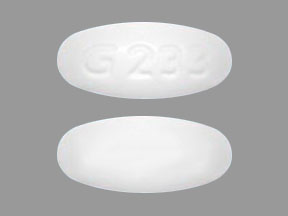
Guaifenesin (Monograph)
Brand names: Children’s Mucinex, Diabetic Tussin, Guiatuss, Mucinex
Drug class: Expectorants
VA class: RE516
CAS number: 93-14-1
Introduction
Expectorant.
Uses for Guaifenesin
Cough
Symptomatic management of productive cough to loosen and thin sputum and bronchial secretions and ease expectoration.
Improves cough symptoms associated with common cold, bronchitis, laryngitis, pharyngitis, pertussis, influenza, measles, and coughs provoked by chronic paranasal sinusitis.
May be useful in the management of irritative nonproductive cough and coughs productive of scanty amounts of thick, viscous secretions.
May indirectly diminish the tendency to cough, but mechanism of this effect differs from that of antitussives (which inhibit or suppress cough); insufficient evidence to support efficacy as antitussive.
Used in fixed combination with other agents (e.g., acetaminophen, chlorpheniramine, dextromethorphan, ephedrine, phenylephrine, pseudoephedrine) for the temporary relief of productive cough and/or other symptoms (nasal congestion, fever).
Guaifenesin Dosage and Administration
Administration
Administer orally.
Do not break, crush, or chew extended-release tablets.
Dosage
Because combinations and dosage strengths vary for fixed-combination preparations, consult manufacturer’s product labeling for appropriate dosage of the specific preparation.
Pediatric Patients
Cough
Oral
Children <2 years of age: Individualize dosage. (See Pediatric Use under Cautions.)
Children 2 to <6 years of age, conventional preparations: 50–100 mg every 4 hours, up to 600 mg daily. (See Pediatric Use under Cautions.)
Children 2–6 years of age, extended-release preparations: 300 mg every 12 hours, up to 600 mg daily. (See Pediatric Use under Cautions.)
Children 6 to <12 years of age, conventional preparations: 100–200 mg every 4 hours, up to 1.2 g daily.
Children 6–12 years of age, extended-release preparations: 600 mg every 12 hours, up to 1.2 g daily.
Children ≥12 years of age, conventional preparations: 200–400 mg every 4 hours, up to 2.4 g daily.
Children ≥12 years of age, 600-mg extended-release tablets: 600 mg or 1.2 g every 12 hours, up to 2.4 g daily.
Adults
Cough
Oral
Conventional preparations: 200–400 mg every 4 hours, up to 2.4 g daily.
600-mg extended-release tablets: 600 mg or 1.2 g every 12 hours, up to 2.4 g daily.
Prescribing Limits
Pediatric Patients
Cough
Oral
Children 2 to <6 years of age, conventional preparations: Maximum 600 mg daily.
Children 2–6 years of age, extended-release preparations: Maximum 600 mg daily.
Children 6 to <12 years of age, conventional preparations: Maximum 1.2 g daily.
Children 6–12 years of age, extended-release preparations: Maximum 1.2 g daily.
Children ≥12 years of age, conventional preparations: Maximum 2.4 g daily.
Children ≥12 years of age, extended-release preparations: Maximum 2.4 g daily.
Adults
Cough
Oral
Conventional preparations: Maximum 2.4 g daily.
Extended-release preparations: Maximum 2.4 g daily.
Related/similar drugs
albuterol, amoxicillin, doxycycline, ciprofloxacin, azithromycin, benzonatate, ceftriaxone
Cautions for Guaifenesin
Contraindications
-
Known hypersensitivity to guaifenesin.
Warnings/Precautions
General Precautions
Excessive Dosage
Emesis may result from doses larger than those required for expectorant action, but GI upset at ordinary dosage is rare.
Persistent Cough
Do not use as self-medication for persistent or chronic cough (e.g., that associated with smoking, asthma, chronic bronchitis, emphysema), or cough accompanied by excessive phlegm unless directed by a clinician.
Persistent cough may indicate serious condition; if it persists for >1 week, is recurrent, or is accompanied by fever, rash, or persistent headache, consult a clinician.
Use of Fixed Combinations
When used in fixed combination with other agents (e.g., acetaminophen, chlorpheniramine, codeine, dextromethorphan, ephedrine, phenylephrine, pseudoephedrine), consider the cautions, precautions, and contraindications associated with the concomitant agent(s).
Specific Populations
Pregnancy
Category C.
Lactation
Not known whether guaifenesin is distributed into milk.
Pediatric Use
Safety and efficacy of Mucinex 600-mg extended-release tablets not established in children <12 years of age.
Risk of overdosage and toxicity (including death) in children <2 years of age receiving OTC preparations containing antihistamines, cough suppressants, expectorants, and nasal decongestants alone or in combination for relief of symptoms of upper respiratory tract infection. Limited evidence of efficacy for these preparations in this age group; appropriate dosages not established. Therefore, FDA recommends not to use such preparations in children <2 years of age; safety and efficacy in older children under evaluation. Because children 2–3 years of age also are at increased risk of overdosage and toxicity, some manufacturers of oral nonprescription cough and cold preparations agreed to voluntarily revise the product labeling to state that such preparations should not be used in children <4 years of age. FDA recommends that parents and caregivers adhere to dosage instructions and warnings on the product labeling that accompanies the preparation and consult a clinician about any concerns. Clinicians should ask caregivers about use of OTC cough/cold preparations to avoid overdosage.
Stability
Storage
Tight containers.
Actions
-
Reduces the viscosity of tenacious secretions and acts as an expectorant by increasing respiratory tract fluid.
-
Increases expectorated sputum volume over the first 4–6 days of a productive cough, decreases sputum viscosity and difficulty in expectoration, and improves associated symptoms.
Advice to Patients
-
Importance of contacting a clinician if cough persists for >1 week, tends to recur, or is accompanied by fever, rash, or persistent headache.
-
Importance of not using for self-medication for persistent or chronic cough unless directed by a clinician.
-
Importance of keeping Mucinex 600-mg extended-release tablets out of reach of young children to avoid accidental swallowing and choking.
-
Importance of informing clinicians of existing or contemplated concomitant therapy, including prescription and OTC drugs as well as any concomitant illnesses.
-
Importance of women informing clinicians if they are or plan to become pregnant or plan to breast-feed.
-
Importance of informing patients of other important precautionary information. (See Cautions.)
Preparations
Excipients in commercially available drug preparations may have clinically important effects in some individuals; consult specific product labeling for details.
Please refer to the ASHP Drug Shortages Resource Center for information on shortages of one or more of these preparations.
* available from one or more manufacturer, distributor, and/or repackager by generic (nonproprietary) name
|
Routes |
Dosage Forms |
Strengths |
Brand Names |
Manufacturer |
|---|---|---|---|---|
|
Oral |
Granules |
50 mg per packet |
Mucinex Mini Melts |
Reckitt Benckiser |
|
100 mg per packet |
Mucinex Mini Melts |
Reckitt Benckiser |
||
|
Solution |
100 mg/5 mL* |
Children’s Mucinex Chest Congestion |
Reckitt Benckiser |
|
|
Diabetic Tussin Expectorant |
Health Care Products |
|||
|
Guaifenesin Oral Solution |
||||
|
Guiatuss Syrup |
Goldline |
|||
|
200 mg/5 mL |
Diabetic Tussin Mucus Relief |
Health Care Products |
||
|
Tablets |
200 mg* |
Guaifenesin Tablets |
||
|
Tablets, extended-release |
600 mg |
Mucinex |
Reckitt Benckiser |
|
|
1.2 g |
Mucinex Maximum Strength |
Reckitt Benckiser |
* available from one or more manufacturer, distributor, and/or repackager by generic (nonproprietary) name
|
Routes |
Dosage Forms |
Strengths |
Brand Names |
Manufacturer |
|---|---|---|---|---|
|
Oral |
Solution |
100 mg/5 mL Guaifenesin and Codeine Phosphate 10 mg/5 mL* |
Cheratussin AC (C-V) |
Qualitest |
|
Guaiatussin AC (C-V) |
Hi-Tech |
|||
|
Guaifenesin AC Cough Syrup (C-V) |
||||
|
Guaifenesin and Codeine Phosphate Oral Solution (C-V) |
||||
|
Robafen AC (C-V) |
Major |
|||
|
200 mg/5 mL Guaifenesin and Codeine Phosphate 8 mg/5 mL |
Codar GF (C-V) |
Respa |
|
Routes |
Dosage Forms |
Strengths |
Brand Names |
Manufacturer |
|---|---|---|---|---|
|
Oral |
For Solution |
400 mg/packet with Acetaminophen 1 g/packet |
Theraflu Flu & Chest Congestion |
Novartis |
|
400 mg/packet with Acetaminophen 1 g/packet, Dextromethorphan Hydrobromide 30 mg/packet, and Pseudoephedrine Hydrochloride 60 mg/packet |
Theraflu Max-D Severe Cold & Flu |
Novartis |
||
|
Granules |
50 mg per packet with Dextromethorphan Hydrobromide 5 mg/packet |
Mucinex Cough Mini Melts |
Reckitt Benckiser |
|
|
Solution |
33.3 mg/5 mL with Dextromethorphan Hydrobromide 3.3 mg/5 mL |
Vick’sNature Fusion Cough and Chest Congestion |
Procter & Gamble |
|
|
50 mg/5 mL with Dextromethorphan Hydrobromide 5 mg/5 mL and Phenylephrine Hydrochloride 2.5 mg/5 mL |
Children’s Robitussin Cold & Cough CF |
Pfizer |
||
|
50 mg/5 mL with Phenylephrine Hydrochloride 2.5 mg/5 mL |
Triaminic Chest and Nasal Congestion |
Novartis |
||
|
66.6 mg/5 mL with Acetaminophen 108.3 mg/5 mL, Dextromethorphan Hydrobromide 3.3 mg/5 mL, and Phenylephrine Hydrochloride 1.6 mg/5 mL |
Tylenol Cold Multi-Symptom Severe |
McNeil |
||
|
Tylenol Cold & Flu Severe |
McNeil |
|||
|
66.6 mg/5 mL with Acetaminophen 108.3 mg/5 mL, and Phenylephrine Hydrochloride 1.6 mg/5 mL |
Theraflu Warming Relief Cold & Chest Congestion |
Novartis |
||
|
66.6 mg/5 mL with Dextromethorphan Hydrobromide 3.3 mg/5 mL |
Vick’s Dayquil Mucus Control DM |
Procter & Gamble |
||
|
66.6 mg/5 mL with Dextromethorphan Hydrobromide 6.6 mg/5 mL |
Vick’s Formula 44 Custom Care Chesty Cough |
Procter & Gamble |
||
|
100 mg/5mL with Acetaminophen 162.5 mg/5 mL, Dextromethorphan Hydrobromide 5 mg/5 mL, and Phenylephrine Hydrochloride 2.5 mg/5 mL |
Children’s Mucinex Cold, Cough, and Sore Throat |
Reckitt Benckiser |
||
|
Children’s Mucinex Multi-symptom Cold & Fever |
Reckitt Benckiser |
|||
|
100 mg/5 mL with Dextromethorphan Hydrobromide 5 mg/5 mL |
Children’s Mucinex Cough |
Reckitt Benckiser |
||
|
Pediacare Children’s Cough & Congestion |
Prestige Brands |
|||
|
100 mg/5 mL with Dextromethorphan Hydrobromide 5 mg/5 mL and Phenylephrine Hydrochloride 2.5 mg/5 mL |
Children’s Mucinex Multi-symptom Cold |
Reckitt Benckiser |
||
|
100 mg/5 mL with Dextromethorphan Hydrobromide 10 mg/5 mL |
Robitussin Peak Cold Cough + Chest Congestion DM |
Pfizer |
||
|
100 mg/5 mL with Dextromethorphan Hydrobromide 10 mg/5 mL and Phenylephrine Hydrochloride 5 mg/5 mL |
Robitussin Peak Cold Multi-Symptom Cold |
Pfizer |
||
|
100 mg/5 mL with Phenylephrine Hydrochloride 2.5 mg/5 mL |
Children’s Mucinex Stuffy Nose & Cold |
Reckitt Benckiser |
||
|
100 mg/5 mL with Phenylephrine Hydrochloride 5 mg/5 mL |
Rescon-GG |
Capellon |
||
|
200 mg/5 mL with Dextromethorphan Hydrobromide 10 mg/5 mL |
Robitussin Peak Cold Maximum Strength Cough + Chest Congestion DM |
Pfizer |
||
|
200 mg/5 mL with Dextromethorphan Hydrobromide 10 mg/5 mL and Phenylephrine Hydrochloride 5 mg/5 mL |
Robitussin Peak Cold Maximum Strength Multi-Symptom Cold |
Pfizer |
||
|
Tablets |
200 mg with Acetaminophen 325 mg, Dextromethorphan 10 mg, and Phenylephrine Hydrochloride 5 mg |
Tylenol Cold Multi-symptom Severe |
McNeil |
|
|
Tylenol Cold & Flu Severe |
McNeil |
|||
|
200 mg with Ephedrine Hydrochloride 12.5 mg |
Primatene |
Pfizer |
||
|
400 mg with Ephedrine Sulfate 25 mg |
Bronkaid Dual Action Caplets |
Bayer |
||
|
400 mg with Pseudoephedrine Hydrochloride 60 mg |
Congestac Caplets |
Ascher |
||
|
Tablets, extended-release |
600 mg with Dextromethorphan Hydrobromide 30 mg |
Mucinex DM |
Reckitt Benckiser |
|
|
600 mg with Pseudoephedrine Hydrochloride 60 mg |
Mucinex D |
Reckitt Benckiser |
||
|
1.2 g with Dextromethorphan Hydrobromide 60 mg |
Mucinex DM Maximum Strength |
Reckitt Benckiser |
||
|
1.2 g with Pseudoephedrine Hydrochloride 120 mg |
Mucinex D Maximum Strength |
Reckitt Benckiser |
AHFS DI Essentials™. © Copyright 2024, Selected Revisions February 1, 2016. American Society of Health-System Pharmacists, Inc., 4500 East-West Highway, Suite 900, Bethesda, Maryland 20814.
Reload page with references included
Frequently asked questions
- Does Mucinex help you get pregnant?
- Does Mucinex help with Covid?
- What is the dose for an adult for Robitussin DM? How many times a day?
More about guaifenesin
- Compare alternatives
- Pricing & coupons
- Reviews (295)
- Drug images
- Latest FDA alerts (4)
- Side effects
- Dosage information
- Patient tips
- During pregnancy
- Support group
- Drug class: expectorants
- Breastfeeding
Patient resources
Professional resources
Other brands
Mucinex, Mucinex Maximum Strength