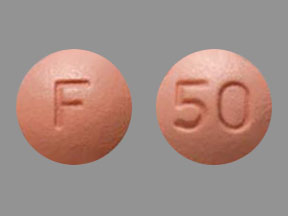
Galantamine (Monograph)
Brand name: Razadyne
Drug class: Parasympathomimetic (Cholinergic) Agents
- Anticholinesterase Agents
VA class: CN900
Chemical name: (4aS,6R,8aS)-4a,5,9,10,11,12-hexahydro-3-methoxy-11-methyl-6H-benzofuro[3a,3,2-ef][2]benzazepin-6-ol hydrobromide
Molecular formula: C17H21N03.HBr
CAS number: 1953-04-4
Introduction
A centrally active, reversible acetylcholinesterase inhibitor.
Uses for Galantamine
Alzheimer’s Disease
Management of mild to moderate dementia of the Alzheimer’s type (Alzheimer’s disease).
Cholinesterase inhibitors (e.g., donepezil, galantamine, rivastigmine) are used for symptomatic management of dementia associated with Alzheimer's disease; however, these drugs shown to provide only modest benefits and do not alter the underlying dementing process. Because of the lack of established alternatives, experts generally recommend a trial with one of these agents in patients with Alzheimer's disease.
Mild Cognitive Impairment
Investigated in patients with mild cognitive impairment† [off-label] who did not meet diagnostic criteria for Alzheimer’s disease, but was associated with increased mortality. (See Mortality under Cautions.) Not approved by FDA for this use.
In general, no evidence of benefit with cholinesterase inhibitors in patients with mild cognitive impairment who do not have dementia.
Related/similar drugs
donepezil, memantine, Aricept, Namenda, rivastigmine, Exelon
Galantamine Dosage and Administration
Administration
Oral Administration
Administer conventional tablets or oral solution orally twice daily, preferably with morning and evening meals.
Administer extended-release capsules orally once daily in the morning, preferably with food.
Administer oral solution using the dosing syringe provided by the manufacturer; refer to accompanying patient information for instructions. Dilute appropriate dose of oral solution in 100 mL of a nonalcoholic beverage just prior to administration and stir well; consume entire mixture immediately.
Dosage
Available as galantamine hydrobromide; dosage is expressed in terms of galantamine.
Slow dosage escalation is recommended to minimize adverse effects; minimum of 4 weeks at prior dosage is recommended before dosage is increased.
If galantamine therapy interrupted for more than 3 days, resume therapy using the lowest dosage and titrate upward to prior dosage.
Adults
Alzheimer’s Disease
Oral
Initially, 4 mg twice daily (as conventional tablets or oral solution) or 8 mg once daily (as extended-release capsules). May increase dosage after a minimum of 4 weeks to 8 mg twice daily (as conventional tablets or oral solution) or 16 mg once daily (as extended-release capsules) based on patient response and tolerability.
May attempt further increases to 12 mg twice daily (as conventional tablets or oral solution) or 24 mg once daily (as extended-release capsules) after a minimum of 4 weeks of treatment at the previous dosage.
Maintenance dosage recommended by the manufacturer is 8–12 mg twice daily (as conventional tablets and oral solution) or 16–24 mg once daily (as extended-release capsules). Higher dosages (e.g., 16 mg twice daily) do not result in greater efficacy and are less well tolerated than lower dosages.
Special Populations
Hepatic Impairment
Alzheimer’s Disease
Oral
Dosage generally should not exceed 16 mg daily in patients with moderate hepatic impairment (Child-Pugh score of 7–9). Use not recommended in patients with severe hepatic impairment (Child-Pugh score of 10–15).
Renal Impairment
Alzheimer’s Disease
Oral
Dosage generally should not exceed 16 mg daily in patients with Clcr of 9–59 mL/minute. Use not recommended in patients with Clcr <9 mL/minute.
Cautions for Galantamine
Contraindications
-
Known hypersensitivity to galantamine or any ingredient in the formulation.
Warnings/Precautions
Cardiovascular Effects
Potential bradycardia, AV block, or other vagotonic effects on the heart.
Patients with supraventricular cardiac conduction abnormalities and those receiving concomitant therapy with drugs that substantially decrease heart rate appear to be at particular risk.
Use with caution in patients with sick sinus syndrome or other conduction defects.
GI Effects
Possible diarrhea, nausea, vomiting, and weight loss; such effects are dose related and generally mild to moderate in severity. Manufacturer states to monitor patient's weight during therapy.
Peptic Ulcers/GI Bleeding
Cholinesterase inhibitors may increase gastric acid secretion. Monitor closely for manifestations of active or occult GI bleeding, especially in patients with increased risk (e.g., history of ulcer disease, concomitant NSAIA therapy).
GU Effects
Although not reported in clinical studies with galantamine, cholinomimetic agents may cause bladder outflow obstruction.
Neurologic Effects
Drugs that increase cholinergic activity have the potential for causing seizures; seizures also may be a manifestation of Alzheimer’s disease.
Respiratory Effects
Use with caution in patients with a history of severe asthma or obstructive pulmonary disease because of increased cholinergic activity.
Mortality
Higher incidence of death reported in patients receiving galantamine than in those receiving placebo in 2 studies in patients with mild cognitive impairment† [off-label] who did not meet diagnostic criteria for Alzheimer’s disease. Deaths were due to various causes expected in a geriatric population; approximately half in galantamine-treated patients were due to vascular causes (i.e., MI, stroke, sudden death). In addition, the incidence of mortality in placebo-treated patients in these 2 studies was substantially lower than that reported in placebo-treated patients in studies that evaluated galantamine in patients with Alzheimer’s disease.
Sensitivity Reactions
Serious Skin Reactions
Serious skin reactions such as Stevens-Johnson syndrome and acute generalized exanthematous pustulosis reported. Discontinue drug at the first sign of a skin rash unless rash is clearly not drug related. If rash is severe, do not resume therapy and consider alternative treatment.
Prescribing and Dispensing Precautions
Similarity in spelling of Reminyl (the former trade name of galantamine) and Amaryl (glimepiride) has resulted in errors. In April 2005, manufacturer of galantamine announced that trade name would be changed from Reminyl to Razadyne to avoid future dispensing errors.
Specific Populations
Pregnancy
No adequate data to inform developmental risks associated with use of galantamine in pregnant women. Animal reproduction studies revealed some evidence of developmental toxicity.
Lactation
Not known whether galantamine is distributed into milk or if the drug affects the nursing infant or milk production. Consider known benefits of breast-feeding along with the mother's clinical need for galantamine and any potential adverse effects on the breast-fed infant from the drug or underlying maternal condition.
Pediatric Use
Safety and efficacy not established.
Hepatic Impairment
Use not recommended in patients with severe hepatic impairment (Child-Pugh score of 10–15). Dosage modification recommended in patients with moderate hepatic impairment. (See Hepatic Impairment under Dosage and Administration.)
Renal Impairment
Use not recommended in patients with severe renal impairment (Clcr <9 mL/minute). Dosage modification recommended in patients with moderate renal impairment. (See Renal Impairment under Dosage and Administration.)
Common Adverse Effects
Nausea, vomiting, diarrhea, dizziness, headache, decreased appetite.
Drug Interactions
Metabolized by CYP enzymes, principally CYP2D6 and 3A4.
Does not inhibit CYP1A2, 2A6, 3A4, 2C, 2D6, or 2E1 in vitro.
Drugs Affecting Hepatic Enzymes
CYP3A4 inhibitors: Possible increased systemic exposure of galantamine.
CYP2D6 inhibitors: Possible decrease in galantamine clearance of about 25–33%.
Specific Drugs
|
Drug |
Interaction |
|---|---|
|
Amitriptyline |
Possible decrease in galantamine clearance of about 25–33% |
|
Anticholinergics |
Antagonistic effects |
|
Cholinomimetics and other cholinesterase inhibitors |
Additive pharmacologic effects |
|
Cimetidine |
Increased galantamine bioavailability by about 16% |
|
Digoxin |
Pharmacokinetic interaction unlikely |
|
Erythromycin |
Minimally increased galantamine AUC by 10% |
|
Fluoxetine |
Possible decrease in galantamine clearance of about 25–33% |
|
Fluvoxamine |
Possible decrease in galantamine clearance of about 25–33% |
|
Ketoconazole |
Increased galantamine AUC by 30% |
|
Memantine |
No effect on pharmacokinetics of galantamine |
|
Neuromuscular blocking agents (e.g., succinylcholine) |
Additive pharmacologic effects |
|
Paroxetine |
Increased galantamine bioavailability by about 40% |
|
Quinidine |
Possible decrease in galantamine clearance of about 25–33% |
|
Ranitidine |
No effect on pharmacokinetics of galantamine |
|
Warfarin |
Pharmacokinetic interaction or effects on PT unlikely |
Galantamine Pharmacokinetics
Absorption
Bioavailability
Absolute oral bioavailability about 90%. Bioavailabilities of oral solution and tablets are equivalent. Extended-release capsules (24 mg once daily) and conventional tablets (12 mg twice daily) are bioequivalent when administered under fasting conditions.
Peak plasma concentrations attained within 1 or 4.5–5 hours after administration of conventional tablets or extended-release capsules, respectively.
Food
Conventional tablets or oral solution: Food did not affect the AUC, but peak plasma concentrations were decreased by 25% and time to peak plasma concentrations was delayed by 1.5 hours.
Extended-release capsules: No appreciable differences in pharmacokinetic parameters following administration with food.
Onset
Maximum inhibition of acetylcholinesterase (about 40%) achieved about 1 hour after a single 8-mg oral dose.
Special Populations
Approximately 50% higher systemic exposure following administration of extended-release capsules in patients with reduced levels of CYP2D6 (also known as poor metabolizers); however, dosage adjustment is not necessary.
Distribution
Extent
In whole blood, galantamine is mainly distributed to blood cells (52.7%). Blood to plasma concentration ratio is 1.2.
Plasma Protein Binding
18% at therapeutically relevant concentrations.
Elimination
Metabolism
Metabolized in the liver by CYP isoenzymes (principally CYP2D6 and 3A4).
Clearance decreased 25% in patients with reduced levels of CYP2D6 activity; however, dosage adjustment is not necessary.
Elimination Route
Principally in urine.
Half-life
Terminal elimination half-life of about 7 hours.
Special Populations
In patients with moderate hepatic impairment (Child-Pugh score of 7–9), clearance decreased by about 25% compared with healthy individuals. Exposure to the drug would be expected to increase further with increasing degree of hepatic impairment.
In patients with moderate or severe renal impairment, AUC following a single 8-mg dose of galantamine (as conventional tablets) increased by 37% or 67%, respectively, compared with values in healthy individuals.
Stability
Storage
Oral
Conventional Tablets and Extended-release Capsules
25°C; may be exposed to 15–30°C.
Solution
20–25°C. Do not freeze.
Actions
-
Binds reversibly with and inactivates acetylcholinesterase, thus inhibiting hydrolysis of acetylcholine and increasing the concentration of acetylcholine at cholinergic synapses. Also binds allosterically with nicotinic acetylcholine receptors and may potentiate the action of agonists (e.g., acetylcholine) at these receptors.
-
Deficiency of acetylcholine caused by selective loss of cholinergic neurons in the cerebral cortex, nucleus basalis, and hippocampus is a pathologic feature of Alzheimer's disease associated with cognitive deficits.
-
Effects may diminish as the Alzheimer’s disease process advances and fewer cholinergic neurons remain functioning.
Advice to Patients
-
Risk of adverse effects (e.g., nausea, vomiting, anorexia, weight loss).
-
Importance of administering galantamine with food and ensuring adequate fluid intake.
-
Importance of beginning therapy at lowest dosage and gradually increasing back to prior dosage range if therapy is interrupted for any reason.
-
Importance of understanding the proper procedure for administering the oral solution, including review of the patient information provided by the manufacturer; advise patients to direct questions about administration to their pharmacist or clinician.
-
Importance of informing clinicians of existing or contemplated concomitant therapy, including prescription and OTC drugs.
-
Importance of women informing clinicians if they are or plan to become pregnant or plan to breast-feed.
-
Importance of informing patients of other important precautionary information. (See Cautions.)
Preparations
Excipients in commercially available drug preparations may have clinically important effects in some individuals; consult specific product labeling for details.
Please refer to the ASHP Drug Shortages Resource Center for information on shortages of one or more of these preparations.
* available from one or more manufacturer, distributor, and/or repackager by generic (nonproprietary) name
|
Routes |
Dosage Forms |
Strengths |
Brand Names |
Manufacturer |
|---|---|---|---|---|
|
Oral |
Capsules, extended-release |
8 mg (of galantamine)* |
Galantamine Hydrobromide Extended-release Capsules |
|
|
Razadyne ER |
Janssen |
|||
|
16 mg (of galantamine)* |
Galantamine Hydrobromide Extended-release Capsules |
|||
|
Razadyne ER |
Janssen |
|||
|
24 mg (of galantamine)* |
Galantamine Hydrobromide Extended-release Capsules |
|||
|
Razadyne ER |
Janssen |
|||
|
Solution |
4 mg/mL (of galantamine)* |
Galantamine Hydrobromide Oral Solution |
||
|
Tablets, film-coated |
4 mg (of galantamine)* |
Galantamine Hydrobromide Tablets |
||
|
Razadyne |
Janssen |
|||
|
8 mg (of galantamine)* |
Galantamine Hydrobromide Tablets |
|||
|
Razadyne |
Janssen |
|||
|
12 mg (of galantamine)* |
Galantamine Hydrobromide Tablets |
|||
|
Razadyne |
Janssen |
AHFS DI Essentials™. © Copyright 2024, Selected Revisions November 9, 2020. American Society of Health-System Pharmacists, Inc., 4500 East-West Highway, Suite 900, Bethesda, Maryland 20814.
† Off-label: Use is not currently included in the labeling approved by the US Food and Drug Administration.
Reload page with references included
Frequently asked questions
More about galantamine
- Check interactions
- Compare alternatives
- Pricing & coupons
- Reviews (15)
- Drug images
- Side effects
- Dosage information
- During pregnancy
- Drug class: cholinesterase inhibitors
- En español