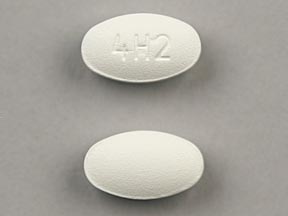
Cetirizine (Monograph)
Brand name: ZyrTEC
Drug class: Second Generation Antihistamines
Introduction
Second generation antihistamine; piperazine-derivative, carboxylic acid metabolite of hydroxyzine.
Uses for Cetirizine
Allergic Rhinitis
Self-medication for symptomatic relief of rhinorrhea, sneezing, lacrimation, itching eyes, and/or oronasopharyngeal itching associated with seasonal (e.g., hay fever) allergic rhinitis or other upper respiratory allergies.
Symptomatic relief of perennial (nonseasonal) allergic rhinitis.
May be used alone or in fixed combination with pseudoephedrine hydrochloride; use fixed-combination preparation only when both antihistamine and nasal decongestant activity are needed concurrently.
Chronic Idiopathic Urticaria
Self-medication for symptomatic relief of pruritus associated with chronic idiopathic urticaria (e.g., hives); not for prevention of chronic idiopathic urticaria or allergic skin reactions.
Cetirizine Dosage and Administration
Administration
Oral Administration
Administer orally without regard to food. May adjust time of administration for individual patient requirements.
Oral solution (syrup): Use only the measuring device (i.e., cup) provided by the manufacturer.
Chewable tablets: Administer with or without water.
Fixed-combination cetirizine/pseudoephedrine tablets (e.g., Zyrtec-D): Swallow whole; do not break or chew.
Dosage
Available as cetirizine hydrochloride; dosage expressed in terms of the salt.
Pediatric Patients
Allergic Rhinitis
Seasonal
Self-medication in children 2 to <6 years of age: 2.5 mg once daily (as oral solution); may increase dosage to a maximum of 5 mg daily, given either as a 5-mg dose once daily or, alternatively, as a 2.5-mg dose every 12 hours. (See Pediatric Use under Cautions.)
Self-medication in children ≥6 years of age: 5 or 10 mg once daily (as chewable or conventional tablets or oral solution), depending on symptom severity. In clinical trials, most children ≥12 years of age received an initial dosage of 10 mg daily; no additional benefit observed with 20-mg daily dosage.
Self-medication in children ≥12 years of age: 5 mg twice daily (every 12 hours) (in fixed combination with 120 mg pseudoephedrine hydrochloride).
Perennial
OralChildren 6 months to <2 years of age: 2.5 mg once daily (as oral solution). In children 12–23 months of age, may increase dosage to a maximum of 5 mg daily, given as 2.5 mg every 12 hours. (See Pediatric Use under Cautions.)
Children 2–5 years of age: 2.5 mg once daily (as oral solution); may increase dosage to a maximum of 5 mg daily, given either as a 5-mg dose once daily (as chewable tablets or oral solution) or, alternatively, as a 2.5-mg dose every 12 hours (as oral solution). (See Pediatric Use under Cautions.)
Children ≥6 years of age: 5 or 10 mg once daily (as chewable or conventional tablets or oral solution), depending on symptom severity. In clinical trials, most children ≥12 years of age received an initial dosage of 10 mg daily; no additional benefit observed with 20-mg daily dosage.
Children ≥12 years of age: 5 mg twice daily (every 12 hours) (in fixed combination with 120 mg pseudoephedrine hydrochloride).
Chronic Idiopathic Urticaria
Oral
Children 6 months to <2 years of age: 2.5 mg once daily (as oral solution). In children 12–23 months of age, may increase dosage to a maximum of 5 mg daily, given as 2.5 mg every 12 hours. (See Pediatric Use under Cautions.)
Children 2–5 years of age: 2.5 mg once daily (as oral solution); may increase dosage to a maximum of 5 mg daily, given either as a 5-mg dose once daily (as chewable tablets or oral solution) or, alternatively, as a 2.5-mg dose every 12 hours (as oral solution). (See Pediatric Use under Cautions.)
Self-medication in children ≥6 years of age: 5 or 10 mg once daily (as chewable or conventional tablets or oral solution), depending on symptom severity. In clinical trials, most children ≥12 years of age received an initial dosage of 10 mg daily; no additional benefit observed with 20-mg daily dosage.
Adults
Allergic Rhinitis
Seasonal
OralSelf-medication: 5 or 10 mg once daily (as chewable or conventional tablets or oral solution), depending on symptom severity. In clinical trials, most patients received an initial dosage of 10 mg daily; no additional benefit observed with 20-mg daily dosage.
Self-medication: 5 mg twice daily (every 12 hours) (in fixed combination with 120 mg pseudoephedrine hydrochloride).
Perennial
Oral5 or 10 mg once daily (as chewable or conventional tablets or oral solution), depending on symptom severity. In clinical trials, most patients received an initial dosage of 10 mg daily; no additional benefit observed with 20-mg daily dosage.
5 mg twice daily (every 12 hours) (in fixed combination with 120 mg pseudoephedrine hydrochloride).
Chronic Idiopathic Urticaria
Oral
Self-medication: 5 or 10 mg once daily (as chewable or conventional tablets or oral solution), depending on symptom severity. In clinical trials, most patients received an initial dosage of 10 mg daily; no additional benefit observed with 20-mg daily dosage.
Prescribing Limits
Pediatric Patients
Allergic Rhinitis
Oral
Children 12 months to <2 years of age: Maximum 5 mg daily.
Self-medication in children 2 to <6 years of age: Maximum 5 mg in 24 hours. (See Pediatric Use under Cautions.)
Self-medication in children ≥6 years of age: Maximum 10 mg in 24 hours.
Self-medication in children ≥12 years of age: Maximum 10 mg daily (in fixed combination with 120 mg pseudoephedrine hydrochloride). Fixed-combination preparation not recommended for children <12 years of age; contains 120 mg pseudoephedrine hydrochloride, which exceeds recommended single dose in such patients.
Children ≥12 years of age: In clinical trials, a 20-mg daily dosage did not provide additional clinical benefit.
Chronic Idiopathic Urticaria
Oral
Children 12 months to 5 years of age: Maximum 5 mg daily.
Self-medication in children ≥6 years of age: Maximum 10 mg in 24 hours.
Children ≥12 years of age: In clinical trials, a 20-mg daily dosage did not provide additional clinical benefit.
Adults
Allergic Rhinitis
Oral
Self-medication: Maximum 10 mg in 24 hours (alone or in fixed combination with 120 mg pseudoephedrine hydrochloride). In clinical trials, a 20-mg daily dosage did not provide additional clinical benefit.
Chronic Idiopathic Urticaria
Oral
Self-medication: Maximum 10 mg in 24 hours. In clinical trials, a 20-mg daily dosage did not provide additional clinical benefit.
Special Populations
Hepatic Impairment
Children <6 years of age: Use not recommended.
Adults and children ≥6 years of age: 5 mg once daily (as chewable or conventional tablets or oral solution).
Adults and children ≥12 years of age: 5 mg once daily (in fixed combination with 120 mg pseudoephedrine hydrochloride).
Renal Impairment
Children <6 years of age: Use not recommended.
Adults and children ≥6 years of age: 5 mg once daily (as chewable or conventional tablets or oral solution) in patients with impaired renal function (e.g., Clcr of 11–31 mL/minute) or those on hemodialysis (e.g., Clcr <7 mL/minute).
Adults and children ≥12 years of age: 5 mg once daily (in fixed combination with 120 mg pseudoephedrine hydrochloride) in patients with impaired renal function (e.g., Clcr of 11–31 mL/minute) or those on hemodialysis (e.g., Clcr <7 mL/minute).
Geriatric Patients
Self-medication in patients ≥65 years of age: 5 mg once daily (as chewable or conventional tablets or oral solution); do not exceed this amount in 24 hours.
Cautions for Cetirizine
Contraindications
-
Known hypersensitivity to cetirizine, hydroxyzine, or any ingredient in the formulation.
Warnings/Precautions
General Precautions
Prescribing and Dispensing Errors
Ensure accuracy of prescription; similarities in spelling, dosage intervals, and tablet strengths of Zyrtec and Zyprexa (olanzapine, an atypical antipsychotic agent) may result in errors.
CNS Effects
Risk of somnolence; caution required when performing hazardous activities requiring mental alertness or physical coordination (e.g., operating machinery, driving a motor vehicle). (See Specific Drugs under Interactions.)
Use of Fixed Combinations
When used in fixed combination with pseudoephedrine hydrochloride (e.g., Zyrtec-D), consider the cautions, precautions, and contraindications associated with pseudoephedrine.
Specific Populations
Pregnancy
Chewable or conventional tablets or oral solution: Category B.
Fixed-combination cetirizine hydrochloride/pseudoephedrine hydrochloride: Category C.
Lactation
Distributed into milk. Use not recommended.
Pediatric Use
Chewable or conventional tablets or oral solution: Safety and efficacy not established in children <6 months of age; oral solution is the recommended formulation in children <2 years of age.
Fixed-combination cetirizine hydrochloride/pseudoephedrine hydrochloride: Safety and efficacy not established in children <12 years of age; use not recommended in this age group.
Risk of overdosage and toxicity (including death) in children <2 years of age receiving OTC preparations containing antihistamines, cough suppressants, expectorants, and nasal decongestants alone or in combination for relief of symptoms of upper respiratory tract infection. Clinicians should ask caregivers about use of nonprescription cough and cold preparations to avoid overdosage.
Geriatric Use
Insufficient experience in patients ≥65 years of age to determine whether geriatric patients respond differently than younger adults. No overall differences in safety relative to younger patients, but increased sensitivity cannot be ruled out.
Select dosage with caution because of age-related decreases in renal function; periodic monitoring of renal function recommended. Dosage adjustment recommended in patients ≥65 years of age. (See Geriatric Patients under Dosage and Administration.)
Hepatic Impairment
Decreased clearance in patients with chronic hepatic impairment. Dosage adjustment necessary. (See Hepatic Impairment under Dosage and Administration.)
Use not recommended in children <6 years of age with hepatic impairment.
Renal Impairment
Decreased clearance in patients with moderate renal impairment (Clcr of 11–31 mL/minute) or in those on hemodialysis. Dosage adjustment necessary. (See Renal Impairment under Dosage and Administration.)
Use not recommended in children <6 years of age with renal impairment.
Common Adverse Effects
Adults and children ≥12 years of age: Somnolence, fatigue, dry mouth. Insomnia reported with cetirizine hydrochloride-pseudoephedrine hydrochloride fixed combination.
Children 2–11 years of age: Headache, pharyngitis, abdominal pain.
Children 6 months to 2 years of age: Irritability, fussiness, insomnia, fatigue, malaise.
Drug Interactions
Metabolized minimally in the liver. May have low potential for adverse drug interactions associated with metabolic enzyme systems.
Drugs Affecting Hepatic Microsomal Enzymes
Concomitant administration with drugs known to inhibit CYP microsomal enzymes has not been associated with clinically important changes in ECG parameters (e.g., QTc intervals).
Specific Drugs
|
Drug |
Interaction |
Comments |
|---|---|---|
|
Azithromycin |
No clinically important changes in ECG parameters observed with concomitant therapy; no clinically important interactions reported |
|
|
CNS depressants (e.g., alcohol, sedatives, tranquilizers) |
Possible additive CNS effects (e.g., increased drowsiness) |
Avoid concomitant use |
|
Erythromycin |
No clinically important changes in ECG parameters observed with concomitant therapy; no clinically important interactions reported |
|
|
Ketoconazole |
Prolongation of QTc interval (with an increase of 17.4 msec) observed with concomitant administration; no clinically important interactions reported |
Not considered clinically important |
|
MAO inhibitors |
Potentiated pressor effects of sympathomimetic drugs (e.g., pseudoephedrine) |
Avoid concomitant use of fixed-combination preparation containing cetirizine hydrochloride and pseudoephedrine hydrochloride (e.g., Zyrtec-D) with an MAO inhibitor, or for 2 weeks after discontinuance of an MAO inhibitor |
|
Pseudoephedrine |
No pharmacokinetic interactions observed |
|
|
Theophylline |
Decreased clearance (16%) of cetirizine; disposition of theophylline not altered with concomitant administration |
Cetirizine Pharmacokinetics
Absorption
Bioavailability
Rapidly absorbed from the GI tract following oral administration, with peak plasma concentrations achieved in about 1 hour.
Bioavailability of chewable tablets or oral solution is comparable to that of conventional tablets.
Onset
Antihistaminic effect noted in 95% of adults and children at 1 hour.
Duration
Antihistaminic effect persists for about 24 hours.
Food
Food may decrease peak plasma concentrations and rate of absorption, but does not affect extent of absorption.
Distribution
Extent
Distribution into human body tissues not fully elucidated. Appears to be extensively distributed into many body tissues and fluids in animals; brain cetirizine concentrations were <10% of those measured in plasma.
Distributed into milk.
Plasma Protein Binding
Approximately 93%.
Elimination
Metabolism
Undergoes a low degree of first-pass metabolism in the liver; metabolized to limited extent by oxidative O-dealkylation to a metabolite with negligible antihistaminic activity.
Elimination Route
80% of a dose is excreted in urine, mainly as unchanged drug.
Half-life
Initial distribution half-life is about 3 hours; terminal elimination half-life is about 8.3 hours.
Special Populations
In patients with chronic hepatic impairment or moderate renal impairment (e.g., Clcr of 11–31 mL/minute) or in those on hemodialysis, half-life is increased and clearance is decreased.
In geriatric patients (mean: 77 years of age), half-life is increased and clearance is decreased, possibly due to age-related changes in renal function.
In pediatric patients, half-life is decreased and clearance is increased.
Stability
Storage
Oral
Tablets and Chewable Tablets
20–25°C (may be exposed to 15–30°C).
Solution
20–25°C (may be exposed to 15–30°C). Also may be refrigerated at 2–8°C.
Actions
-
Exhibits selective antagonism of peripheral histamine H1-receptors.
-
Antihistaminic effect is comparable to that of astemizole (no longer commercially available in the US), clemastine, chlorpheniramine, diphenhydramine, hydroxyzine, loratadine, pyrilamine, and terfenadine (no longer commercially available in the US). Tolerance to antihistaminic effect usually does not occur.
-
No appreciable anticholinergic or antiserotonergic effects in animal models, but dry mouth more common with cetirizine than placebo in clinical trials.
Advice to Patients
-
For self-medication, importance of taking only as directed and not exceeding recommended dosage.
-
Risk of somnolence; importance of exercising caution when performing activities requiring mental alertness or physical coordination (e.g., operating machinery, driving a motor vehicle).
-
For self-medication with cetirizine in fixed combination with pseudoephedrine, importance of discontinuing therapy and contacting a clinician if symptoms do not improve within 7 days or are accompanied by fever, or if nervousness, dizziness, or sleeplessness occurs.
-
For self-medication for management of chronic idiopathic urticaria (e.g., hives), importance of understanding that cetirizine does not prevent hives. Importance of consulting a clinician before initiating therapy if hives are unusual in color, look bruised or blistered, or do not itch. Importance of discontinuing therapy and contacting a clinician if symptoms do not improve within 3 days or if hives have persisted for >6 weeks.
-
Importance of understanding that chronic idiopathic urticaria may present with other severe allergic reactions, including anaphylactic shock (e.g., trouble swallowing, swelling of the tongue, trouble speaking, wheezing or trouble breathing, dizziness or loss of consciousness, swelling in or around the mouth, drooling). These manifestations may occur when hives first appear or up to several hours later and can be life-threatening if not treated immediately. Importance of immediately seeking emergency help if anaphylactic shock occurs. If an epinephrine auto-injector has been prescribed, importance of carrying this device at all times; never use cetirizine as a substitute for the epinephrine auto-injector.
-
Importance of discontinuing the drug immediately and informing a clinician if an allergic or hypersensitivity reaction occurs.
-
Importance of informing clinicians of existing or contemplated concomitant therapy, including prescription and OTC drugs and dietary or herbal supplements, as well as any concomitant illnesses.
-
Importance of patients with renal or hepatic impairment, heart disease, hypertension, thyroid disease, diabetes mellitus, glaucoma, or difficulty in urination resulting from prostate enlargement not undertaking self-medication without first consulting a clinician.
-
Importance of women informing their clinician if they are or plan to become pregnant or plan to breast-feed.
-
Importance of informing patients of other important precautionary information. (See Cautions.)
Preparations
Excipients in commercially available drug preparations may have clinically important effects in some individuals; consult specific product labeling for details.
Please refer to the ASHP Drug Shortages Resource Center for information on shortages of one or more of these preparations.
* available from one or more manufacturer, distributor, and/or repackager by generic (nonproprietary) name
|
Routes |
Dosage Forms |
Strengths |
Brand Names |
Manufacturer |
|---|---|---|---|---|
|
Oral |
Capsules, liquid-filled |
10 mg* |
Cetirizine Hydrochloride Capsules |
|
|
ZyrTEC Liquid Gels |
McNeil |
|||
|
Solution |
5 mg/5 mL* |
Cetirizine Hydrochloride Oral Solution |
||
|
Children’s ZyrTEC Allergy Syrup |
McNeil |
|||
|
Children’s ZyrTEC Perfect Measure |
McNeil |
|||
|
Tablets |
5 mg* |
Cetirizine Hydrochloride Tablets |
||
|
10 mg* |
Cetirizine Hydrochloride Tablets |
|||
|
Tablets, chewable |
5 mg* |
Cetirizine Hydrochloride Chewable Tablets |
||
|
Children’s ZyrTEC Chewables |
McNeil |
|||
|
10 mg* |
Cetirizine Hydrochloride Chewable Tablets |
|||
|
Children’s ZyrTEC Chewables |
McNeil |
|||
|
Tablets, film-coated |
5 mg* |
Cetirizine Hydrochloride Tablets |
||
|
10 mg* |
Cetirizine Hydrochloride Tablets |
|||
|
ZyrTEC |
McNeil |
* available from one or more manufacturer, distributor, and/or repackager by generic (nonproprietary) name
|
Routes |
Dosage Forms |
Strengths |
Brand Names |
Manufacturer |
|---|---|---|---|---|
|
Oral |
Tablets, extended-release |
5 mg with Pseudoephedrine Hydrochloride 120 mg* |
Cetirizine Hydrochloride and Pseudoephedrine Hydrochloride Tablets |
|
|
ZyrTEC-D |
McNeil |
AHFS DI Essentials™. © Copyright 2024, Selected Revisions February 1, 2012. American Society of Health-System Pharmacists, Inc., 4500 East-West Highway, Suite 900, Bethesda, Maryland 20814.
Reload page with references included
Frequently asked questions
- Should cetirizine be taken at bedtime or upon awakening?
- Can you take antihistamines when pregnant?
- Is Generic Zyrtec Available?
More about cetirizine
- Check interactions
- Compare alternatives
- Pricing & coupons
- Reviews (292)
- Drug images
- Latest FDA alerts (1)
- Side effects
- Dosage information
- Patient tips
- During pregnancy
- Support group
- Drug class: antihistamines
- Breastfeeding
Patient resources
Professional resources
Other brands
Zyrtec, Aller-Tec, Quzyttir, All Day Allergy, ... +2 more